




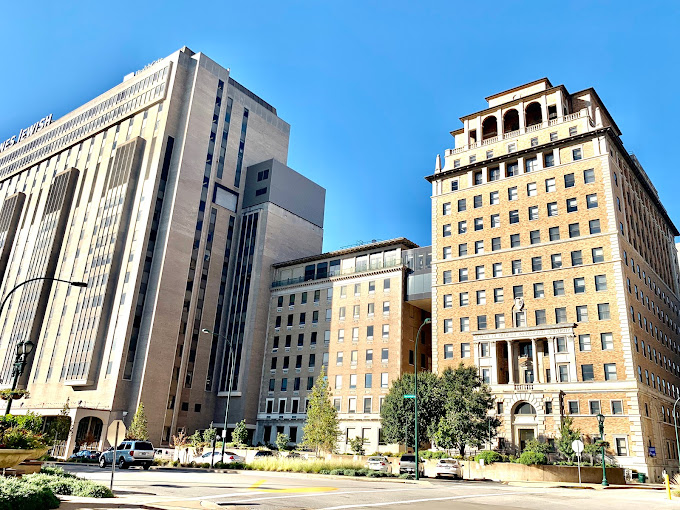
Washington University Medical Campus
Cancer Alternative treatments
Cardiology Cardiovascular SurgeryCardiology Cardiovascular Surgery
Ear Nose Throat ENTEar Nose Throat ENT
Executive Health Check UpExecutive Health Check Up
General SurgeryGeneral Surgery
Hospital Quick Facts
Clinical Excellence
Research Leadership
Innovative Technology
Interdisciplinary Collaboration
Education and Training
Community Engagement
Specialized Centers of Excellence
About Us
Our faculty, students, trainees and staff are pushing the bounds of medicine and improving health in our community and around the world.
Washington University School of Medicine is committed to advancing human health in a culture that supports diversity, inclusion, critical thinking and creativity. As international leaders in patient care, research and education, our outstanding faculty has contributed major discoveries and innovations in the fields of science and clinical medicine since the school’s founding in 1891.
Located on the Washington University Medical Campus adjacent to the Cortex Innovation Community, we are one of seven schools of Washington University in St. Louis.
Speciality
Clinical Excellence
Research Leadership
Innovative Technology
Interdisciplinary Collaboration
Education and Training
Community Engagement
Specialized Centers of Excellence
Quality
Our faculty members are recognized nationally and worldwide as leaders in their fields. On campus, they’re also known as committed mentors and collaborators. Scientists, physicians, and experts in policy and public health, their countless efforts to advance knowledge, improve care and save lives range from the molecular to global, the biological to social.
Our faculty currently includes 15 National Academy of Sciences fellows, 30 members of the National Academy of Medicine and 15 investigators with NIH MERIT status. They have earned 116 individual and/or institutional NIH career development awards and 77 career development awards from non-federal agencies. In addition, 19 Nobel laureates are associated with the School of Medicine.
Vision & Mission
Our vision
Washington University School of Medicine will lead in advancing human health through the promotion of wellness and delivery of outstanding health care, innovative research and the education of tomorrow’s leaders in biomedicine within a culture that supports diversity, inclusion, critical thinking and creativity.
Our mission
In leading the advancement of human health, Washington University School of Medicine will:
Cultivate excellence and collegiality within an equitable and inclusive community
Attract, develop, advance and support a diverse and talented current and future workforce
Innovate through discoveries and inventions in basic, clinical, translational and population sciences
Build and support an environment that fosters exceptionally creative research, health care, education and the well-being of our workforce
Use our academic excellence and scientific rigor to continually advance and enhance health care in a way that ensures access, compassion, high value, equity and evidence-based care for all people in our community, including those who are underserved and uninsured
Observe the highest standards of ethics, integrity and humanity across all missions
Apply advances in research, education and health care to the betterment of the human condition locally and globally
Awards & Recognition
Quality and Safety Awards: Recognition for maintaining high standards of patient safety, quality of care, and clinical outcomes. This might include awards from organizations like The Joint Commission, Leapfrog Group, or Healthgrades.
Patient Experience Awards: Recognition for providing exceptional patient experiences, including awards based on patient satisfaction surveys or feedback from independent organizations like Press Ganey or Consumer Reports.
Specialty Excellence Awards: Awards acknowledging excellence in specific medical specialties such as cardiology, oncology, orthopedics, or obstetrics. These accolades might be bestowed by specialty-specific organizations or publications.
Community Service Awards: Recognition for outstanding contributions to the local community through health education programs, outreach initiatives, free clinics, and other community health initiatives. Awards in this category may come from local governments, non-profit organizations, or healthcare associations.
Employee Satisfaction and Workplace Culture Awards: Awards acknowledging the hospital's commitment to creating a positive work environment, employee satisfaction, and professional development opportunities. These might be given by entities like Forbes, Fortune, or local business organizations.
Environmental Sustainability Awards: Recognition for efforts to reduce environmental impact through sustainable practices in operations, waste management, energy efficiency, and green initiatives. Awards in this category might come from environmental organizations or sustainability-focused groups.
Technology and Innovation Awards: Awards recognizing the adoption and implementation of innovative technologies and practices to enhance patient care, improve operational efficiency, and advance medical research. These might be given by technology publications, healthcare associations, or industry groups.
Read real patient testimonials of Washington University Medical Campus and discover inspiring stories of healing, compassionate care, and life-changing experiences at our hospital.
1. Went to Endocrinology dept for my diabetes check up. Thought I'd take a few pictures from the 13th floor window.
2. I think the doctors, nurse practitioners, and the RNs at Washington University Hospital in St Louis are great and caring people! I just recently was there. When I arrived from three hours away. I showed up at th ER. There was people waiting to go back. I went straight to triage then straight back. They gave me wonderful care! My Drs/ Dr Blinder, Dr Santiago. Thanks for posting Jerry Little
My Blog
Stay informed with the latest health tips, hospital updates, medical insights, and wellness articles curated by Washington University Medical Campus.
Stories
Ask questions
Comments
Tell us what you think—leave your comments for Washington University Medical Campus.
Download the MyHospitalNow app
Are you Patient?
- Free Surgery Cost Estimation
- Free Consulting with Best Hospital
- Free Consulting with Best Doctors
- Lowest Treatment Cost
- World Class Hospitals Options
- Tour to your Dream Country


Are you Hospital?
- Free International Surgery Query
- Free Hospital Profile
- Directly Interact with Patients
- Free Services/Offer Publishing
- Free Medical Tourism IT Platform
- Free Case Management Software
Are you Doctor?
- Free International Surgery Query
- Free Doctor Profile
- Directly Interact with Patients
- Free Services/Offer Publishing
- Free Medical Tourism IT Platform
- Free Case Management Software
Leave a Comment