Introduction
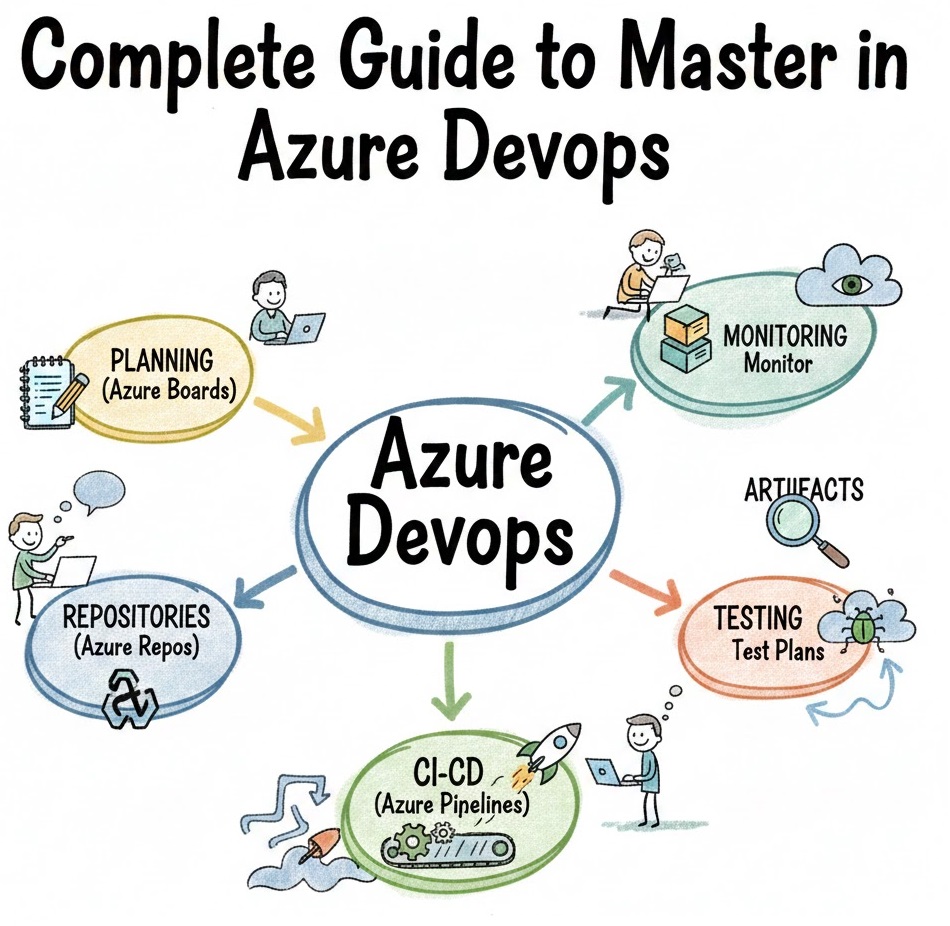
In today’s fast-paced digital world, efficient software development and deployment are crucial to achieving business goals. Azure DevOps is at the heart of streamlining this process, offering tools and services for automation, collaboration, and delivery. Master in Azure DevOps is one of the most advanced certifications for professionals who want to master this platform and lead their teams in building, testing, and delivering applications efficiently.This certification enables professionals to acquire hands-on experience with Azure DevOps tools, such as Azure Repos, Azure Pipelines, Azure Boards, and Azure Artifacts. It equips learners with the knowledge to automate, monitor, and optimize workflows to support an agile and DevOps-oriented approach.
What is the Master in Azure DevOps?
Master in Azure DevOps is an advanced certification designed for professionals who want to specialize in automating software delivery pipelines using Microsoft’s Azure DevOps platform. It provides an in-depth understanding of DevOps practices, covering everything from code versioning to deployment, testing, security integration, and monitoring. The certification prepares professionals to optimize continuous integration and continuous delivery (CI/CD) processes, helping organizations streamline their DevOps operations.
This program integrates various tools and best practices to automate the software development lifecycle (SDLC), ensuring seamless collaboration between development, operations, and security teams.
Who Should Take This Program?
This certification is designed for professionals who work in or are looking to transition to roles where DevOps practices and tools like Azure DevOps are central to the workflow. If you are:
- A DevOps Engineer, Cloud Engineer, or Software Engineer, this certification will solidify your expertise in Azure DevOps.
- An Engineering Manager or Project Manager, you will gain deep insights into DevOps management, automation, and delivery pipelines.
- A Platform Engineer or Site Reliability Engineer (SRE), you will acquire essential skills for managing scalable infrastructure and maintaining high availability.
- A Security Engineer or QA Engineer, you will learn how to integrate security and testing practices into the development pipeline using Azure DevOps.
Skills You’ll Gain
The Master in Azure DevOps certification provides practical skills in areas essential for mastering DevOps:
- Continuous Integration (CI) and Continuous Delivery (CD): Build, test, and deploy software automatically with minimal human intervention using Azure Pipelines.
- Version Control with Azure Repos: Learn how to manage and version your code using Git repositories, ensuring your code is always tracked and protected.
- Infrastructure as Code (IaC): Automate infrastructure provisioning and management with tools like Azure Resource Manager (ARM) templates and Terraform.
- Deployment Automation: Set up automatic deployment processes using Azure DevOps pipelines to improve release cycles and reduce downtime.
- Agile Project Management: Use Azure Boards for managing work, tracking bugs, and supporting Agile workflows like Scrum and Kanban.
- Security and Compliance: Integrate security tools and testing procedures directly into the pipeline, following DevSecOps principles.
- Monitoring and Feedback Loops: Use Azure Monitor and Azure Application Insights to track application performance, detect issues early, and optimize the user experience.
Real-World Projects You’ll Be Able to Do After It
- Automated CI/CD Pipeline Setup: Build a fully automated pipeline to continuously integrate, test, and deploy web applications, mobile apps, or services.
- Infrastructure Automation: Write Infrastructure as Code scripts for deploying and managing cloud infrastructure, using Azure DevOps and Azure Resource Manager (ARM) templates.
- Project and Work Management: Use Azure Boards to manage sprint tasks, backlogs, track progress, and monitor team performance.
- Deployment for Multi-cloud Environments: Implement deployment processes that work across different cloud platforms such as Azure and AWS using pipelines and containerization tools like Docker and Kubernetes.
- Security-Integrated DevOps: Integrate vulnerability scanning and automated security testing within your deployment pipeline to create a secure, compliant system.
Preparation Plan
7–14 Days: Getting Started
- Learn Azure DevOps Basics: Familiarize yourself with key tools like Azure Boards, Azure Repos, Azure Pipelines, and Azure Artifacts.
- Version Control: Get comfortable with Git and Azure Repos for code versioning.
- CI/CD Fundamentals: Set up basic CI pipelines using Azure Pipelines for automating builds.
30 Days: Deep Dive
- Advanced Pipelines: Build multi-stage pipelines with deployment automation.
- Project Management: Learn to use Azure Boards for Agile project management and task tracking.
- Infrastructure as Code: Automate infrastructure provisioning using ARM templates or Terraform.
- Automated Testing: Integrate unit tests into your pipeline for continuous quality assurance.
60 Days: Mastering Real-World Projects
- Complex Pipelines: Create end-to-end pipelines with multiple environments (dev, test, prod).
- Security and Compliance: Integrate security scans and compliance checks in your pipeline.
- Hands-on Projects: Work on real-world projects like setting up pipelines for a multi-service application or deploying to Azure Kubernetes Service (AKS).
Common Mistakes
When pursuing Master in Azure DevOps, avoid the following pitfalls:
- Overlooking the DevOps Culture: DevOps is about collaboration. Focusing only on tools without embracing DevOps culture and practices can undermine your efforts.
- Neglecting Testing and Security: DevOps is not just about delivery but also ensuring quality. Not incorporating automated testing and security into your pipelines is a common mistake.
- Not Understanding Cloud Infrastructure: Failing to learn how cloud infrastructure works (e.g., networking, storage, scalability) will limit your ability to use Azure DevOps effectively.
Best Next Certifications After This
Once you have achieved Master in Azure DevOps, consider pursuing the following:
- Azure DevOps Expert: Deepens your knowledge of advanced Azure DevOps features and cloud services.
- Certified Kubernetes Administrator: Since Kubernetes is a powerful orchestration tool often used with Azure DevOps, becoming a Kubernetes expert adds significant value to your skill set.
- Certified Cloud Security Professional (CCSP): If you’re interested in security, this certification helps you specialize in securing cloud-based systems.
Choose Your Path
The Master in Azure DevOps certification provides flexibility, allowing you to specialize in various sub-domains of DevOps. Depending on your career goals and interests, you can choose from these six learning paths to tailor your learning experience:
1. DevOps
- Focus: Master the full spectrum of Azure DevOps tools and practices for building, testing, and deploying software.
- Who It’s For: Engineers and managers who want to automate software delivery, optimize development processes, and improve collaboration across teams.
- Skills: CI/CD pipelines, version control with Azure Repos, build automation, monitoring, and testing.
2. DevSecOps
- Focus: Integrate security practices throughout the DevOps pipeline, ensuring secure software delivery and infrastructure.
- Who It’s For: Security professionals, DevOps engineers, or anyone interested in incorporating security into the DevOps lifecycle.
- Skills: Security automation, vulnerability scanning, compliance checks, and securing cloud infrastructure.
3. SRE (Site Reliability Engineering)
- Focus: Ensure that software is highly available, scalable, and reliable in production environments using Azure tools.
- Who It’s For: Engineers focused on maintaining uptime, reliability, and performance of systems.
- Skills: Automated infrastructure management, monitoring, incident response, and performance tuning.
4. AIOps/MLOps
- Focus: Incorporate AI and machine learning into the DevOps workflow to enhance monitoring, decision-making, and automation.
- Who It’s For: Data scientists, machine learning engineers, or DevOps professionals looking to integrate AI/ML in operations.
- Skills: AI-driven monitoring, anomaly detection, automation, and machine learning model integration.
5. DataOps
- Focus: Automate and manage data workflows in a DevOps setup, ensuring smooth, continuous data delivery pipelines.
- Who It’s For: Data engineers, analytics professionals, or anyone looking to integrate DevOps principles into data management and processing.
- Skills: Data pipeline automation, version control for data, and continuous data delivery.
6. FinOps
- Focus: Manage cloud costs and financial operations in a DevOps environment to optimize resources and drive cost-efficiency.
- Who It’s For: Cloud engineers, financial engineers, or anyone responsible for managing cloud budgets and costs.
- Skills: Cost optimization, cloud resource monitoring, budget forecasting, and financial reporting.
Role → Recommended Certifications
| Role | Recommended Certifications |
|---|---|
| DevOps Engineer | – Master in Azure DevOps – Azure DevOps Expert – Certified Kubernetes Administrator |
| SRE (Site Reliability Engineer) | – Master in Azure DevOps – Certified Kubernetes Administrator – Google Cloud Professional DevOps Engineer |
| Platform Engineer | – Master in Azure DevOps – Certified Kubernetes Administrator – Azure Solutions Architect Expert |
| Cloud Engineer | – Azure Solutions Architect Expert – Master in Azure DevOps – AWS Certified Solutions Architect |
| Security Engineer | – Certified Cloud Security Professional (CCSP) – Master in Azure DevOps – Certified Ethical Hacker (CEH) |
| Data Engineer | – Master in Azure DevOps – Azure Data Engineer Associate – Google Professional Data Engineer |
| FinOps Practitioner | – Master in Azure DevOps – FinOps Certified Practitioner – Certified Cloud Financial Manager |
| Engineering Manager | – Master in Azure DevOps – Certified Agile Leadership (CAL) – ScrumMaster Certification |
List of Certifications
| Certification Name | Track | Level | Who It’s For | Prerequisites | Skills Covered | Recommended Order |
|---|---|---|---|---|---|---|
| Master in Azure DevOps | DevOps | Advanced | Engineers, Managers | Basic knowledge of DevOps and Azure | CI/CD, Cloud Management, Version Control, Azure Pipelines, Monitoring, Automation, Version Control | Master in Azure DevOps, then Azure DevOps Expert |
| Azure DevOps Expert | DevOps | Expert | DevOps Engineers, Managers | Master in Azure DevOps, strong Azure knowledge | Advanced pipelines, resource management, complex CI/CD pipelines, scaling DevOps processes | Azure DevOps Expert → Master in Azure DevOps |
| Certified Kubernetes Administrator | Cloud / Container | Intermediate | Platform Engineers, DevOps Engineers | Understanding of Kubernetes, Cloud basics | Kubernetes orchestration, cluster management, storage, networking, and security in cloud environments | Certified Kubernetes Administrator → Master in Azure DevOps |
| Certified Cloud Security Professional (CCSP) | Security | Advanced | Security Engineers | Knowledge of cloud security concepts, IT experience | Cloud security best practices, risk management, compliance, and securing cloud environments | CCSP → Master in Azure DevOps |
| Azure Solutions Architect Expert | Cloud | Expert | Cloud Engineers, Architects | Knowledge of Azure services and cloud basics | Cloud architecture, solutions design, Azure services, scalability, disaster recovery, migration | Azure Solutions Architect → Master in Azure DevOps |
| Azure Data Engineer Associate | DataOps / Cloud | Associate | Data Engineers, Architects | Knowledge of data management and cloud basics | Data storage, integration, processing, and management in the cloud, including Azure-specific tools | Azure Data Engineer → Master in Azure DevOps |
| FinOps Certified Practitioner | FinOps | Associate | Financial Engineers, Cloud Cost Managers | Basic cloud financial knowledge | Cloud cost management, budgeting, forecasting, cost optimization in cloud environments | FinOps Certified Practitioner → Master in Azure DevOps |
Top Institutions Providing Training for Master in Azure DevOps
1. DevOpsSchool
DevOpsSchool is one of the most popular training providers for DevOps and Azure DevOps certifications. They deliver instructor‑led online sessions, real‑time projects, and mentorship.
- Courses are designed for beginners to advanced learners.
- Emphasis on practical work, not just theory.
- Includes preparation guidance specifically for the Master in Azure DevOps certification.
- Access to labs and post‑training support helps you build real DevOps pipelines on Azure.
2. Cotocus
Cotocus is known for structured training programs that blend theory with hands‑on practice.
- Trainers are industry practitioners with real cloud experience.
- Azure DevOps courses include CI/CD build pipelines, IaC, and release automation.
- Good for engineers who want guided assistance through the entire certification journey.
- Strong focus on real project examples and troubleshooting common issues.
3. ScmGalaxy
ScmGalaxy has a reputation for deep technical training, especially in DevOps tools and cloud platforms.
- Provides bootcamps and regular weekly classes.
- Offers interactive sessions with live use‑cases.
- Training includes Azure DevOps, Git, Jenkins, Terraform, monitoring tools, and pipeline security.
- Small class sizes help learners get individual attention.
4. BestDevOps
BestDevOps specializes in DevOps certification training with a focus on practical, industry‑oriented outcomes.
- Courses combine Azure DevOps tool mastery with DevOps principles.
- Includes preparation modules aligned with certification objectives.
- Good choice for professionals who want a performance‑oriented learning path.
- Emphasis on building automated CI/CD workflows from scratch.
5. DevSecOpsSchool
DevSecOpsSchool focuses on integrating security into DevOps — a crucial aspect of modern cloud development.
- Covers not just automation but also security checks inside pipelines.
- Teaches DevSecOps frameworks with Azure tools.
- Good for learners who want to specialize beyond traditional DevOps into secure DevOps practices (DevSecOps).
- Helpful for roles that are security‑oriented or regulatory compliance focused.
6. SRESchool
SRESchool offers training designed around Site Reliability Engineering using cloud and DevOps tools.
- Topics include availability, reliability, monitoring, and auto‑scaling practices.
- Integrates Azure DevOps with reliability engineering principles.
- Suitable for professionals aiming for SRE, platform engineering, or cloud operations roles.
- Hands‑on labs focus on real uptime challenges and automated infrastructure management.
7. AIOPSSchool
AIOPSSchool focuses on applying analytics and automation to IT operations — often referred to as AI‑powered DevOps.
- Teaches how AI/ML can improve observability, auto‑remediation, and performance prediction.
- Great for professionals interested in next‑generation DevOps practices (AIOps/MLOps).
- Covers event correlation, anomaly detection, and workflow automation.
- Uses Azure tools along with machine learning platforms for intelligent DevOps operations.
8. DataOPSSchool
DataOPSSchool specializes in DevOps practices oriented around data workflows.
- Combines Azure DevOps with Big Data and data pipeline automation.
- Ideal for data engineers and analytics teams integrating continuous delivery into data solutions.
- Covers ETL automation, data versioning, pipeline orchestration, and monitoring.
- Exercises include real data management problems in Azure environments.
9. FinOpsSchool
FinOpsSchool teaches professionals how to manage cloud costs and financial operations in DevOps environments.
- Focuses on cost optimization strategies while using Azure DevOps pipelines.
- Helps engineers and managers understand budgeting, forecasting, and cloud spend optimization.
- Important for roles where performance and cost efficiency matter.
- Includes frameworks for real‑world cost governance in production environments.
FAQs on Master in Azure DevOps
1. How difficult is the Master in Azure DevOps certification?
While the certification is advanced, it’s designed to be accessible to professionals with prior experience in DevOps or cloud technologies. The difficulty lies in mastering Azure-specific tools and integrating them effectively in real-world environments.
2. How much time does it take to complete the program?
On average, it will take 30 to 60 days to prepare for the certification, depending on your previous experience.
3. Do I need experience with Azure before starting this program?
Basic knowledge of cloud technologies and DevOps practices is beneficial but not mandatory. The certification covers foundational concepts as well.
4. Is this certification suitable for beginners?
While it’s not specifically for beginners, if you have foundational knowledge in software development and cloud computing, you can progress through the content.
5. What career outcomes can I expect after obtaining this certification?
You can qualify for roles like DevOps Engineer, Cloud Engineer, SRE, and even move into managerial positions within DevOps teams.
6. How do I prepare for the Master in Azure DevOps certification?
It’s essential to practice with real-world projects and complete hands-on labs. Azure DevOps documentation and official learning paths are good resources.
7. What are the benefits of having this certification?
This certification enhances your career prospects in the rapidly growing DevOps industry. It proves your expertise in automating deployment and managing cloud-based applications.
8. How do I maintain this certification?
Once certified, keep up with the latest trends in Azure DevOps, and continue learning to stay current with evolving tools and practices.
Next Certifications to Take
- Same Track: Azure DevOps Expert
- Cross-Track: Certified Kubernetes Administrator
- Leadership: Certified Agile Leadership
FAQs on Master in Azure DevOps
1. How difficult is the Master in Azure DevOps certification?
- The Master in Azure DevOps certification is designed for professionals with a background in software development, cloud, or DevOps. It can be challenging but achievable with a structured study plan and hands-on practice. The difficulty level increases as you progress into advanced topics like CI/CD, automation, and cloud management.
2. How long does it take to complete the Master in Azure DevOps program?
- On average, you can expect to spend 30 to 60 days preparing for the certification. The time depends on your prior knowledge of DevOps concepts and Azure tools. You can follow a 7–14 day, 30-day, or 60-day preparation plan, as outlined in the preparation section.
3. Do I need prior Azure experience to take this certification?
- While prior experience in Azure or DevOps is helpful, it’s not mandatory. The certification covers all the essential topics, from version control to CI/CD pipelines, and can be learned from scratch. However, some familiarity with cloud concepts will give you an advantage.
4. What are the prerequisites for this certification?
- A foundational understanding of software development, version control systems like Git, and cloud computing basics (especially Azure) is recommended. Basic knowledge of scripting languages like PowerShell or Bash can also be useful.
5. How is the Master in Azure DevOps certification different from other DevOps certifications?
- The Master in Azure DevOps certification focuses specifically on Azure DevOps tools and their integration into the SDLC, with an emphasis on Microsoft technologies. It offers a specialized curriculum that covers Azure-specific services like Azure Pipelines, Azure Boards, Azure Artifacts, and Azure Repos, making it ideal for professionals working with Microsoft Azure.
6. What career opportunities will this certification open up?
- After completing the Master in Azure DevOps certification, you can qualify for roles such as DevOps Engineer, Cloud Engineer, Site Reliability Engineer (SRE), Platform Engineer, and Engineering Manager. You will also be well-equipped to handle advanced DevOps tools and practices within Azure environments.
7. What’s the best way to prepare for the certification exam?
- The best preparation method includes:
- Hands-on practice with Azure DevOps services.
- Studying Azure documentation and using official study guides.
- Completing online courses that provide in-depth learning and real-world scenarios.
- Practicing with real projects to solidify your understanding of tools like Azure Pipelines, Azure Boards, and Infrastructure as Code.
8. Is there any online support during the training?
- Yes, many training providers, such as DevOpsSchool, ScmGalaxy, and Cotocus, offer support through discussion forums, one-on-one mentorship, and instructor-led sessions. Some providers even offer post-training support to help with real-world challenges.
9. How much does the Master in Azure DevOps certification cost?
- The cost of the certification exam itself varies depending on the region and the training provider. Typically, exam fees range from $150 to $250 USD. Training courses can cost between $500 to $2,000 USD, depending on the provider and the depth of the course.
10. How do I register for the Master in Azure DevOps exam?
- You can register for the exam via the official certification provider or Microsoft’s certification portal. Ensure you meet all the prerequisites and have completed your training before attempting the exam.
11. Is there any time limit for completing the certification?
- There is no time limit for completing the Master in Azure DevOps certification. However, it is recommended to complete the exam within a reasonable time frame after completing your training to retain the knowledge and skills.
12. Can I pursue this certification while working full-time?
- Yes, the Master in Azure DevOps certification is flexible enough to be pursued alongside your full-time job. You can study during your free hours and complete the training at your own pace. Many providers offer self-paced learning options that allow you to balance your professional responsibilities.
Conclusion
The Master in Azure DevOps certification is an essential credential for anyone looking to specialize in Azure DevOps tools and practices. With Azure being a key player in cloud computing and DevOps, this certification provides you with the skills and knowledge to automate software delivery pipelines, manage cloud-based applications, and integrate security and monitoring into your workflows.By obtaining this certification, you’ll not only enhance your technical expertise but also open up new career opportunities in fields like DevOps, Cloud Engineering, SRE, and DataOps. Whether you’re looking to advance in your current role or transition into a new one, the Master in Azure DevOps certification equips you with the tools to succeed in a fast-evolving industry.
Find Trusted Cardiac Hospitals
Compare heart hospitals by city and services — all in one place.
Explore Hospitals