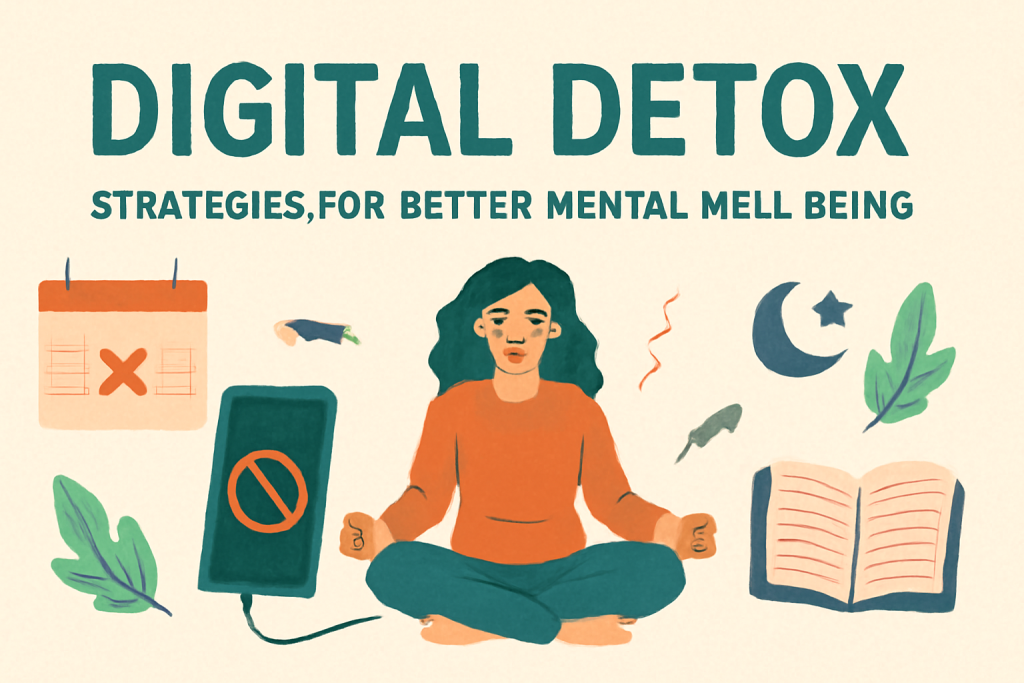
In today’s hyper-connected world, constant exposure to screens and digital devices can have a significant impact on mental health. While technology has its benefits, excessive use can lead to stress, anxiety, depression, and poor sleep quality. A digital detox offers a way to disconnect and regain balance in life. Here are some effective strategies for achieving better mental well-being through a digital detox:
1. Set Screen Time Limits
- What It Is: Use built-in features on your phone or download apps that track and limit your screen time. Set boundaries on how long you can spend on social media, news, or entertainment apps.
- Why It Helps: This helps you reclaim your time and focus on activities that promote mindfulness, like reading, exercising, or spending quality time with loved ones.
2. Designate Tech-Free Zones
- What It Is: Create areas in your home or office where electronic devices are not allowed, such as the bedroom or dining area.
- Why It Helps: This fosters a healthier environment for relaxation and sleep, and can enhance quality family time, leading to reduced anxiety and improved relationships.
3. Practice Mindfulness and Meditation
- What It Is: Incorporate mindfulness practices, such as deep breathing, meditation, or yoga, into your routine. Use apps like Headspace or Calm for guided sessions.
- Why It Helps: These practices calm the mind, reduce stress, and help you become more present in the moment, reducing the pull of constant notifications and distractions.
4. Schedule Digital-Free Days
- What It Is: Choose a day of the week, or even just a few hours, where you completely disconnect from all digital devices, including your phone, computer, and television.
- Why It Helps: It allows you to reset and focus on non-digital activities, such as nature walks, hobbies, or socializing without screens, leading to enhanced well-being.
5. Unsubscribe and Clean Up Your Digital Space
- What It Is: Unsubscribe from unnecessary email lists, unfollow accounts that do not add value to your life, and declutter your digital devices.
- Why It Helps: Reducing digital clutter helps lower stress and minimizes distractions, creating a more peaceful and organized digital environment.
6. Engage in Offline Hobbies
- What It Is: Reconnect with offline hobbies like drawing, gardening, cooking, reading, or hiking.
- Why It Helps: These activities reduce reliance on digital devices, help improve your focus, and boost your creativity and mental well-being.
7. Use Technology to Improve Your Detox
- What It Is: Use technology in a mindful way by downloading apps that promote well-being, such as sleep trackers, fitness apps, or journaling tools.
- Why It Helps: Technology can be used as a positive tool to support your mental health, making your digital detox more intentional and structured.
8. Be Mindful of Social Media Usage
- What It Is: Limit your social media usage or take breaks from it entirely. You can unfollow accounts that make you feel anxious or inadequate.
- Why It Helps: Social media can often contribute to feelings of inadequacy, jealousy, and anxiety. Reducing exposure helps protect your mental space and fosters a more positive outlook.
9. Prioritize Real-Life Social Interactions
- What It Is: Instead of texting or messaging online, make an effort to meet friends or family in person or via phone calls.
- Why It Helps: Face-to-face interactions or meaningful voice conversations build stronger emotional connections, contributing to better mental health.
10. Implement a “No Technology” Rule Before Bed
- What It Is: Set a time (e.g., an hour) before bed where all digital devices are turned off. Use this time to unwind and engage in relaxing activities like reading, journaling, or listening to music.
- Why It Helps: Reducing screen exposure before sleep promotes better sleep hygiene and improves mental well-being by preventing blue light from interfering with your natural sleep cycle.
Conclusion
A digital detox is an essential practice for improving mental health in a tech-heavy world. By following these strategies, you can create a healthier relationship with technology, leading to reduced stress, improved sleep, and overall better mental well-being.
Find Trusted Cardiac Hospitals
Compare heart hospitals by city and services — all in one place.
Explore Hospitals
A digital detox works best when it’s practical and repeatable, because the real goal is not quitting technology but reducing the mental noise that comes from constant alerts, comparison, and endless content. Start by identifying your “high-drain” habits—late-night scrolling, nonstop notifications, work messages after hours—and replace them with simple guardrails like scheduled check-in times, app limits, and a phone-free first and last hour of the day. Even small changes can quickly improve sleep, focus, and mood, especially when you pair them with offline recovery habits such as walking, reading, journaling, prayer/meditation, or face-to-face time with family and friends. It also helps to clean your digital environment: unfollow accounts that trigger stress, turn off non-essential notifications, and keep the most distracting apps off your home screen. When you make detox a routine (not a one-time challenge), you build calmer attention, stronger relationships, and better emotional balance without feeling disconnected from the world.