Introduction
Deception Technology Tools are security solutions designed to detect, deceive, and mitigate cyber threats by luring attackers into traps such as decoy systems, fake credentials, and honeypots. By identifying threats before they reach critical assets, these platforms reduce dwell time, enhance incident response, and provide actionable intelligence for security teams.
Organizations face an increasing volume of sophisticated cyber attacks, making traditional defenses insufficient. Deception technology adds a proactive layer, giving security teams early warning and forensic insight to neutralize threats quickly.
Real-world use cases include:
- Detecting insider threats through fake credentials or decoy environments
- Monitoring lateral movement within networks to spot breaches
- Early identification of ransomware or malware attacks
- Providing threat intelligence for incident response teams
- Testing the effectiveness of existing security controls
Evaluation criteria for Deception Technology Tools:
- Deployment flexibility across endpoints, networks, and cloud
- Automated decoy generation and orchestration
- Threat detection accuracy and alerting mechanisms
- Integration with SIEM, SOAR, and threat intelligence platforms
- Ease of use and configuration
- Analytics and reporting dashboards
- Scalability for enterprise environments
- Threat intelligence enrichment and investigation capabilities
- Compliance and security standards support
- Cost and total value proposition
Best for: SOC teams, enterprise security operations, cybersecurity teams in large organizations, financial services, healthcare, and critical infrastructure
Not ideal for: Very small organizations with limited IT resources or minimal exposure to targeted cyber threats
Key Trends in Deception Technology Tools
- AI-driven anomaly detection to identify sophisticated attacks
- Automated decoy deployment and dynamic environment generation
- Integration with SIEM and SOAR platforms for faster response
- Real-time monitoring of attacker behavior across endpoints and networks
- Threat intelligence enrichment from decoy interactions
- Cloud-native and hybrid deployment models
- Endpoint and network deception combined for unified coverage
- Proactive threat hunting using decoy-generated alerts
- Flexible subscription and consumption-based pricing
- Enhanced reporting and dashboard visualizations for SOC teams
How We Selected These Tools (Methodology)
- Evaluated market adoption and vendor reputation
- Assessed feature completeness including decoy creation, threat detection, and alerting
- Considered reliability and performance in active enterprise environments
- Reviewed security and compliance posture
- Examined integrations with SIEM, SOAR, and analytics platforms
- Tested suitability for SMB, mid-market, and enterprise organizations
- Evaluated usability and onboarding ease
- Analyzed innovation, AI integration, and predictive threat detection
- Reviewed scalability and multi-environment deployment capabilities
- Assessed support, documentation, and community presence
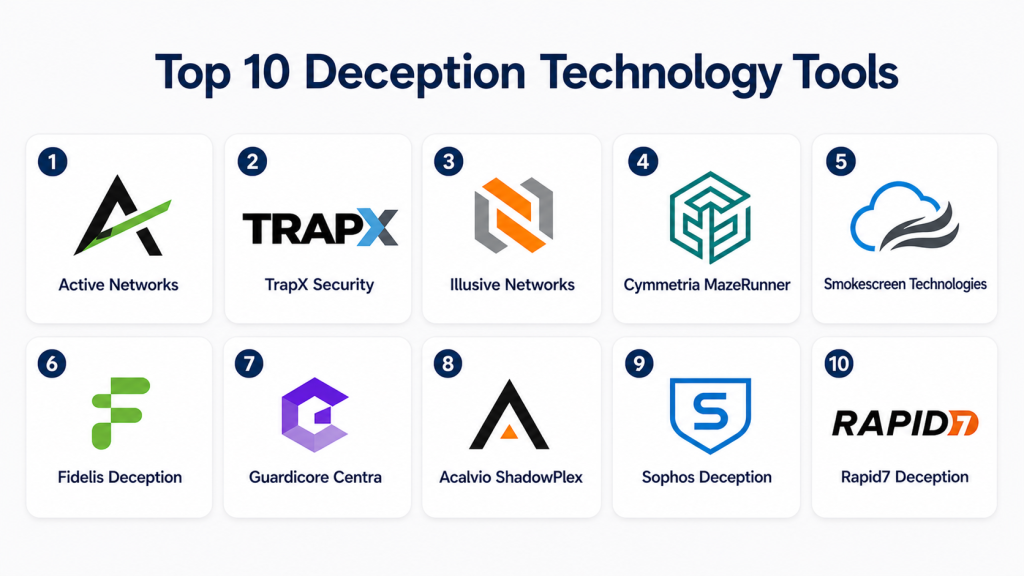
Top 10 Deception Technology Tools
#1 — Active Networks
Short description:
Attivo Networks provides an enterprise-grade deception platform that detects lateral movement, insider threats, and ransomware early. It is ideal for large organizations seeking proactive threat detection and investigation capabilities.
Key Features
- Endpoint and network decoys
- Credential and asset deception
- Threat analytics and visualization
- Automated attack detection alerts
- Integration with SIEM and SOAR
- Active threat hunting tools
Pros
- Early detection of lateral movement and insider threats
- Extensive integration and analytics
Cons
- Complex initial deployment for smaller teams
- Licensing cost can be high for SMBs
Platforms / Deployment
- Windows / Linux
- Cloud / Hybrid
Security & Compliance
- Encryption, MFA, audit logs
- Not publicly stated
Integrations & Ecosystem
- SIEM and SOAR integrations
- Threat intelligence enrichment
- API for custom workflows
Support & Community
Dedicated enterprise support, documentation, and community forums
#2 — TrapX Security
Short description:
TrapX Security offers a comprehensive deception platform that detects, analyzes, and responds to cyber threats using dynamic honeypots, traps, and decoy systems.
Key Features
- Automated decoy and honeypot deployment
- Real-time attack analytics
- Threat intelligence dashboards
- Integration with SIEM and SOAR platforms
- Credential and application deception
- Incident response orchestration
Pros
- Highly effective for early threat detection
- Provides actionable intelligence for SOC teams
Cons
- Advanced deployment requires training
- Higher cost for smaller deployments
Platforms / Deployment
- Windows / Linux
- Cloud / Hybrid
Security & Compliance
- Encryption, RBAC, audit logs
- Not publicly stated
Integrations & Ecosystem
- SIEM, SOAR, and analytics platform integration
- API support for custom alerts
Support & Community
Documentation, training, and enterprise-grade support
#3 — Illusive Networks
Short description:
Illusive Networks uses identity and endpoint deception to proactively detect cyber attackers and reduce dwell time in enterprise networks.
Key Features
- Identity and credential deception
- Automated decoy generation
- Threat analytics dashboards
- Integration with SIEM and SOAR
- Endpoint detection coverage
- Attack path analysis
Pros
- Reduces attacker dwell time
- Strong identity and endpoint protection
Cons
- May require dedicated SOC resources
- Premium pricing for full features
Platforms / Deployment
- Windows / Linux
- Cloud / Hybrid
Security & Compliance
- MFA, encryption, audit logs
- Not publicly stated
Integrations & Ecosystem
- SIEM and SOAR integration
- API access for analytics and alerting
Support & Community
Enterprise support with knowledge base and training
#4 — Cymmetria MazeRunner
Short description:
MazeRunner by Cymmetria provides dynamic deception for network and endpoint security, helping detect, analyze, and neutralize cyber attacks proactively.
Key Features
- Network and endpoint decoys
- Dynamic attack simulation
- Threat detection and alerting
- Integration with security tools
- Behavioral analytics
- Automated response workflow
Pros
- Real-time attack detection
- Dynamic decoy environment
Cons
- Setup requires technical expertise
- Cost may be high for SMBs
Platforms / Deployment
- Windows / Linux
- Cloud / Hybrid
Security & Compliance
- Encryption, audit logs
- Not publicly stated
Integrations & Ecosystem
- SIEM and SOAR platforms
- API for alerting and reporting
Support & Community
Documentation, enterprise onboarding, and support
#5 — Smokescreen Technologies
Short description:
Smokescreen Technologies offers a deception platform that creates realistic decoys and lures attackers to detect threats early in the attack lifecycle.
Key Features
- Decoy creation and deployment
- Threat detection and alerting
- Endpoint and network coverage
- Analytics dashboards
- SIEM integration
- Forensic threat data collection
Pros
- Early detection of malware and intrusions
- Detailed analytics for SOC teams
Cons
- Learning curve for small teams
- Enterprise pricing
Platforms / Deployment
- Windows / Linux
- Cloud / Hybrid
Security & Compliance
- Encryption, audit logs
- Not publicly stated
Integrations & Ecosystem
- SIEM and threat intelligence integration
- API for workflow automation
Support & Community
Enterprise-level support and documentation
#6 — Fidelis Deception
Short description:
Fidelis Deception combines network and endpoint deception with advanced analytics to detect attackers and prevent lateral movement.
Key Features
- Endpoint and network decoys
- Credential and application deception
- Threat analytics dashboards
- Automated alerting
- SIEM integration
- Threat intelligence enrichment
Pros
- Strong detection capabilities
- Centralized analytics
Cons
- Deployment complexity
- Premium pricing
Platforms / Deployment
- Windows / Linux
- Cloud / Hybrid
Security & Compliance
- Encryption, audit logs
- Not publicly stated
Integrations & Ecosystem
- SIEM, SOAR, and analytics integration
- API access
Support & Community
Documentation, enterprise support, and training
#7 — Guardicore Centra
Short description:
Guardicore Centra uses micro-segmentation and deception to protect networks from advanced threats and lateral movement.
Key Features
- Micro-segmentation and decoys
- Endpoint threat detection
- Credential deception
- Attack visualization dashboards
- SIEM integration
- Automated threat alerts
Pros
- Combines segmentation and deception
- Advanced attack visualization
Cons
- Setup complexity
- Licensing cost
Platforms / Deployment
- Windows / Linux
- Cloud / Hybrid
Security & Compliance
- MFA, encryption, audit logs
- Not publicly stated
Integrations & Ecosystem
- SIEM and threat intelligence platforms
- API for alerts and reporting
Support & Community
Enterprise support, documentation, and training
#8 — Acalvio ShadowPlex
Short description:
ShadowPlex delivers deception-as-a-service for endpoints and networks, providing early threat detection and forensic insight.
Key Features
- Endpoint and network decoys
- Attack simulation
- Threat analytics
- SIEM integration
- Automated alerts
- Behavioral analytics
Pros
- Early attack detection
- Scalable across enterprises
Cons
- Premium pricing
- Requires trained SOC staff
Platforms / Deployment
- Windows / Linux
- Cloud / Hybrid
Security & Compliance
- MFA, encryption
- Not publicly stated
Integrations & Ecosystem
- SIEM and SOAR integration
- API for alerting
Support & Community
Enterprise support and documentation
#9 — Sophos Deception
Short description:
Sophos Deception integrates with existing security controls to trap attackers, detect threats, and reduce dwell time in networks.
Key Features
- Endpoint decoy deployment
- Credential and application deception
- Threat analytics and alerts
- SIEM and Sophos platform integration
- Automated incident response
- Reporting dashboards
Pros
- Integrated with Sophos ecosystem
- Quick deployment
Cons
- Limited standalone enterprise analytics
- Licensing cost
Platforms / Deployment
- Windows / Linux
- Cloud / Hybrid
Security & Compliance
- Encryption, MFA
- Not publicly stated
Integrations & Ecosystem
- Sophos platforms, SIEM integration
- API for alerts
Support & Community
Documentation and enterprise support
#10 — Rapid7 Deception
Short description:
Rapid7 Deception leverages decoy servers, endpoints, and credentials to lure attackers and detect breaches early, supporting SOC teams with actionable insights.
Key Features
- Decoy servers and endpoints
- Credential deception
- Attack simulation
- Threat analytics dashboards
- SIEM integration
- Automated alerting
Pros
- Detects sophisticated threats early
- Strong analytics and reporting
Cons
- Deployment may be complex
- Premium cost
Platforms / Deployment
- Windows / Linux
- Cloud / Hybrid
Security & Compliance
- MFA, encryption
- Not publicly stated
Integrations & Ecosystem
- SIEM and analytics integration
- API for alerts
Support & Community
Documentation, enterprise support, and training
Comparison Table (Top 10)
| Tool Name | Best For | Platform(s) Supported | Deployment | Standout Feature | Public Rating |
|---|---|---|---|---|---|
| Active Networks | Enterprise SOC | Windows / Linux | Cloud / Hybrid | Lateral movement detection | N/A |
| TrapX Security | Mid-market to Enterprise | Windows / Linux | Cloud / Hybrid | Dynamic honeypots | N/A |
| Illusive Networks | Enterprise SOC | Windows / Linux | Cloud / Hybrid | Credential and endpoint deception | N/A |
| Cymmetria MazeRunner | Mid-market | Windows / Linux | Cloud / Hybrid | Dynamic attack simulation | N/A |
| Smokescreen Tech | Mid-market | Windows / Linux | Cloud / Hybrid | Realistic decoy environments | N/A |
| Fidelis Deception | Enterprise SOC | Windows / Linux | Cloud / Hybrid | Network + endpoint deception | N/A |
| Guardicore Center | Mid-market to Enterprise | Windows / Linux | Cloud / Hybrid | Segmentation + deception | N/A |
| Acalvio ShadowPlex | Enterprise SOC | Windows / Linux | Cloud / Hybrid | Deception as a service | N/A |
| Sophos Deception | SMB to Enterprise | Windows / Linux | Cloud / Hybrid | Sophos ecosystem integration | N/A |
| Rapid7 Deception | Enterprise SOC | Windows / Linux | Cloud / Hybrid | Decoy servers and endpoints | N/A |
Evaluation & Scoring of Deception Technology Tools
| Tool Name | Core (25%) | Ease (15%) | Integrations (15%) | Security (10%) | Performance (10%) | Support (10%) | Value (15%) | Weighted Total |
|---|---|---|---|---|---|---|---|---|
| Active Networks | 9 | 8 | 8 | 9 | 8 | 8 | 7 | 8.3 |
| TrapX Security | 9 | 7 | 8 | 9 | 8 | 8 | 7 | 8.2 |
| Illusive Networks | 8 | 8 | 7 | 8 | 8 | 7 | 7 | 7.8 |
| Cymmetria MazeRunner | 8 | 7 | 7 | 8 | 8 | 7 | 7 | 7.7 |
| Smokescreen Tech | 7 | 8 | 6 | 7 | 7 | 7 | 8 | 7.3 |
| Fidelis Deception | 8 | 7 | 7 | 8 | 8 | 7 | 7 | 7.7 |
| Guardicore Center | 8 | 7 | 7 | 8 | 8 | 7 | 7 | 7.7 |
| Acalvio ShadowPlex | 8 | 7 | 7 | 8 | 8 | 7 | 7 | 7.7 |
| Sophos Deception | 7 | 8 | 6 | 7 | 7 | 7 | 8 | 7.3 |
| Rapid7 Deception | 8 | 7 | 7 | 8 | 8 | 7 | 7 | 7.7 |
Interpretation: Weighted totals highlight each tool’s overall performance across core features, ease, integrations, security, reliability, support, and value, helping organizations compare suitability for their environment.
Which Deception Technology Tools Tool Is Right for You?
Solo / Freelancer
Smaller organizations may start with Sophos Deception or Smokescreen Technologies for basic decoy deployment and endpoint deception without complex configurations.
SMB
TrapX Security, Cymmetria MazeRunner, and Guardicore Centra balance features and usability for mid-market security teams to monitor internal threats.
Mid-Market
Attivo Networks, Illusive Networks, and Fidelis Deception provide enterprise-grade detection with endpoint and network coverage suitable for multi-site operations.
Enterprise
Acalvio ShadowPlex, Rapid7 Deception, and Attivo Networks offer large-scale deployment, advanced analytics, and multi-environment threat intelligence integration.
Budget vs Premium
Budget: Sophos Deception, Smokescreen Technologies
Premium: Attivo Networks, Acalvio ShadowPlex, TrapX Security
Feature Depth vs Ease of Use
Depth: Attivo Networks, Illusive Networks, Acalvio ShadowPlex
Ease: Sophos Deception, Smokescreen Technologies
Integrations & Scalability
Enterprise teams needing SIEM/SOAR integration benefit from TrapX Security, Attivo Networks, and Rapid7 Deception.
Security & Compliance Needs
Organizations handling critical infrastructure or sensitive data should prioritize platforms with strong MFA, encryption, and audit capabilities, such as Attivo Networks and Illusive Networks.
Frequently Asked Questions (FAQs)
1. What pricing models do deception tools use?
Pricing is usually subscription-based or per endpoint, with enterprise plans offering custom licensing based on scale and coverage.
2. How long does deployment take?
SMBs may deploy basic decoys in days; enterprise-scale setups require several weeks to configure multi-environment deception.
3. Do these tools require technical expertise?
Yes, enterprise tools often require SOC or IT staff training to deploy, monitor, and analyze alerts effectively.
4. Can they integrate with SIEM or SOAR?
Most platforms support integration with SIEM, SOAR, and analytics tools for centralized monitoring and incident response.
5. How does deception detect threats?
They use decoy assets, fake credentials, and honeypots to lure attackers, detecting lateral movement and malicious activity in real time.
6. Are endpoints covered?
Yes, advanced platforms deploy deception across endpoints, networks, and cloud resources to identify threats across the attack surface.
7. Can deception detect insider threats?
Yes, by monitoring for suspicious access to decoy credentials, files, or systems, these platforms can reveal insider activity.
8. Do these platforms provide analytics?
Yes, most include dashboards with attack metrics, decoy interactions, and intelligence for SOC teams.
9. Can they reduce dwell time?
By detecting attacks early and generating actionable alerts, deception tools reduce attacker dwell time and risk exposure.
10. Are these solutions suitable for small organizations?
Yes, SMBs can deploy lighter tools like Sophos Deception or Smokescreen Technologies to gain visibility without complex infrastructure.
Conclusion
Deception Technology Tools are a proactive approach to cybersecurity, providing early detection, threat intelligence, and forensic insights to strengthen enterprise defenses. Tools like Attivo Networks, TrapX Security, and Illusive Networks deliver advanced detection across endpoints and networks, while solutions such as Sophos Deception or Smokescreen Technologies provide accessible entry points for SMBs. Selecting the right platform depends on organizational size, threat exposure, integration needs, and budget. Security teams should shortlist platforms, evaluate demos, and validate integration and compliance capabilities to maximize detection, reduce dwell time, and enhance incident response.

Find Trusted Cardiac Hospitals
Compare heart hospitals by city and services — all in one place.
Explore Hospitals
If fake systems, credentials, or files stay unchanged for too long, attackers may learn that they are decoys. Teams should regularly update them and make sure they look similar to real assets. This can make deception more useful and improve the chances of detecting attackers early.