Introduction
Revenue recognition software is a specialized financial tool that helps businesses accurately record and report revenue according to accounting standards such as ASC 606 and IFRS 15. These platforms automate complex calculations, track deferred revenue, and ensure compliance with regulatory requirements, reducing manual errors and audit risks. With recurring revenue models and multi-element contracts becoming commonplace, revenue recognition software has become essential for finance teams.
Real-world use cases include:
- SaaS companies managing subscription revenue and upgrades.
- Professional services firms tracking milestone-based project revenue.
- E-commerce and marketplace platforms handling deferred revenue from gift cards or deposits.
- Telecommunications and utility companies managing usage-based billing.
- Enterprises managing bundled products and services with complex recognition rules.
When evaluating revenue recognition software, buyers should consider:
- Compliance with ASC 606 / IFRS 15
- Automation capabilities for recurring, usage-based, or milestone billing
- Integration with ERP and accounting systems
- Real-time reporting and analytics
- Multi-currency and tax handling
- Scalability for growing transaction volumes
- Audit trails and internal control features
- Ease of use and implementation
- Customer support and training resources
- Pricing and total cost of ownership
Best for: Finance and accounting teams, CFOs, controllers, and enterprises with recurring revenue or complex contracts.
Not ideal for: Small businesses with simple, one-time transactions where spreadsheet-based or basic accounting tools suffice.
Key Trends in Revenue Recognition Software
- AI-driven automation for complex revenue calculations.
- Real-time revenue reporting and predictive analytics.
- Integrated compliance with global accounting standards (ASC 606, IFRS 15).
- Cloud-first deployment for accessibility and scalability.
- API-first platforms enabling ERP and CRM integrations.
- Automation for multi-element contracts and milestone billing.
- Embedded audit trails and internal control features.
- Enhanced multi-currency and tax management capabilities.
- Focus on recurring revenue and subscription analytics.
- Expansion of self-service reporting and dashboards for finance teams.
How We Selected These Tools (Methodology)
- Evaluated market adoption and brand presence across SMB to enterprise.
- Assessed feature completeness including ASC 606/IFRS 15 automation.
- Considered performance and reliability signals such as uptime and processing efficiency.
- Reviewed security and compliance certifications and practices.
- Analyzed integration capabilities with ERP, CRM, and financial software.
- Measured customer fit across industries and company sizes.
- Compared pricing models and total cost of ownership.
- Prioritized cloud-based solutions with strong analytics and dashboards.
- Evaluated support and onboarding resources for ease of implementation.
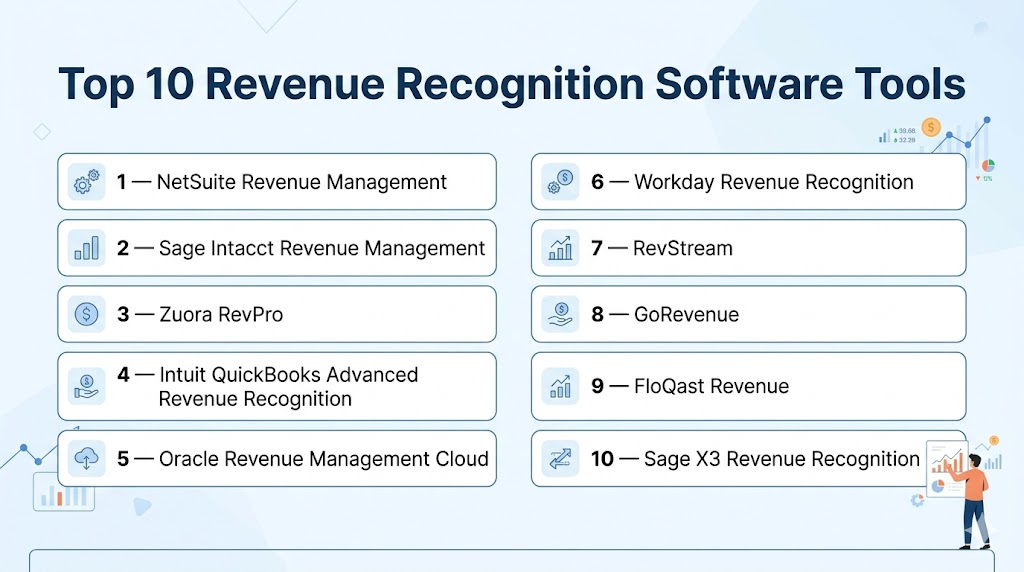
Top 10 Revenue Recognition Software Tools
#1 — NetSuite Revenue Management
Short description : NetSuite Revenue Management automates revenue recognition for enterprises, particularly for SaaS, subscription, and multi-element contracts. It helps finance teams ensure compliance and improve financial accuracy.
Key Features
- Automated ASC 606 and IFRS 15 compliance
- Multi-element arrangement management
- Deferred revenue tracking and amortization
- Integration with NetSuite ERP
- Real-time reporting and dashboards
- Audit trails and compliance controls
- Multi-currency support
Pros
- Seamless ERP integration
- Supports complex enterprise revenue scenarios
- Strong reporting and analytics
Cons
- Premium pricing
- Implementation complexity for SMBs
- May require training for advanced features
Platforms / Deployment
- Web
- Cloud
Security & Compliance
- SOC 2, GDPR, MFA, SSO/SAML
- Audit logs and role-based access
Integrations & Ecosystem
Integrates deeply with NetSuite ERP, CRM, and accounting modules.
- NetSuite ERP modules
- Payment gateways
- Business intelligence tools
- API for custom integrations
Support & Community
- Documentation and knowledge base
- Dedicated NetSuite support tiers
- User community and forums
#2 — Sage Intacct Revenue Management
Short description : Sage Intacct automates revenue recognition, deferred revenue tracking, and compliance reporting, tailored for mid-market to enterprise organizations.
Key Features
- ASC 606 / IFRS 15 automation
- Multi-element and milestone revenue tracking
- Real-time dashboards and reporting
- ERP and accounting system integration
- Audit and compliance features
- Multi-currency and tax support
Pros
- Strong mid-market ERP integration
- Detailed reporting and analytics
- Cloud-based with frequent updates
Cons
- Higher learning curve for new users
- Less suitable for very small businesses
- Customization may require technical expertise
Platforms / Deployment
- Web
- Cloud
Security & Compliance
- SOC 2, GDPR, MFA
- Role-based access and audit trails
Integrations & Ecosystem
- Payment gateways and CRM integration
- Accounting and ERP systems
- API access for automation and custom workflows
Support & Community
- Knowledge base and training
- Customer support tiers
- Active user community
#3 — Zuora RevPro
Short description : Zuora RevPro automates complex revenue recognition for enterprise subscription businesses, offering compliance and analytics for recurring revenue.
Key Features
- ASC 606 / IFRS 15 compliance
- Automated deferred revenue and milestone recognition
- Subscription revenue handling
- ERP and financial system integrations
- Analytics and reporting dashboards
- Audit and compliance tracking
Pros
- Enterprise-level subscription revenue management
- Advanced automation for complex contracts
- Strong compliance support
Cons
- Steep learning curve
- High total cost of ownership
- Implementation may be time-intensive
Platforms / Deployment
- Web
- Cloud
Security & Compliance
- SOC 2, PCI DSS, GDPR
- MFA, SSO/SAML, audit trails
Integrations & Ecosystem
- ERP: SAP, Oracle, NetSuite
- Payment gateways
- API-first integrations for developers
Support & Community
- Enterprise support tiers
- Training programs
- User forums and community resources
#4 — Intuit QuickBooks Advanced Revenue Recognition
Short description : QuickBooks Advanced Revenue Recognition simplifies revenue tracking for SMBs, handling subscription and multi-element revenue scenarios with automation.
Key Features
- ASC 606 / IFRS 15 compliance automation
- Deferred revenue tracking
- Integration with QuickBooks accounting
- Reporting dashboards and analytics
- Multi-currency and taxation support
Pros
- Easy setup for SMBs
- Integrates with QuickBooks ecosystem
- Affordable pricing
Cons
- Limited advanced features for complex enterprises
- Smaller integration ecosystem
- Basic reporting compared to enterprise tools
Platforms / Deployment
- Web
- Cloud
Security & Compliance
- SOC 2, PCI DSS, MFA
- Role-based access and audit logs
Integrations & Ecosystem
- QuickBooks accounting modules
- Payment gateways
- API for custom reporting
Support & Community
- Knowledge base and tutorials
- Email and phone support
- Small user community
#5 — Oracle Revenue Management Cloud
Short description : Oracle Revenue Management Cloud provides enterprise-grade revenue recognition, compliance automation, and advanced analytics for complex contract arrangements.
Key Features
- ASC 606 / IFRS 15 compliance
- Multi-element arrangement and milestone management
- Deferred revenue automation
- ERP and financial system integration
- Analytics and real-time dashboards
- Audit trail and compliance controls
Pros
- Enterprise scalability
- Advanced compliance features
- Strong analytics capabilities
Cons
- High implementation effort
- Premium pricing
- Complexity for SMB use
Platforms / Deployment
- Web
- Cloud
Security & Compliance
- SOC 2, ISO 27001, GDPR, MFA, SSO/SAML
- Audit logging and RBAC
Integrations & Ecosystem
- Oracle ERP suite
- Payment and billing systems
- API integrations for custom workflows
Support & Community
- Dedicated enterprise support
- Extensive documentation
- Community forums
#6 — Workday Revenue Recognition
Short description : Workday automates revenue recognition across recurring and complex contracts, integrating with Workday Financial Management for comprehensive financial control.
Key Features
- ASC 606 / IFRS 15 automation
- Deferred revenue and milestone recognition
- Analytics and dashboards
- ERP integration with Workday Financials
- Multi-currency support
- Audit and compliance features
Pros
- Seamless integration with Workday Financials
- Real-time revenue insights
- Cloud-based with high reliability
Cons
- Implementation complexity for mid-size companies
- Costly for smaller organizations
- Learning curve for advanced features
Platforms / Deployment
- Web
- Cloud
Security & Compliance
- SOC 2, GDPR, MFA, SSO/SAML
- Audit trails and role-based permissions
Integrations & Ecosystem
- Workday Financials and HCM modules
- Payment and ERP systems
- API and reporting integrations
Support & Community
- Enterprise support tiers
- Training and documentation
- Active Workday community
#7 — RevStream
Short description : RevStream automates revenue recognition for subscription and contract-based businesses, providing audit-ready compliance and real-time analytics.
Key Features
- ASC 606 / IFRS 15 compliance automation
- Subscription and milestone revenue tracking
- Deferred revenue management
- Integration with ERPs and accounting systems
- Real-time reporting dashboards
- Audit and internal control features
Pros
- SMB and mid-market friendly
- Strong automation capabilities
- Easy reporting and audit preparation
Cons
- Limited advanced enterprise features
- Smaller integration ecosystem
- Some customization requires technical expertise
Platforms / Deployment
- Web
- Cloud
Security & Compliance
- SOC 2, GDPR, MFA
- Audit trails and role-based permissions
Integrations & Ecosystem
- ERP: NetSuite, Sage
- Accounting tools: QuickBooks, Xero
- API and webhooks for developers
Support & Community
#8 — GoRevenue
Short description : GoRevenue streamlines revenue recognition for subscription-based and project-based businesses, automating deferred revenue calculations and compliance reporting.
Key Features
- ASC 606 / IFRS 15 compliance
- Subscription and milestone tracking
- Deferred revenue automation
- Real-time dashboards
- ERP and accounting integrations
- Audit trail support
Pros
- Simplifies complex revenue scenarios
- Cloud-based and scalable
- Strong reporting capabilities
Cons
- Limited brand recognition
- Smaller ecosystem of integrations
- Some advanced features require configuration
Platforms / Deployment
- Web
- Cloud
Security & Compliance
- SOC 2, GDPR, MFA
- Audit trails and role-based access
Integrations & Ecosystem
- ERP: NetSuite, QuickBooks
- Payment systems
- API for custom integrations
Support & Community
#9 — FloQast Revenue
Short description : FloQast Revenue helps finance teams automate revenue recognition, streamline compliance, and integrate with existing accounting and ERP systems.
Key Features
- ASC 606 / IFRS 15 automation
- Deferred revenue and milestone tracking
- Subscription revenue handling
- ERP and accounting integration
- Analytics and reporting dashboards
- Audit trail support
Pros
- User-friendly for finance teams
- Integrates with existing ERP systems
- Automated compliance reporting
Cons
- Limited enterprise-scale features
- Smaller user community
- Customization options may be limited
Platforms / Deployment
- Web
- Cloud
Security & Compliance
- SOC 2, GDPR, MFA
- Audit logging and role-based permissions
Integrations & Ecosystem
- ERP: NetSuite, QuickBooks
- Accounting platforms
- API for custom reporting
Support & Community
- Knowledge base and tutorials
- Email support
- Community forum
#10 — Sage X3 Revenue Recognition
Short description : Sage X3 Revenue Recognition provides enterprise-grade revenue automation for complex contracts, ensuring compliance and real-time visibility.
Key Features
- ASC 606 / IFRS 15 compliance
- Multi-element and milestone revenue tracking
- Deferred revenue automation
- Integration with Sage ERP
- Analytics and dashboards
- Audit trail and control features
Pros
- Enterprise-scale capability
- Strong compliance automation
- Detailed reporting and analytics
Cons
- Implementation complexity
- High cost for SMBs
- Learning curve for advanced features
Platforms / Deployment
- Web
- Cloud
Security & Compliance
- SOC 2, GDPR, MFA, SSO/SAML
- Audit logs and RBAC
Integrations & Ecosystem
- Sage ERP modules
- Accounting systems
- API and custom integration support
Support & Community
- Enterprise support tiers
- Documentation and training
- Community forums
Comparison Table (Top 10)
| Tool Name | Best For | Platform(s) Supported | Deployment | Standout Feature | Public Rating |
|---|---|---|---|---|---|
| NetSuite Revenue Management | Enterprise & SaaS | Web | Cloud | Complex contract and subscription handling | N/A |
| Sage Intacct Revenue Management | Mid-market to enterprise | Web | Cloud | Compliance automation | N/A |
| Zuora RevPro | Enterprise subscription businesses | Web | Cloud | Advanced subscription revenue management | N/A |
| QuickBooks Advanced Revenue | SMBs & accounting workflows | Web | Cloud | Easy SMB revenue recognition | N/A |
| Oracle Revenue Management Cloud | Large enterprises | Web | Cloud | Multi-element contract support | N/A |
| Workday Revenue Recognition | Enterprise finance teams | Web | Cloud | ERP-integrated real-time reporting | N/A |
| RevStream | SMB and mid-market | Web | Cloud | Automated compliance | N/A |
| GoRevenue | SMBs & project-based businesses | Web | Cloud | Simplified deferred revenue management | N/A |
| FloQast Revenue | Finance teams | Web | Cloud | Integration-friendly revenue automation | N/A |
| Sage X3 Revenue Recognition | Enterprise | Web | Cloud | Multi-element revenue automation | N/A |
Evaluation & Scoring of Revenue Recognition Software
| Tool Name | Core (25%) | Ease (15%) | Integrations (15%) | Security (10%) | Performance (10%) | Support (10%) | Value (15%) | Weighted Total (0–10) |
|---|---|---|---|---|---|---|---|---|
| NetSuite Revenue Management | 10 | 7 | 10 | 9 | 9 | 8 | 7 | 8.95 |
| Sage Intacct Revenue Management | 9 | 8 | 8 | 9 | 8 | 7 | 8 | 8.25 |
| Zuora RevPro | 10 | 7 | 9 | 9 | 9 | 8 | 7 | 8.85 |
| QuickBooks Advanced Revenue | 7 | 9 | 7 | 8 | 8 | 7 | 9 | 8.05 |
| Oracle Revenue Management Cloud | 10 | 7 | 9 | 9 | 9 | 8 | 7 | 8.85 |
| Workday Revenue Recognition | 9 | 8 | 9 | 9 | 8 | 8 | 7 | 8.45 |
| RevStream | 8 | 8 | 7 | 8 | 8 | 7 | 8 | 7.95 |
| GoRevenue | 7 | 8 | 6 | 7 | 8 | 7 | 8 | 7.45 |
| FloQast Revenue | 7 | 8 | 6 | 7 | 8 | 7 | 8 | 7.45 |
| Sage X3 Revenue Recognition | 9 | 7 | 8 | 9 | 8 | 8 | 7 | 8.25 |
Interpretation: Weighted totals reflect comparative capabilities, factoring feature depth, ease of use, integrations, security, performance, support, and value. Higher scores indicate better suitability for complex and large-scale revenue recognition scenarios.
Which Revenue Recognition Software Tool Is Right for You?
Solo / Freelancer
- QuickBooks Advanced Revenue is suitable for small teams handling simple subscription or project-based revenue.
SMB
- Sage Intacct, RevStream, and GoRevenue offer automation and compliance suitable for growing businesses.
Mid-Market
- NetSuite Revenue Management and Workday Revenue Recognition balance compliance, analytics, and integrations.
Enterprise
- Zuora RevPro, Oracle Revenue Management Cloud, and Sage X3 are best for complex, multi-element contracts and large-scale subscription operations.
Budget vs Premium
- Budget: QuickBooks Advanced Revenue, RevStream, GoRevenue
- Premium: NetSuite Revenue Management, Zuora RevPro, Oracle Revenue Management Cloud
Feature Depth vs Ease of Use
- Feature-rich: Zuora RevPro, Oracle Revenue Management Cloud, NetSuite
- Ease of use: QuickBooks Advanced Revenue, RevStream
Integrations & Scalability
- Enterprises should prioritize NetSuite, Oracle, and Workday for ERP and accounting integrations.
Security & Compliance Needs
- Look for SOC 2, GDPR compliance, audit trails, and MFA. Oracle, Zuora, and NetSuite excel for regulated industries.
Frequently Asked Questions (FAQs)
1. What types of revenue can these platforms manage?
They handle subscription, milestone-based, usage-based, multi-element, and project revenue, automating deferred revenue and compliance reporting.
2. How long does implementation take?
SMB platforms may implement in days, while enterprise solutions can require weeks due to complex contract structures and ERP integrations.
3. Are these tools compliant with ASC 606 / IFRS 15?
Yes, all top-rated platforms automate revenue recognition aligned with ASC 606 and IFRS 15 standards.
4. Can they integrate with existing ERP or accounting systems?
Yes, platforms like NetSuite, Workday, and Oracle provide deep ERP and accounting integrations. SMB solutions offer simpler API and accounting connections.
5. Are these platforms secure for handling sensitive financial data?
Yes, leading tools provide SOC 2, GDPR compliance, MFA, SSO/SAML, and audit logs.
6. Can small businesses benefit from revenue recognition software?
Yes, platforms like QuickBooks Advanced Revenue and RevStream provide automation without complex enterprise features.
7. Can I switch platforms if needed?
Most platforms allow data export, but migrating revenue records and deferred balances may require planning.
8. Do these platforms support global currencies and taxes?
Yes, multi-currency and localized tax handling are standard in enterprise solutions.
9. How scalable are these tools?
Enterprise solutions scale to complex, multi-market revenue recognition. SMB-focused platforms handle smaller volumes efficiently.
10. Do these tools provide reporting and analytics?
Yes, dashboards, real-time reports, and audit-ready analytics are core features, helping finance teams make informed decisions.
Conclusion
Revenue recognition software streamlines complex financial operations, ensures compliance with accounting standards, and reduces manual errors. Choosing the right tool depends on company size, contract complexity, and integration needs. SMBs may prioritize ease of use and affordability, while enterprises require robust automation, ERP integration, and global compliance. Leading platforms such as NetSuite Revenue Management, Zuora RevPro, and Oracle Revenue Management Cloud deliver enterprise-grade capabilities, whereas QuickBooks Advanced Revenue and RevStream provide accessible solutions for smaller teams. Businesses should shortlist 2–3 tools aligned with their revenue models, conduct pilots, and validate integration, reporting, and compliance features before full deployment.

Find Trusted Cardiac Hospitals
Compare heart hospitals by city and services — all in one place.
Explore Hospitals
Customers may upgrade, cancel, renew, or change their plans, and these changes can affect existing revenue schedules. Teams should test how the software handles these changes and whether corrections are easy to track and audit. This can help avoid manual fixes and errors during the financial close.