Introduction
Financial Planning & Analysis (FP&A) software helps organizations streamline budgeting, forecasting, reporting, and performance analysis. It transforms raw financial and operational data into actionable insights, enabling better decision-making and strategic planning. In today’s fast-paced business environment, leveraging FP&A tools is critical for maintaining financial agility and competitive advantage.
Businesses use FP&A software for a variety of purposes:
- Budgeting and Forecasting: Automate and refine financial projections.
- Performance Analysis: Track KPIs and identify trends or anomalies.
- Scenario Planning: Model multiple financial scenarios to guide strategic choices.
- Data Consolidation: Aggregate data from multiple sources for a unified view.
- Regulatory Reporting: Ensure compliance with financial standards.
- Collaboration: Enable finance teams, executives, and department heads to work together on planning.
Best for: Finance teams, FP&A analysts, CFOs, mid-market to enterprise companies across industries including manufacturing, retail, technology, and services.
Not ideal for: Sole proprietors or very small teams with simple financial needs; spreadsheet-based solutions may suffice in these cases.
Key Trends in Financial Planning & Analysis (FP&A) Software
- Increasing adoption of AI-powered forecasting to enhance prediction accuracy.
- Real-time financial analytics with live dashboards and KPIs.
- Automated data integration from ERP, CRM, and cloud apps.
- Scenario modeling for strategic decision-making under uncertainty.
- Cloud-first deployment models with SaaS subscriptions for flexibility.
- Enhanced security and compliance features including SSO, MFA, encryption.
- Collaborative budgeting workflows supporting remote finance teams.
- Adoption of self-service analytics for non-finance stakeholders.
- Tiered pricing models targeting SMBs to large enterprises.
- Focus on interoperability with BI, reporting, and visualization platforms.
How We Selected These Tools (Methodology)
- Evaluated market adoption and mindshare across global finance teams.
- Assessed feature completeness covering budgeting, forecasting, reporting, and analytics.
- Analyzed reliability and performance signals, including handling large datasets.
- Reviewed security posture: SSO, encryption, compliance certifications.
- Examined integrations and ecosystem with ERP, CRM, BI tools, and APIs.
- Considered customer fit across SMB, mid-market, and enterprise segments.
- Factored in ease of use and learning curve for finance teams.
- Evaluated support and community strength, including documentation and onboarding.
- Compared pricing and value relative to feature set and deployment model.
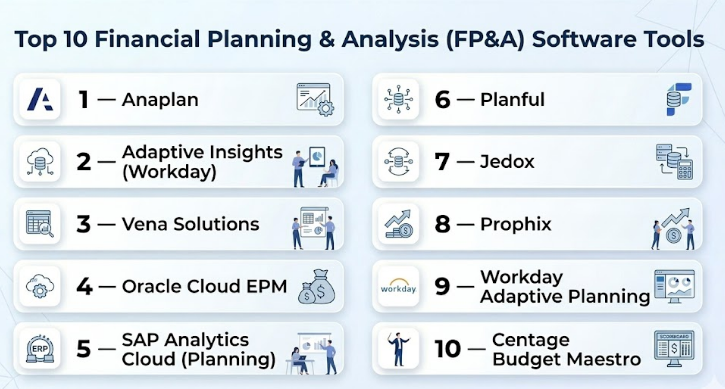
Top 10 Financial Planning & Analysis (FP&A) Software Tools
#1 — Anaplan
Short description: Anaplan offers a cloud-based platform for connected planning, enabling finance teams to model, forecast, and analyze data collaboratively. Ideal for large enterprises seeking integrated planning across finance, sales, and operations.
Key Features
- Connected planning across finance and operational units
- Advanced scenario modeling and forecasting
- Real-time dashboards and reporting
- AI-driven predictive analytics
- Collaboration and workflow management
- Role-based access and audit logs
Pros
- Scalable for large organizations
- Strong modeling flexibility and scenario planning
Cons
- Can be complex to implement
- Steep learning curve for new users
Platforms / Deployment
- Web, iOS, Android
- Cloud
Security & Compliance
- SSO/SAML, MFA, encryption, RBAC
- SOC 2, ISO 27001, GDPR
Integrations & Ecosystem
Integrates with ERP, CRM, and BI platforms through APIs and connectors.
- SAP, Oracle, Salesforce
- Tableau, Power BI
- Workday
- Excel connector
Support & Community
- Dedicated onboarding support
- Extensive documentation and community forums
- Premium support tiers available
#2 — Adaptive Insights (Workday)
Short description: Adaptive Insights is a cloud FP&A tool tailored for mid-market to enterprise businesses, providing intuitive budgeting, forecasting, and reporting capabilities with strong collaborative features.
Key Features
- Budgeting, forecasting, and modeling
- Real-time dashboards
- Scenario analysis and variance reporting
- Workflow automation for approvals
- Integration with ERP systems
- AI-assisted forecasting
Pros
- User-friendly interface
- Strong collaborative features
Cons
- Limited customization for complex enterprise models
- Performance may degrade with very large datasets
Platforms / Deployment
- Web, iOS
- Cloud
Security & Compliance
- SSO/SAML, MFA
- SOC 2, GDPR
Integrations & Ecosystem
Supports ERP and BI integrations for consolidated financial data.
- NetSuite, SAP, Oracle
- Salesforce, Power BI, Tableau
Support & Community
- Onboarding and training resources
- Responsive support tiers
- Community forums for peer support
#3 — Vena Solutions
Short description: Vena combines FP&A with Excel interface familiarity, offering finance teams planning, budgeting, and reporting capabilities without losing spreadsheet flexibility.
Key Features
- Excel-based planning and reporting
- Financial consolidation
- Scenario and variance analysis
- Workflow automation
- Real-time dashboards
- Data governance
Pros
- Leverages Excel skills
- Quick adoption by finance teams
Cons
- Interface may feel dated compared to modern dashboards
- Cloud dependency may limit offline work
Platforms / Deployment
- Web, Windows
- Cloud
Security & Compliance
- SSO/SAML, encryption
- SOC 2, GDPR
Integrations & Ecosystem
- ERP and BI integrations
- API access for custom connections
- Connectors: NetSuite, Oracle, SAP
Support & Community
- Comprehensive onboarding and training
- Support tiers with SLA options
- Active user community
#4 — Oracle Cloud EPM
Short description: Oracle Cloud EPM provides enterprise-level FP&A capabilities including budgeting, planning, forecasting, and analytics, integrated with broader Oracle Cloud infrastructure.
Key Features
- Enterprise planning and budgeting
- Advanced financial modeling
- Predictive analytics
- Consolidation and close management
- Dashboards and reporting
- AI-powered forecasting
Pros
- Highly scalable for global enterprises
- Deep integration with Oracle Cloud ecosystem
Cons
- Complex deployment
- Higher cost than mid-market solutions
Platforms / Deployment
- Web
- Cloud
Security & Compliance
- SSO/SAML, encryption, audit trails
- SOC 1/2, ISO 27001, GDPR
Integrations & Ecosystem
- Native Oracle ERP and BI integration
- APIs for custom connections
- Third-party connectors for Salesforce, Tableau
Support & Community
- Global enterprise support
- Documentation, training, and Oracle community forums
#5 — SAP Analytics Cloud (Planning)
Short description: SAP Analytics Cloud Planning combines analytics and FP&A in one cloud platform, enabling organizations to plan, simulate, and analyze financial data effectively.
Key Features
- Integrated analytics and planning
- Predictive and simulation modeling
- Collaborative budgeting and forecasting
- KPI dashboards and reporting
- Data consolidation from multiple sources
Pros
- Strong analytics integration
- Centralized planning for complex enterprises
Cons
- Learning curve for non-SAP users
- Customization requires expert support
Platforms / Deployment
- Web, iOS, Android
- Cloud
Security & Compliance
- SSO/SAML, MFA, encryption
- SOC 2, ISO 27001
Integrations & Ecosystem
- SAP ERP, SuccessFactors, Ariba
- BI platforms: SAP Analytics, Power BI
- API and SDK for custom extensions
Support & Community
- Extensive SAP support and training
- Active SAP user community
- Documentation and webinars
#6 — Planful
Short description: Planful offers continuous planning, budgeting, and forecasting with a focus on automating FP&A workflows and reducing reliance on spreadsheets.
Key Features
- Continuous planning and forecasting
- Financial consolidation
- Scenario modeling
- Automated reporting
- Workflow automation and approvals
- Real-time dashboards
Pros
- Streamlined workflows
- Reduces spreadsheet dependency
Cons
- Some advanced analytics require configuration
- Limited on-prem options
Platforms / Deployment
- Web
- Cloud
Security & Compliance
- SSO/SAML, encryption
- SOC 2, GDPR
Integrations & Ecosystem
- ERP: NetSuite, Oracle, SAP
- BI tools: Tableau, Power BI
- API access for custom integration
Support & Community
- Onboarding and training programs
- Support tiers with SLAs
- Active user forum
#7 — Jedox
Short description: Jedox provides enterprise FP&A solutions emphasizing Excel-like interface and integration with ERP systems, suited for planning, budgeting, and forecasting.
Key Features
- Planning and budgeting
- Scenario modeling and simulation
- Excel interface integration
- Workflow automation
- Dashboarding and reporting
- Predictive analytics
Pros
- Familiar Excel experience
- Flexible modeling options
Cons
- Modern UI feels less intuitive
- Setup may require IT support
Platforms / Deployment
- Web, Windows, macOS
- Cloud / On-prem / Hybrid
Security & Compliance
- SSO, encryption, RBAC
- SOC 2, GDPR
Integrations & Ecosystem
- ERP: SAP, Oracle, Microsoft Dynamics
- BI tools: Tableau, Power BI
- API and connector support
Support & Community
- Knowledge base and documentation
- Onboarding and consulting support
- Active online community
#8 — Prophix
Short description: Prophix delivers corporate performance management including FP&A capabilities, designed to automate budgeting, planning, and reporting processes.
Key Features
- Budgeting and forecasting automation
- Scenario modeling
- Reporting and dashboards
- Workflow approvals
- Consolidation and data validation
- AI-driven insights
Pros
- Intuitive interface
- Strong automation features
Cons
- May require training for advanced functions
- Limited third-party connectors
Platforms / Deployment
- Web, Windows
- Cloud / Hybrid
Security & Compliance
- SSO, MFA, encryption
- SOC 2, GDPR
Integrations & Ecosystem
- ERP integrations: NetSuite, Oracle, SAP
- API and data connectors for BI tools
- Excel integration
Support & Community
- Support tiers with SLA options
- Knowledge base and community forums
- Training programs
#9 — Workday Adaptive Planning
Short description: Adaptive Planning by Workday focuses on collaborative FP&A with strong forecasting, modeling, and reporting features for growing mid-market and enterprise companies.
Key Features
- Budgeting and forecasting
- Scenario planning and modeling
- Dashboards and KPI tracking
- Automated workflows
- Collaborative planning
- Predictive analytics
Pros
- Easy adoption and collaboration
- Strong cloud performance
Cons
- Customization may be limited
- Cost can be high for smaller teams
Platforms / Deployment
- Web, iOS, Android
- Cloud
Security & Compliance
- SSO/SAML, MFA
- SOC 2, GDPR
Integrations & Ecosystem
- ERP integrations: Workday, Oracle, SAP
- BI tools: Tableau, Power BI
- API for custom connections
Support & Community
- Documentation, webinars, community
- Premium support tiers
- Onboarding and training
#10 — Centage Budget Maestro
Short description: Budget Maestro provides mid-market FP&A software with budgeting, forecasting, and reporting capabilities, focusing on automation and simplified financial modeling.
Key Features
- Budgeting and forecasting
- Scenario modeling
- Financial reporting and dashboards
- Automated data consolidation
- Workflow approvals
- KPI tracking
Pros
- Simplifies FP&A for mid-market companies
- Quick implementation
Cons
- Less suitable for global enterprise complexity
- Limited advanced analytics
Platforms / Deployment
- Windows, Web
- Cloud / On-prem
Security & Compliance
- SSO, encryption
- SOC 2, GDPR
Integrations & Ecosystem
- ERP connectors: Sage, QuickBooks, NetSuite
- Excel and BI integrations
- API access
Support & Community
- Onboarding and training support
- Documentation and knowledge base
- Customer support tiers
Comparison Table (Top 10)
| Tool Name | Best For | Platform(s) Supported | Deployment | Standout Feature | Public Rating |
|---|---|---|---|---|---|
| Anaplan | Large enterprises | Web, iOS, Android | Cloud | Connected planning | N/A |
| Adaptive Insights | Mid-market to enterprise | Web, iOS | Cloud | Collaborative budgeting | N/A |
| Vena Solutions | Finance teams familiar with Excel | Web, Windows | Cloud | Excel-based planning | N/A |
| Oracle Cloud EPM | Global enterprises | Web | Cloud | Enterprise modeling | N/A |
| SAP Analytics Cloud | Complex enterprises | Web, iOS, Android | Cloud | Analytics + FP&A | N/A |
| Planful | Mid-market to enterprise | Web | Cloud | Continuous planning | N/A |
| Jedox | Enterprise & mid-market | Web, Windows, macOS | Cloud / On-prem / Hybrid | Excel integration | N/A |
| Prophix | Mid-market | Web, Windows | Cloud / Hybrid | Automation | N/A |
| Workday Adaptive Planning | Mid-market / enterprise | Web, iOS, Android | Cloud | Collaborative forecasting | N/A |
| Centage Budget Maestro | Mid-market | Windows, Web | Cloud / On-prem | Simplified budgeting | N/A |
Evaluation & Scoring of Financial Planning & Analysis (FP&A) Software
| Tool Name | Core (25%) | Ease (15%) | Integrations (15%) | Security (10%) | Performance (10%) | Support (10%) | Value (15%) | Weighted Total (0–10) |
|---|---|---|---|---|---|---|---|---|
| Anaplan | 10 | 8 | 9 | 9 | 9 | 8 | 7 | 9.0 |
| Adaptive Insights | 9 | 9 | 8 | 8 | 8 | 9 | 8 | 8.6 |
| Vena Solutions | 8 | 9 | 7 | 8 | 8 | 8 | 8 | 8.1 |
| Oracle Cloud EPM | 10 | 7 | 9 | 9 | 9 | 8 | 6 | 8.7 |
| SAP Analytics Cloud | 9 | 7 | 9 | 9 | 8 | 8 | 7 | 8.3 |
| Planful | 8 | 8 | 8 | 8 | 8 | 8 | 8 | 8.0 |
| Jedox | 8 | 7 | 8 | 8 | 7 | 7 | 7 | 7.5 |
| Prophix | 8 | 8 | 7 | 8 | 8 | 7 | 8 | 7.9 |
| Workday Adaptive Planning | 9 | 8 | 8 | 8 | 8 | 8 | 7 | 8.2 |
| Centage Budget Maestro | 7 | 8 | 7 | 7 | 7 | 7 | 8 | 7.4 |
Interpretation: Scores are comparative and help identify which tool aligns best with business needs. Higher weighted totals indicate stronger overall capabilities across core features, ease, integrations, security, performance, support, and value.
Which Financial Planning & Analysis (FP&A) Software Tool Is Right for You?
Solo / Freelancer
Simpler tools with spreadsheet integration or lightweight FP&A features, such as Vena or Centage, may suffice.
SMB
Mid-market solutions like Planful, Adaptive Insights, or Prophix provide robust planning capabilities without excessive complexity.
Mid-Market
Workday Adaptive Planning and SAP Analytics Cloud offer scalability, collaborative workflows, and predictive analytics for growing organizations.
Enterprise
Anaplan, Oracle Cloud EPM, and SAP Analytics Cloud excel for global enterprises needing connected planning and advanced scenario modeling.
Budget vs Premium
Smaller budgets benefit from Centage or Vena; premium solutions with enterprise capabilities include Anaplan and Oracle Cloud EPM.
Feature Depth vs Ease of Use
Tools like Anaplan and Oracle EPM offer deep functionality but may require training; Planful and Adaptive Insights balance ease of use with functionality.
Integrations & Scalability
Enterprises should prioritize platforms with broad ERP, CRM, and BI integrations such as Anaplan, SAP Analytics Cloud, and Oracle Cloud EPM.
Security & Compliance Needs
Organizations handling sensitive financial data or operating in regulated industries should select tools with SOC 2, ISO 27001, GDPR compliance, and strong access controls.
Frequently Asked Questions (FAQs)
1. What pricing models do FP&A tools use?
Most FP&A software offers subscription-based SaaS pricing, often per user or per module. Enterprise deployments may include custom quotes based on scale.
2. How long does implementation take?
Implementation can range from a few weeks for mid-market solutions to several months for enterprise-scale platforms with complex data integration.
3. Can FP&A tools replace Excel entirely?
Many FP&A tools reduce spreadsheet reliance but Excel often remains for ad-hoc analysis. Platforms like Vena integrate with Excel to ease transition.
4. What security measures are standard?
Modern FP&A software includes SSO/SAML, MFA, encryption, audit logs, and role-based access. Compliance with SOC 2, ISO 27001, and GDPR is common.
5. How scalable are these solutions?
Enterprise-grade tools like Anaplan and Oracle EPM can scale across global operations, handling high transaction volumes and multiple business units.
6. Are AI and predictive analytics included?
Many platforms now incorporate AI-powered forecasting and predictive analytics to enhance scenario modeling and planning accuracy.
7. How do integrations work?
FP&A tools typically provide APIs, pre-built connectors, and native integrations to ERP, CRM, and BI systems for automated data flow.
8. What are common implementation challenges?
Challenges include data migration, user adoption, system integration, and configuring complex financial models. Vendor support mitigates these risks.
9. Can I switch FP&A tools easily?
Switching requires careful data migration, reconfiguring workflows, and training users. Planning ahead and evaluating export/import capabilities is key.
10. Are there alternatives to FP&A software?
For small businesses or simple budgets, Excel, Google Sheets, or accounting software with basic reporting may suffice.
Conclusion
FP&A software has become indispensable for modern finance teams seeking to optimize budgeting, forecasting, and reporting. With evolving AI capabilities, real-time dashboards, and automated workflows, organizations can make faster, data-driven decisions. Selection depends on company size, budget, required features, integrations, and compliance needs. Mid-market companies often benefit from adaptive, user-friendly platforms, while large enterprises gain value from scalable, connected solutions with predictive analytics. Evaluating your organization’s priorities, testing tools via pilot projects, and ensuring integration and security alignment are crucial first steps toward improving financial planning processes. Begin by shortlisting a few platforms, validating their capabilities against your workflow, and running small-scale pilots to identify the best fit for your team.

Find Trusted Cardiac Hospitals
Compare heart hospitals by city and services — all in one place.
Explore Hospitals
FP&A tools can connect many systems, but incorrect or missing data can still lead to wrong forecasts. Teams should have regular checks for missing values, duplicate data, and unexpected changes before reports are used for decisions. This can make forecasts more reliable and reduce last-minute corrections.