Introduction
Orthopedic and spine disorders have become increasingly prevalent in today’s active yet sedentary world. From chronic joint pain caused by wear and tear to complex spinal issues affecting mobility, millions of individuals seek specialized surgical intervention annually to regain their quality of life. Navigating the healthcare landscape to find the right facility can be daunting, but choosing a specialized surgery center is often the most critical step in ensuring a successful outcome.In this guide, we will explore the essential elements of high-quality orthopedic care. Whether you are considering joint replacement or exploring options for spine surgery, it is vital to be well-informed. For resources and tools to help you research facilities and healthcare information, you can visit MyHospitalNow.
What Is Orthopedic & Spine Surgery?
Orthopedic surgery is a branch of medicine focused on correcting musculoskeletal conditions—the system that includes bones, joints, ligaments, tendons, and muscles. Spine surgery, while a distinct specialty, often overlaps with orthopedics and focuses on treating disorders of the vertebrae, spinal discs, and the nerves running through the spinal column.
Common Conditions
- Orthopedic: Chronic joint pain, ligament tears (like ACL injuries), bone fractures, and arthritis.
- Spine: Herniated discs, spinal stenosis (narrowing of the spine), scoliosis, and degenerative disc disease.
Surgery is typically recommended when conservative treatments—such as physical therapy, medication, or lifestyle modifications—fail to provide adequate relief or when a condition significantly impairs mobility and daily function.
Why Specialized Orthopedic & Spine Centers Matter
Choosing a hospital that specializes in orthopedics rather than a general facility can profoundly influence your surgical journey. These centers are built on a framework of expertise and focus.
- Experienced Surgeons: Specialists at these centers perform orthopedic and spinal procedures daily, refining their technique and staying updated on the latest surgical innovations.
- Multidisciplinary Care: Your care team often includes orthopedic surgeons, neurosurgeons, pain management specialists, and specialized nurses working in tandem.
- Personalized Treatment Plans: Because they focus on one area of medicine, these centers excel at creating plans tailored to your specific anatomy, lifestyle, and recovery goals.
- Integrated Rehabilitation: Recovery starts the moment you leave the operating room. Specialized centers typically feature dedicated physical therapy units to ensure continuity of care.
Common Conditions Treated
Understanding the condition affecting you is the first step toward effective treatment.
Common Orthopedic Conditions
| Condition | Common Symptoms | Possible Treatment |
| Knee Osteoarthritis | Joint pain | Knee Replacement |
| Hip Arthritis | Hip stiffness | Hip Replacement |
| Herniated Disc | Back pain | Spine Surgery |
| Spinal Stenosis | Leg pain | Decompression Surgery |
| ACL Tear | Knee instability | ACL Reconstruction |
Other frequently treated conditions include rotator cuff injuries, complex fractures, and sports-related injuries that require precise surgical repair.
Services Offered by Orthopedic & Spine Centers
Top-tier centers provide a continuum of care that goes beyond the operating table:
- Joint Replacement: Replacing damaged joints with artificial implants to restore movement.
- Spine Surgery: Procedures ranging from spinal fusion to complex decompression to relieve nerve pressure.
- Arthroscopy: Minimally invasive procedures using cameras to repair soft tissue inside joints.
- Sports Medicine: Focused on getting athletes back to peak performance through surgical and non-surgical means.
- Pediatric Orthopedics: Specialized care for musculoskeletal conditions in children.
- Physical Therapy & Rehab: The backbone of long-term success, helping patients regain strength, flexibility, and function post-surgery.
Advanced Technologies Used
Modern surgery is defined by precision. Specialized centers invest in cutting-edge technology to improve accuracy and minimize trauma to the body.
Advanced Technology Comparison Table
| Technology | Purpose | Patient Benefit |
| Robotic Surgery | Surgical precision | Faster recovery |
| Navigation Systems | Implant positioning | Better accuracy |
| MRI Imaging | Detailed diagnosis | Improved planning |
| Minimally Invasive | Smaller incisions | Less pain |
Robotic-assisted surgery and 3D imaging allow surgeons to plan procedures with extreme detail, ensuring that implants are placed perfectly and healthy tissue is preserved.
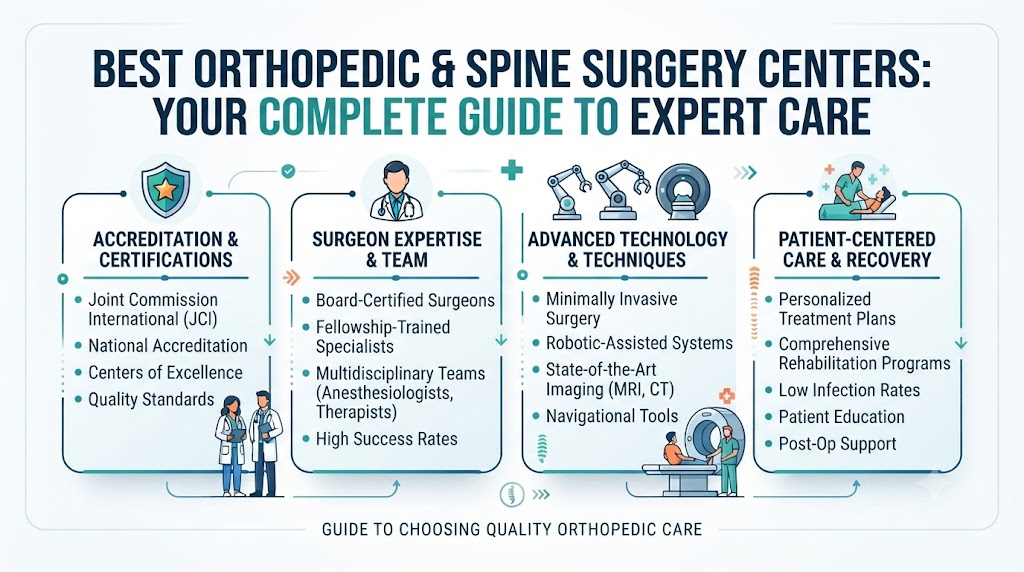
How to Choose the Right Orthopedic & Spine Surgery Center
When evaluating a facility, look beyond marketing. Focus on quality, safety, and transparency.
- Experienced Surgeons: Look for surgeons with fellowship training in the specific procedure you require.
- Hospital Accreditation: Ensure the facility meets national or regional quality and safety standards.
- Modern Facilities: Check for updated surgical suites and dedicated recovery wings.
- Infection Control: Specialized centers often have lower infection rates due to their high-volume, sterile focus.
- Rehabilitation Programs: Does the hospital have on-site physical therapy? Continuity is key.
- Insurance Acceptance: Verify that your insurance provider is in-network to avoid unexpected financial burdens.
Hospital Selection Checklist
| Factor | Importance |
| Experienced Surgeons | High (Better outcomes) |
| Accreditation | High (Quality standards) |
| Advanced Equipment | High (Accurate treatment) |
| Rehabilitation Services | High (Faster recovery) |
| Emergency Services | High (Immediate care) |
Preparing for Orthopedic Surgery
Preparation is as important as the surgery itself.
- Medical Evaluation: Undergo a full physical to ensure you are fit for anesthesia.
- Imaging Tests: Provide your surgeon with the most recent MRIs or CT scans.
- Medication Review: Discuss current medications with your doctor, as some may need to be paused.
- Lifestyle Prep: Stop smoking and maintain a balanced diet, as both significantly influence bone healing.
- Questions to Ask: Always ask your surgeon about the number of times they have performed the procedure and what their specific recovery success rates look like.
Recovery & Rehabilitation
Recovery is a journey, not a sprint.
- Immediate Post-Op: Your hospital stay will focus on pain management and early movement.
- Physical Therapy: This is non-negotiable. Sticking to your prescribed exercises is the most important factor in reclaiming your range of motion.
- Home Care: Prepare your home by removing trip hazards and organizing items you use frequently at waist level.
- Follow-up Visits: Regular check-ins ensure your implant or surgical site is healing correctly.
Benefits of Specialized Orthopedic Centers
The primary benefit is focus. Because these centers do not divide their resources across every branch of medicine, they are able to cultivate an environment optimized for orthopedic success. This leads to reduced complication risks, shorter hospital stays, and more individualized attention from specialized nursing staff.
Common Mistakes Patients Make
- Ignoring Symptoms: Early intervention can often prevent the need for major surgery.
- Delaying Surgery: Living in chronic pain for too long can lead to muscle atrophy and secondary issues.
- Choosing by Price Only: Surgery is a long-term investment in your mobility; quality of care should take precedence over cost.
- Skipping Physiotherapy: Surgery repairs the anatomy; physical therapy rebuilds the function.
- Missing Appointments: Follow-ups are essential to catch potential issues early.
Practical Solution: Always keep a dedicated folder or digital log of your appointments, medications, and physical therapy exercises.
Tips for Maintaining Healthy Bones & Spine
Prevention is the best medicine. Maintain your musculoskeletal health with these habits:
Healthy Bone Care Table
| Healthy Habit | Benefit |
| Regular Exercise | Stronger muscles & joints |
| Calcium-rich foods | Healthy, dense bones |
| Vitamin D | Better bone strength |
| Weight management | Less pressure on joints |
| Good posture | Healthy spine alignment |
Real-Life Patient Scenarios
- Early Diagnosis: A patient experiencing persistent knee pain sought a specialist immediately. Through imaging, they identified early-stage cartilage wear. With targeted physical therapy and weight management, they avoided surgery for years.
- Successful Rehab: A patient underwent hip replacement at a specialized center. Because the center utilized robotic-assisted surgery and on-site physical therapy, the patient was walking independently within days and returned to regular activities months ahead of the predicted timeline.
FAQs
- What conditions require orthopedic surgery?
Severe fractures, chronic joint arthritis, ligament tears, and persistent spinal nerve compression. - When should someone see a spine specialist?
If you have radiating leg or arm pain, numbness, or back pain that does not improve after six weeks of conservative care. - Is minimally invasive surgery better?
It often results in smaller incisions, less pain, and faster recovery times, but it is not suitable for every case. - How do I choose the right hospital?
Focus on surgeon experience, hospital accreditation, and the availability of on-site rehabilitation. - How long is recovery?
This varies greatly; minor procedures may take weeks, while major joint replacements can take several months. - What rehabilitation is needed?
Nearly all orthopedic surgeries require physical therapy to regain strength and flexibility. - Are robotic surgeries safer?
They offer higher precision in implant placement, which can lead to better long-term durability of the surgery. - Does insurance cover orthopedic surgery?
Most plans cover medically necessary surgeries, but always verify coverage with your provider first. - Can back pain always be treated without surgery?
Many cases are resolved with physical therapy, exercise, and pain management. Surgery is generally a secondary option. - How can I maintain healthy joints?
Stay active, maintain a healthy weight, and eat a nutrient-dense diet rich in calcium and Vitamin D. - Do I need a referral?
Depending on your insurance plan, you may need a primary care physician referral to see an orthopedic specialist. - What should I bring to my appointment?
Your medical history, current imaging (MRIs/X-rays), and a list of your symptoms and questions. - Is age a barrier to surgery?
While health status matters more than age, many older adults successfully undergo life-changing orthopedic surgeries. - How soon can I return to work?
This depends on the procedure and the physical demands of your job; your surgeon will provide a specific timeline. - Will I have a scar?
Most surgical procedures leave a scar, but minimally invasive techniques significantly reduce their size.
Final Thoughts
The decision to undergo orthopedic or spine surgery is a significant step toward reclaiming your health and mobility. By choosing a specialized center that prioritizes expert care, advanced technology, and comprehensive rehabilitation, you are setting the foundation for a successful recovery. Remember that your engagement in the process—from your pre-surgical preparation to your dedication during physical therapy—is the key to achieving the best possible outcome.To explore hospitals and discover more healthcare information, we encourage you to visit MyHospitalNow. Taking the time to research your options today will help you walk, move, and live better tomorrow.

Find Trusted Cardiac Hospitals
Compare heart hospitals by city and services — all in one place.
Explore Hospitals