Introduction
Neurological emergencies and chronic brain disorders represent some of the most time-sensitive, complex medical challenges in healthcare. A stroke occurs when blood flow to a portion of the brain is disrupted or when a blood vessel within the brain ruptures. Because brain cells depend on a continuous supply of oxygen and nutrients carried by blood, even brief interruptions can lead to rapid tissue injury. Beyond stroke, a broad spectrum of neurological conditions—ranging from severe epilepsy and movement disorders to brain tumors and neuromuscular diseases—requires specialized evaluation and management.In this guide, you will learn how to identify high-quality neurological care centers, understand critical emergency stroke protocols, explore advanced diagnostic and therapeutic technologies, and navigate the stroke rehabilitation journey. You can also explore MYHOSPITALNOW to discover educational resources, research healthcare facilities, and compare options for specialized neurological and hospital care.
Understanding Stroke and Neurological Disorders
A stroke occurs when the vascular supply to the brain is compromised, leading to acute neurological dysfunction. Understanding the specific type of stroke or neurological disorder is fundamental to delivering appropriate emergency care, as therapeutic interventions vary significantly based on the underlying pathology.
Ischemic Stroke
Ischemic stroke is the most common form of stroke, accounting for the majority of clinical cases. It occurs when a blood clot (thrombus) or an embolus originating from elsewhere in the body blocks an artery supplying blood to the brain. Deprived of oxygen, brain cells in the affected area begin to experience cellular damage within minutes. Emergency treatment focuses on restoring blood flow as quickly as possible using specialized clot-dissolving medications or mechanical endovascular procedures.
Hemorrhagic Stroke
Hemorrhagic stroke occurs when a weakened blood vessel in or around the brain ruptures, causing bleeding into the surrounding tissue (intracerebral hemorrhage) or the space between the brain and its covering membranes (subarachnoid hemorrhage). Common underlying causes include chronic high blood pressure, cerebral aneurysms, and arteriovenous malformations (AVMs). Unlike ischemic stroke, treatment for hemorrhagic stroke focuses on controlling bleeding, reducing intracranial pressure, and preventing secondary damage, sometimes requiring emergency neurosurgical intervention.
Transient Ischemic Attack (TIA)
Often referred to as a “mini-stroke,” a Transient Ischemic Attack (TIA) is caused by a temporary blockade of blood flow to the brain. TIA symptoms are similar to those of a full stroke but typically resolve within minutes to hours without causing permanent visible tissue damage on routine imaging. However, a TIA is a critical medical warning sign. Individuals who experience a TIA face a significantly elevated risk of suffering a major ischemic stroke in the subsequent days and weeks. Immediate medical evaluation is vital to identify and treat underlying risk factors.
Common Neurological Disorders
Neurology hospitals manage a wide range of complex brain, spinal cord, and peripheral nervous system conditions, including:
- Epilepsy and Seizure Disorders: Uncontrolled electrical activity in the brain requiring specialized monitoring and medical or surgical management.
- Parkinson’s Disease and Movement Disorders: Progressive conditions affecting motor function, posture, and coordination.
- Multiple Sclerosis (MS) and Autoimmune Neuropathies: Conditions where the immune system attacks nerve coverings, causing varied neurological deficits.
- Brain and Spinal Tumors: Benign or malignant growths requiring multidisciplinary neuro-oncology and surgical care.
- Neuromuscular Disorders: Diseases such as Amyotrophic Lateral Sclerosis (ALS) and Myasthenia Gravis that impact nerve signal transmission to muscles.
Importance of Emergency Medical Care
In any acute neurological event, time is brain tissue. Millions of neurons can be lost every minute treatment is delayed during an active ischemic stroke. Prompt access to emergency medical evaluation allows clinical teams to perform rapid imaging, determine the exact nature of the deficit, and initiate time-sensitive therapies that can alter the long-term course of recovery.
Types of Stroke Care Services
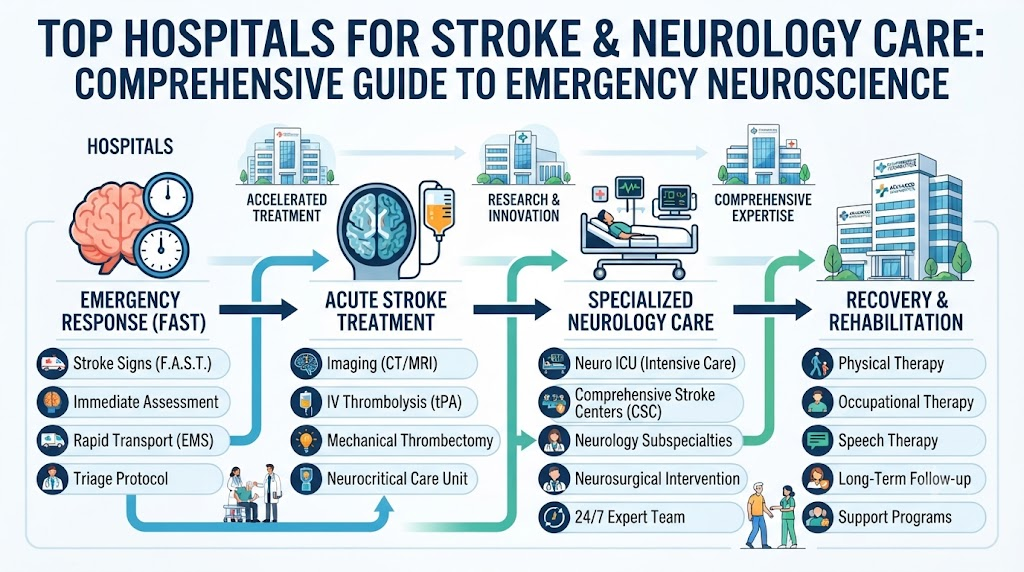
Comprehensive stroke care encompasses a spectrum of medical services designed to guide a patient from the moment of emergency presentation through long-term physical and functional recovery.
       [ Emergency Evaluation ]
                   │
                   ▼
        [ Acute Intervention ]
        (Medications / Thrombectomy)
                   │
                   ▼
         [ Neurocritical Care ]
                   │
                   ▼
      [ Inpatient Rehabilitation ]
                   │
                   ▼
     [ Long-Term Outpatient Care ]
Emergency Stroke Evaluation
Upon arrival at a medical facility, emergency stroke evaluation begins immediately. Clinical teams utilize standardized stroke scales, vital sign stabilization, and urgent laboratory testing to assess the severity of neurological impairment and clear the patient for rapid diagnostic brain imaging.
Acute Stroke Treatment
Acute intervention focuses on halting stroke progression. For ischemic stroke, this may involve intravenous thrombolytic therapies (clot-busting medications) administered within strict eligibility time windows. For hemorrhagic stroke, acute care centers around blood pressure management, reversal of blood-thinning medications, and intracranial pressure monitoring.
Neurocritical Care
Patients with severe stroke, large brain hemorrhages, or high-risk neurological conditions are admitted to specialized Neuro-Intensive Care Units (Neuro ICUs). These units feature advanced hemodynamic and neurological monitoring tools operated by critical care specialists who manage complex complications such as brain swelling and seizure activity.
Endovascular Stroke Therapy
Endovascular stroke therapy represents a major advancement in acute ischemic stroke treatment. Interventional neuroradiologists utilize minimally invasive catheter-based techniques to navigate through blood vessels directly to the site of an arterial blockage in the brain to physically remove large clots.
Neurosurgery
Neurosurgical services are essential for conditions requiring direct surgical intervention. This includes decompressing brain tissue in the event of severe swelling, clipping or coiling intracranial aneurysms, evacuating large hematomas, or placing ventricular drains to manage fluid accumulation around the brain.
Stroke Rehabilitation
Rehabilitation begins as soon as the patient is medically stable. Inpatient and outpatient rehabilitation programs focus on restoring lost physical, speech, and cognitive functions, helping individuals adapt to persistent deficits and regain maximum personal independence.
Long-Term Neurology Follow-Up
Long-term care involves ongoing consultation with neurologists to manage secondary prevention strategies, adjust medications, address residual symptoms like spasticity or post-stroke depression, and monitor overall brain health over time.
Stroke & Neurology Services Comparison
| Service | Primary Purpose | Key Benefit |
| Emergency Stroke Care | Immediate diagnosis and rapid medical triage | Faster intervention to save brain tissue |
| Advanced Brain Imaging | Detailed visualization of cerebral vessels and tissue | Accurate diagnosis for precise treatment selection |
| Neurocritical Care | Specialized intensive monitoring for severe brain injuries | Improved stability and support during acute phases |
| Stroke Rehabilitation | Multi-disciplinary physical, speech, and occupational therapy | Enhanced functional recovery and quality of life |
| Neurosurgery | Direct surgical management of hemorrhages, swellings, and vascular defects | Specialized surgical intervention when medications are insufficient |
| Neurology Follow-Up | Ongoing medical oversight, medication management, and risk factor control | Sustained long-term health and secondary prevention |
Services Offered by Leading Stroke & Neurology Hospitals
Hospitals equipped with advanced neuroscience capabilities offer structured clinical programs designed to manage both acute emergencies and complex chronic conditions.
Emergency Department Stroke Protocols
Leading facilities maintain streamlined “Code Stroke” protocols. When a potential stroke patient arrives—or is pre-announced by emergency medical services (EMS)—a specialized team is immediately activated. This protocol prioritizes the patient for immediate clinical evaluation, emergency laboratory testing, and rapid brain imaging, minimizing delays in care.
Neurologist Consultation
On-call neurologists provide expert diagnostic evaluations in both emergency and inpatient settings. They analyze clinical presentations, review neuroimaging, determine exact neurological syndromes, and construct comprehensive medical management plans.
Neurosurgery Services
A full-capacity neurosurgery department provides 24/7 surgical coverage. Skilled neurosurgeons perform procedures ranging from urgent craniotomies for hemorrhagic control to complex reconstructive surgeries for vascular malformations and brain tumors.
Advanced Brain Imaging (CT, MRI)
Modern neurological centers house high-resolution imaging suites dedicated to rapid diagnostic acquisition. Advanced Non-Contrast Computed Tomography (NCCT), CT Angiography (CTA), CT Perfusion, and high-field Magnetic Resonance Imaging (MRI) allow physicians to visualize brain anatomy, blood vessel blockages, and blood flow patterns in real time.
Intensive Care Units (Neuro ICU)
Dedicated Neuro ICUs provide specialized care distinct from general medical ICUs. Nurses and physicians trained in neurocritical care utilize specialized monitoring systems to observe cerebral perfusion pressure, brain oxygenation, and electrical brain activity continuously.
Physical Rehabilitation
Physical therapists work with patients to rebuild muscle strength, regain balance, improve coordination, and retrain walking patterns affected by neurological damage.
Occupational Therapy
Occupational therapists focus on helping individuals regain daily living skills. This includes retraining fine motor skills required for dressing, eating, bathing, writing, and using household items safely.
Speech and Language Therapy
Stroke and brain injuries frequently impact communication centers and swallowing mechanisms. Speech-language pathologists evaluate and treat difficulty speaking (aphasia), speech muscle impairment (dysarthria), and swallowing dysfunction (dysphagia).
Neuropsychology Support
Neuropsychologists conduct detailed assessments of memory, attention, executive functioning, and emotional balance. They provide tailored therapy and coping strategies for cognitive shifts or psychological challenges following neurological events.
Long-Term Neurological Care
Beyond acute hospitalization, comprehensive medical centers provide outpatient neurology clinics. These clinics manage chronic neurological disorders, coordinate ongoing therapeutic regimens, and focus on secondary risk factor management.
Advanced Technologies Used in Modern Neuroscience
Technology plays a fundamental role in modern neurological diagnosis, acute intervention, and functional recovery.
+-------------------------------------------------------------------+
|                   MODERN NEUROSCIENCE TECHNOLOGY                  |
+-------------------------------------------------------------------+
|  DIAGNOSTICS & IMAGING          |  ACUTE & SURGICAL INTERVENTION  |
|  • Computed Tomography (CT)     |  • Mechanical Thrombectomy      |
|  • Magnetic Resonance Imaging   |  • Continuous ICP Monitoring    |
|  • CT Angiography / Perfusion   |  • Advanced Angiography Suites  |
+-------------------------------------------------------------------+
|  DIGITAL & THERAPEUTIC TOOLS    |  REHABILITATION INNOVATIONS     |
|  • AI-Assisted Radiologic Scans |  • Robotic Mobility Devices     |
|  • Tele-Neurology Networks      |  • Computerized Cognitive Tools |
+-------------------------------------------------------------------+
CT Brain Imaging
Non-contrast CT scans are typically the first imaging tool used during an acute stroke evaluation. CT imaging quickly differentiates between an ischemic stroke and a hemorrhagic stroke, which is essential because clot-busting medications can be life-threatening if administered during an active brain hemorrhage.
Magnetic Resonance Imaging (MRI)
MRI provides detailed, high-resolution soft tissue contrast, allowing clinicians to detect tiny ischemic lesions, subtle brain tissue abnormalities, and structural malformations that may not be visible on standard CT scans.
CT Angiography (CTA) and Perfusion Imaging
CT Angiography uses contrast media to create three-dimensional images of blood vessels in the neck and brain, identifying exact points of vascular occlusion or stenosis. CT Perfusion imaging maps blood flow through brain tissue, helping physicians identify areas of potentially salvageable brain tissue (the ischemic penumbra).
Mechanical Thrombectomy Technology
Specialized catheterisation suites equipped with biplane fluoroscopy enable neurointerventionalists to perform mechanical thrombectomies. Microcatheters and stent retrievers are inserted through femoral or radial arteries to physically grasp and extract blood clots from large cerebral arteries.
Neuro-Monitoring Systems
Advanced Neuro ICUs utilize intracranial pressure (ICP) monitors, continuous electroencephalography (cEEG) for hidden seizure detection, and cerebral oxygenation sensors to keep continuous track of brain health in critically ill patients.
Robotic Rehabilitation Tools
Modern rehabilitation centers incorporate robotic-assisted gait trainers and motorized upper-limb exoskeletons. These devices provide repetitive, precisely controlled motion therapy that supports neuroplasticity—the brain’s ability to reorganize and form new neural connections.
Tele-Neurology Services
Tele-neurology networks connect emergency physicians in smaller or rural facilities with specialized neurologists via high-definition video connections. This technology enables rapid expert evaluation and decision-making for time-critical stroke treatments, regardless of geographic location.
AI-Assisted Stroke Imaging
Artificial intelligence platforms assist neuroradiologists by automatically analyzing brain scans within seconds of acquisition. These tools help highlight vessel blockages and quantify perfusion deficits, speeding up clinical decision-making.
How to Choose the Right Hospital for Stroke & Neurology Care
Selecting an appropriate hospital for neurological care involves understanding a facility’s capabilities, clinical expertise, and resource availability.
Experienced Neurologists and Subspecialists
Look for institutions with board-certified neurologists who possess subspecialty training in vascular neurology, neurocritical care, interventional neurology, or clinical neurophysiology.
Dedicated Stroke Units
Facilities with dedicated stroke units offer structured environments where clinical staff specialize in stroke recovery. Research indicates that patients cared for in dedicated stroke units generally experience better clinical outcomes compared to those managed in general medical wards.
24/7 Emergency and Interventional Services
Because stroke can occur at any time, comprehensive stroke hospitals maintain round-the-clock availability for emergency brain imaging, neurointerventional procedures, and emergency neurosurgery.
Advanced Diagnostic Infrastructure
A well-equipped neurological center should feature access to 24/7 CT, CTA, MRI, and neurovascular ultrasound technologies to support rapid clinical decision-making.
Integrated Multidisciplinary Rehabilitation
Check whether the hospital provides seamless access to integrated rehabilitation services, including inpatient rehabilitation units and organized outpatient therapy programs.
Long-Term Follow-Up and Disease Management
Top-tier facilities offer structured outpatient programs to help manage risk factors, coordinate therapy adjustments, and support long-term recovery and secondary stroke prevention.
Hospital Selection Checklist
| Feature | Why It Matters | Checklist Verification |
| Dedicated Stroke Unit | Provides specialized nursing and clinical monitoring tailored to brain injuries | [ ] Confirmed |
| Experienced Neurologists | Ensures precise diagnosis and tailored treatment strategies | [ ] Confirmed |
| 24/7 Advanced Brain Imaging | Enables rapid differentiation between stroke types and vascular blockages | [ ] Confirmed |
| Neurosurgery & Interventional Team | Ensures immediate capability to manage hemorrhages and perform clot extractions | [ ] Confirmed |
| Multidisciplinary Rehabilitation | Supports physical, speech, and cognitive recovery early in care | [ ] Confirmed |
| 24/7 Emergency Stroke Response | Eliminates delays in time-sensitive medical interventions | [ ] Confirmed |
Stroke Warning Signs Everyone Should Know
Recognizing stroke symptoms quickly is essential to getting timely medical treatment. The FAST acronym is an easy way to remember and identify the most common signs of a stroke.
  F - FACE DROOPING       (One side of the face sags or feels numb)
  A - ARM WEAKNESS        (One arm drifts downward when raised)
  S - SPEECH DIFFICULTY   (Words are slurred or hard to understand)
  T - TIME TO CALL EMS    (Immediate medical emergency—seek help)
The FAST Warning Signs
- F – Face Drooping: Ask the person to smile. Does one side of the face droop, or is it numb?
- A – Arm Weakness: Ask the person to raise both arms. Does one arm drift downward or feel weak?
- S – Speech Difficulty: Ask the person to repeat a simple sentence. Is their speech slurred, strange, or hard to understand?
- T – Time to Call Emergency Services: If a person exhibits any of these signs, even if the symptoms go away, contact emergency medical services immediately.
Additional Critical Symptoms
Beyond the FAST signs, other sudden neurological symptoms require immediate emergency attention:
- Sudden Vision Changes: Sudden loss of vision, double vision, or blurred vision in one or both eyes.
- Severe, Unexplained Headache: A sudden, unusually severe headache often described as the “worst headache of your life,” which can indicate an intracranial hemorrhage.
- Sudden Loss of Balance or Coordination: Sudden dizziness, loss of balance, or difficulty walking.
- Sudden Confusion: Sudden difficulty understanding speech or confusion about time and place.
Crucial Safety Note: If you suspect someone is having a stroke, do not wait to see if symptoms improve, and do not drive yourself to the hospital if possible. Call emergency medical services immediately so pre-hospital evaluation and care can begin during transit.
Stroke Diagnosis and Treatment
Managing stroke involves a continuous medical workflow that transitions from immediate diagnostic triage to acute intervention and stabilization.
[ EMS Call / Arrival ] ➔ [ Rapid Imaging (CT/CTA) ] ➔ [ Medical / Surgical Intervention ] ➔ [ ICU/Unit Monitoring ]
Medical History and Physical Examination
Upon arrival at the hospital, the clinical team performs a rapid targeted medical evaluation. Physicians assess the onset time of symptoms, review current medications (especially blood thinners), measure blood pressure, and perform a standardized neurological examination, such as the National Institutes of Health Stroke Scale (NIHSS).
Diagnostic Imaging
Rapid imaging is performed immediately:
- Non-Contrast CT Scan: Rules out intracerebral hemorrhage.
- CT Angiography (CTA): Identifies large vessel blockages in the arterial system.
- CT Perfusion or MRI: Evaluates the extent of tissue damage and identifies areas of potentially recoverable brain tissue.
Diagnostic Blood Tests
Blood samples are drawn concurrently to measure blood glucose levels, blood clotting parameters (INR/PTT), platelet counts, and markers of general organ function.
Clot-Busting Medication (Ischemic Stroke)
If an ischemic stroke is diagnosed within the established eligibility time window and there are no contraindications (such as recent major surgery or bleeding risks), intravenous thrombolytic medications may be administered. These medications work to dissolve the blood clot blocking cerebral blood flow.
Mechanical Thrombectomy (Ischemic Stroke)
For patients with a large vessel occlusion (LVO) in a major cerebral artery, mechanical thrombectomy may be performed. Guided by real-time X-ray imaging, a neurointerventionalist advances a catheter through the vascular system to remove the clot directly, often restoring blood flow even when clot-busting medications alone are insufficient.
Neurosurgical Management (Hemorrhagic Stroke)
If imaging reveals a hemorrhagic stroke, treatment focuses on stabilizing vital signs, managing high blood pressure, and reversing any anticoagulant medications. If bleeding causes high intracranial pressure or is caused by a structural defect like an aneurysm, neurosurgeons may intervene to relieve pressure or repair the affected vessel.
Inpatient Rehabilitation Planning
Diagnostic and medical management transitions into early rehabilitation planning once vital signs and neurological status stabilize, ensuring a seamless move toward physical and cognitive recovery.
Stroke Rehabilitation
Rehabilitation is an active, ongoing process designed to help patients regain as much independence and functional mobility as possible following a stroke or brain injury.
                         [ Stroke Rehabilitation ]
                                     │
      ┌──────────────────┬───────────┴───────────┬──────────────────┐
      ▼                  ▼                       ▼                  ▼
[ Physical ]       [ Occupational ]          [ Speech ]       [ Cognitive & ]
[ Therapy  ]       [   Therapy    ]          [ Therapy]       [ Emotional   ]
(Movement)          (Daily Tasks)           (Communication)   (Memory/Support)
Physical Therapy
Physical therapy addresses motor impairments, muscle weakness, and balance issues. Therapists guide patients through tailored exercise regimens, gait training, and mobility exercises to encourage neural reorganization and assist patients in regaining physical stability.
Occupational Therapy
Occupational therapy helps patients adapt to functional limitations so they can safely perform daily activities. Therapists work on hand-eye coordination, fine motor control, adaptive equipment training, and home environment safety modifications.
Speech and Language Therapy
Speech therapy helps patients address communication impairments (aphasia) and speech muscle control problems (dysarthria). Speech-language pathologists also perform swallowing evaluations and therapies to treat dysphagia, lowering the risk of choking or aspiration pneumonia.
Cognitive Rehabilitation
Cognitive rehabilitation targets impairments in memory, executive function, attention, and problem-solving skills. Through structured mental exercises and compensatory strategies, therapists help patients manage cognitive changes in daily life.
Nutritional Support
Clinical dietitians work with the medical team to design meal plans that support recovery, meet nutritional requirements, accommodate swallowing difficulties, and manage underlying risk factors such as high cholesterol, diabetes, and hypertension.
Emotional and Psychological Support
Mood shifts, anxiety, and post-stroke depression are common challenges following major neurological events. Access to mental health professionals, neuropsychologists, and peer support groups provides emotional support for both patients and their caregivers.
Long-Term Community Follow-Up
Rehabilitation extends beyond inpatient stays. Outpatient physical therapy, home health services, and community wellness programs offer long-term support as patients continue their recovery at home.
Possible Complications and Prevention Strategies
Neurological events can lead to secondary physical and cognitive challenges. Recognizing potential complications helps healthcare teams and families implement early preventive measures.
Common Secondary Complications
- Physical Paralysis or Weakness (Hemiparesis): Loss of movement or strength on one side of the body, which can affect balance and mobility.
- Speech and Language Difficulties (Aphasia): Challenges in speaking, understanding spoken words, reading, or writing.
- Swallowing Dysfunction (Dysphagia): Impaired swallowing mechanics, which increases the risk of aspiration and respiratory infections.
- Cognitive Impairment: Shifts in memory, concentration, processing speed, or decision-making abilities.
- Post-Stroke Depression and Mood Changes: Emotional shifts caused by biological changes in the brain alongside the psychological adjustments associated with recovery.
- Risk of Recurrent Stroke: Individuals who have experienced a stroke are at higher risk for subsequent vascular events if underlying cardiovascular risk factors remain unmanaged.
The Impact of Early Rehabilitation
Initiating rehabilitation early during hospitalization helps reduce complications associated with prolonged immobility, such as joint stiffness, deep vein thrombosis (DVT), and pressure ulcers. Active engagement in therapeutic activities also promotes neuroplastic recovery, supporting overall functional improvement over time.
How MYHOSPITALNOW Helps Patients
Navigating hospital networks, specialized neuroscience departments, and emergency options can be overwhelming for families facing neurological concerns.
Hospital Discovery and Exploration
MYHOSPITALNOW offers a patient-friendly platform designed to help individuals and families locate medical facilities offering specialized neurological and stroke care services.
Hospital Resource Information
The platform provides clear information about hospital capabilities, emergency care infrastructure, neuroscience departments, and specialized rehabilitation facilities, helping users learn about available options.
Educational Healthcare Resources
MYHOSPITALNOW publishes educational content covering medical conditions, diagnostic procedures, warning signs, and treatment frameworks. These resources help readers better understand neurological health topics and prepare for discussions with healthcare professionals.
Empowering Informed Healthcare Choices
By presenting organized, easy-to-understand information, MYHOSPITALNOW empowers patients and their families to make well-informed healthcare decisions alongside qualified medical providers.
Common Mistakes People Make in Neurological Emergencies
| Common Mistake | Potential Risk / Consequence | Recommended Action / Practical Solution |
| Ignoring Early Stroke Symptoms | Delays critical diagnostic testing and narrows the window for effective interventions. | Treat any sudden neurological change as an emergency, even if symptoms seem to improve. |
| Delaying Emergency Care | Reduces the chance of using time-sensitive therapies like clot-busting medications. | Contact emergency services immediately at the first sign of FAST symptoms. |
| Transporting the Patient Yourself | Misses out on early evaluation and stabilizing care provided by paramedics during transit. | Rely on emergency medical services for transport and initial medical management. |
| Skipping Rehabilitation | Slows motor, speech, and functional recovery progress after hospital discharge. | Consistently participate in prescribed inpatient and outpatient rehabilitation programs. |
| Neglecting Cardiovascular Risk Factors | Increases the long-term risk of recurrent stroke or cardiovascular complications. | Monitor and manage blood pressure, blood sugar, and cholesterol levels with your physician. |
| Missing Follow-Up Appointments | Prevents timely medication adjustments and ongoing neurological evaluations. | Keep all scheduled follow-up visits with your care team and neurologist. |
Common Myths vs. Facts
Myth 1: Stroke only affects older adults.
Fact: While stroke risk increases with age, strokes can and do occur in individuals of all ages, including young adults, children, and infants, often due to underlying vascular, genetic, or lifestyle factors.
Myth 2: Stroke recovery ends after hospital discharge.
Fact: Brain recovery and neuroplasticity continue long after leaving the hospital. Rehabilitation efforts spanning months or years can yield ongoing functional improvements.
Myth 3: Every stroke requires emergency surgery.
Fact: Treatment depends entirely on the stroke type and severity. Many ischemic strokes are managed with clot-dissolving medications or medical therapy, reserved for specific clinical situations where surgical or endovascular intervention is needed.
Myth 4: Stroke recovery experiences are identical for everyone.
Fact: Neurological recovery varies widely based on the stroke’s location, the extent of tissue affected, overall baseline health, age, and access to prompt medical treatment and rehabilitation.
Real-Life Educational Scenarios
Scenario 1: Recognizing FAST Signs and Seeking Immediate Emergency Care
An individual at home notices that their family member suddenly develops a drooping smile and slurred speech. Recognizing these as classic FAST symptoms, they call emergency services immediately rather than waiting to see if the symptoms pass. EMS personnel notify the receiving emergency department in transit, allowing the hospital’s stroke team to prepare for immediate CT imaging upon arrival. Because treatment was initiated early, the medical team successfully administers time-sensitive therapy to restore blood flow, significantly reducing potential long-term impairment.
Scenario 2: Benefiting from Multidisciplinary Stroke Rehabilitation
Following an ischemic stroke affecting motor function on one side, a patient enters an inpatient rehabilitation program. A dedicated team—comprising physical therapists, occupational therapists, and speech-language pathologists—designs a coordinated, daily therapy schedule. Over several weeks of structured exercise and mobility training, the patient makes steady progress in regain balance, fine motor control, and daily living skills, easing their eventual transition back home.
Scenario 3: Selecting a Hospital with Integrated Neuroscience Capabilities
A family seeking long-term care for a relative with complex neurological needs researches regional medical centers. Using educational platforms like MYHOSPITALNOW, they look for facilities with dedicated stroke units, advanced neuroimaging tools, round-the-clock neurocritical care, and comprehensive outpatient rehabilitation programs. Selecting a facility with integrated capabilities ensures their family member receives seamless care throughout every stage of treatment and recovery.
Scenario 4: Managing Long-Term Neurological Health
After completing inpatient rehabilitation, a post-stroke patient continues regular outpatient neurology visits. The attending neurologist monitors blood pressure, adjusts secondary prevention medications, and coordinates ongoing outpatient physical therapy. By proactively managing cardiovascular risk factors and maintaining regular medical evaluations, the patient actively reduces their risk of recurrent stroke while continuing to build physical endurance and functional mobility.
Frequently Asked Questions (FAQs)
1. What is a stroke?
A stroke is a time-sensitive medical emergency that occurs when blood flow to part of the brain is interrupted by a clot or when a cerebral blood vessel ruptures, causing brain cell damage in the affected area.
2. What are the FAST warning signs of a stroke?
FAST stands for Face drooping, Arm weakness, Speech difficulty, and Time to call emergency medical services. Recognizing these signs quickly is crucial for getting immediate care.
3. What is the difference between ischemic stroke and hemorrhagic stroke?
An ischemic stroke occurs when a blood clot blocks a blood vessel supplying the brain. A hemorrhagic stroke occurs when a weakened blood vessel ruptures and bleeds into or around brain tissue.
4. Why is immediate emergency care so critical during a stroke?
Rapid medical evaluation allows clinical teams to preserve brain tissue, minimize lasting neurological damage, and utilize time-sensitive treatments like clot-dissolving medications or mechanical endovascular therapy.
5. What diagnostic tests are used to evaluate a stroke?
Physicians use rapid non-contrast CT scans, CT Angiography (CTA), CT Perfusion, MRI, and targeted blood tests to determine the type, location, and severity of a stroke.
6. What is a mechanical thrombectomy?
Mechanical thrombectomy is a minimally invasive endovascular procedure where a specialized neurointerventionalist uses catheter-guided tools to physically remove a large blood clot from an obstructed brain artery.
7. Who needs stroke rehabilitation?
Individuals recovering from a stroke who experience persistent physical weakness, balance difficulties, speech impairments, swallowing issues, or cognitive shifts benefit from structured rehabilitation programs.
8. How long does stroke recovery take?
Recovery timelines vary significantly for each person. Initial functional gains often occur during the first few months of rehabilitation, but recovery and adaptation can continue over many months or years.
9. What neurological conditions do specialized neurology hospitals manage?
In addition to stroke, specialized neurology hospitals evaluate and treat conditions such as epilepsy, Parkinson’s disease, multiple sclerosis, brain tumors, neuropathies, and neuromuscular disorders.
10. How do hospitals manage acute stroke emergencies?
Hospitals utilize structured “Code Stroke” protocols, bringing together emergency physicians, neurologists, radiologists, and specialized nursing staff to provide immediate evaluation, rapid imaging, and timely treatment.
11. What advanced technologies are improving modern stroke care?
Modern neuroscience utilizes advanced imaging technologies like CT perfusion, biplane fluoroscopy suites for mechanical thrombectomy, continuous neuro-monitoring tools in specialized ICUs, and robotic-assisted rehabilitation devices.
12. How can an individual reduce their overall stroke risk?
Managing underlying cardiovascular risk factors—such as maintaining healthy blood pressure, managing diabetes, controlling cholesterol levels, eating a balanced diet, staying physically active, and avoiding tobacco—helps lower overall stroke risk.
13. How do I choose the right hospital for neurological care?
Look for facilities with dedicated stroke units, experienced neurologists, 24/7 neurosurgery and imaging capabilities, integrated rehabilitation services, and structured long-term follow-up programs.
14. What key features define a comprehensive stroke center?
Comprehensive stroke centers offer 24/7 access to advanced neuroimaging, neurointerventional procedures, neurosurgical coverage, dedicated Neuro-Intensive Care Units, and complete multidisciplinary rehabilitation services.
15. How does MYHOSPITALNOW assist families searching for neurological care?
MYHOSPITALNOW provides an easy-to-use directory and educational resources that help families research healthcare facilities, explore hospital capabilities, understand treatment options, and make informed medical decisions.
Final Thoughts
Navigating a stroke or complex neurological condition requires quick decision-making, access to specialized care, and a clear understanding of recovery pathways. Recognizing stroke warning signs using the FAST framework and seeking immediate emergency medical intervention remain the most important steps in saving brain tissue and improving long-term recovery outcomes.Facilities equipped with dedicated stroke units, round-the-clock advanced neuroimaging, interventional capabilities, and specialized neuro-intensive care provide the critical infrastructure needed to manage complex neurological emergencies. Furthermore, comprehensive rehabilitation programs—spanning physical, occupational, and speech therapies—play an essential role in helping patients rebuild independence and quality of life after a major event.

Find Trusted Cardiac Hospitals
Compare heart hospitals by city and services — all in one place.
Explore Hospitals