Introduction
Public Key Infrastructure (PKI) Tools provide the foundation for secure digital communications by managing encryption keys, digital certificates, and authentication processes. PKI ensures data integrity, confidentiality, and authentication across applications, devices, and networks. With increasing reliance on digital signatures, IoT devices, cloud services, and remote work, PKI tools are critical for organizations to prevent data breaches, identity theft, and unauthorized access.
Use cases include securing emails and web traffic, enabling digital signatures for contracts, authenticating IoT devices, managing certificate lifecycles, and supporting multi-factor authentication. Organizations should evaluate tools based on certificate management, automation, key lifecycle management, compliance, integrations, deployment flexibility, scalability, user-friendliness, and support.
Best for: IT administrators, security teams, and enterprises across finance, healthcare, government, and technology sectors that require certificate and key management at scale.
Not ideal for: Organizations with minimal encryption or digital signature needs, or those relying solely on small-scale OS-level encryption without complex PKI requirements.
Key Trends in PKI Tools
- Automation of certificate issuance and renewal
- Cloud-based PKI and managed certificate services
- Integration with multi-factor authentication and identity management
- Centralized certificate and key management dashboards
- Support for IoT device authentication and PKI for cloud-native apps
- API-first design for developer integration
- AI-assisted monitoring for certificate expiry and vulnerabilities
- Compliance support for HIPAA, GDPR, SOC 2, and industry-specific standards
- Hybrid deployment options for on-prem and cloud
- Flexible pricing models including subscription-based and per-device licenses
How We Selected These Tools
- Market adoption and enterprise mindshare
- Feature completeness including certificate lifecycle management, automation, and monitoring
- Reliability and performance signals
- Security posture and compliance certifications
- Integration capabilities with cloud, IAM, and network systems
- Customer fit across small, mid-market, and enterprise environments
- Support resources and community engagement
- Cost-effectiveness and licensing flexibility
- Ease of deployment, scalability, and administration
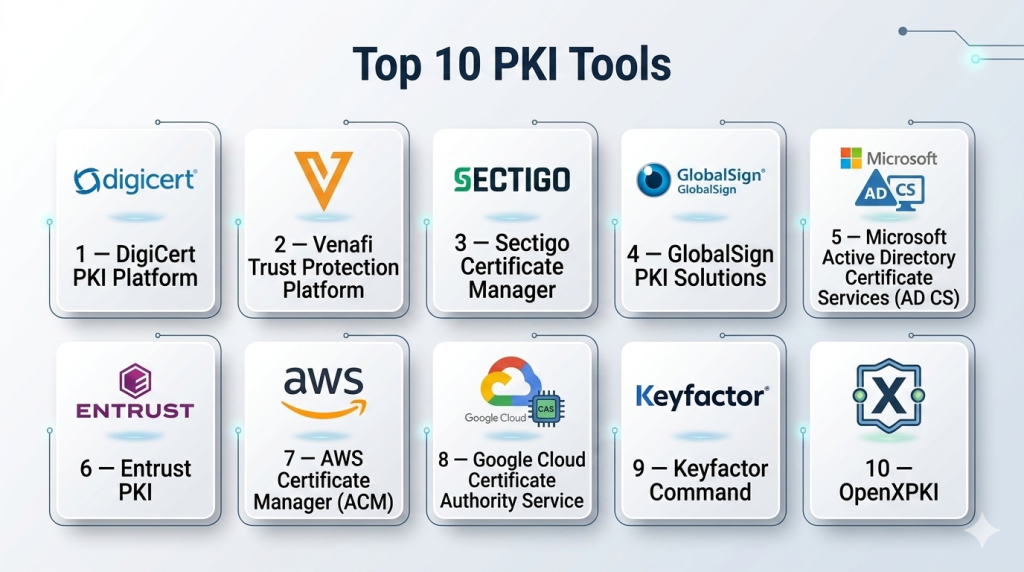
Top 10 PKI Tools
#1 — DigiCert PKI Platform
Short description: DigiCert offers enterprise-grade PKI with certificate management, digital signatures, and strong identity validation. Best suited for enterprises needing secure, automated certificate workflows.
Key Features
- Automated certificate issuance and renewal
- Centralized management dashboard
- Support for SSL/TLS, code signing, and IoT certificates
- Integration with IAM and security tools
- Advanced reporting and auditing
- Cloud and hybrid deployment
Pros
- High reliability and security standards
- Simplifies large-scale certificate management
Cons
- Enterprise pricing can be high
- Learning curve for complex integrations
Platforms / Deployment
- Web / Windows / Linux
- Cloud / Self-hosted / Hybrid
Security & Compliance
- RSA and ECC encryption, MFA, audit logs
- SOC 2, ISO 27001, GDPR
Integrations & Ecosystem
Works with IAM platforms, cloud services, and security monitoring tools
- Microsoft Active Directory
- AWS, Azure
- SIEM and network management systems
Support & Community
Enterprise support tiers, onboarding guides, and active community forums
#2 — Venafi Trust Protection Platform
Short description: Venafi provides PKI and certificate lifecycle management with a focus on trust protection, compliance, and automated workflows for enterprises.
Key Features
- Centralized certificate and key management
- Automated discovery and renewal of certificates
- Integration with cloud and network infrastructure
- IoT certificate management
- Compliance reporting and analytics
Pros
- Strong enterprise compliance features
- Automation reduces human errors
Cons
- Complex deployment in hybrid environments
- Premium pricing
Platforms / Deployment
- Windows / Linux / macOS
- Cloud / Self-hosted / Hybrid
Security & Compliance
- RSA and ECC encryption, RBAC, MFA
- SOC 2, ISO 27001, HIPAA, GDPR
Integrations & Ecosystem
Integrates with IAM, cloud platforms, and network security tools
- AWS, Azure, Google Cloud
- Active Directory
- Security monitoring platforms
Support & Community
Enterprise support, detailed documentation, and professional services
#3 — Sectigo Certificate Manager
Short description: Sectigo provides a comprehensive PKI solution for SSL/TLS certificates, code signing, and enterprise-grade certificate automation.
Key Features
- Automated certificate lifecycle management
- Centralized certificate inventory
- Integration with DevOps and cloud workflows
- Code signing and SSL/TLS management
- Audit and compliance reporting
Pros
- Simplifies certificate management across teams
- Strong automation and scalability
Cons
- Learning curve for large enterprise deployments
- Some features require higher-tier licenses
Platforms / Deployment
- Web / Windows / Linux
- Cloud / Hybrid
Security & Compliance
- RSA and ECC encryption, audit logs
- ISO 27001, SOC 2, GDPR
Integrations & Ecosystem
- Microsoft Active Directory
- CI/CD pipelines and DevOps tools
- Cloud providers and network appliances
Support & Community
Professional support, documentation, and user community
#4 — GlobalSign PKI Solutions
Short description: GlobalSign provides cloud-based PKI and certificate management with strong identity validation for enterprises and SMBs.
Key Features
- Cloud-based certificate issuance and renewal
- SSL/TLS, code signing, and document signing
- Centralized management portal
- API-driven automation
- Compliance reporting and monitoring
Pros
- Cloud-native with easy deployment
- Scales for multi-region and multi-cloud environments
Cons
- Advanced features require premium plans
- Limited on-prem deployment flexibility
Platforms / Deployment
- Web / Windows / Linux
- Cloud / Hybrid
Security & Compliance
- RSA and ECC encryption, MFA, RBAC
- ISO 27001, SOC 2, GDPR
Integrations & Ecosystem
- IAM systems, DevOps tools, cloud services
- Active Directory, AWS, Azure
Support & Community
Enterprise support, onboarding guides, and online resources
#5 — Microsoft Active Directory Certificate Services (AD CS)
Short description: AD CS provides Windows-native PKI services for issuing and managing certificates in enterprise environments.
Key Features
- Certificate authority services
- Key archival and recovery
- Integration with Active Directory
- SSL/TLS and client certificate management
- Group policy support
Pros
- Built-in Windows integration
- Cost-effective for Microsoft environments
Cons
- Limited cloud-native features
- Requires Windows Server administration expertise
Platforms / Deployment
- Windows Server
- Self-hosted / Hybrid
Security & Compliance
- RSA encryption, audit logging
- Varies / N/A
Integrations & Ecosystem
- Active Directory, Microsoft applications
- Limited API integration
Support & Community
Microsoft support, documentation, and forums
#6 — Entrust PKI
Short description: Entrust provides PKI solutions for enterprises needing SSL/TLS certificates, IoT authentication, and secure identity management.
Key Features
- Certificate lifecycle management
- IoT device authentication
- Cloud and on-prem deployment
- Digital signatures for documents and code
- Reporting and analytics
Pros
- Enterprise-grade reliability
- Broad protocol and certificate support
Cons
- Premium pricing
- Setup complexity for hybrid deployments
Platforms / Deployment
- Windows / Linux / macOS
- Cloud / Self-hosted / Hybrid
Security & Compliance
- RSA and ECC encryption, RBAC, MFA
- SOC 2, ISO 27001, GDPR
Integrations & Ecosystem
- IAM platforms, cloud services, DevOps tools
- Active Directory, AWS, Azure
Support & Community
Professional support, documentation, and online community
#7 — AWS Certificate Manager (ACM)
Short description: ACM automates SSL/TLS certificate provisioning, deployment, and renewal for AWS-hosted applications and services.
Key Features
- Automatic certificate issuance and renewal
- Integration with AWS load balancers and CloudFront
- IAM-based access control
- Private certificate authority support
Pros
- Simplifies SSL/TLS management in AWS
- No manual certificate renewals
Cons
- Limited to AWS ecosystem
- Advanced reporting requires additional services
Platforms / Deployment
- Web / AWS Cloud
- Cloud
Security & Compliance
- RSA and ECC encryption, IAM policies
- SOC 2, ISO 27001, GDPR, HIPAA
Integrations & Ecosystem
- AWS services (ELB, CloudFront, Lambda)
- CloudTrail logging
Support & Community
AWS support tiers, documentation, and developer forums
#8 — Google Cloud Certificate Authority Service
Short description: Google’s managed CA service provides centralized PKI and certificate lifecycle management for cloud-native applications.
Key Features
- Managed certificate authority
- Automatic certificate issuance and rotation
- IAM-based access control
- Integration with Google Cloud services
Pros
- Cloud-native, scalable
- API support for DevOps and automation
Cons
- Limited outside Google Cloud
- Advanced monitoring may require setup
Platforms / Deployment
- Web / Google Cloud
- Cloud
Security & Compliance
- RSA and ECC encryption, IAM policies
- SOC 2, ISO 27001, GDPR
Integrations & Ecosystem
- Google Cloud Storage, Compute Engine, GKE
- DevOps tools and APIs
Support & Community
Google Cloud support, documentation, and forums
#9 — Keyfactor Command
Short description: Keyfactor Command centralizes certificate management for enterprises with hybrid IT environments, offering automation and security analytics.
Key Features
- Certificate lifecycle management
- Discovery of unmanaged certificates
- Automation workflows for issuance and renewal
- Integration with cloud, DevOps, and security tools
- Reporting and analytics
Pros
- Strong automation and compliance features
- Visibility into certificate inventory
Cons
- Premium pricing
- Requires expertise for hybrid deployments
Platforms / Deployment
- Windows / Linux / macOS
- Cloud / Self-hosted / Hybrid
Security & Compliance
- RSA/ECC encryption, RBAC, audit logs
- SOC 2, ISO 27001, GDPR
Integrations & Ecosystem
- IAM, cloud platforms, DevOps tools
- Active Directory, AWS, Azure
Support & Community
Professional support, documentation, online resources
#10 — OpenXPKI
Short description: OpenXPKI is an open-source PKI platform for managing certificate authorities and issuing certificates. Ideal for developers and organizations seeking flexible PKI solutions.
Key Features
- Certificate authority management
- Certificate issuance and revocation
- Workflow automation
- API and CLI support
- Open-source extensibility
Pros
- Free and flexible
- Fully customizable
Cons
- Requires technical expertise
- Community support only
Platforms / Deployment
- Windows / Linux / macOS
- Self-hosted
Security & Compliance
- RSA/ECC encryption
- Compliance depends on configuration
Integrations & Ecosystem
- APIs for custom apps and DevOps workflows
- Integrates with IAM systems
Support & Community
Community support, documentation, active developer forums
Comparison Table
| Tool Name | Best For | Platforms | Deployment | Standout Feature | Public Rating |
|---|---|---|---|---|---|
| DigiCert PKI | Enterprises | Windows, Linux, macOS | Cloud / Self-hosted / Hybrid | Automated certificate lifecycle | N/A |
| Venafi Trust Protection | Enterprises | Windows, Linux, macOS | Cloud / Self-hosted / Hybrid | Trust protection and automation | N/A |
| Sectigo Certificate Manager | Enterprises, DevOps | Windows, Linux | Cloud / Hybrid | Code signing + automation | N/A |
| GlobalSign PKI | Enterprises, SMB | Windows, Linux | Cloud / Hybrid | Cloud-based certificate issuance | N/A |
| Microsoft AD CS | Enterprises | Windows | Self-hosted / Hybrid | Windows-native PKI | N/A |
| Entrust PKI | Enterprises | Windows, Linux, macOS | Cloud / Self-hosted / Hybrid | IoT authentication support | N/A |
| AWS ACM | AWS users | Web / AWS | Cloud | Automatic SSL/TLS management | N/A |
| Google Cloud CA | Cloud-native | Web / Google Cloud | Cloud | Managed certificate authority | N/A |
| Keyfactor Command | Enterprises | Windows, Linux, macOS | Cloud / Self-hosted / Hybrid | Hybrid certificate management | N/A |
| OpenXPKI | Developers | Windows, Linux, macOS | Self-hosted | Open-source CA platform | N/A |
Evaluation & Scoring
| Tool Name | Core (25%) | Ease (15%) | Integrations (15%) | Security (10%) | Performance (10%) | Support (10%) | Value (15%) | Weighted Total |
|---|---|---|---|---|---|---|---|---|
| DigiCert | 9 | 8 | 8 | 9 | 9 | 8 | 7 | 8.4 |
| Venafi | 9 | 7 | 8 | 9 | 8 | 7 | 6 | 8.0 |
| Sectigo | 8 | 8 | 7 | 8 | 8 | 7 | 7 | 7.8 |
| GlobalSign | 8 | 8 | 7 | 8 | 8 | 7 | 7 | 7.8 |
| Microsoft AD CS | 7 | 8 | 6 | 7 | 7 | 7 | 8 | 7.5 |
| Entrust | 8 | 7 | 7 | 8 | 8 | 7 | 7 | 7.7 |
| AWS ACM | 7 | 9 | 8 | 8 | 9 | 7 | 8 | 8.0 |
| Google Cloud CA | 7 | 9 | 8 | 8 | 9 | 7 | 8 | 8.0 |
| Keyfactor | 8 | 7 | 8 | 8 | 8 | 7 | 7 | 7.8 |
| OpenXPKI | 7 | 6 | 7 | 7 | 7 | 5 | 9 | 7.2 |
Which Tool Is Right for You
Solo / Freelancer: OpenXPKI or AD CS for flexible, low-cost options.
SMB: GlobalSign or Sectigo for simple, cloud-friendly management.
Mid-Market: AWS ACM, Google Cloud CA, or DigiCert for cloud integration and automation.
Enterprise: DigiCert, Venafi, Entrust, or Keyfactor for full PKI lifecycle, automation, and compliance.
Budget vs Premium: OpenXPKI or AD CS for cost-effective solutions; DigiCert, Venafi for enterprise-grade capabilities.
Feature Depth vs Ease of Use: Venafi and DigiCert provide full features but require expertise; Sectigo and GlobalSign focus on usability.
Integrations & Scalability: Cloud-native tools scale efficiently; enterprise platforms support hybrid and multi-cloud.
Security & Compliance Needs: Enterprises with strict regulatory requirements should prioritize DigiCert, Venafi, and Keyfactor for auditing and compliance.
Frequently Asked Questions
1. What are PKI tools used for?
PKI tools manage digital certificates, keys, and authentication processes to secure communications, verify identities, and enable encryption for applications, devices, and networks.
2. How complex is deployment?
Complexity depends on tool scope. Cloud-based PKI is simpler, while enterprise hybrid PKI with automation and auditing requires technical expertise.
3. Can PKI tools integrate with cloud services?
Yes. Most PKI tools support AWS, Azure, Google Cloud, and hybrid environments via APIs, automation scripts, and IAM integration.
4. Are PKI tools suitable for IoT devices?
Many modern PKI solutions provide certificate issuance and authentication specifically for IoT devices to secure connectivity and prevent spoofing.
5. How do PKI tools help compliance?
They provide audit trails, certificate lifecycle management, and enforce policies to meet GDPR, HIPAA, SOC 2, and other regulatory standards.
6. Can PKI tools automate certificate renewal?
Yes. Automation reduces human errors and downtime by renewing certificates before expiration and issuing them programmatically.
7. What are the main cost considerations?
Costs vary by deployment model, number of certificates, automation features, and enterprise integrations. Cloud-managed PKI is subscription-based; self-hosted may include licensing and maintenance costs.
8. Can PKI tools be used by developers?
Yes. API-first PKI tools like OpenXPKI, AWS ACM, and Google Cloud CA allow developers to embed certificate management into DevOps pipelines and custom applications.
9. How scalable are PKI tools?
Cloud-native and enterprise-grade PKI tools scale efficiently across thousands of devices, multi-cloud deployments, and hybrid environments.
10. Are open-source PKI tools reliable?
Open-source tools like OpenXPKI provide flexibility and cost advantages but require technical expertise for setup, management, and security best practices.
Conclusion
Public Key Infrastructure tools are essential for securing digital communications, managing certificates, and maintaining trust across networks, applications, and devices. Enterprises benefit from DigiCert, Venafi, and Entrust for comprehensive lifecycle management, automation, and compliance, while SMBs and cloud-first organizations can leverage Sectigo, GlobalSign, AWS ACM, or Google Cloud CA for scalable, cloud-native PKI solutions. Open-source and native tools like OpenXPKI and Microsoft AD CS are suitable for developers and cost-conscious deployments. Organizations should evaluate PKI tools based on deployment complexity, integrations, scalability, and compliance requirements, pilot the solutions in controlled scenarios, and ensure ongoing management to maintain secure and trusted digital environments.

Find Trusted Cardiac Hospitals
Compare heart hospitals by city and services — all in one place.
Explore Hospitals
Even with automatic renewal, teams should monitor failed renewals and test what happens when a certificate expires or the CA is temporarily unavailable. Having alerts, backup certificates, and a clear recovery process can prevent certificate problems from turning into application or service outages.