Introduction
Data Catalog & Metadata Management Tools are platforms that help organizations discover, organize, document, and govern their data assets across complex environments. In simple terms, they act like a “Google for enterprise data,” enabling teams to understand what data exists, where it lives, how it is used, and whether it can be trusted.As organizations scale their data ecosystems across cloud platforms, warehouses, lakes, and SaaS tools, metadata becomes the backbone of data governance, compliance, and analytics efficiency. Without proper metadata management, data becomes fragmented, duplicated, and difficult to trust.
In modern data-driven enterprises, these tools are essential for enabling AI initiatives, self-service analytics, and regulatory compliance.
Real-world use cases include:
- Building a centralized data inventory across cloud and on-prem systems
- Enabling self-service analytics for business teams
- Supporting data lineage tracking for compliance audits
- Improving AI/ML model training data discovery
- Managing data governance policies and access control
What buyers should evaluate:
- Data discovery and search capabilities
- Metadata ingestion and automation
- Data lineage tracking and visualization
- Governance and policy enforcement
- Integration with data warehouses and lakes
- AI-based data classification and tagging
- Scalability across enterprise data environments
- User collaboration and documentation features
- Security and access control capabilities
- Ease of deployment and usability
Best for: Data engineers, data governance teams, analytics leaders, and enterprises managing large-scale data ecosystems
Not ideal for: Small organizations with limited data systems or those not relying on analytics or BI platforms
Key Trends in Data Catalog & Metadata Management Tools
- AI-powered metadata tagging and classification
- Automated data lineage tracking across complex pipelines
- Cloud-native data catalog platforms for multi-cloud environments
- Integration with modern data stacks like Snowflake, Databricks, and BigQuery
- Self-service data discovery for business users
- Metadata-driven data governance and compliance automation
- Real-time metadata updates from streaming pipelines
- Graph-based data lineage visualization
- Data observability integration with catalogs
- Increased focus on data trust and quality scoring
How We Selected These Tools (Methodology)
- Evaluated market adoption across enterprise data teams
- Assessed metadata ingestion and cataloging capabilities
- Reviewed data lineage and governance features
- Analyzed integration with cloud data platforms and ETL tools
- Evaluated AI-driven metadata classification features
- Checked scalability for enterprise and multi-cloud environments
- Assessed security, access control, and compliance capabilities
- Reviewed usability and self-service capabilities
- Considered community, documentation, and support quality
- Prioritized tools aligned with modern data stack architectures
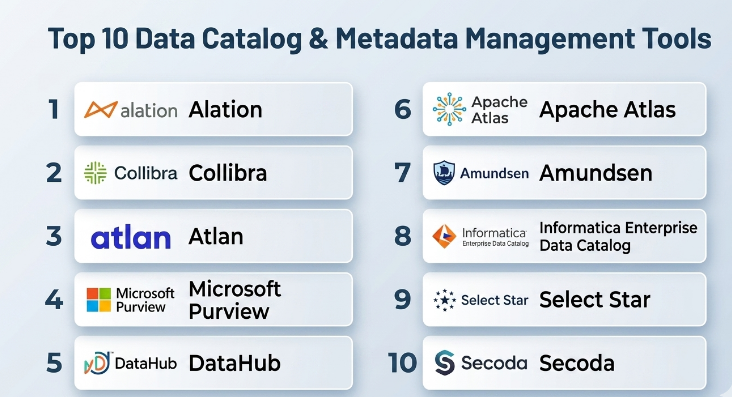
Top 10 Data Catalog & Metadata Management Tools
#1 — Alation
Short description:
Alation is a leading enterprise data catalog platform designed to help organizations discover, understand, and govern their data assets. It provides AI-assisted metadata management and strong collaboration features for data teams and business users.
Key Features
- AI-driven data cataloging and discovery
- Automated metadata ingestion
- Data lineage tracking
- Business glossary management
- Collaboration and documentation tools
- Governance and policy management
Pros
- Strong enterprise adoption
- Excellent data discovery experience
Cons
- Premium pricing
- Complex deployment in large environments
Platforms / Deployment
- Web
- Cloud / Hybrid
Security & Compliance
- Role-based access control
- Encryption and audit logs
- Compliance reporting support
Integrations & Ecosystem
Integrates with cloud data platforms and analytics ecosystems.
- Snowflake, BigQuery, Redshift
- ETL tools like Informatica and Talend
- BI tools like Tableau and Power BI
Support & Community
Strong enterprise support and extensive documentation
#2 — Collibra
Short description:
Collibra is a data intelligence platform focused on data governance, cataloging, and metadata management for large enterprises with strict compliance needs.
Key Features
- Enterprise data catalog
- Data governance workflows
- Metadata management automation
- Data lineage tracking
- Policy enforcement tools
- Business glossary creation
Pros
- Strong governance capabilities
- Enterprise-grade compliance support
Cons
- Steep learning curve
- High implementation cost
Platforms / Deployment
- Web
- Cloud / On-prem / Hybrid
Security & Compliance
- RBAC and SSO support
- Encryption and audit logging
- GDPR and compliance readiness
Integrations & Ecosystem
- Cloud data warehouses
- ETL pipelines
- BI and analytics tools
Support & Community
Enterprise documentation and dedicated support
#3 — Atlan
Short description:
Atlan is a modern data workspace and metadata platform designed for collaborative data teams, enabling real-time discovery and governance.
Key Features
- Real-time metadata synchronization
- Data lineage visualization
- AI-powered data discovery
- Collaboration workspace for data teams
- Data governance automation
- Integration with modern data stacks
Pros
- Modern UI and collaboration features
- Fast deployment
Cons
- Limited advanced governance depth vs legacy tools
- Premium pricing for enterprise scale
Platforms / Deployment
- Web
- Cloud
Security & Compliance
- Encryption and role-based access
- Audit logs
Integrations & Ecosystem
- Snowflake, Databricks, BigQuery
- BI tools and ETL platforms
- APIs for automation
Support & Community
Strong documentation and fast-growing community
#4 — Microsoft Purview
Short description:
Microsoft Purview is a unified data governance and metadata management solution for discovering, classifying, and governing enterprise data.
Key Features
- Automated data discovery and classification
- Data lineage tracking
- Data catalog and governance
- Sensitivity labeling
- Hybrid data environment support
- Compliance reporting
Pros
- Deep Microsoft ecosystem integration
- Strong compliance features
Cons
- Best suited for Microsoft environments
- Limited flexibility outside Azure ecosystem
Platforms / Deployment
- Web
- Cloud
Security & Compliance
- Microsoft security standards
- Encryption and RBAC
- Compliance certifications (varies by region)
Integrations & Ecosystem
- Azure Data Lake, Synapse
- Power BI integration
- Microsoft security tools
Support & Community
Microsoft enterprise support
#5 — DataHub
Short description:
DataHub is an open-source metadata platform focused on real-time data discovery, lineage, and governance.
Key Features
- Open-source metadata management
- Data lineage tracking
- Schema evolution monitoring
- Search and discovery
- Integration with data pipelines
- Event-driven metadata updates
Pros
- Open-source and highly flexible
- Strong developer adoption
Cons
- Requires engineering setup
- Limited enterprise governance features
Platforms / Deployment
- Web
- Cloud / Self-hosted
Security & Compliance
- Depends on deployment configuration
- Role-based access control
Integrations & Ecosystem
- Apache Airflow, Spark
- Snowflake, BigQuery
- APIs for extensibility
Support & Community
Strong open-source community support
#6 — Apache Atlas
Short description:
Apache Atlas is an open-source metadata and governance tool designed for Hadoop and big data ecosystems.
Key Features
- Metadata management for big data
- Data lineage tracking
- Classification and tagging
- Governance policy framework
- Integration with Hadoop ecosystem
- API-based extensibility
Pros
- Open-source and enterprise-ready
- Strong Hadoop integration
Cons
- Complex setup
- Limited modern UI/UX
Platforms / Deployment
- Linux / Web
- Self-hosted
Security & Compliance
- RBAC support
- Audit logging
Integrations & Ecosystem
- Hadoop, Hive, Spark
- ETL pipelines
- Data governance tools
Support & Community
Community-driven support
#7 — Amundsen
Short description:
Amundsen is an open-source data discovery and metadata engine designed to improve data search and usability across organizations.
Key Features
- Data discovery engine
- Metadata ingestion pipelines
- Search-based interface
- Data lineage tracking
- Collaboration features
- Lightweight architecture
Pros
- Easy to deploy
- Developer-friendly
Cons
- Limited enterprise governance features
- Requires customization
Platforms / Deployment
- Web
- Cloud / Self-hosted
Security & Compliance
- Depends on implementation
- Role-based access
Integrations & Ecosystem
- Snowflake, Presto, Hive
- Airflow and ETL tools
- APIs for integration
Support & Community
Open-source community support
#8 — Informatica Enterprise Data Catalog
Short description:
Informatica EDC provides enterprise metadata management, data lineage, and governance capabilities across hybrid environments.
Key Features
- Automated metadata harvesting
- Data lineage visualization
- AI-based metadata classification
- Data governance tools
- Business glossary management
- Enterprise search
Pros
- Strong enterprise adoption
- Deep metadata automation
Cons
- High cost
- Complex implementation
Platforms / Deployment
- Web
- Cloud / On-prem / Hybrid
Security & Compliance
- Encryption and RBAC
- Audit logging
- Compliance support
Integrations & Ecosystem
- Informatica ecosystem
- Cloud data warehouses
- BI and ETL tools
Support & Community
Enterprise-level support
#9 — Select Star
Short description:
Select Star is a modern metadata platform focused on automated data lineage and discovery for analytics teams.
Key Features
- Automated data lineage mapping
- Metadata discovery
- Data usage tracking
- Search-based data catalog
- Collaboration features
- Integration with BI tools
Pros
- Easy-to-use interface
- Strong lineage automation
Cons
- Limited enterprise governance depth
- Smaller ecosystem
Platforms / Deployment
- Web
- Cloud
Security & Compliance
- Role-based access control
- Encryption
Integrations & Ecosystem
- Snowflake, BigQuery
- Tableau, Looker
- APIs for automation
Support & Community
Strong documentation and customer support
#10 — Secoda
Short description:
Secoda is an AI-powered data discovery and catalog platform that helps teams document, search, and understand data quickly.
Key Features
- AI-driven data catalog
- Automated documentation
- Data lineage tracking
- Search and discovery tools
- Collaboration workspace
- Metadata automation
Pros
- AI-powered automation
- Fast onboarding
Cons
- Limited enterprise governance depth
- Smaller ecosystem compared to legacy tools
Platforms / Deployment
- Web
- Cloud
Security & Compliance
- Role-based access
- Encryption support
Integrations & Ecosystem
- Snowflake, BigQuery
- BI tools
- ETL pipelines
Support & Community
Active support and growing user base
Comparison Table (Top 10)
| Tool Name | Best For | Platform(s) Supported | Deployment | Standout Feature | Public Rating |
|---|---|---|---|---|---|
| Alation | Enterprise governance | Web | Cloud/Hybrid | AI data discovery | N/A |
| Collibra | Compliance-heavy orgs | Web | Cloud/Hybrid | Governance workflows | N/A |
| Atlan | Modern data teams | Web | Cloud | Collaboration workspace | N/A |
| Microsoft Purview | Azure ecosystems | Web | Cloud | Deep Azure integration | N/A |
| DataHub | Developers | Web | Cloud/Self-hosted | Open-source metadata | N/A |
| Apache Atlas | Hadoop ecosystems | Web | Self-hosted | Big data governance | N/A |
| Amundsen | Data discovery | Web | Cloud/Self-hosted | Lightweight search | N/A |
| Informatica EDC | Enterprises | Web | Hybrid | Automated lineage | N/A |
| Select Star | Analytics teams | Web | Cloud | Automated lineage mapping | N/A |
| Secoda | SMB / Mid-market | Web | Cloud | AI-powered catalog | N/A |
Evaluation & Scoring of Data Catalog & Metadata Management Tools
| Tool Name | Core (25%) | Ease (15%) | Integrations (15%) | Security (10%) | Performance (10%) | Support (10%) | Value (15%) | Weighted Total |
|---|---|---|---|---|---|---|---|---|
| Alation | 10 | 8 | 10 | 10 | 9 | 9 | 7 | 8.8 |
| Collibra | 10 | 7 | 10 | 10 | 9 | 9 | 7 | 8.6 |
| Atlan | 9 | 9 | 9 | 9 | 9 | 8 | 8 | 8.7 |
| Microsoft Purview | 9 | 8 | 10 | 10 | 9 | 9 | 8 | 8.9 |
| DataHub | 8 | 8 | 9 | 8 | 8 | 8 | 9 | 8.3 |
| Apache Atlas | 8 | 7 | 8 | 8 | 8 | 7 | 9 | 7.9 |
| Amundsen | 8 | 8 | 8 | 8 | 8 | 8 | 9 | 8.2 |
| Informatica EDC | 10 | 7 | 10 | 10 | 9 | 9 | 7 | 8.7 |
| Select Star | 8 | 9 | 9 | 8 | 8 | 8 | 8 | 8.3 |
| Secoda | 8 | 9 | 8 | 8 | 8 | 8 | 8 | 8.2 |
Which Data Catalog & Metadata Management Tool Is Right for You?
Solo / Freelancer
Amundsen or DataHub for lightweight metadata exploration
SMB
Secoda or Atlan for easy onboarding and collaboration
Mid-Market
Select Star or Atlan for scalable metadata management
Enterprise
Alation, Collibra, Informatica EDC, Microsoft Purview for governance-heavy environments
Budget vs Premium
Budget: DataHub, Amundsen
Premium: Alation, Collibra, Informatica
Feature Depth vs Ease of Use
Depth: Collibra, Informatica, Alation
Ease: Secoda, Atlan, Select Star
Integrations & Scalability
Microsoft Purview, Alation, Atlan for enterprise-scale ecosystems
Security & Compliance Needs
Role-based access, encryption, audit logging, and enterprise governance capabilities
Frequently Asked Questions (FAQs)
1. What is a data catalog?
A data catalog is a centralized system that organizes and documents data assets across an organization.
2. Why is metadata important?
Metadata provides context about data, helping users understand origin, usage, and structure.
3. Are these tools only for enterprises?
No, modern tools like Secoda and DataHub are suitable for SMBs and startups.
4. Do they support cloud data platforms?
Yes, most integrate with Snowflake, BigQuery, Databricks, and AWS services.
5. What is data lineage?
Data lineage tracks the flow of data from source to destination across systems.
6. Are there open-source options?
Yes, DataHub, Amundsen, and Apache Atlas are open-source solutions.
7. Do they support AI features?
Yes, many tools use AI for metadata tagging and discovery.
8. Can they improve compliance?
Yes, they help enforce governance policies and audit readiness.
9. Are they difficult to implement?
Enterprise tools may require setup, while modern tools are easier to deploy.
10. What is the biggest benefit?
Improved data discovery, trust, and governance across the entire organization.
Conclusion
Data Catalog & Metadata Management Tools are essential for modern data-driven organizations that rely on scalable analytics and AI systems. Platforms like Alation, Collibra, and Informatica deliver enterprise-grade governance, while tools like DataHub, Secoda, and Amundsen provide flexible, developer-friendly alternatives

Find Trusted Cardiac Hospitals
Compare heart hospitals by city and services — all in one place.
Explore Hospitals
Data catalog and metadata management tools are most valuable when they help organizations discover, organize, understand, and govern data assets across complex data environments. By providing data discovery, metadata harvesting, business glossaries, data lineage, classification, search, data ownership, quality insights, governance workflows, access controls, and integration with databases, data warehouses, data lakes, and analytics platforms, these tools enable organizations to improve data visibility, strengthen governance, increase trust in enterprise data, simplify compliance, and help teams find and use the right data more efficiently.