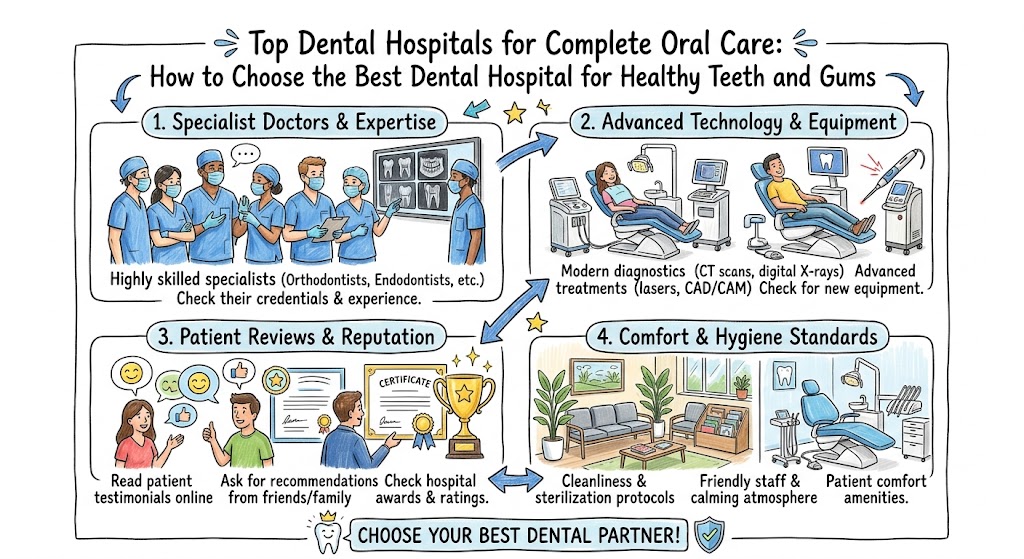
A bright, healthy smile is more than just a confidence booster; it is a vital window into your overall health. From eating and speaking comfortably to preventing systemic medical conditions like heart disease and diabetes, maintaining optimal oral health is an essential, lifelong commitment. However, achieving and sustaining that perfect smile requires more than just brushing your teeth twice a day. It demands access to comprehensive, expert dental care that addresses everything from basic routine cleanings to highly complex surgical restorations.When it comes to managing specialized treatments like dental implants, orthodontic realignments, or advanced gum therapies, standard clinics may fall short. This is where finding the Top Dental Hospitals for Complete Oral Care becomes absolutely crucial. Navigating the vast landscape of healthcare providers can feel overwhelming, but platforms like MyHospitalNow make the process seamless. MyHospitalNow helps patients discover hospitals, compare healthcare providers, explore highly qualified specialists, request specific treatment information, and ultimately make informed, confident healthcare decisions for themselves and their families.In this ultimate guide, we will unpack everything you need to know about comprehensive oral care, explore the distinct qualities that set elite dental hospitals apart, dive into advanced dental technologies, and provide you with actionable checklists to guide your next dental visit.
Why Complete Oral Care Matters
Complete oral care refers to a systemic, holistic approach to maintaining the health of your mouth, teeth, gums, and jaw. Rather than simply reacting to a toothache when it becomes unbearable, complete oral care focuses on continuous prevention, early detection, and precise, targeted intervention.Your mouth is naturally populated with bacteria. Without diligent hygiene and professional oversight, these bacteria can form plaque, leading to chronic infections, tooth decay, and periodontal disease. Furthermore, medical research has repeatedly demonstrated a profound link between oral infections and systemic health problems. Inflammation in the mouth can allow harmful bacteria to enter the bloodstream, elevating the risk of cardiovascular disease, respiratory issues, arterial clogging, and complications during pregnancy.By prioritizing comprehensive care at a top-tier facility, you are not merely preserving your smile; you are proactively safeguarding your entire body’s well-being.
Understanding Oral Health: More Than Just White Teeth
When many people think of a healthy mouth, they instantly picture a row of perfectly white teeth. While aesthetics are certainly a byproduct of great dental hygiene, true oral health runs much deeper, encompassing a complex ecosystem of interconnected tissues and structures.
- Teeth Health: The enamel covering your teeth is the hardest substance in the human body, but it is highly susceptible to acid erosion and bacterial decay. Healthy teeth must be structurally sound, free of cavities, and properly aligned to ensure comfortable chewing and clear speech.
- Gum Health (Periodontium): Your gums serve as the fundamental support system for your teeth. Healthy gums are pink, firm, and fit snugly around each tooth, acting as a secure seal against bacterial invasion. Bleeding, swelling, or receding gums are early warnings of underlying infection that can lead to bone loss.
- Jaw Health (Temporomandibular Joint & Bone): The jawbone supports the roots of your teeth and gives structure to your face. Conditions affecting the jawbone or the temporomandibular joint (TMJ) can cause chronic pain, clicking sounds, and severe difficulty when opening or closing the mouth.
- The Power of Oral Hygiene: Oral hygiene is the daily defense mechanism that keeps this entire system functional. Consistent brushing, flossing, and tongue cleaning remove the bio-film of food particles and bacteria that naturally accumulate throughout the day, preventing them from solidifying into stubborn tartar that can only be removed by a professional dental hygienist.
Common Dental Problems and Their Impact
Despite our best intentions, structural vulnerabilities, genetics, and lifestyle habits can pave the way for a variety of dental disorders. Understanding these common problems is the first step toward seeking timely care.
1. Tooth Decay (Dental Caries)
Tooth decay occurs when ambient mouth bacteria feed on the sugars and starches left behind from food, producing acids that steadily eat away at the tooth enamel. If left untreated, the decay penetrates deeper layers of the tooth, reaching the sensitive pulp and causing intense pain, infection, or abscesses.
2. Gum Disease (Gingivitis and Periodontitis)
Gum disease begins as gingivitis—marked by red, swollen, and bleeding gums. If ignored, it escalates into periodontitis, a severe infection that destroys the soft tissue and the bone supporting the teeth. Periodontitis is the leading cause of adult tooth loss worldwide.
3. Tooth Loss
Whether caused by severe trauma, advanced decay, or progressive gum disease, losing a tooth is more than a cosmetic issue. It can cause adjacent teeth to shift out of place, alter your bite, lead to jawbone deterioration, and make simple nutritional chewing a painful chore.
4. Chronic Bad Breath (Halitosis)
While occasional bad breath is normal, persistent halitosis is often a sign of deep-seated oral health issues. It can indicate hidden food particles, poor tongue hygiene, advanced gum disease, dry mouth (xerostomia), or underlying systemic infections.
5. Oral Infections and Abscesses
An abscess is a localized collection of pus caused by a bacterial infection at the root of a tooth or in the spaces between the teeth and gums. Abscesses cause throbbing pain, facial swelling, fever, and require emergency intervention to prevent the infection from spreading into the deep spaces of the neck or skull.
6. Misaligned Teeth (Malocclusion)
Crooked, crowded, or protruding teeth can disrupt the harmony of your bite. Malocclusion makes regular cleaning significantly harder, increasing the risk of hidden decay, and can put uneven pressure on the jaw, causing chronic TMJ headaches and premature tooth wear.
What Makes Top Dental Hospitals Stand Out?
When facing complex dental needs, selecting a general clinic might not provide the full scope of care required. Top dental hospitals distinguish themselves by offering an elevated, integrated tier of medical services that guarantees comprehensive treatment under one roof.
- Multidisciplinary Teams of Experts: Leading dental hospitals do not rely on a single general dentist to manage every issue. Instead, they house an elite team of board-certified specialists, including oral surgeons, periodontists, orthodontists, endodontists, and prosthodontists, who collaborate on complex patient cases.
- State-of-the-Art Infrastructure: These institutions invest heavily in cutting-edge diagnostic equipment, dedicated surgical suites, and specialized sterilization departments that meet stringent international medical standards.
- Integrated Care Pathways: From your initial digital consultation and diagnostic scanning to outpatient surgery, anesthesia management, and post-operative physical rehabilitation, every stage of your treatment plan is managed smoothly within a unified ecosystem.
- Emergency Infrastructure: Unlike standard clinics that operate strictly during business hours, top dental hospitals provide around-the-clock emergency services for acute facial trauma, severe dental infections, or sudden oral hemorrhages.
Services Offered by Leading Dental Hospitals
A hallmarks of the Top Dental Hospitals for Complete Oral Care is their ability to offer an exhaustive suite of dental treatments across the entire spectrum of oral medicine.
Preventive Dentistry
Preventive dentistry forms the bedrock of lifelong oral health. Services include comprehensive diagnostic exams, professional dental cleanings (scaling and polishing), digital oral cancer screenings, dental sealants to protect vulnerable grooved teeth from decay, and localized fluoride therapies designed to remineralize weak spots in enamel.
Cosmetic Dentistry
Cosmetic dentistry seamlessly merges medical science with artistry to elevate the aesthetic look of your smile. Top hospitals offer custom teeth whitening procedures, porcelain veneers to mask chips or deep stains, composite bonding, and comprehensive gum contouring to address “gummy” smiles and create a balanced look.
Restorative Dentistry
When teeth are damaged by trauma or decay, restorative dentistry steps in to bring back full function and structural integrity. This includes tooth-colored composite fillings, custom-crafted inlays and onlays, and robust porcelain or ceramic crowns that fit comfortably over compromised teeth.
Orthodontics
Orthodontic care corrects jaw and teeth misalignments to optimize your bite and facial profile. Leading institutions offer traditional metal braces, self-ligating brackets, ceramic tooth-colored braces, and advanced clear aligner systems like Invisalign, tailored for both pediatric and adult patients.
Pediatric Dentistry (Pedodontics)
Children require specialized, empathetic dental care tailored to their developing jaws and primary teeth. Pediatric units focus on building a positive, anxiety-free association with the dentist, monitoring jaw growth, providing early interceptive orthodontics, and administering protective sealants.
Oral and Maxillofacial Surgery
This specialized surgical field addresses complex anatomical issues of the mouth, jaws, and face. Surgeons handle everything from impacted wisdom teeth extractions and bone grafting procedures to reconstructive jaw surgery (orthognathic surgery) and the removal of oral tumors or cysts.
Dental Implants
Dental implants represent the modern gold standard for tooth replacement. By surgically placing a biocompatible titanium post directly into the jawbone, specialists create a strong anchor that mimics a natural tooth root. This post is then topped with a custom crown, fully restoring your bite strength and preventing jawbone shrinkage.
Advanced Technologies Used in Modern Dental Care
The integration of advanced digital technology has completely revolutionized the patient experience, making dental procedures significantly faster, more accurate, and virtually painless.
[Traditional Care: Physical Impressions & Guesswork]
                       │
                       ▼
[Modern Care: 3D Imaging ➔ Intraoral Scanning ➔ CAD/CAM Precision]
- Digital X-Rays: Traditional film X-rays have been widely replaced by digital radiography. This technology reduces radiation exposure by up to 80–90%, provides instant high-resolution imagery, and allows dentists to zoom in on microscopic fractures or hidden decay.
- Intraoral Scanners: The days of biting down into messy, uncomfortable putty impressions are gone. Advanced wand-like intraoral scanners capture thousands of accurate 3D color images of your teeth in seconds, creating a highly detailed digital map of your mouth.
- CAD/CAM Dentistry: Computer-Aided Design and Computer-Aided Manufacturing (CAD/CAM) allow dental hospitals to design and mill highly precise dental restorations, such as crowns, veneers, and inlays, right on-site. This enables convenient, single-visit restorations.
- Laser Dentistry: Specialized dental lasers are used for a wide array of soft and hard tissue procedures. Lasers can pinpoint and remove decay, sterilize infected root canals, and perform precise gum surgeries with minimal bleeding, negligible post-operative swelling, and often without the need for local anesthesia.
- 3D Cone Beam Computed Tomography (CBCT): CBCT scans generate incredibly detailed three-dimensional views of your jawbone, nerve pathways, and surrounding soft tissues. This precise mapping is invaluable for planning safe dental implant placements and complex root canal treatments.
Comprehensive Overview of Dental Treatments
To help you better understand the vast range of clinical options available, the table below highlights common dental treatments, their underlying purposes, benefits, and the ideal patient profiles.
Table 1: Common Dental Treatments
| Treatment | Purpose | Key Benefits | Ideal Patients |
| Dental Cleanings & Scaling | Removes hardened tartar and plaque buildup from teeth and below the gumline. | Prevents gum disease, eliminates persistent bad breath, and brightens teeth. | Every individual, recommended twice a year. |
| Dental Implants | Permanently replaces missing teeth by anchoring a titanium post directly into the jawbone. | Restores natural chewing power, stops jawbone loss, and lasts a lifetime. | Patients with missing teeth and healthy jawbone density. |
| Root Canal Therapy | Removes infected or dead pulp tissue from inside a severely decayed tooth. | Saves the natural tooth structure and eliminates intense, throbbing dental pain. | Patients with deep tooth decay or internal nerve infections. |
| Clear Aligners (Invisalign) | Gradually straightens crooked teeth using a series of removable, transparent plastic trays. | Virtually invisible, removable for easy cleaning, and highly comfortable. | Teens and adults with mild to moderate teeth misalignment. |
| Porcelain Crowns | Encapsulates a severely damaged or weakened tooth to restore its size, shape, and strength. | Protects vulnerable teeth from fracturing and blends in with natural teeth. | Patients with large cavities, cracked teeth, or post-root canal teeth. |
| Teeth Whitening | Uses professional-grade bleaching agents to break up deep enamel stains. | Significantly brightens your smile quickly and boosts self-esteem. | Patients with external tooth discoloration from food, coffee, or aging. |
Mapping Dental Problems to Clinical Solutions
When you experience oral discomfort, it helps to understand what your symptoms might mean and the specific clinical treatments a top dental hospital will likely recommend.
Table 2: Dental Problems and Solutions
| Condition | Common Symptoms | Recommended Hospital Treatment |
| Advanced Tooth Decay | Sharp pain when biting, lingering sensitivity to hot/cold, visible holes or dark spots. | Composite fillings, inlays/onlays, or porcelain crowns depending on severity. |
| Periodontitis (Severe Gum Disease) | Swollen, bright red gums, bleeding while flossing, loose teeth, receding gumline. | Deep scaling and root planing, localized antibiotic therapy, or laser gum surgery. |
| Impacted Wisdom Teeth | Throbbing pain at the back of the jaw, facial swelling, difficulty chewing, headaches. | Surgical extraction under local anesthesia or conscious IV sedation. |
| Tooth Enamel Erosion | Translucent-looking edges on teeth, general sensitivity to sweet foods, minor chipping. | Fluoride varnish applications, dental bonding, or protective porcelain veneers. |
| Bruxism (Chronic Teeth Grinding) | Waking up with dull headaches, sore jaw muscles, flattened or worn-down tooth surfaces. | Custom-molded nightguards, TMJ physical therapy, or botulinum toxin injections for muscle relaxation. |
| Chronic Root Infection | Constant throbbing pain, a visible pimple on the gums (fistula), facial swelling, tooth discoloration. | Root canal therapy combined with an apicoectomy (root-end surgery) if necessary. |
Benefits of Choosing Top Dental Hospitals for Complete Oral Care
Choosing an elite, multi-specialty dental hospital over a basic clinic yields profound advantages for your long-term health and peace of mind.
- Unmatched Diagnostic Accuracy: With advanced tools like CBCT scanners and intraoral digital cameras, specialists catch underlying issues before they turn into painful, expensive emergencies.
- Enhanced Patient Safety and Sterilization: Top hospitals enforce rigorous hospital-grade infection control protocols, utilizing advanced autoclaves and single-use disposable tools to ensure zero cross-contamination.
- Sedation and Sleep Dentistry Options: For patients dealing with severe dental anxiety or undergoing lengthy surgeries, top dental hospitals provide safe sedation options, including nitrous oxide (laughing gas), oral sedatives, and full intravenous (IV) conscious sedation managed by licensed anesthesiologists.
- Long-Term Cost Efficiency: While the upfront cost at a premier hospital may seem higher than a discount clinic, their use of durable, premium materials and expert execution means treatments rarely need to be redone. This saves you significant money, time, and discomfort over the long term.
How to Choose the Right Dental Hospital
Selecting the best dental hospital requires evaluating several critical benchmarks to ensure you receive world-class care tailored to your unique needs.
Table 3: Factors to Consider When Choosing a Dental Hospital
| Factor | Importance | Key Questions to Ask |
| Specialist Qualifications | Ensures your specific procedure is handled by an expert with advanced training, not a generalist. | “Are your specialists board-certified in periodontics, oral surgery, or prosthodontics?” |
| Technology Infrastructure | Modern equipment translates directly to faster recovery times, higher precision, and less pain. | “Do you utilize digital intraoral scanners, laser dentistry, and on-site 3D CBCT imaging?” |
| Sterilization Protocols | Protects you from healthcare-associated infections and ensures absolute clinical purity. | “What class of autoclave sterilization do you use, and can I review your safety protocols?” |
| Emergency Availability | Dental crises can strike at any hour; you need a hospital capable of immediate intervention. | “Do you provide 24/7 coverage for dental trauma, severe pain, or bleeding?” |
| Patient Reviews & Cases | Real-world testimonials and before-and-after portfolios showcase a hospital’s track record. | “Can I review case studies or verified testimonials for patient procedures similar to mine?” |
Questions Patients Should Ask Their Dentist
Before consenting to any major dental procedure, it is vital to engage your dental specialist in an open conversation. Use these specific questions to gain clarity and establish trust:
- “What are the alternative treatment options available to address my condition, and what are the pros and cons of each?”
- “What is the expected lifespan of the materials (implants, crowns, veneers) you are proposing to use?”
- “What form of sedation or pain management do you recommend for my anxiety level and procedure complexity?”
- “Can you provide a complete, itemized cost breakdown of the treatment plan, including post-operative follow-up visits?”
- “What are the risks or potential complications if I choose to delay this specific treatment for a few months?”
Cost Factors in Dental Treatments
Understanding what influences the final cost of your dental care can help you plan your finances effectively without sacrificing quality.
- Complexity of the Case: A straightforward single-rooted tooth extraction is vastly different from a surgical wisdom tooth extraction nested near a major facial nerve, which requires advanced imaging and surgical expertise.
- Material Quality: The choice of materials significantly shifts pricing. For instance, high-end, bio-compatible zirconia or premium porcelain crowns crafted via CAD/CAM milling cost more than basic porcelain-fused-to-metal (PFM) alternatives, but offer superior durability and lifelike aesthetics.
- Sedation Requirements: Utilizing local numbing jelly and injections is inexpensive, whereas bringing in an anesthesiologist for full conscious IV sedation or general anesthesia introduces separate, specialized billing structures.
- Insurance Coverage and Financing: Many dental insurance policies fully cover preventive care (cleanings, basic X-rays) but only partially cover restorative work (crowns, root canals), leaving cosmetic work entirely out-of-pocket. Top dental hospitals mitigate this by partnering with major insurance networks and offering interest-free monthly financing plans.
Preventive Dental Care Tips for Everyday Health
While choosing a premier hospital is vital for specialized treatments, maintaining a flawless daily routine at home is your absolute best defense against dental diseases.
- Master the Modified Bass Brushing Technique: Angle your toothbrush toothbrush at a 45-degree angle toward your gumline. Use short, gentle, circular strokes rather than sawing aggressively back and forth, which can abrade enamel and cause gums to recede.
- Never Skip Your Evening Floss: Brushing misses nearly 40% of your tooth surfaces—specifically the tight spaces between teeth. Flossing once a day removes hidden plaque and food debris, stopping interdental cavities before they start.
- Incorporate a Tongue Scraper: Your tongue’s textured surface houses millions of bacteria. Using a dedicated tongue scraper every morning significantly reduces bad breath and lowers the overall bacterial load in your mouth.
- Stay Hydrated with Fluoridated Water: Water stimulates saliva production. Saliva is your mouth’s natural defense system; it washes away food debris, neutralizes destructive bacterial acids, and delivers essential calcium and phosphate ions to remineralize enamel.
Structuring Your Daily Oral Care Routine
Consistency is key to a healthy smile. Use the structured matrix below to optimize your daily oral care habits.
Table 4: Daily Oral Care Routine
| Activity | Recommended Frequency | Key Benefits |
| Fluoride Brushing | Twice daily (morning and right before bed) for a full 2 minutes. | Discharges soft plaque, removes surface stains, and strengthens enamel against acid. |
| Flossing | Once daily (ideally during your evening routine). | Clears out food particles and bacterial film from hidden gaps between teeth. |
| Tongue Cleaning | Once daily (every morning using a stainless steel or plastic scraper). | Eliminates volatile sulfur compounds that cause chronic bad breath. |
| Antiseptic Rinsing | Once daily (at a separate time from brushing to avoid washing away concentrated fluoride). | Lowers the overall bacterial count in the mouth and rinses away loose debris. |
| Water Hydration | Continuously throughout the day (especially right after meals). | Boosts healthy saliva flow and naturally cleanses the oral cavity. |
Nutrition and Its Profound Impact on Oral Health
Your diet plays a massive, direct role in the structural integrity of your teeth and the health of your gum tissues.
[Frequent Sugar/Acid Intake] ➔ [Bacterial Acid Production] ➔ [Enamel Mineral Loss]
                                                                     │
                                                                     ▼
[Calcium, Vitamin D, & Fibrous Veggies] ➔ [Saliva Buffering] ➔ [Enamel Remineralization]
- The Danger of Frequent Sugar Exposures: It isn’t just the amount of sugar you eat; it is the frequency of exposure. Sipping on sugary sodas, juices, or snacking on sticky candies throughout the day keeps your oral cavity in a constant state of acidic attack, giving your enamel no time to recover.
- Teeth-Strengthening Minerals: Calcium and phosphorus are the literal building blocks of enamel. Incorporate calcium-rich foods like dairy products, almonds, leafy greens, and fortified plant milks into your diet. Vitamin D is equally vital, as your body requires it to absorb calcium efficiently.
- Crunchy, Fibrous Foods as Natural Cleansers: Fresh, crunchy vegetables and fruits like celery, carrots, and apples act as natural toothbrushes. Chewing these foods scrubs away surface plaque and vigorously stimulates salivary glands, flooding your mouth with protective saliva.
Tailored Oral Health Strategies for Every Stage of Life
As our bodies grow and age, our oral structures evolve, presenting distinct care requirements across different stages of life.
Children: Protecting Developing Smiles
The primary focus for children is preventing early childhood caries and monitoring jaw development. Parents should clean an infant’s gums with a damp cloth even before teeth erupt. Once teeth emerge, use a tiny smear of fluoride toothpaste. Early visits to a pediatric dentist (by age one) help catch bite alignment issues early and allow for the application of protective dental sealants on newly erupted permanent molars.
Adults: Combatting Stress and Lifestyle Wear
Adults frequently contend with issues stemming from stress and busy lifestyles, including stress-related teeth grinding (bruxism), structural erosion from acidic diets, and early-stage gum disease. Hormonal shifts during pregnancy can also trigger “pregnancy gingivitis,” requiring extra clinical attention. Focus on consistent professional cleanings and managing stress to protect your smile.
Seniors: Managing Complex Age-Related Changes
As we age, nerves inside our teeth shrink, making seniors less sensitive to the pain of developing cavities until deep damage is done. Seniors face higher rates of dry mouth (often caused by prescription medications), root-surface decay as gums naturally recede, and tooth loss. Top dental hospitals provide specialized geriatric dentistry, focusing on implant restorations, precisely fitted dentures, and dry-mouth therapies to preserve quality of life.
Common Myths vs. Facts About Dental Care
Misinformation can lead to poor choices that compromise your health. Let’s debunk some of the most pervasive myths surrounding dental care.
- Myth:If my gums bleed when I brush, I should stop brushing them and leave them alone.
- Fact: Bleeding gums are typically a sign of plaque buildup and early gingivitis. Stopping your hygiene routine allows the bacteria to multiply, worsening the infection. You should continue to brush gently with a soft-bristled brush and schedule a professional cleaning immediately.
- Myth:Baby teeth don’t really matter because they are just going to fall out anyway.
- Fact: Primary teeth are vital placeholders. They guide permanent teeth into their correct positions and are essential for a child’s speech development and nutrition. Premature loss of primary teeth can cause severe orthodontic crowding later in life.
- Myth:The harder I brush my teeth, the cleaner and whiter they will get.
- Fact: Aggressive brushing with stiff bristles scratches your enamel and destroys delicate gum tissue, leading to root exposure and painful sensitivity. Gentle motion with a soft or electric toothbrush is all that is required to remove plaque.
- Myth:If I am not experiencing any pain or discomfort, my teeth and gums are perfectly healthy.
- Fact: Chronic conditions like chronic gum disease, deep bone loss, and early-stage cavities often develop quietly without any pain. By the time you feel sharp pain, the issue has typically reached the internal nerve, requiring extensive treatments like a root canal or extraction.
Latest Innovations and the Future of Digital Dental Care
The dental field is evolving at a breakneck pace, with incredible technological innovations moving from research labs into top dental hospitals.
- Artificial Intelligence (AI) Diagnostics: Advanced dental hospitals utilize AI software to analyze digital X-rays and CBCT scans. These AI algorithms scan thousands of images to spot hidden cavities, bone loss, and root canal anomalies with near-perfect accuracy, acting as a powerful second opinion for your dentist.
- Teledentistry for Remote Consultations: Teledentistry allows patients to securely upload high-resolution photos of their teeth, video-chat with top specialists, receive initial triage advice, and discuss treatment plans from the comfort of home.
- 3D-Printed Prosthetics: 3D printing is transforming dental labs. Specialized printers can quickly fabricate surgical implant guides, highly accurate orthodontic models, temporary crowns, and custom nightguards right inside the hospital, dramatically slashing patient wait times.
- Smart Toothbrushes and IoT Integration: Modern electric toothbrushes feature Bluetooth connectivity and built-in pressure sensors. These smart brushes track your brushing habits via smartphone apps, giving real-time feedback on missed spots and preventing you from brushing too hard.
Expert Recommendations for Long-Term Success
To ensure your smile remains bright and healthy for decades to come, dental specialists emphasize these core recommendations:
- Schedule Checkups Biannually: Do not wait for symptoms to emerge. Visit a top dental hospital every six months for a professional cleaning and thorough exam.
- Address Issues Early: If a dentist catches a minor cavity, treat it immediately with a simple composite filling. Delaying care allows the decay to spread, turning a simple fix into an expensive root canal or crown.
- Invest in Quality Tools: Switch to a high-quality electric toothbrush equipped with a pressure sensor. This investment protects your enamel and improves plaque removal compared to standard manual brushes.
- Wear Protective Gear: If you play contact sports, always wear a custom-fitted sports mouthguard. If you grind your teeth at night, wear a custom nightguard to prevent micro-fractures and TMJ strain.
Common Mistakes Patients Should Avoid
Even well-intentioned patients can fall into bad habits that undermine their oral health. Watch out for these common missteps:
- Using Your Teeth as Tools: Using your teeth to rip open plastic packaging, crack nuts, or pop open bottle caps is an easy way to fracture crowns or chip healthy enamel.
- Rinsing with Water Right After Brushing: Rinsing your mouth out with water immediately after brushing washes away the concentrated, protective fluoride left behind by your toothpaste. Instead, spit out the excess toothpaste foam but avoid rinsing with water to let the fluoride strengthen your enamel.
- Overusing OTC Whitening Kits: Excessive use of unregulated over-the-counter whitening strips or highly abrasive charcoal toothpastes can strip away your enamel, exposing the yellow dentin layer beneath and causing severe, chronic tooth sensitivity.
- Ignoring Persistent Jaw Clicking or Pain: Chronic clicking, popping, or soreness in your jaw joint is a sign of TMJ dysfunction. Ignoring this can lead to permanent joint wear, locked jaw episodes, and chronic migraines.
Patient Preparation Checklists
To maximize the efficiency, comfort, and success of your dental appointments, utilize these two practical checklists.
Checklist 1: Preparing for Your First Appointment
- Collect and bring copies of your recent dental records, past X-rays, and treatment summaries.
- Write down a complete list of all current prescription medications, vitamins, and supplements you take, including dosages.
- Compile a comprehensive log of your medical history, noting conditions like diabetes, heart murmurs, high blood pressure, or artificial joint replacements.
- Jot down any specific symptoms you are experiencing, such as sensitivity, localized pain, or jaw clicking.
- Contact your dental insurance provider to clarify your coverage limits, co-pays, and pre-authorization requirements.
- Arrive 15 minutes early to fill out any necessary hospital registration forms comfortably.
Checklist 2: Post-Operative Recovery (Implants and Extractions)
- Maintain firm, steady pressure on the surgical gauze pad for at least 45–60 minutes post-surgery to control bleeding.
- Apply an ice pack wrapped in a cloth to the outside of your cheek for 15-minute intervals to minimize facial swelling.
- Strictly avoid using straws, smoking, or spitting forcefully for at least 48 hours to protect the delicate blood clot.
- Restrict your diet entirely to cool, soft foods (puddings, broths, yogurt, smoothies) for the first 24 to 48 hours.
- Take all prescribed antibiotics and pain medications exactly as directed by your oral surgeon.
- Brush your remaining teeth very gently, completely avoiding the immediate surgical site to prevent irritating the healing tissue.
Evaluating the Risks of Delaying Dental Treatment
Postponing a necessary dental visit can cause minor, easily treatable issues to escalate into severe, expensive medical emergencies.
[Minor Dental Issue] ➔ [Delayed Care] ➔ [Escalated Infection / Severe Pain] ➔ [High Treatment Cost]
Table 5: Benefits vs. Risks of Timely Treatment
| Dental Concern | Timely Action Choice | Resulting Benefit | Delayed Action Choice | Resulting Risk / Consequence |
| Incipient Cavity | Immediate composite filling. | Saves natural tooth structure; low-cost, quick procedure. | Postpone treatment for 1–2 years. | Decay hits the nerve; requires a root canal, core buildup, and crown, or extraction. |
| Bleeding Gums | Deep scaling and hygiene adjustments. | Reverses gingivitis completely; protects underlying bone. | Ignore bleeding for months or years. | Escalates to periodontitis, leading to bone loss and loose teeth. |
| Chipped Tooth | Prompt cosmetic bonding or veneer. | Restores bite harmony; prevents further cracks or structural failure. | Leave tooth jagged and unprotected. | Fractures expand deeper, exposing the nerve or requiring extraction. |
| Missing Tooth | Swift placement of a dental implant. | Keeps adjacent teeth aligned; preserves jawbone density. | Leave an empty gap for years. | Adjacent teeth tilt into the space; jawbone degrades, requiring extensive bone grafts later. |
Key Takeaways
- Complete oral care is an investment in your whole-body health. Oral health is deeply linked to systemic conditions like cardiovascular health and diabetes management.
- Elite dental hospitals offer comprehensive care under one roof. They bring together multi-specialty teams, advanced diagnostic tools, and emergency capabilities that standard clinics cannot match.
- Advanced technology delivers a better patient experience. Innovations like digital X-rays, intraoral 3D scanners, and CAD/CAM dentistry make treatments highly accurate, faster, and much more comfortable.
- Daily prevention is irreplaceable. Consistent flossing, brushing with fluoride toothpaste, using a tongue scraper, and choosing a tooth-healthy diet are essential to preventing long-term dental issues.
- Avoid delaying treatment. Catching problems early saves you money, protects your natural teeth, and prevents complex medical emergencies.
Frequently Asked Questions (20 FAQs)
1. How often should I visit a dental hospital for a regular checkup?
It is highly recommended to visit a dental hospital every six months for a routine examination and professional cleaning. Patients with a history of advanced gum disease, rapid cavity development, or compromised immune systems may need to visit more frequently, such as every three to four months.
2. Why should I choose a dental hospital over a traditional dental clinic?
Top dental hospitals house comprehensive teams of board-certified specialists (oral surgeons, periodontists, orthodontists) and advanced diagnostic technology under one roof. They offer hospital-grade sterilization, emergency care, and advanced sedation options that standard individual clinics typically cannot provide.
3. What are dental implants, and how long do they typically last?
Dental implants are biocompatible titanium posts surgically anchored into the jawbone to replace missing tooth roots. Once fully integrated, they are topped with a custom crown. With proper oral hygiene and regular professional checkups, the titanium implant post can last a lifetime, while the crown may need replacement after 10–15 years due to natural wear.
4. Is root canal therapy a painful procedure?
With modern advancements in local anesthesia and dental technology, root canal therapy is no more uncomfortable than receiving a standard filling. The primary purpose of a root canal is actually to eliminate the severe, throbbing pain caused by an infected or dying tooth nerve.
5. What is the difference between gingivitis and periodontitis?
Gingivitis is the early, reversible stage of gum disease characterized by red, swollen gums that bleed during brushing or flossing. If left untreated, it can progress to periodontitis, a severe, irreversible chronic infection that destroys the soft tissue and bone supporting your teeth, eventually leading to tooth loss.
6. Can clear aligners fix all types of crooked teeth?
Clear aligners are excellent, virtually invisible options for correcting mild to moderate crowding, spacing issues, and minor bite misalignments. However, highly complex orthodontic cases involving severe jaw discrepancies or significant tooth rotations may still require traditional metal or ceramic braces.
7. Why do my teeth feel so sensitive to hot and cold liquids?
Tooth sensitivity typically occurs when the protective outer enamel wears down, exposing the underlying dentin layer. This can be caused by aggressive brushing, acid reflux, tooth decay, receding gums, or micro-cracks in the teeth. It is best to have a specialist evaluate the root cause.
8. How does my oral health impact my heart and overall body?
Chronic oral infections and advanced gum disease allow harmful bacteria to enter your bloodstream. This bacteria can trigger inflammation throughout the body, which studies have linked to an increased risk of heart disease, arterial plaque buildup, stroke, and respiratory complications.
9. What should I do in the event of a dental emergency, like a knocked-out tooth?
If a permanent tooth is knocked out, handle it carefully by the crown (the chewing surface), never the root. Gently rinse it with water if dirty, try to reinsert it into the socket if possible, or store it in a container of cold milk. Head to an emergency dental hospital immediately; teeth reinserted within 30–60 minutes have the highest chance of survival.
10. Are digital dental X-rays safe for children and pregnant women?
Yes, digital X-rays are highly safe. They emit up to 80–90% less radiation than traditional film X-rays. Dental hospitals also use protective lead aprons and thyroid collars to maximize safety. If you are pregnant, always inform your dentist so they can customize your care plan.
11. What causes chronic bad breath (halitosis), and how can I fix it?
Chronic bad breath is typically caused by the buildup of volatile sulfur compounds produced by bacteria living on the tongue, between the teeth, or below the gumline. It can be corrected through consistent flossing, daily tongue scraping, treating underlying gum disease, and staying well-hydrated.
12. At what age should a child have their very first dental visit?
The American Academy of Pediatric Dentistry recommends scheduling a child’s first dental visit within six months of their first tooth erupting, or by their first birthday. Early visits help children grow comfortable with the dentist and allow specialists to monitor early jaw development.
13. What are dental sealants, and are they necessary?
Dental sealants are thin, protective plastic coatings applied directly to the chewing surfaces of the permanent back molars. They fill in deep pits and grooves, acting as a barrier against plaque and food particles, which significantly reduces the risk of childhood cavities.
14. How can I manage severe dental anxiety or fear?
Top dental hospitals offer dedicated sedation dentistry options to help anxious patients feel entirely comfortable. These range from nitrous oxide (laughing gas) and oral sedatives to conscious IV sedation, allowing you to relax or sleep soundly through your entire treatment.
15. What are porcelain veneers, and can they stain over time?
Porcelain veneers are ultra-thin, custom-crafted shells bonded to the front surfaces of your teeth to correct cosmetic flaws like chips, gaps, or deep stains. High-quality dental porcelain is highly dense and non-porous, making it exceptionally resistant to staining from coffee, tea, or red wine.
16. Why is saliva so important for my teeth and gums?
Saliva is your mouth’s natural defense system. It continuously washes away food particles, neutralizes destructive bacterial acids, and supplies essential calcium and phosphate ions that actively remineralize and strengthen your tooth enamel throughout the day.
17. How can I prevent teeth grinding (bruxism) at night?
While you cannot always stop the subconscious habit of grinding your teeth, you can protect them from damage. A specialist at a top dental hospital can craft a custom-fitted nightguard that cushions your teeth, absorbs grinding forces, and reduces strain on your jaw joint (TMJ).
18. Does professional teeth whitening damage tooth enamel?
When performed or supervised by trained professionals at a dental hospital, teeth whitening is entirely safe and does not damage enamel. Professional systems use balanced, medical-grade hydrogen peroxide formulas combined with protective gels to shield your gums from irritation.
19. What are the main signs that a tooth might be fractured?
Signs of a fractured tooth include sharp pain when biting down that dissipates quickly, intermittent sensitivity to cold or hot substances, or localized swelling around a specific tooth. Fractures can be hard to spot with the naked eye and require digital imaging for proper diagnosis.
20. How can I find a trusted, top dental hospital near me?
You can discover premier, accredited dental hospitals using specialized healthcare platforms like MyHospitalNow. The platform allows you to compare top-tier facilities, evaluate specialist credentials, read verified reviews, and securely request detailed treatment information.
Conclusion
Achieving and preserving a healthy smile requires moving past a reactive approach to dental care and embracing comprehensive oral health management. Your teeth, gums, and jaw function as an interconnected system that requires precise, continuous maintenance. While daily brushing and flossing form your foundational frontline defense, they must be paired with the advanced diagnostic capabilities, elite clinical expertise, and specialized treatments found at premier dental institutions.Choosing the right partner for your long-term health journey is a decision that warrants careful consideration. Opting for the Top Dental Hospitals for Complete Oral Care ensures you have access to a collaborative team of board-certified specialists—such as oral surgeons, periodontists, endodontists, and orthodontists—who work together to address complex care needs under one roof. These leading facilities invest heavily in advanced technologies, including digital intraoral scanners, 3D CBCT imaging, computer-aided CAD/CAM restoration milling, and advanced laser systems. These tools allow for unmatched precision, faster recovery times, and a significantly more comfortable, virtually pain-free patient experience.

Find Trusted Cardiac Hospitals
Compare heart hospitals by city and services — all in one place.
Explore Hospitals