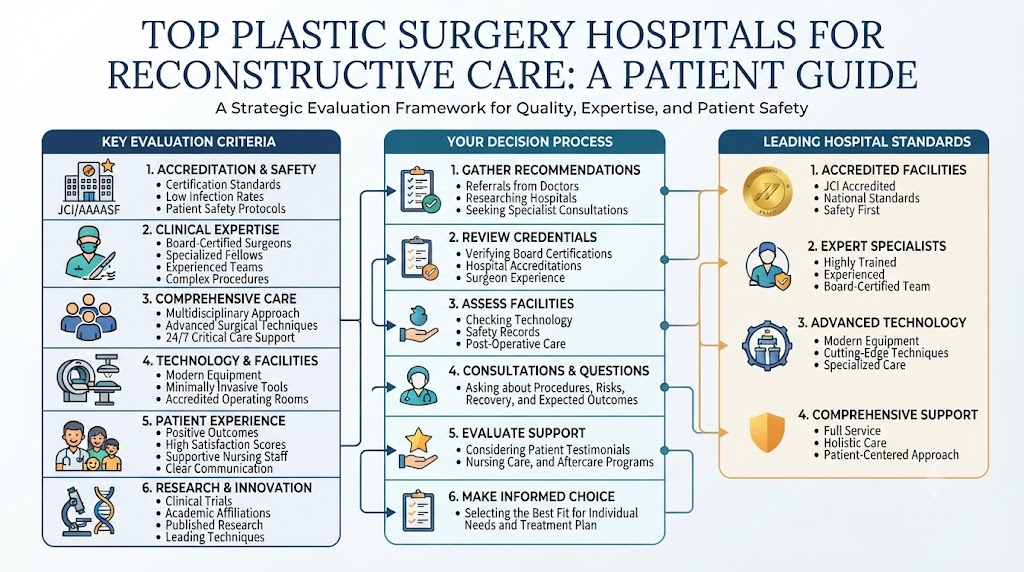
Navigating the path to recovery after trauma, illness, or birth-related conditions requires more than just medical intervention; it demands specialized expertise. Reconstructive plastic surgery is a vital medical field focused on restoring the function, integrity, and appearance of body parts affected by injury, disease, or congenital conditions. Choosing the right facility is the first step toward long-term functional improvement.At MyHospitalNow, we believe that patient education is the cornerstone of successful surgical outcomes. This guide aims to demystify the complexities of reconstructive plastic surgery and help you identify what to look for when selecting a healthcare provider.
Understanding Reconstructive Plastic Surgery
Reconstructive surgery is distinct from cosmetic surgery. While cosmetic procedures are typically elective and designed to enhance aesthetic appearance, reconstructive surgery is medically necessary. Its primary goal is to restore normal function and provide a near-normal appearance to damaged or deformed tissues.Specialized hospitals for reconstructive surgery operate through multidisciplinary teams, including plastic surgeons, orthopedists, oncologists, physical therapists, and nurses. This collaborative approach ensures that every aspect of the patient’s health—from the initial surgery to long-term physical rehabilitation—is managed by experts.
RECONSTRUCTIVE SURGERY OVERVIEW TABLE
| Aspect | Description |
| Medical Specialty | Plastic and Reconstructive Surgery |
| Primary Purpose | Restoration of function and anatomical integrity |
| Common Conditions Treated | Trauma, burns, cancer defects, congenital anomalies |
| Specialists Involved | Plastic surgeons, microsurgeons, physiotherapists, oncologists |
| Treatment Goal | Improved quality of life and functional independence |
Common Conditions Treated
Reconstructive surgery addresses a wide spectrum of physical challenges. Each requires a tailored approach depending on the tissue loss, the cause of the injury, and the patient’s individual health history.
Burn Injuries
Burn reconstruction focuses on managing scar tissue, contractures, and skin loss to regain mobility in affected areas.
Facial Trauma
This involves repairing fractures, lacerations, and soft tissue damage to restore facial symmetry and function, such as speech and breathing.
Congenital Birth Defects
Procedures like cleft lip and palate repair address developmental issues to ensure proper function from an early age.
Breast Reconstruction After Cancer
This is a transformative process aimed at restoring the shape and volume of the breast following a mastectomy, often involving flap surgery or implants.
Hand Injuries
Hand reconstruction requires delicate surgery to reconnect nerves, tendons, and blood vessels to restore dexterity.
Skin & Soft Tissue Defects
Used after tumor removal or chronic wound management, these procedures ensure proper coverage and protection of underlying muscles and bone.
CONDITIONS TREATED TABLE
| Condition | Description | Typical Treatment |
| Burn Injuries | Thermal, chemical, or electrical damage | Skin grafting, scar release |
| Facial Trauma | Damage to facial bones and soft tissue | Osteosynthesis, flap repair |
| Congenital Defects | Present at birth | Developmental correction surgery |
| Breast Reconstruction | Post-mastectomy tissue restoration | Tissue expansion, flap reconstruction |
| Hand Reconstruction | Injury to digits or palm structures | Tendon repair, microsurgical nerve graft |
| Soft Tissue Defects | Loss of skin and muscle layers | Local or free flap transfer |
Types of Reconstructive Procedures
Microsurgery
A specialized technique where surgeons use microscopes and ultra-fine instruments to connect small blood vessels and nerves.
Skin Grafting
Transplanting healthy skin from one part of the body to cover a damaged area.
Flap Reconstruction
Moving healthy tissue—including skin, fat, and sometimes muscle—with its own blood supply to a different site.
Scar Revision Surgery
Minimizing the visibility and restrictive nature of mature scar tissue.
Craniofacial Reconstruction
Complex procedures involving the skull and facial bones to correct severe trauma or defects.
Limb Reconstruction
Restoring form and function to limbs following significant trauma or tumor resection.
PROCEDURES TABLE
| Procedure | Best For | Main Benefit |
| Microsurgery | Complex nerve/vessel restoration | Restores sensation and circulation |
| Skin Grafting | Surface-level skin loss | Rapid wound closure |
| Flap Surgery | Deeper tissue loss | Reliable tissue replacement |
| Scar Revision | Mature, restrictive scars | Improves mobility and appearance |
| Craniofacial Reconstruction | Complex facial injuries | Restores facial structure |
| Limb Reconstruction | Complex fractures/soft tissue loss | Preserves limb function |
How Reconstructive Surgery Is Performed
The journey begins long before the patient enters the operating room. A systematic process ensures that risks are minimized and outcomes are optimized.
SURGICAL PROCESS TABLE
| Step | Description | Purpose |
| Consultation | Physical exam and goal setting | Determine feasibility |
| Diagnosis & Planning | Imaging (CT/MRI) and mapping | Precision in surgical execution |
| Surgery | The operative procedure | Reconstruction/Restoration |
| Recovery | Immediate post-op phase | Healing and monitoring |
| Follow-Up | Long-term check-ups | Monitor function and scar health |
Advanced Technologies in Reconstructive Surgery
Modern hospitals utilize cutting-edge tools to improve precision and shorten recovery times.
TECHNOLOGY TABLE
| Technology | Purpose | Patient Benefit |
| Microsurgery | Precision vessel/nerve repair | Higher success rates in complex grafts |
| 3D Planning | Digital modeling of anatomy | More accurate surgical fit |
| Computer Navigation | Real-time surgical guidance | Reduced trauma to healthy tissue |
| Tissue Expansion | Stretching healthy skin | Easier coverage of large defects |
| Biologic Materials | Enhancing tissue healing | Faster, more natural integration |
Recovery After Reconstructive Surgery
Recovery is a tiered process. Immediate hospital care ensures the survival of reconstructed tissues, while long-term rehabilitation focuses on restoring strength and range of motion.
RECOVERY TABLE
| Recovery Stage | Focus | Expected Outcome |
| Hospital Stay | Wound monitoring/Circulation | Stable tissue integration |
| Early Recovery | Pain management/Initial mobility | Gradual return to activities |
| Rehabilitation | Physical/Occupational therapy | Restored limb/tissue function |
| Long-Term Follow-Up | Scar maturation/Function checks | Optimized quality of life |
Benefits of Specialized Reconstructive Hospitals
Specialized centers offer an environment where reconstructive surgery is a core focus rather than a secondary department. This ensures access to the latest equipment and, more importantly, a team that manages complex cases daily.
BENEFITS TABLE
| Benefit | Why It Matters | Patient Advantage |
| Expert Surgeons | High-volume experience | Better handling of complications |
| Advanced Equipment | Precision instrumentation | Minimally invasive results |
| Rehabilitation | Integrated recovery plans | Faster return to daily function |
| Personalized Care | Custom treatment pathways | Aligned with unique goals |
| Long-Term Follow-Up | Managing scar evolution | Sustained functional outcomes |
Future of Reconstructive Plastic Surgery
The field is evolving rapidly. Innovations are moving toward less invasive methods and faster biological healing.
FUTURE OF RECONSTRUCTIVE SURGERY TABLE
| Innovation | Potential Benefit |
| AI Planning | Reduced surgical error and time |
| Robotic Surgery | Micro-precision in tight spaces |
| 3D Bioprinting | Custom-fit biological implants |
| Regenerative Medicine | Natural tissue replacement |
| Tissue Engineering | Growing new tissue in labs |
FAQs
- What is reconstructive plastic surgery?
It is surgery to restore body function and form after injury or disease. - Who needs reconstructive surgery?
Patients with trauma, cancer-related tissue loss, or congenital issues. - Is it different from cosmetic surgery?
Yes, it is medically necessary to restore function, not purely for aesthetics. - How long is recovery?
Recovery varies significantly based on the procedure; it can range from weeks to months. - Is it covered by insurance?
In many cases, yes, as it is considered medically necessary. - What are skin grafts?
Moving skin from a healthy donor site to a wounded site. - What is microsurgery?
Using a microscope to perform surgery on very small vessels or nerves. - Can burns be reconstructed?
Yes, specialists can release contractures to improve movement. - How do I choose the right hospital?
Look for accreditation, surgeon experience, and integrated rehab services. - What should I expect after surgery?
Swelling, limited movement initially, and a structured recovery plan. - Do I need physical therapy?
Often yes, to regain range of motion in reconstructed areas. - What is a flap?
Tissue moved to a new site with its own blood supply. - Are scars permanent?
All surgery leaves scars, but revision techniques can improve their look and feel. - How long does a consultation take?
It involves a thorough physical exam and detailed discussion of surgical risks. - Can children have this surgery?
Yes, specifically for congenital defects to allow for growth.
Final Thoughts
Reconstructive plastic surgery plays an irreplaceable role in restoring health and dignity to patients. Whether addressing the aftermath of trauma or managing congenital conditions, the right hospital provides not just surgical skill, but the holistic support necessary for healing.To learn more about finding the right care and to compare facilities that prioritize your recovery journey, explore MyHospitalNow for ongoing guidance and educational resources.

Find Trusted Cardiac Hospitals
Compare heart hospitals by city and services — all in one place.
Explore Hospitals