Introduction
Endpoint Protection Platforms (EPP) are comprehensive security solutions designed to protect devices like desktops, laptops, servers, and mobile endpoints from malware, ransomware, phishing, and other cyber threats. EPP solutions combine antivirus, anti-malware, threat detection, firewall management, and often include advanced features such as behavioral analytics, threat intelligence, and device management.
In with remote work, hybrid IT environments, and cloud adoption at an all-time high, organizations need robust endpoint security to prevent breaches and ensure compliance. Effective EPP solutions not only defend endpoints but also integrate with broader cybersecurity strategies, such as Zero Trust architectures and Security Operations Centers (SOC).
Common use cases include securing corporate laptops and mobile devices, protecting servers in hybrid environments, enforcing policy compliance on endpoints, detecting and responding to emerging threats, and integrating endpoint telemetry with SIEM platforms.
When evaluating EPP solutions, buyers should consider threat detection capabilities, response automation, cloud integration, scalability, endpoint performance impact, management console usability, reporting, compatibility with existing security tools, and cost-effectiveness.
Best for: IT security teams, enterprises with remote or hybrid workforces, organizations handling sensitive data, MSPs managing multiple client endpoints.
Not ideal for: Small businesses with minimal devices or low-risk environments where basic antivirus may suffice.
Key Trends in Endpoint Protection Platforms (EPP)
- AI-powered threat detection and response
- Integration with XDR (Extended Detection and Response) platforms
- Cloud-native management consoles for hybrid endpoints
- Behavioral analytics for zero-day threat detection
- Automated incident response and remediation
- Integration with threat intelligence feeds
- Support for mobile device management (MDM)
- Risk-based prioritization and alerting
- Minimal endpoint performance impact through lightweight agents
- Flexible subscription and consumption-based pricing
How We Selected These Tools (Methodology)
- Evaluated market adoption and brand recognition
- Reviewed breadth and depth of threat detection features
- Analyzed performance and reliability across large deployments
- Verified compliance with regulations like GDPR, HIPAA, and SOC 2
- Assessed integrations with SIEM, XDR, and other security tools
- Considered ease of management and automation capabilities
- Reviewed reporting, dashboards, and analytics offerings
- Assessed support availability and professional services
- Evaluated platform coverage (Windows, macOS, Linux, mobile)
- Considered total cost of ownership and pricing flexibility
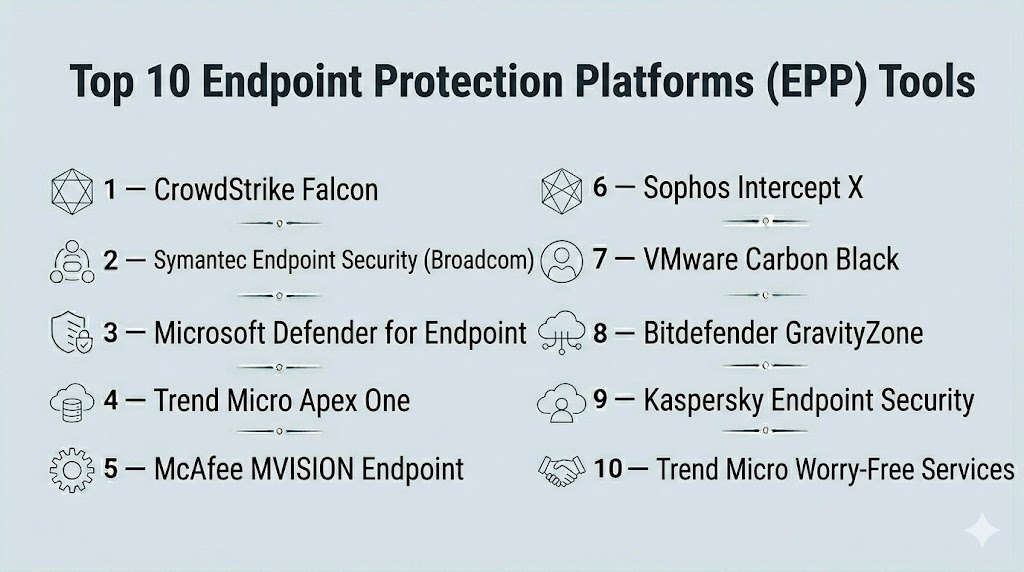
Top 10 Endpoint Protection Platforms (EPP) Tools
#1 — CrowdStrike Falcon
Short description : CrowdStrike Falcon provides cloud-native endpoint protection using AI-driven threat detection, EDR, and behavioral analytics. Ideal for enterprises seeking advanced protection without heavy on-prem infrastructure.
Key Features
- AI-powered malware and ransomware detection
- Endpoint detection and response (EDR)
- Threat intelligence integration
- Cloud-native deployment
- Behavioral analytics and anomaly detection
- Automated response and remediation
- Lightweight agent for minimal performance impact
Pros
- Rapid deployment and scalability
- Continuous threat monitoring and threat intelligence
- Minimal system resource consumption
Cons
- Premium pricing may be high for small businesses
- Advanced configuration may require skilled administrators
Platforms / Deployment
- Web / Windows / macOS / Linux
- Cloud
Security & Compliance
- SOC 2, GDPR, ISO 27001
Integrations & Ecosystem
- SIEM platforms
- SOAR and XDR solutions
- API access for custom integrations
Support & Community
- 24/7 enterprise support, documentation, community forums
#2 — Symantec Endpoint Security (Broadcom)
Short description : Symantec Endpoint Security combines traditional antivirus, EDR, and machine learning to protect endpoints from malware, ransomware, and targeted attacks for large enterprises.
Key Features
- Machine learning and AI-based threat detection
- Advanced ransomware protection
- EDR and incident response tools
- Policy enforcement and compliance reporting
- Cloud and on-prem management options
- Integration with SIEM and threat intelligence feeds
Pros
- Mature platform with extensive threat coverage
- Flexible deployment options
- Comprehensive reporting and compliance tools
Cons
- Complexity in configuration
- Performance impact can be higher than lightweight alternatives
Platforms / Deployment
- Windows / macOS / Linux
- Cloud / On-prem / Hybrid
Security & Compliance
- SOC 2, ISO 27001, GDPR, HIPAA
Integrations & Ecosystem
- SIEM and SOC tools
- XDR integration
- API for automated workflows
Support & Community
- Enterprise support, professional services, community forums
#3 — Microsoft Defender for Endpoint
Short description : Microsoft Defender for Endpoint delivers EPP and EDR capabilities integrated with Microsoft 365 and Azure, providing endpoint threat protection and automated remediation for organizations of all sizes.
Key Features
- Cloud-delivered antivirus and antimalware
- Endpoint detection and response (EDR)
- Threat analytics and intelligence
- Automated investigation and remediation
- Integration with Microsoft 365 security suite
- Device risk and compliance assessment
Pros
- Seamless integration with Microsoft ecosystem
- Cloud-native with minimal on-prem footprint
- Automated remediation reduces manual effort
Cons
- Full feature set best experienced in Microsoft environment
- Limited advanced threat intelligence compared to specialized vendors
Platforms / Deployment
- Windows / macOS / Linux
- Cloud
Security & Compliance
- SOC 2, ISO 27001, GDPR, HIPAA
Integrations & Ecosystem
- Microsoft 365, Azure Security
- SIEM and XDR integration
- API and scripting support
Support & Community
- Microsoft support, online documentation, active community
#4 — Trend Micro Apex One
Short description : Trend Micro Apex One offers automated threat detection, response, and protection across endpoints, servers, and cloud workloads.
Key Features
- Machine learning-based threat detection
- Behavioral analysis and EDR
- Automated response and remediation
- Centralized management console
- Vulnerability protection and application control
- Cloud and on-prem deployment options
Pros
- Comprehensive endpoint protection
- Centralized management for multiple endpoint types
- Supports hybrid environments
Cons
- UI complexity for novice administrators
- High resource usage on older devices
Platforms / Deployment
- Windows / macOS / Linux
- Cloud / On-prem / Hybrid
Security & Compliance
- SOC 2, ISO 27001, GDPR
Integrations & Ecosystem
- SIEM integration
- APIs for automation
- Endpoint management systems
Support & Community
- 24/7 support, knowledge base, online forums
#5 — McAfee MVISION Endpoint
Short description : McAfee MVISION Endpoint provides centralized cloud-native EPP and EDR with machine learning and behavioral analytics for threat detection and automated remediation.
Key Features
- Cloud-native endpoint protection
- Behavioral and AI-based threat detection
- Centralized management and reporting
- Automated response and remediation
- Integration with cloud workloads
- Policy enforcement and compliance
Pros
- Scalable cloud solution
- Automated detection and remediation
- Supports hybrid endpoint environments
Cons
- Learning curve for advanced policy management
- Higher cost for small organizations
Platforms / Deployment
- Windows / macOS / Linux
- Cloud / Hybrid
Security & Compliance
- SOC 2, ISO 27001, GDPR
Integrations & Ecosystem
- SIEM and XDR tools
- API integration
- Threat intelligence feeds
Support & Community
- Enterprise support, documentation, community forums
#6 — Sophos Intercept X
Short description : Sophos Intercept X combines advanced EPP and anti-ransomware protection with deep learning AI and exploit prevention for endpoints.
Key Features
- AI and deep learning malware detection
- Ransomware and exploit prevention
- Endpoint detection and response (EDR)
- Centralized management via Sophos Central
- Behavioral analytics and threat intelligence
- Cloud and on-premises deployment
Pros
- Strong anti-ransomware capabilities
- User-friendly management console
- Lightweight agent with minimal impact
Cons
- Some features require cloud subscription
- Advanced analytics may be limited
Platforms / Deployment
- Windows / macOS / Linux
- Cloud / Hybrid
Security & Compliance
- SOC 2, ISO 27001, GDPR
Integrations & Ecosystem
- SIEM integration
- APIs and Sophos ecosystem
- Threat intelligence feeds
Support & Community
- 24/7 support, documentation, online community
#7 — VMware Carbon Black
Short description : VMware Carbon Black offers next-generation EPP with cloud-native EDR, threat hunting, and behavioral analysis for modern enterprise endpoints.
Key Features
- Cloud-native malware protection
- Behavioral EDR and threat hunting
- Threat intelligence integration
- Policy enforcement and compliance reporting
- Automated remediation and alerts
- API and integration capabilities
Pros
- Advanced threat detection
- Cloud scalability for enterprise deployments
- Integration with VMware ecosystem
Cons
- Complexity in setup
- Resource usage higher on older devices
Platforms / Deployment
- Windows / macOS / Linux
- Cloud / Hybrid
Security & Compliance
- SOC 2, ISO 27001, GDPR
Integrations & Ecosystem
- VMware ecosystem, SIEM, API integrations
- Threat intelligence feeds
- Security orchestration tools
Support & Community
- Enterprise support, documentation, community forums
#8 — Bitdefender GravityZone
Short description : Bitdefender GravityZone provides unified EPP with advanced threat intelligence, behavioral analytics, and cloud-native management for endpoints.
Key Features
- Machine learning and AI threat detection
- Behavioral analysis and EDR
- Centralized cloud console
- Anti-exploit and anti-ransomware
- Policy enforcement and vulnerability assessment
- Cloud-native architecture
Pros
- Lightweight agent
- Centralized management
- Comprehensive endpoint protection
Cons
- Advanced features may require premium tiers
- Limited integrations with non-security tools
Platforms / Deployment
- Windows / macOS / Linux
- Cloud / Hybrid
Security & Compliance
- SOC 2, ISO 27001, GDPR
Integrations & Ecosystem
- SIEM integration
- API access
- Threat intelligence feeds
Support & Community
- 24/7 support, documentation, online forums
#9 — Kaspersky Endpoint Security
Short description : Kaspersky Endpoint Security offers AI-driven antivirus, malware protection, and EDR capabilities for endpoints in enterprises and SMBs.
Key Features
- AI and behavioral malware detection
- EDR and incident response
- Anti-ransomware and anti-exploit
- Centralized management console
- Vulnerability scanning
- Policy enforcement
Pros
- Comprehensive threat protection
- Supports hybrid and cloud deployments
- Scalable for SMB and enterprise
Cons
- Some advanced features require premium license
- Performance impact on older devices
Platforms / Deployment
- Windows / macOS / Linux
- Cloud / On-prem / Hybrid
Security & Compliance
- SOC 2, ISO 27001, GDPR
Integrations & Ecosystem
- SIEM, API integration
- Threat intelligence feeds
- Endpoint management tools
Support & Community
- Documentation, enterprise support, community forums
#10 — Trend Micro Worry-Free Services
Short description : Trend Micro Worry-Free Services delivers cloud-managed EPP for SMBs, integrating antivirus, malware protection, and web threat defense.
Key Features
- Cloud-managed antivirus and antimalware
- Behavior monitoring and EDR
- Web threat protection
- Policy and compliance management
- Lightweight agent deployment
- Cloud-based console
Pros
- Easy deployment for SMBs
- Centralized cloud management
- Affordable and scalable
Cons
- Limited advanced EDR features compared to enterprise solutions
- Less granular reporting
Platforms / Deployment
- Windows / macOS / Linux
- Cloud
Security & Compliance
- SOC 2, ISO 27001, GDPR
Integrations & Ecosystem
- API integration
- SIEM connectivity
- Endpoint management systems
Support & Community
- Documentation, support tiers, online community
Comparison Table (Top 10)
| Tool Name | Best For | Platform(s) Supported | Deployment | Standout Feature | Public Rating |
|---|---|---|---|---|---|
| CrowdStrike Falcon | Enterprise | Web, Windows, macOS, Linux | Cloud | AI-driven threat detection | N/A |
| Symantec Endpoint Security | Enterprise | Windows, macOS, Linux | Cloud/On-prem | Comprehensive threat coverage | N/A |
| Microsoft Defender for Endpoint | Enterprise | Windows, macOS, Linux | Cloud | Azure integration and automated remediation | N/A |
| Trend Micro Apex One | Enterprise | Windows, macOS, Linux | Cloud/Hybrid | Behavioral analytics | N/A |
| McAfee MVISION Endpoint | Enterprise | Windows, macOS, Linux | Cloud/Hybrid | Cloud-native centralized management | N/A |
| Sophos Intercept X | Enterprise | Windows, macOS, Linux | Cloud/Hybrid | Anti-ransomware & deep learning | N/A |
| VMware Carbon Black | Enterprise | Windows, macOS, Linux | Cloud/Hybrid | Behavioral EDR | N/A |
| Bitdefender GravityZone | Enterprise | Windows, macOS, Linux | Cloud/Hybrid | AI-driven threat protection | N/A |
| Kaspersky Endpoint Security | SMB / Enterprise | Windows, macOS, Linux | Cloud/Hybrid | AI-driven EDR | N/A |
| Trend Micro Worry-Free | SMB | Windows, macOS, Linux | Cloud | Cloud-managed EPP | N/A |
Evaluation & Scoring of Endpoint Protection Platforms (EPP)
| Tool Name | Core (25%) | Ease (15%) | Integrations (15%) | Security (10%) | Performance (10%) | Support (10%) | Value (15%) | Weighted Total |
|---|---|---|---|---|---|---|---|---|
| CrowdStrike Falcon | 10 | 9 | 9 | 9 | 9 | 9 | 8 | 9.0 |
| Symantec Endpoint Security | 9 | 8 | 8 | 9 | 8 | 8 | 7 | 8.2 |
| Microsoft Defender | 9 | 9 | 8 | 8 | 8 | 8 | 8 | 8.2 |
| Trend Micro Apex One | 9 | 8 | 8 | 8 | 8 | 8 | 7 | 8.0 |
| McAfee MVISION | 8 | 8 | 8 | 8 | 8 | 8 | 7 | 7.9 |
| Sophos Intercept X | 9 | 9 | 8 | 9 | 8 | 8 | 7 | 8.1 |
| VMware Carbon Black | 9 | 8 | 8 | 9 | 8 | 8 | 7 | 8.0 |
| Bitdefender GravityZone | 8 | 8 | 8 | 8 | 8 | 8 | 7 | 7.8 |
| Kaspersky Endpoint Security | 8 | 8 | 7 | 8 | 8 | 8 | 7 | 7.7 |
| Trend Micro Worry-Free | 8 | 9 | 7 | 8 | 8 | 7 | 7 | 7.7 |
Interpretation: Weighted totals reflect how each EPP balances core features, integrations, security, and usability. Higher scores indicate better overall capability for enterprise security.
Which Endpoint Protection Platforms (EPP) Tool Is Right for You?
Solo / Freelancer
Lightweight antivirus with basic threat protection is sufficient; cloud-native EPP may be overkill.
SMB
Trend Micro Worry-Free and Bitdefender GravityZone provide scalable, easy-to-manage EPP solutions.
Mid-Market
Sophos Intercept X, McAfee MVISION, and Kaspersky Endpoint Security balance advanced protection with manageable deployment.
Enterprise
CrowdStrike Falcon, Symantec Endpoint Security, Microsoft Defender, Trend Micro Apex One, and VMware Carbon Black offer comprehensive protection, analytics, and integration for large-scale environments.
Budget vs Premium
SMBs can adopt cost-effective cloud-managed solutions; enterprises benefit from premium platforms with advanced EDR, threat intelligence, and automation.
Feature Depth vs Ease of Use
Enterprise platforms provide extensive features; mid-market solutions prioritize simplicity and deployment speed.
Integrations & Scalability
Cloud-native EPP platforms offer scalable deployment, APIs for integrations, and seamless connectivity with SIEM/XDR.
Security & Compliance Needs
Organizations subject to GDPR, HIPAA, or SOC 2 require platforms with certified compliance and reporting capabilities.
Frequently Asked Questions (FAQs)
1. What is an EPP?
EPP is a cybersecurity solution that protects endpoints from malware, ransomware, and other threats using antivirus, threat detection, and response capabilities.
2. How does EPP differ from EDR?
EPP focuses on prevention and protection, while EDR emphasizes detection, investigation, and response to active threats.
3. Can EPP handle remote endpoints?
Yes, cloud-native EPP solutions support remote and hybrid endpoints with real-time threat management.
4. Do EPP solutions include ransomware protection?
Most modern EPP platforms include anti-ransomware, exploit prevention, and behavior-based threat detection.
5. Is EPP cloud-based or on-premises?
EPP can be cloud-native, on-premises, or hybrid, depending on the vendor and deployment needs.
6. How does EPP integrate with SIEM/XDR?
EPP provides logs, alerts, and telemetry that feed into SIEM and XDR platforms for centralized monitoring and response.
7. Can EPP protect mobile devices?
Yes, many EPP solutions extend protection to mobile devices including iOS and Android.
8. Does EPP affect device performance?
Modern EPP solutions use lightweight agents to minimize system impact while providing continuous protection.
9. How scalable are EPP platforms?
Cloud-native EPP platforms are highly scalable, supporting thousands to millions of endpoints across distributed environments.
10. What industries benefit most from EPP?
Enterprises, healthcare, finance, government, and any organization with sensitive data benefit from robust endpoint protection.
Conclusion
Endpoint Protection Platforms (EPP) are critical for defending against modern cyber threats across desktops, servers, and mobile endpoints. Selecting the right solution depends on organization size, deployment model, threat landscape, and integration needs. Enterprises benefit from comprehensive platforms like CrowdStrike Falcon, Symantec Endpoint Security, and Microsoft Defender, while SMBs can leverage Trend Micro Worry-Free or Bitdefender GravityZone for scalable protection. Pilot deployments and evaluating integration capabilities with existing security infrastructure ensure optimal protection and operational efficiency.

Find Trusted Cardiac Hospitals
Compare heart hospitals by city and services — all in one place.
Explore Hospitals
Endpoint protection can sometimes affect device performance, especially when scans or security checks run during busy working hours. It helps to monitor this impact so security controls do not make employees avoid or disable them. Finding the right balance between protection and everyday device performance can make the solution more effective.