Introduction
The journey toward parenthood is one of the most significant and deeply personal experiences a person or couple can undertake. For many, this path unfolds naturally, but for a significant number of individuals, it involves navigating the complex landscape of fertility challenges. This process can be fraught with uncertainty, hope, and at times, intense emotional pressure. Recognizing that you may need professional assistance is not a sign of defeat; rather, it is a brave, proactive step toward building the family you envision. This is why selecting an experienced, empathetic, and technologically advanced fertility hospital is paramount.When you look for the best IVF hospitals, you are looking for more than just a medical facility. You are looking for a partner in your care. You need a team that combines clinical excellence with genuine emotional support. Navigating this process alone can be daunting, which is why resources that provide clear, vetted, and compassionate information are essential. For those beginning their research, platforms like Myhospitalnow serve as a vital starting point, helping to demystify the process and connect patients with the expertise they need.
Understanding Infertility
Infertility is medically defined as the inability to achieve a clinical pregnancy after 12 months or more of regular, unprotected sexual intercourse. While this definition provides a clinical baseline, it often fails to capture the emotional reality of the condition. Infertility is not just a biological hurdle; it is a life event that affects individuals and couples physically, mentally, and socially.It is helpful to distinguish between primary and secondary infertility. Primary infertility refers to cases where a couple has never been able to conceive. Secondary infertility occurs when a couple has previously conceived or carried a pregnancy to term but is unable to do so again. Both forms can be equally distressing and require the same level of medical rigor in diagnosis and treatment.One of the most common myths regarding infertility is that it is primarily a female issue. This could not be further from the truth. Statistical data indicates that in approximately one-third of cases, the infertility is attributable to female factors; in another one-third, it is attributable to male factors; and in the remaining cases, it is a combination of both or remains unexplained even after thorough investigation.When should you seek help? The general medical recommendation is to consult a fertility specialist if you have been trying for a year without success. However, if the female partner is over the age of 35, or if there is a known history of conditions like endometriosis, PCOS, or irregular cycles, it is advisable to seek evaluation after six months of trying, or even sooner. Proactive care is always more effective than reactive waiting.It is also important to dispel the stigma surrounding infertility.
Common Causes of Infertility
Fertility is a complex biological process requiring a healthy interplay of hormones, anatomy, and cellular function in both partners. When this process is interrupted, it can stem from a variety of sources.
Female Factors
- Ovulation Disorders: This is one of the most common causes of female infertility, where the ovaries do not release an egg regularly. Polycystic Ovary Syndrome (PCOS) is a frequent culprit, characterized by hormonal imbalances.
- Endometriosis: This occurs when tissue similar to the lining of the uterus grows outside the uterus, potentially causing scarring, inflammation, and blockage of the fallopian tubes.
- Blocked Fallopian Tubes: If the tubes are blocked or damaged, sperm cannot reach the egg, and a fertilized egg cannot move to the uterus for implantation.
- Age-Related Decline: Fertility naturally decreases with age as the quantity and quality of eggs in the ovaries decline. This is a primary factor in the increased utilization of assisted reproductive technology.
Male Factors
- Low Sperm Count (Oligospermia): A decrease in the number of sperm produced can significantly reduce the probability of conception.
- Poor Sperm Motility: This refers to the inability of sperm to swim effectively toward the egg, which is crucial for fertilization.
- Hormonal Disorders: Imbalances in testosterone or other pituitary hormones can impair sperm production.
- Genetic Conditions: Certain chromosomal abnormalities or structural issues can lead to infertility.
Shared & Lifestyle Factors
- Obesity: Excessive body weight can disrupt the hormonal balance necessary for ovulation and sperm production.
- Smoking and Alcohol: These substances are known to have detrimental effects on both egg and sperm quality.
- Chronic Stress: While stress is often secondary to the infertility journey, prolonged high levels of stress hormones can impact the body’s overall reproductive health.
Table 1: Common Causes of Infertility
| Cause | Affects | Impact on Fertility |
| PCOS | Female | Ovulation problems |
| Endometriosis | Female | Reproductive complications |
| Blocked Tubes | Female | Fertilization difficulty |
| Low Sperm Count | Male | Reduced conception chances |
| Hormonal Disorders | Both | Fertility challenges |
What is IVF?
In Vitro Fertilization (IVF) is the most widely utilized and effective form of assisted reproductive technology. The term “in vitro” is Latin for “in glass,” referring to the laboratory environment where the fertilization of the egg by sperm occurs, outside the human body.
The history of IVF is a testament to scientific perseverance. Since the first successful birth via IVF in the late 1970s, the field has evolved exponentially. Today, IVF is a highly refined medical procedure that involves stimulating the ovaries to produce multiple eggs, retrieving these eggs, and fertilizing them in a controlled laboratory setting. Once an embryo develops, it is transferred back into the uterus, with the goal of achieving a healthy pregnancy.
IVF is recommended for a variety of reasons, including tubal factor infertility, severe male factor infertility, advanced maternal age, and cases where other treatments like intrauterine insemination (IUI) have not been successful. It is also an option for individuals using donor eggs or gestational carriers. The decision to pursue IVF is a significant one, and it is usually taken after a thorough diagnostic workup has identified it as the most viable path toward parenthood for the specific patient.
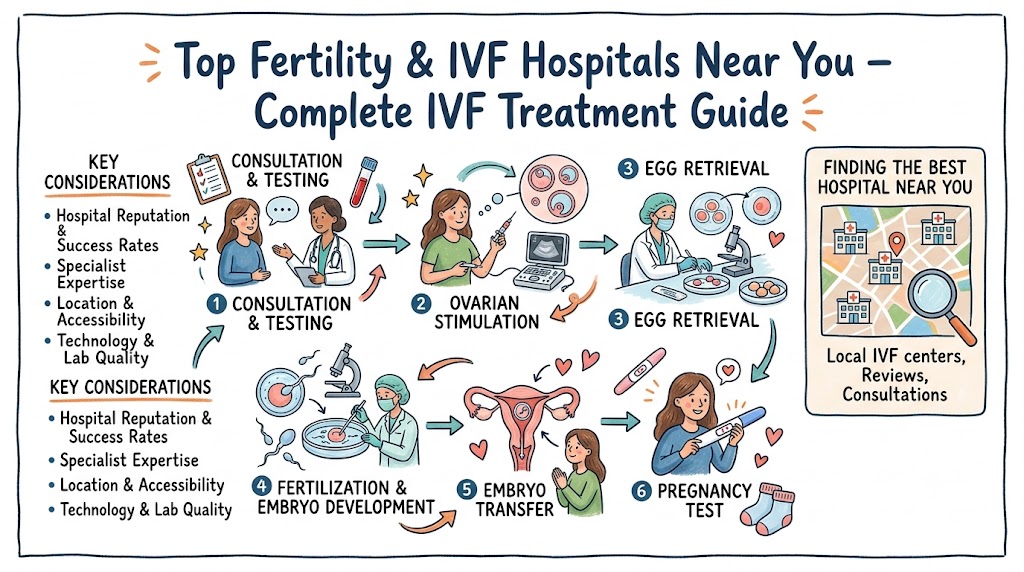
Step-by-Step IVF Process
Understanding the IVF timeline is essential for reducing anxiety during treatment. While protocols vary based on individual needs, the general journey follows a structured path.
Initial Consultation
This stage involves a complete review of your medical history, physical exams, and blood tests to evaluate hormone levels. Male partners will also undergo a semen analysis.
Fertility Testing
Beyond initial labs, this may include ultrasounds to check the uterus and ovaries, and sometimes a hysterosalpingogram (HSG) to ensure the fallopian tubes are open.
Ovarian Stimulation
Over the course of 8 to 14 days, the patient takes injectable fertility medications to encourage the ovaries to produce multiple mature eggs, rather than the single egg typically produced in a natural cycle.
Egg Retrieval
Once the follicles reach a target size, a minor surgical procedure is performed under light sedation to collect the mature eggs from the ovaries.
Sperm Collection
On the same day as the egg retrieval, the male partner provides a semen sample, or previously frozen sperm is thawed.
Fertilization Process
In the laboratory, the eggs are combined with sperm. In cases of male factor infertility, the specialist may use Intracytoplasmic Sperm Injection (ICSI), where a single, healthy sperm is injected directly into each mature egg.
Embryo Development
The resulting embryos are monitored in the incubator for 3 to 5 days, allowing the embryology team to track their growth and select the most viable candidates for transfer.
Embryo Transfer
A thin, flexible tube (catheter) is used to place one or more embryos into the uterus. This is a quick, relatively painless procedure that does not require anesthesia.
Pregnancy Testing
About 10 to 14 days after the transfer, a blood test is performed to measure hCG levels and determine if the treatment was successful.
Table 2: IVF Treatment Journey
| Stage | Purpose | Typical Timeline |
| Evaluation | Fertility assessment | Initial visits |
| Stimulation | Egg development | Several days |
| Retrieval | Egg collection | One procedure |
| Fertilization | Embryo creation | Laboratory phase |
| Transfer | Embryo placement | Short procedure |
| Follow-Up | Pregnancy testing | Post-transfer |
Advanced Fertility Treatments
Reproductive medicine is constantly innovating, providing specialized options for complex cases.
- ICSI: As mentioned, this involves injecting a single sperm into an egg, drastically improving outcomes for severe male factor infertility.
- Donor Eggs/Sperm: When an individual’s own gametes are not viable, donor programs offer an opportunity to achieve pregnancy.
- Frozen Embryo Transfer (FET): Using embryos frozen from a previous cycle, which allows for better timing and a more natural uterine environment during the transfer.
- PGT (Preimplantation Genetic Testing): This allows specialists to screen embryos for genetic conditions before transfer, ensuring the highest chance of a healthy pregnancy.
- Fertility Preservation: Egg or embryo freezing is increasingly used for individuals facing medical treatments that may impair fertility, or for those who wish to delay childbearing for personal reasons.
IVF Success Factors
Success in IVF is influenced by several variables, some of which are within your control and others that are physiological.
Age is the most critical factor, particularly maternal age, as it directly impacts egg quality and chromosomal integrity. However, high-quality laboratory standards and the expertise of the fertility specialist play a massive role in bridging the gap. Lifestyle choices, such as maintaining a healthy weight, avoiding toxins, and managing stress, provide the best physiological environment for the treatment to take hold. Furthermore, the genetic health of the embryos remains the primary determinant of whether an implantation will progress to a successful pregnancy.
Table 3: Factors Influencing IVF Outcomes
| Factor | Potential Impact |
| Age | Significant |
| Egg Quality | High |
| Sperm Health | High |
| Embryo Quality | High |
| Lifestyle | Moderate |
| Medical Expertise | High |
How to Choose the Best Fertility & IVF Hospital
Choosing the right facility is arguably the most important decision you will make. Start by looking for institutions that value transparency and patient education.
- Clinical Expertise: Look for board-certified reproductive endocrinologists with years of experience.
- Laboratory Standards: The lab is the heart of the IVF process. Look for facilities with high-end air filtration, state-of-the-art incubators, and a team of experienced embryologists.
- Advanced Tech: Ensure the hospital offers the full spectrum of ART, including PGT and advanced cryopreservation.
- Holistic Support: Fertility treatment is an emotional journey. Facilities that provide access to mental health counselors, support groups, and patient advocates often report higher patient satisfaction and lower dropout rates.
- Multidisciplinary Team: The best outcomes occur when doctors, nurses, embryologists, and counselors work in lockstep.
Cost of IVF & Financial Considerations
The financial aspect of IVF can be overwhelming. Costs are generally broken down into clinical fees, medication, laboratory procedures, and diagnostic testing. It is essential to have an open conversation with the hospital’s finance department early on to understand the full package.
Many couples find success on their first attempt, but it is wise to budget for the possibility of multiple cycles. Ask about “shared risk” programs or financing options that might make the process more manageable. Investing in a high-quality clinic often proves more cost-effective in the long run, as it reduces the likelihood of failed cycles due to suboptimal laboratory conditions.
Emotional Well-being During IVF
The emotional rollercoaster of IVF is real. It is normal to feel periods of hope, sadness, anxiety, and frustration. Do not isolate yourself. Whether it is through a partner, a trusted friend, or a professional therapist, having an outlet for your feelings is crucial.
Practice stress management through gentle activities like yoga, meditation, or simply walking in nature. Many top fertility hospitals offer dedicated counseling to help patients process the intensity of the hormone treatments and the uncertainty of the outcome. Acknowledging your feelings without judgment is a sign of emotional strength, not weakness.
Recovery & Post-IVF Care
After the egg retrieval, it is common to experience mild bloating or cramping. Most patients return to normal activities within a few days. After an embryo transfer, doctors typically recommend taking it easy for a day or two, though strict bed rest is generally not required.
Compliance with post-transfer medications, such as progesterone support, is critical. Keep all follow-up appointments, even if you feel fine. These visits are necessary for the clinical team to monitor your progress and ensure you are supported throughout the “two-week wait.”
Table 4: Post-IVF Care Checklist
| Care Area | Importance |
| Medication Compliance | Essential |
| Follow-Up Visits | Important |
| Stress Management | Beneficial |
| Healthy Lifestyle | Supportive |
| Medical Monitoring | Necessary |
Real-Life Fertility Journeys
The human side of IVF is best illustrated through the experiences of those who have navigated it. Consider a woman with PCOS who struggled with irregular ovulation for years. By working with a fertility specialist who focused on stabilizing her hormonal profile before beginning a gentle stimulation protocol, she was able to achieve a healthy egg harvest and successful transfer.
Or consider a couple dealing with severe male factor infertility. By utilizing ICSI, they bypassed the fertilization barriers and welcomed twins after their second cycle. Each journey is unique, and while the statistics are important, they are not a substitute for the individual narrative of resilience that each patient carries.
Future of Fertility Treatment
The future of reproductive medicine is incredibly bright. We are seeing the integration of Artificial Intelligence (AI) in embryology, which helps specialists select the most viable embryos with greater precision. Genetic medicine is also advancing, offering new ways to address hereditary conditions before birth. Personalized medicine, where protocols are tailored to the specific genetic makeup and hormone profile of the patient, is becoming the gold standard, promising higher success rates and lower physical burdens for patients.
FAQs
- What is IVF?
IVF is a fertility treatment where an egg is retrieved and fertilized by sperm in a lab. The resulting embryo is then placed into the uterus. - Who needs IVF treatment?
It is recommended for those with blocked tubes, severe male factor issues, endometriosis, or unexplained infertility when other methods have failed. - Is IVF painful?
The injections and procedure may cause mild discomfort, but most patients find it very manageable with standard pain relief and anesthesia. - How long does IVF take?
One cycle typically takes about 4 to 6 weeks from the start of medication to the pregnancy test. - What affects IVF success rates?
Age, egg and sperm quality, embryo genetics, and the expertise of the laboratory and medical team are the primary drivers of success. - How many IVF cycles are needed?
Many couples succeed in one or two cycles, but some may require more depending on their specific fertility diagnosis. - What is ICSI?
Intracytoplasmic Sperm Injection is a technique where a single sperm is injected into an egg, used primarily to treat male factor infertility. - Can IVF help older women?
Yes, IVF can help older women conceive, though success rates may vary and sometimes donor eggs are recommended for the best outcomes. - Is IVF safe?
IVF is widely considered safe. Like any medical procedure, there are minor risks, which your specialist will discuss thoroughly during your consultation. - What is embryo freezing?
It is the process of cryopreserving unused embryos for future use, which can improve the chances of pregnancy in later cycles. - How do I choose an IVF hospital?
Focus on clinics with high success transparency, advanced laboratory tech, and a strong emphasis on patient support and ethical care. - Are fertility tests necessary?
Yes, they provide the necessary data to determine the cause of infertility and the most appropriate treatment path for you. - Can lifestyle affect fertility?
Yes, smoking, alcohol, excessive weight, and poor nutrition can negatively impact egg and sperm quality. - What support is available during IVF?
Many clinics offer counseling, support groups, and patient advocate services to help manage the emotional demands of treatment. - What should I expect after embryo transfer?
You may experience minor cramping or spotting. It is important to follow medication instructions and wait for the official pregnancy blood test.
Final Conclusion
Embarking on the IVF journey is a profound act of hope. While the road may feel long and at times uncertain, the field of reproductive medicine has matured into a sophisticated discipline capable of creating life in ways once thought impossible. The key to navigating this experience is knowledge, proactive preparation, and the selection of a healthcare partner who truly understands the gravity of your situation.We have explored the definitions of infertility, the mechanics of IVF, the necessity of choosing the right hospital, and the importance of maintaining emotional resilience. Throughout this guide, the common thread has been the importance of personalized care. Every diagnosis is different, and every patient deserves a treatment plan that is as unique as their own story.The advances in technology, from ICSI to PGT and AI-enhanced embryo selection, mean that we are better equipped than ever to overcome reproductive challenges. However, technology is only one part of the equation. Your relationship with your fertility specialist and the support system at your chosen hospital are just as vital. Remember to look for clinics that prioritize clear communication and provide a supportive environment.

Find Trusted Cardiac Hospitals
Compare heart hospitals by city and services — all in one place.
Explore Hospitals
Choosing an IVF hospital involves much more than comparing success rates. Factors such as the experience of the fertility specialists, the range of treatment options available, transparent pricing, personalized patient care, and access to advanced laboratory technology all play an important role in improving the overall treatment experience and outcomes.