Introduction
Capacity Planning Tools help organizations forecast, manage, and optimize IT infrastructure resources such as CPU, memory, storage, network bandwidth, and application workloads. These platforms enable IT teams to predict future demand, avoid system overloads, and ensure applications run efficiently across cloud, hybrid, and on-premise environments. In modern IT ecosystems where workloads are highly dynamic, containerized, and distributed across multiple clouds, capacity planning has become a critical part of operational strategy. Businesses now need predictive insights rather than reactive monitoring to maintain performance and control infrastructure costs. Modern tools combine AI-driven forecasting, workload modeling, automation, and observability integrations to improve decision-making and scalability planning.
Real-World Use Cases Include:
- Forecasting cloud infrastructure growth requirements.
- Optimizing Kubernetes cluster resource allocation.
- Preventing system downtime due to resource exhaustion.
- Reducing cloud cost through right-sizing recommendations.
- Planning data center expansion and workload distribution.
Key Buyer Evaluation Criteria Include:
- Forecasting accuracy and predictive analytics capabilities.
- Integration with cloud providers and monitoring systems.
- Support for hybrid and multi-cloud environments.
- AI/ML-based workload prediction features.
- Scalability for enterprise workloads.
- Ease of deployment and usability.
- Cost optimization insights.
- Real-time and historical data analysis.
- Security controls and compliance support.
- Reporting and visualization capabilities.
Best for:
DevOps teams, cloud architects, IT operations teams, enterprise infrastructure planners, FinOps teams, SaaS providers, and organizations running large-scale distributed systems.
Not ideal for:
Small websites with static workloads, organizations without cloud or infrastructure complexity, or teams that do not require predictive scaling or cost optimization.
Key Trends in Capacity Planning Tools
- AI-driven predictive capacity forecasting is becoming standard.
- FinOps integration is improving cloud cost optimization strategies.
- Kubernetes-native capacity planning is rapidly expanding.
- Real-time observability integration is enhancing forecasting accuracy.
- Multi-cloud capacity modeling is becoming essential for enterprises.
- Automated scaling recommendations are reducing manual intervention.
- Workload simulation models are improving infrastructure planning.
- Cost-aware capacity optimization is gaining importance.
- Edge computing capacity planning is emerging as a new requirement.
- Unified observability platforms are combining monitoring and forecasting.
How We Selected These Tools (Methodology)
- Market adoption and enterprise usage trends.
- Strength of forecasting and predictive analytics capabilities.
- Support for cloud, hybrid, and on-prem environments.
- Integration ecosystem with observability and cloud platforms.
- AI/ML capabilities for workload prediction.
- Security and compliance readiness.
- Scalability for enterprise workloads.
- Ease of implementation and usability.
- Quality of reporting and visualization features.
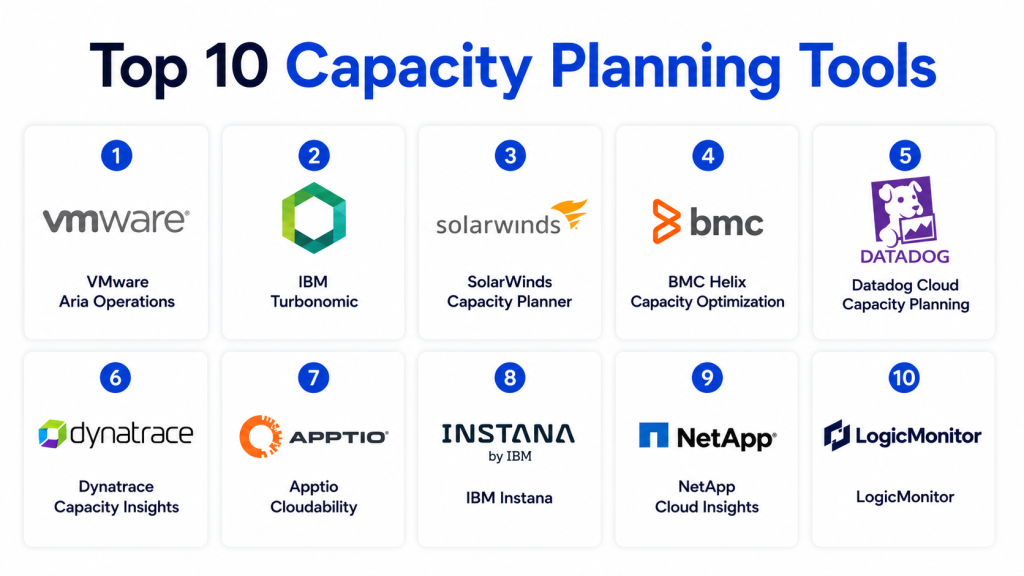
Top 10 Capacity Planning Tools
1- VMware Aria Operations
Short Description: VMware Aria Operations is a leading infrastructure capacity planning and operations analytics platform designed for virtualized, hybrid cloud, and enterprise infrastructure environments. It is widely used by enterprises managing VMware-heavy environments.
Key Features
- AI-driven workload forecasting
- Capacity reclamation analytics
- Hybrid cloud optimization
- Performance monitoring and alerting
- Predictive resource planning
- Automated workload balancing
- Custom dashboards and reporting
Pros
- Excellent VMware ecosystem integration
- Strong predictive analytics capabilities
- Mature enterprise-grade automation
Cons
- Can be complex for smaller teams
- Licensing costs may be high
- Best suited for VMware-centric environments
Platforms / Deployment
- Cloud / Self-hosted / Hybrid
Security & Compliance
- RBAC
- SSO/SAML
- MFA support
- Audit logging
- Encryption support
Integrations & Ecosystem
VMware Aria Operations integrates deeply with virtualization, cloud, and infrastructure management platforms, making it a strong fit for enterprise data center operations.
- VMware vSphere
- AWS
- Microsoft Azure
- Kubernetes
- ServiceNow
- REST APIs
Support & Community
Strong enterprise support ecosystem with extensive documentation, training programs, and a large VMware partner community.
2- ServiceNow Strategic Portfolio Management
Short Description: ServiceNow Strategic Portfolio Management provides enterprise-level resource and capacity planning across IT, project management, and operational workflows. It is commonly used by large organizations standardizing digital operations.
Key Features
- Enterprise resource forecasting
- Demand and portfolio management
- Workforce planning
- AI-assisted planning insights
- Workflow automation
- Financial planning integration
- Scenario modeling
Pros
- Strong enterprise workflow automation
- Unified operational planning platform
- Excellent governance capabilities
Cons
- Implementation can be lengthy
- Premium pricing structure
- Requires administrative expertise
Platforms / Deployment
- Cloud
Security & Compliance
- SSO/SAML
- RBAC
- Encryption
- Audit trails
- SOC 2
- GDPR support
Integrations & Ecosystem
The platform supports extensive enterprise integrations across ITSM, ERP, HR, and project management ecosystems.
- Jira
- SAP
- Microsoft Teams
- Azure DevOps
- Slack
- REST APIs
Support & Community
Large enterprise support organization with strong onboarding, implementation partners, and active user communities.
3- Planview AdaptiveWork
Short Description: Planview AdaptiveWork focuses on enterprise project and resource capacity planning for PMOs, IT departments, and professional services organizations seeking strategic portfolio visibility.
Key Features
- Resource capacity forecasting
- Portfolio prioritization
- Scenario planning
- Real-time dashboards
- Agile planning support
- Budget forecasting
- Workforce utilization tracking
Pros
- Strong portfolio planning capabilities
- Good visualization features
- Suitable for large project organizations
Cons
- UI may feel dated
- Learning curve for advanced features
- Complex customization process
Platforms / Deployment
- Cloud
Security & Compliance
- SSO
- RBAC
- Encryption
- Audit capabilities
Integrations & Ecosystem
Planview AdaptiveWork integrates with project management, collaboration, and enterprise planning systems.
- Jira
- Salesforce
- Microsoft Project
- Slack
- Azure DevOps
- APIs
Support & Community
Comprehensive enterprise support with implementation consulting and knowledge base resources.
4- Anaplan
Short Description: Anaplan is a connected enterprise planning platform used for financial, workforce, supply chain, and operational capacity planning across large enterprises.
Key Features
- Scenario simulation
- Predictive analytics
- Financial planning
- Workforce modeling
- Collaborative planning
- Real-time analytics
- Custom planning models
Pros
- Highly flexible modeling platform
- Strong enterprise scalability
- Excellent scenario planning
Cons
- Requires skilled administrators
- Higher implementation complexity
- Premium enterprise pricing
Platforms / Deployment
- Cloud
Security & Compliance
- SSO
- Encryption
- RBAC
- Audit logs
- SOC 2 support
Integrations & Ecosystem
Anaplan supports enterprise-wide planning integrations across finance, operations, and analytics ecosystems.
- SAP
- Oracle
- Salesforce
- Power BI
- Tableau
- APIs
Support & Community
Strong enterprise training ecosystem with certification programs and consulting support.
5- IBM Turbonomic
Short Description: IBM Turbonomic is an AI-powered application resource management and capacity optimization platform designed for hybrid cloud and Kubernetes environments.
Key Features
- AI-driven resource optimization
- Kubernetes capacity planning
- Cloud cost optimization
- Automated scaling
- Performance assurance
- Real-time workload balancing
- Infrastructure analytics
Pros
- Excellent automation capabilities
- Strong Kubernetes support
- Effective cloud optimization
Cons
- Complex enterprise setup
- Premium licensing
- Requires operational maturity
Platforms / Deployment
- Cloud / Hybrid
Security & Compliance
- RBAC
- SSO
- Audit logging
- Encryption support
Integrations & Ecosystem
IBM Turbonomic integrates with cloud, virtualization, observability, and container orchestration platforms.
- Kubernetes
- AWS
- Azure
- Google Cloud
- VMware
- AppDynamics
Support & Community
Enterprise-grade support backed by IBM’s infrastructure and consulting ecosystem.
6- Smartsheet Resource Management
Short Description: Smartsheet Resource Management helps organizations manage project staffing, resource allocation, and team capacity planning through collaborative planning workflows.
Key Features
- Team utilization tracking
- Project forecasting
- Resource scheduling
- Reporting dashboards
- Workload balancing
- Timesheet management
- Collaboration tools
Pros
- User-friendly interface
- Quick onboarding process
- Strong collaboration features
Cons
- Less advanced predictive analytics
- Limited deep infrastructure planning
- Enterprise governance may require add-ons
Platforms / Deployment
- Cloud
Security & Compliance
- SSO
- MFA
- Encryption
- Audit capabilities
Integrations & Ecosystem
Smartsheet connects well with project management and productivity platforms commonly used by distributed teams.
- Microsoft Teams
- Slack
- Jira
- Salesforce
- Google Workspace
- APIs
Support & Community
Good onboarding documentation and strong adoption among business teams and PMOs.
7- Broadcom Clarity
Short Description: Broadcom Clarity is an enterprise portfolio and resource management platform designed for strategic planning, project governance, and operational capacity management.
Key Features
- Resource forecasting
- Portfolio management
- Capacity analytics
- Agile planning
- Financial governance
- Scenario analysis
- Workflow automation
Pros
- Strong enterprise governance
- Comprehensive planning capabilities
- Mature portfolio management features
Cons
- Interface complexity
- Longer deployment cycles
- Requires dedicated administration
Platforms / Deployment
- Cloud / Hybrid
Security & Compliance
- SSO
- RBAC
- Audit logging
- Encryption support
Integrations & Ecosystem
Broadcom Clarity integrates with enterprise planning, Agile, and DevOps ecosystems.
- Jira
- Rally
- SAP
- Microsoft Project
- APIs
- ServiceNow
Support & Community
Enterprise-focused support structure with partner implementation ecosystem.
8- Oracle Primavera P6
Short Description: Oracle Primavera P6 is widely used for construction, engineering, and infrastructure project capacity planning where resource allocation and scheduling are mission-critical.
Key Features
- Resource capacity management
- Project scheduling
- Scenario analysis
- Cost forecasting
- Multi-project planning
- Risk analysis
- Critical path management
Pros
- Excellent for large infrastructure projects
- Deep scheduling functionality
- Strong enterprise reporting
Cons
- Steep learning curve
- Traditional interface design
- Overkill for smaller teams
Platforms / Deployment
- Cloud / Self-hosted
Security & Compliance
- RBAC
- SSO support
- Encryption
- Audit capabilities
Integrations & Ecosystem
Primavera integrates with ERP, project management, and enterprise scheduling ecosystems.
- Oracle ERP
- SAP
- Microsoft Project
- Primavera Analytics
- APIs
Support & Community
Strong enterprise support and large adoption in construction and engineering sectors.
9- ClickUp
Short Description: ClickUp provides lightweight resource and workload planning features suitable for SMBs and fast-growing operational teams seeking affordability and flexibility.
Key Features
- Workload views
- Task allocation
- Team capacity visualization
- Dashboards
- Time tracking
- Automation workflows
- Agile project management
Pros
- Affordable pricing
- Flexible workspace customization
- Easy adoption for smaller teams
Cons
- Limited enterprise forecasting depth
- Advanced analytics may be basic
- Large-scale governance can be challenging
Platforms / Deployment
- Web / Windows / macOS / Linux / iOS / Android
- Cloud
Security & Compliance
- SSO
- MFA
- Encryption
- RBAC support
Integrations & Ecosystem
ClickUp offers a broad productivity ecosystem suitable for operational and collaborative workflows.
- Slack
- GitHub
- Jira
- Google Workspace
- Microsoft Teams
- APIs
Support & Community
Large SMB user community with extensive tutorials and templates.
10- NetApp Cloud Insights
Short Description: NetApp Cloud Insights delivers infrastructure observability and capacity optimization across cloud, storage, and hybrid environments.
Key Features
- Infrastructure utilization analytics
- Storage capacity forecasting
- Hybrid cloud monitoring
- AI-assisted anomaly detection
- Performance visualization
- Resource optimization
- Real-time telemetry
Pros
- Strong storage analytics
- Excellent hybrid visibility
- Good observability integration
Cons
- Best suited for infrastructure-focused teams
- May require operational expertise
- Enterprise pricing considerations
Platforms / Deployment
- Cloud
Security & Compliance
- RBAC
- Encryption
- SSO
- Audit logging
Integrations & Ecosystem
NetApp Cloud Insights integrates with infrastructure, storage, and observability ecosystems.
- Kubernetes
- VMware
- AWS
- Azure
- NetApp ONTAP
- APIs
Support & Community
Strong enterprise documentation and infrastructure operations support ecosystem.
Comparison Table
| Tool Name | Best For | Platform(s) Supported | Deployment | Standout Feature | Public Rating |
|---|---|---|---|---|---|
| VMware Aria Operations | Virtualized infrastructure | Web, Windows, Linux | Cloud/Hybrid/On-prem | VMware optimization | N/A |
| IBM Turbonomic | AI workload optimization | Web, Linux, Windows | Cloud/Hybrid | AI resource management | N/A |
| SolarWinds Capacity Planner | Legacy IT environments | Web, Windows | On-prem/Cloud | IT forecasting | N/A |
| BMC Helix Capacity Optimization | Enterprise ITSM | Web, Linux, Windows | Cloud/Hybrid | Predictive modeling | N/A |
| Datadog | Cloud-native teams | Web | Cloud | Unified observability | N/A |
| Dynatrace | AI observability | Web, Linux, Windows | Cloud/Hybrid | AI insights | N/A |
| Apptio Cloudability | FinOps teams | Web | Cloud | Cost optimization | N/A |
| IBM Instana | Real-time observability | Web, Linux, Windows | Cloud/Hybrid | Dependency mapping | N/A |
| NetApp Cloud Insights | Storage-heavy orgs | Web | Cloud/Hybrid | Storage analytics | N/A |
| LogicMonitor | Hybrid IT monitoring | Web | Cloud/Hybrid | Easy deployment | N/A |
Evaluation & Scoring Table
| Tool Name | Core (25%) | Ease (15%) | Integrations (15%) | Security (10%) | Performance (10%) | Support (10%) | Value (15%) | Total |
|---|---|---|---|---|---|---|---|---|
| VMware Aria Operations | 9 | 7 | 9 | 9 | 9 | 8 | 7 | 8.4 |
| IBM Turbonomic | 9 | 7 | 9 | 9 | 9 | 8 | 7 | 8.5 |
| SolarWinds Capacity Planner | 7 | 8 | 7 | 8 | 7 | 7 | 8 | 7.4 |
| BMC Helix | 9 | 6 | 9 | 9 | 9 | 8 | 6 | 7.9 |
| Datadog | 8 | 9 | 9 | 9 | 9 | 8 | 6 | 8.3 |
| Dynatrace | 9 | 7 | 9 | 9 | 9 | 8 | 6 | 8.4 |
| Apptio Cloudability | 8 | 8 | 8 | 8 | 8 | 8 | 8 | 8.1 |
| IBM Instana | 8 | 7 | 8 | 8 | 8 | 8 | 7 | 7.9 |
| NetApp Cloud Insights | 7 | 8 | 7 | 8 | 7 | 7 | 8 | 7.5 |
| LogicMonitor | 7 | 8 | 8 | 8 | 7 | 8 | 8 | 7.7 |
Which Capacity Planning Tool Is Right for You?
Solo / Freelancer
Smartsheet Resource Management and ClickUp are strong choices for small operational teams needing lightweight planning, collaboration, and affordability. These platforms offer lower onboarding complexity and faster adoption.
SMB
SMBs typically benefit from ClickUp, Smartsheet, or Planview AdaptiveWork depending on project complexity. These tools balance usability with enough forecasting depth for growing organizations.
Mid-Market
Mid-market organizations often require stronger forecasting, reporting, and governance capabilities. Planview AdaptiveWork, IBM Turbonomic, and Broadcom Clarity are well suited for scaling operational planning.
Enterprise
Large enterprises managing hybrid infrastructure, global teams, or large project portfolios should evaluate VMware Aria Operations, ServiceNow Strategic Portfolio Management, Anaplan, and Oracle Primavera P6.
Budget vs Premium
Budget-focused buyers may prefer ClickUp or Smartsheet for operational planning. Premium enterprise platforms such as Anaplan and ServiceNow deliver broader governance and predictive planning but at significantly higher cost.
Feature Depth vs Ease of Use
ClickUp and Smartsheet prioritize accessibility and usability. VMware Aria Operations and Oracle Primavera P6 provide deeper analytics and enterprise control but require more operational expertise.
Integrations & Scalability
Organizations with mature IT ecosystems should prioritize tools with strong APIs and enterprise integrations such as ServiceNow, VMware, IBM Turbonomic, or Anaplan.
Security & Compliance Needs
Highly regulated industries should evaluate enterprise-grade platforms with mature RBAC, audit logging, encryption, and SSO capabilities. ServiceNow, VMware, IBM, and Oracle generally align better with enterprise governance requirements.
Frequently Asked Questions (FAQs)
1. What are Capacity Planning Tools used for?
Capacity Planning Tools help organizations forecast resource requirements, optimize workloads, manage operational demand, and avoid performance bottlenecks across infrastructure, workforce, and project operations.
2. Are Capacity Planning Tools only for IT infrastructure?
No. Many platforms support workforce planning, manufacturing operations, project portfolio management, financial forecasting, and enterprise operational planning in addition to infrastructure optimization.
3. Do these tools support AI-driven forecasting?
Many modern platforms now include AI-assisted forecasting, anomaly detection, and predictive analytics to improve planning accuracy and automate recommendations.
4. What is the difference between resource planning and capacity planning?
Resource planning focuses on assigning available resources, while capacity planning evaluates future demand and predicts whether additional resources will be needed.
5. Are cloud-native tools better than self-hosted platforms?
Cloud-native platforms generally offer faster deployment and easier scalability, while self-hosted deployments may provide greater control for regulated or security-sensitive organizations.
6. Which tool is best for enterprise infrastructure planning?
VMware Aria Operations, IBM Turbonomic, and NetApp Cloud Insights are strong options for infrastructure-centric enterprise environments.
7. What industries benefit most from these platforms?
Industries including IT services, manufacturing, engineering, healthcare, construction, telecommunications, and financial services commonly use capacity planning platforms.
8. Can SMBs benefit from capacity planning software?
Yes. SMBs can improve workforce efficiency, project delivery, and operational forecasting using lightweight planning platforms like ClickUp and Smartsheet.
9. What are common mistakes when implementing these tools?
Organizations often underestimate integration complexity, fail to define forecasting goals, or neglect change management and stakeholder training during rollout.
10. How should organizations evaluate vendors?
Buyers should evaluate scalability, analytics depth, integrations, deployment flexibility, governance controls, vendor support quality, and long-term operational fit before selecting a platform.
Conclusion
Capacity Planning Tools are essential for modern IT environments where workloads constantly change across cloud, hybrid, and distributed systems. These platforms help organizations predict infrastructure needs, optimize costs, and ensure application reliability at scale. Enterprise-grade tools like VMware Aria Operations and IBM Turbonomic provide deep AI-driven optimization, while platforms like Datadog and LogicMonitor offer strong observability-driven capacity insights. FinOps-focused tools like Apptio Cloudability add financial intelligence to capacity decisions. The right choice depends on whether your priority is performance optimization, cost control, cloud-native visibility, or enterprise infrastructure governance.

Find Trusted Cardiac Hospitals
Compare heart hospitals by city and services — all in one place.
Explore Hospitals
This gave me a better understanding of how capacity planning tools help forecast resource needs and improve system efficiency. I’d like to explore which tool fits best for scaling cloud and enterprise environments.