Introduction
SD-WAN Management Platforms help organizations centrally manage, optimize, secure, and automate software-defined wide area networks across branch offices, cloud environments, remote users, and distributed enterprise infrastructure. These platforms replace traditional WAN architectures with intelligent traffic routing, centralized policy management, application-aware networking, and integrated security capabilities. As enterprises continue adopting hybrid work, cloud-first applications, edge computing, and multi-cloud infrastructure, SD-WAN platforms have become critical for maintaining network performance, reducing operational complexity, and improving connectivity resilience. Modern SD-WAN solutions also integrate AI-driven analytics, zero-trust security models, and SASE architectures to support evolving enterprise networking demands.
Common Real-world use cases include:
- Connecting branch offices with centralized network control
- Optimizing SaaS and cloud application performance
- Supporting hybrid and remote workforce connectivity
- Simplifying multi-cloud networking operations
- Improving WAN resiliency and failover automation
Key Evaluation criteria buyers should consider include:
- Centralized orchestration and management
- Application-aware routing capabilities
- Integrated security and SASE functionality
- Multi-cloud networking support
- Automation and AI-driven analytics
- WAN optimization and performance monitoring
- Scalability across distributed environments
- API integrations and ecosystem support
- Deployment flexibility
- Total cost of ownership
Best for: Enterprises, distributed retail organizations, financial services, healthcare providers, telecom operators, managed service providers, and businesses with multiple branch locations or hybrid cloud environments.
Not ideal for: Very small organizations with limited networking requirements or businesses fully dependent on single-site operations without WAN complexity.
Key Trends in SD-WAN Management Platforms
- AI-powered traffic optimization and predictive analytics are becoming standard features.
- SASE integration is increasingly replacing standalone SD-WAN deployments.
- Zero-trust networking principles are deeply integrated into WAN architectures.
- Multi-cloud connectivity optimization is now a major purchasing factor.
- Edge computing support is driving new SD-WAN deployment models.
- Unified network and security management platforms are gaining enterprise adoption.
- API-first automation is simplifying large-scale network operations.
- Cloud-native SD-WAN architectures continue replacing appliance-heavy deployments.
- Real-time telemetry and observability capabilities are improving troubleshooting.
- Subscription-based pricing models are becoming more common across vendors.
How We Selected These Tools (Methodology)
The tools below were evaluated using practical enterprise networking criteria including:
- Market adoption and industry reputation
- SD-WAN orchestration and automation depth
- Security integration capabilities
- Reliability and WAN optimization performance
- Cloud and hybrid infrastructure compatibility
- Vendor ecosystem and API flexibility
- Scalability across distributed environments
- Reporting, analytics, and troubleshooting features
- Customer support quality and operational maturity
- Suitability across SMB, mid-market, and enterprise environments
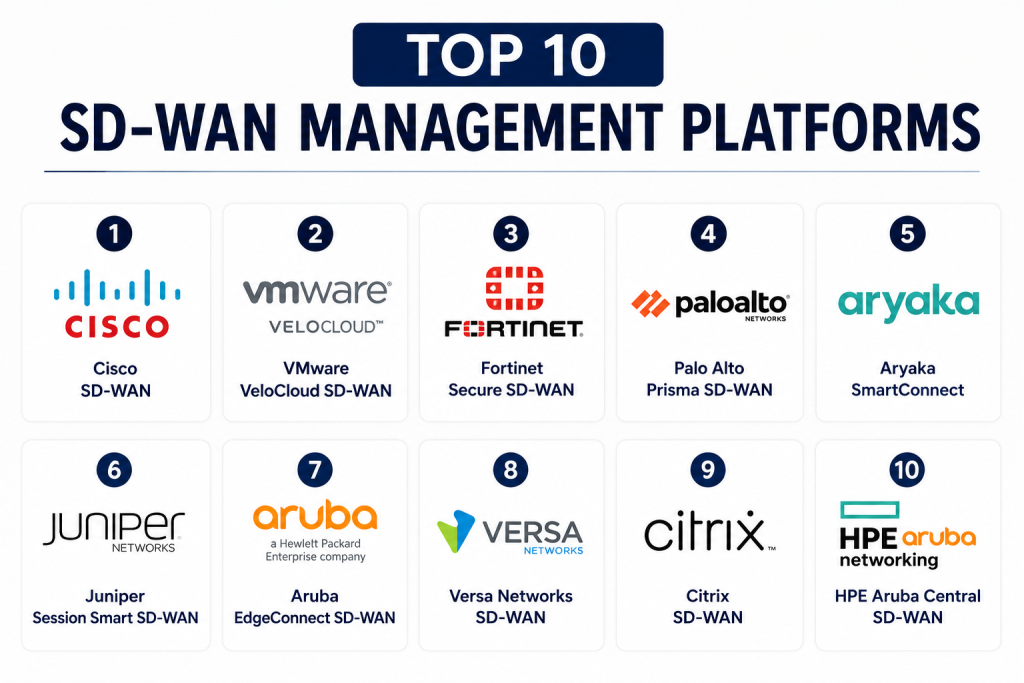
Top 10 SD-WAN Management Platforms
1- Cisco SD-WAN
Short description: Cisco SD-WAN is an enterprise-grade platform focused on centralized WAN orchestration, application-aware routing, and secure connectivity for large distributed environments.
Key Features
- Centralized WAN orchestration
- Application-aware routing
- Integrated security controls
- Multi-cloud connectivity
- AI-driven analytics
- Zero-touch provisioning
- Real-time monitoring dashboards
Pros
- Strong enterprise scalability
- Deep Cisco ecosystem integration
- Advanced automation capabilities
Cons
- Complex deployment for smaller teams
- Premium pricing
- Best experience within Cisco environments
Platforms / Deployment
- Cloud
- Hybrid
- Appliance-based
Security & Compliance
- RBAC
- MFA
- SSO/SAML
- Encryption
- Audit logging
Integrations & Ecosystem
Cisco SD-WAN integrates with Cisco’s broader networking, security, and observability ecosystem for centralized enterprise operations.
- Cisco Secure Access
- Cisco Umbrella
- APIs
- SIEM integrations
- Cloud provider integrations
Support & Community
Cisco offers enterprise-grade support, certifications, partner ecosystems, and extensive documentation resources.
2- VMware VeloCloud SD-WAN
Short description: VMware VeloCloud SD-WAN provides cloud-delivered WAN optimization and centralized orchestration for enterprises seeking scalable hybrid networking.
Key Features
- Dynamic multipath optimization
- Cloud-delivered gateways
- WAN performance analytics
- Zero-touch deployment
- Application prioritization
- Edge-to-cloud optimization
- Integrated security support
Pros
- Strong cloud networking optimization
- Easy branch deployment
- Reliable application performance management
Cons
- Enterprise pricing structure
- Advanced customization may require expertise
- Some features depend on VMware ecosystem adoption
Platforms / Deployment
- Cloud
- Hybrid
Security & Compliance
- Encryption
- RBAC
- Secure segmentation
- Audit capabilities
Integrations & Ecosystem
VeloCloud integrates with cloud infrastructure providers, security platforms, and enterprise virtualization ecosystems.
- VMware ecosystem
- AWS
- Azure
- APIs
- Security integrations
Support & Community
VMware provides enterprise support programs, onboarding resources, and a mature technical ecosystem.
3- Fortinet Secure SD-WAN
Short description: Fortinet Secure SD-WAN combines WAN optimization and integrated security into a unified platform for branch and enterprise networking.
Key Features
- Integrated firewall functionality
- Application-aware traffic steering
- WAN optimization
- Secure segmentation
- Centralized management
- AI-powered threat intelligence
- LTE and broadband failover
Pros
- Strong integrated security
- Competitive total cost of ownership
- Simplified branch security management
Cons
- Interface complexity for beginners
- Advanced configurations require expertise
- Reporting customization can be limited
Platforms / Deployment
- Cloud
- Self-hosted
- Hybrid
Security & Compliance
- MFA
- RBAC
- Encryption
- SSO support
- Threat intelligence integration
Integrations & Ecosystem
Fortinet integrates tightly with its broader cybersecurity and networking ecosystem.
- FortiManager
- FortiAnalyzer
- APIs
- SIEM tools
- Cloud providers
Support & Community
Strong enterprise support and broad security-focused partner ecosystem.
4- Palo Alto Prisma SD-WAN
Short description: Prisma SD-WAN focuses on secure application delivery, intelligent path selection, and integrated cloud security for distributed enterprises.
Key Features
- AI-driven traffic optimization
- Autonomous digital experience management
- Integrated SASE architecture
- Application-aware routing
- Cloud-delivered security
- Zero-touch provisioning
- Centralized orchestration
Pros
- Strong SASE capabilities
- Excellent application performance visibility
- Integrated security architecture
Cons
- Higher licensing costs
- Complex enterprise configurations
- Better suited for larger organizations
Platforms / Deployment
- Cloud
- Hybrid
Security & Compliance
- Zero-trust security
- RBAC
- Encryption
- MFA
- Audit logging
Integrations & Ecosystem
Prisma SD-WAN integrates with Palo Alto’s cloud security and network operations ecosystem.
- Prisma Access
- Cortex ecosystem
- APIs
- SIEM integrations
- Multi-cloud integrations
Support & Community
Enterprise-grade support with strong security-focused documentation and training.
5- Aryaka SmartConnect
Short description: Aryaka SmartConnect delivers managed SD-WAN services with global private backbone optimization and cloud-first networking capabilities.
Key Features
- Global private backbone
- Managed SD-WAN services
- Application acceleration
- WAN optimization
- Multi-cloud connectivity
- AI-driven visibility
- Integrated security options
Pros
- Excellent global WAN performance
- Simplified managed operations
- Strong cloud application optimization
Cons
- Managed-service focus may limit customization
- Premium pricing for global deployments
- Less flexibility for DIY networking teams
Platforms / Deployment
- Cloud
- Managed service
Security & Compliance
- Encryption
- RBAC
- Segmentation
- Secure access controls
Integrations & Ecosystem
Aryaka integrates with cloud platforms, security providers, and enterprise networking ecosystems.
- AWS
- Azure
- Google Cloud
- APIs
- Security integrations
Support & Community
Managed-service support model with strong enterprise onboarding assistance.
6- Juniper Session Smart SD-WAN
Short description: Juniper Session Smart SD-WAN provides application-aware networking and secure WAN orchestration using session-based routing technology.
Key Features
- Session-based routing
- WAN optimization
- Dynamic traffic engineering
- Secure segmentation
- Centralized orchestration
- AI-driven insights
- Application visibility
Pros
- Efficient bandwidth utilization
- Strong performance optimization
- Secure routing architecture
Cons
- Smaller market presence than major competitors
- Learning curve for advanced deployments
- Ecosystem maturity still growing
Platforms / Deployment
- Cloud
- Hybrid
Security & Compliance
- Encryption
- RBAC
- Segmentation
- Secure policy enforcement
Integrations & Ecosystem
Juniper integrates with AI-driven networking and cloud infrastructure ecosystems.
- Juniper Mist AI
- APIs
- Cloud integrations
- Monitoring platforms
Support & Community
Juniper offers enterprise support programs and expanding SD-WAN documentation resources.
7- Aruba EdgeConnect SD-WAN
Short description: Aruba EdgeConnect SD-WAN delivers secure branch networking, WAN optimization, and centralized policy control for distributed enterprises.
Key Features
- Business intent overlays
- WAN optimization
- Dynamic path control
- Integrated segmentation
- Centralized orchestration
- Application visibility
- Multi-cloud support
Pros
- Strong branch networking performance
- Good application prioritization
- Reliable WAN resiliency
Cons
- Interface complexity in large deployments
- Premium enterprise pricing
- Advanced policies require planning
Platforms / Deployment
- Cloud
- Hybrid
Security & Compliance
- Encryption
- RBAC
- Secure segmentation
- Audit controls
Integrations & Ecosystem
Aruba integrates with HPE networking and enterprise management ecosystems.
- Aruba Central
- APIs
- Cloud integrations
- Security platforms
Support & Community
Strong enterprise support backed by HPE’s global partner ecosystem.
8- Versa Networks SD-WAN
Short description: Versa Networks delivers unified SD-WAN, SASE, and secure networking capabilities for service providers and enterprises.
Key Features
- Integrated SASE functionality
- Unified policy management
- WAN optimization
- AI-driven analytics
- Secure branch connectivity
- Multi-tenant management
- Application visibility
Pros
- Strong security integration
- Flexible deployment options
- Telecom-grade scalability
Cons
- Complex enterprise deployments
- Requires experienced administrators
- Interface usability varies
Platforms / Deployment
- Cloud
- Self-hosted
- Hybrid
Security & Compliance
- RBAC
- Encryption
- MFA
- Segmentation
- Audit logging
Integrations & Ecosystem
Versa integrates with telecom, cloud, and enterprise security ecosystems.
- APIs
- Cloud platforms
- SIEM tools
- Security integrations
Support & Community
Enterprise-focused support model with growing service provider adoption.
9- Citrix SD-WAN
Short description: Citrix SD-WAN focuses on application delivery optimization and secure connectivity for hybrid workforce environments.
Key Features
- Application acceleration
- WAN optimization
- Centralized orchestration
- Secure remote connectivity
- Traffic shaping
- Cloud optimization
- Real-time analytics
Pros
- Strong remote work optimization
- Good application delivery performance
- Reliable WAN acceleration
Cons
- Best suited for Citrix-centric environments
- Advanced integrations may require tuning
- Smaller ecosystem compared to larger networking vendors
Platforms / Deployment
- Cloud
- Hybrid
Security & Compliance
- Encryption
- RBAC
- Secure segmentation
- Authentication controls
Integrations & Ecosystem
Citrix integrates with virtualization, remote access, and cloud delivery ecosystems.
- Citrix Workspace
- APIs
- Cloud integrations
- Monitoring tools
Support & Community
Enterprise support is available, with strong documentation for Citrix-focused deployments.
10- HPE Aruba Central SD-WAN
Short description: HPE Aruba Central SD-WAN combines cloud-based orchestration, branch networking, and AI-powered operational analytics.
Key Features
- Cloud-native management
- AI-powered insights
- Centralized policy orchestration
- Branch connectivity optimization
- Application analytics
- Zero-touch provisioning
- Integrated network monitoring
Pros
- Strong cloud-native operations
- Simplified branch management
- Good AI-driven visibility
Cons
- Ecosystem strongest within Aruba deployments
- Enterprise-focused pricing
- Advanced analytics require tuning
Platforms / Deployment
- Cloud
- Hybrid
Security & Compliance
- RBAC
- MFA
- Encryption
- Audit capabilities
Integrations & Ecosystem
Aruba Central integrates with HPE networking, cloud, and observability ecosystems.
- Aruba networking
- APIs
- Cloud integrations
- Monitoring tools
- Security platforms
Support & Community
Backed by HPE enterprise support services and strong networking partner ecosystems.
Comparison Table
| Tool Name | Best For | Platform(s) Supported | Deployment | Standout Feature | Public Rating |
|---|---|---|---|---|---|
| Cisco SD-WAN | Large enterprises | Appliance, Cloud | Hybrid | Application-aware routing | N/A |
| VMware VeloCloud | Hybrid cloud networking | Cloud | Hybrid | Dynamic multipath optimization | N/A |
| Fortinet Secure SD-WAN | Security-focused networking | Cloud, Appliance | Hybrid | Integrated firewall security | N/A |
| Palo Alto Prisma SD-WAN | SASE environments | Cloud | Hybrid | AI-driven traffic optimization | N/A |
| Aryaka SmartConnect | Global managed networking | Cloud | Managed Service | Private global backbone | N/A |
| Juniper Session Smart | Secure WAN optimization | Cloud | Hybrid | Session-based routing | N/A |
| Aruba EdgeConnect | Branch networking | Cloud | Hybrid | Business intent overlays | N/A |
| Versa Networks SD-WAN | Telecom-grade deployments | Cloud | Hybrid | Unified SASE architecture | N/A |
| Citrix SD-WAN | Remote workforce optimization | Cloud | Hybrid | Application acceleration | N/A |
| HPE Aruba Central SD-WAN | Cloud-managed operations | Cloud | Hybrid | AI-powered analytics | N/A |
Evaluation & Scoring of SD-WAN Management Platforms
| Tool Name | Core | Ease | Integrations | Security | Performance | Support | Value | Weighted Total |
|---|---|---|---|---|---|---|---|---|
| Cisco SD-WAN | 9 | 7 | 9 | 9 | 9 | 8 | 7 | 8.4 |
| VMware VeloCloud | 8 | 8 | 8 | 8 | 8 | 8 | 7 | 7.9 |
| Fortinet Secure SD-WAN | 9 | 7 | 8 | 9 | 8 | 8 | 8 | 8.3 |
| Palo Alto Prisma SD-WAN | 9 | 7 | 9 | 9 | 9 | 8 | 6 | 8.2 |
| Aryaka SmartConnect | 8 | 8 | 7 | 8 | 9 | 8 | 7 | 7.9 |
| Juniper Session Smart | 8 | 7 | 7 | 8 | 8 | 7 | 7 | 7.5 |
| Aruba EdgeConnect | 8 | 7 | 8 | 8 | 8 | 8 | 7 | 7.8 |
| Versa Networks SD-WAN | 9 | 6 | 8 | 9 | 8 | 7 | 7 | 7.9 |
| Citrix SD-WAN | 8 | 7 | 7 | 8 | 8 | 7 | 7 | 7.5 |
| HPE Aruba Central SD-WAN | 8 | 8 | 8 | 8 | 8 | 8 | 7 | 7.9 |
These scores are comparative and designed to help organizations evaluate SD-WAN platforms across operational priorities. Higher scores generally indicate stronger enterprise functionality, automation depth, scalability, and security integration. Organizations should balance feature depth with deployment complexity and operational skill requirements before selecting a platform.
Which SD-WAN Management Platform Is Right for You?
Solo / Freelancer
Most solo operators do not require enterprise-grade SD-WAN platforms. Lightweight cloud networking solutions or managed networking services are usually more practical.
SMB
Fortinet Secure SD-WAN and VMware VeloCloud provide strong usability, integrated security, and manageable deployment complexity for growing organizations.
Mid-Market
Aruba EdgeConnect and HPE Aruba Central SD-WAN offer balanced operational visibility, branch networking performance, and centralized orchestration.
Enterprise
Cisco SD-WAN, Palo Alto Prisma SD-WAN, and Versa Networks SD-WAN are best suited for large distributed environments requiring advanced automation, security, and scalability.
Budget vs Premium
Premium enterprise solutions offer stronger AI analytics, SASE integration, and automation capabilities but typically involve higher licensing and operational costs.
Feature Depth vs Ease of Use
Organizations with experienced networking teams can benefit from highly customizable enterprise platforms, while smaller teams may prefer cloud-managed simplicity.
Integrations & Scalability
Large enterprises should prioritize API-rich platforms with strong cloud, observability, and security ecosystem support.
Security & Compliance Needs
Organizations handling regulated data should prioritize integrated SASE, segmentation, encryption, audit logging, and zero-trust networking capabilities.
Frequently Asked Questions (FAQs)
1. What is an SD-WAN Management Platform?
An SD-WAN Management Platform centrally manages software-defined wide area networks, optimizing traffic routing, security, and branch connectivity.
2. Why are organizations adopting SD-WAN?
Organizations use SD-WAN to improve cloud application performance, reduce WAN costs, simplify branch networking, and strengthen operational visibility.
3. What is the difference between SD-WAN and traditional WAN?
Traditional WAN relies heavily on static MPLS architectures, while SD-WAN uses software-defined policies and intelligent traffic routing across multiple connection types.
4. What is SASE in relation to SD-WAN?
SASE combines networking and security capabilities into a unified cloud-delivered architecture, often integrating directly with SD-WAN platforms.
5. Are SD-WAN platforms secure?
Most enterprise SD-WAN platforms include encryption, segmentation, access controls, and integrated security capabilities for secure branch connectivity.
6. Can SD-WAN improve application performance?
Yes. SD-WAN platforms dynamically optimize network traffic paths based on application requirements and network conditions.
7. Is SD-WAN only for large enterprises?
No. SMB-focused SD-WAN solutions are increasingly available with simplified cloud-managed deployment models.
8. How difficult is SD-WAN deployment?
Deployment complexity depends on network size, security requirements, and integration needs. Cloud-managed platforms typically simplify implementation.
9. Do SD-WAN platforms support hybrid cloud environments?
Yes. Most modern SD-WAN platforms are designed specifically for hybrid cloud and multi-cloud connectivity optimization.
10. How should organizations evaluate SD-WAN vendors?
Organizations should assess scalability, security integration, WAN optimization, operational simplicity, cloud support, APIs, and total ownership costs.
Conclusion
SD-WAN Management Platforms have become foundational technologies for modern enterprise networking. As organizations continue embracing cloud-first operations, hybrid work environments, and distributed infrastructure, centralized WAN orchestration and intelligent traffic optimization are increasingly essential. The best platform depends heavily on organizational size, security requirements, cloud adoption strategy, and operational maturity. Some businesses prioritize integrated security and SASE capabilities, while others focus on WAN performance optimization, automation depth, or managed-service simplicity. Enterprises should shortlist a few platforms aligned with their networking strategy, validate interoperability with existing infrastructure, and conduct pilot deployments before large-scale rollouts. Careful evaluation of scalability, security posture, and operational complexity can significantly improve long-term networking outcomes.

Find Trusted Cardiac Hospitals
Compare heart hospitals by city and services — all in one place.
Explore Hospitals
SD-WAN management platforms are most valuable when they help organizations centrally manage, monitor, optimize, and secure software-defined wide area networks across distributed locations. By providing centralized network management, application-aware routing, traffic optimization, network monitoring, automated provisioning, policy management, security controls, performance analytics, failover management, reporting, and integration with cloud and enterprise networking environments, these platforms enable organizations to improve network visibility, simplify branch connectivity, optimize application performance, reduce operational complexity, and maintain more reliable and secure WAN infrastructure.