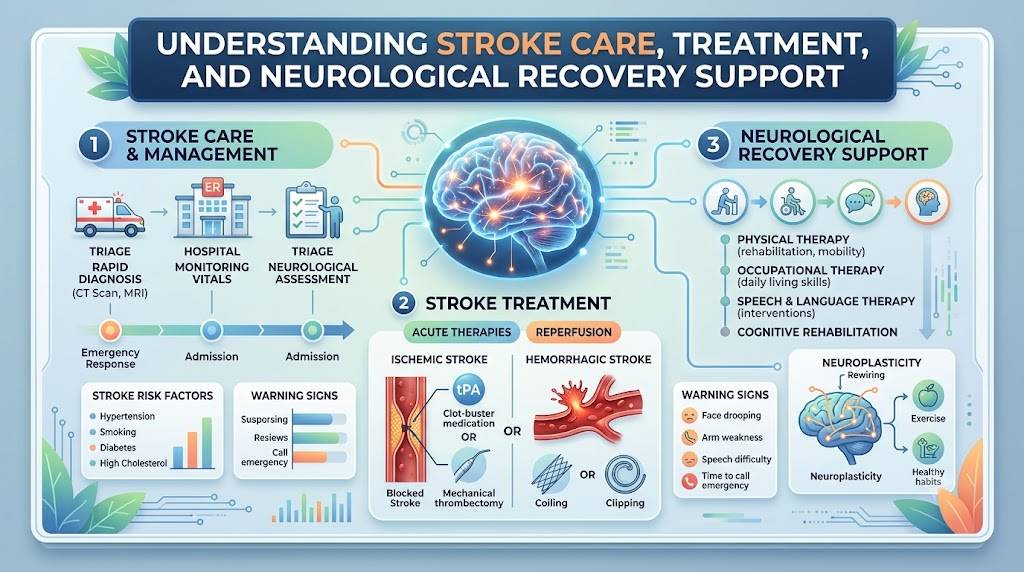
A stroke can affect the brain very quickly. It happens when brain blood flow stops or bleeding starts. Fast medical assessment helps doctors understand the problem. Neurological care can then support safe and timely treatment. Care may include emergency treatment, monitoring, rehabilitation, and follow-up. MyHospitalNow helps people explore hospitals, doctors, and healthcare services. Learn more at .
What Is a Stroke?
A stroke happens when the brain loses normal blood flow. It can also happen when a brain blood vessel bleeds. Both types can harm brain cells. Brain cells need blood and oxygen to work well.
There are two main types of stroke. An ischemic stroke happens when a blood vessel becomes blocked. A hemorrhagic stroke happens when a blood vessel bleeds.
The care plan depends on the stroke type. It also depends on the person’s health and symptoms. This is why quick stroke diagnosis is important.
Why Is Stroke Treatment Time-Sensitive?
Brain cells need a steady supply of blood and oxygen. A blocked vessel can reduce this supply. Bleeding can also harm nearby brain tissue.
Doctors need to know what type of stroke occurred. Brain scans can help show the cause. This information helps the medical team plan care.
Early hospital assessment can also help find other problems. These may affect breathing, blood pressure, or heart function. Stroke care must always follow medical assessment.
What Does a Neurologist Do for a Stroke Patient?
A stroke neurologist is a doctor who treats brain and nerve problems. The neurologist checks the patient’s symptoms and brain function. They also review test results and brain scans.
The doctor helps identify the stroke type. They may also help plan medical care and monitoring. They can work with emergency, ICU, and rehabilitation teams.
During recovery, the neurologist may review progress. They may also help plan follow-up care. This teamwork supports complete stroke patient care.
How Is a Stroke Diagnosed?
Stroke diagnosis starts with a medical history. Doctors ask when symptoms began and what changed. They also perform a neurological examination.
Blood tests may help check the person’s health. A CT scan is often used during stroke assessment. It can help doctors look for bleeding.
An MRI may also be used when needed. Blood vessel imaging may provide more information. Heart tests may also help find possible stroke causes.
The tests used can vary between patients. The medical team chooses tests based on the situation.
Treatment for Ischemic Stroke
An ischemic stroke occurs when blood flow is blocked. The blockage may come from a blood clot. Treatment focuses on restoring or supporting blood flow when possible.
Some selected patients may receive clot-busting treatment. This is called thrombolysis. Some selected patients may have a clot removed through a procedure.
Other care may include medicines and close monitoring. Supportive care also helps protect brain function. The medical team decides which options are suitable.
Treatment for Hemorrhagic Stroke
A hemorrhagic stroke involves bleeding in or around the brain. The bleeding can put pressure on nearby brain tissue. It can also affect normal brain function.
Treatment may include careful monitoring and blood pressure management. Doctors may also manage pressure around the brain. Some patients need a neurosurgical evaluation.
Severe cases may need critical care. The medical team watches for changes and complications. Treatment depends on the bleeding and the patient’s condition.
Stroke Emergency Care
Emergency stroke care starts with rapid medical assessment. Doctors check symptoms and perform brain imaging. They also monitor important body functions.
Some patients need urgent specialist care. Others may need intensive monitoring. Hospital resources can differ between facilities.
A stroke treatment hospital may have several teams working together. These teams can include neurologists, emergency doctors, nurses, and imaging staff. Some hospitals also have neurosurgery and rehabilitation services.
Stroke ICU and Critical Care
Some stroke patients need intensive care. This may happen after a severe stroke. It may also happen when close monitoring is needed.
Stroke ICU care can include regular brain checks. Teams may also monitor breathing and heart activity. Blood pressure can be watched closely.
Some patients may need breathing support. Doctors also watch for possible complications. ICU needs depend on stroke severity and overall health.
Medicines Used in Stroke Care
Doctors may use different medicines during stroke care. The choice depends on the stroke type and patient needs. Medicines may support blood flow or reduce certain risks.
Some medicines help prevent new blood clots. Others may help manage health problems linked with stroke. Treatment can also include medicines for related conditions.
Patients should not start or stop medicines without medical advice. Medicine choices need proper assessment. The treating team can explain the reason for each medicine.
Thrombolysis and Thrombectomy
Thrombolysis is a treatment that can help break certain blood clots. It may be used for selected ischemic stroke patients. Doctors first assess whether it is suitable.
Thrombectomy is a procedure that removes certain clots. It uses special medical tools inside a blood vessel. It may help selected patients with certain blockages.
Both options need specialist assessment. They are not suitable for every stroke patient. Timing, stroke type, scans, and health can affect treatment choices.
Stroke Rehabilitation
Stroke rehabilitation can be an important part of recovery. It helps people work on skills affected by stroke. Rehabilitation needs can differ from person to person.
Care may include physical therapy and occupational therapy. Speech and language therapy may also help. Some people need swallowing or cognitive support.
Emotional support can also be helpful. Rehabilitation may happen in different care settings. MyHospitalNow.com can help people explore hospitals and neurological care services.
Physical Therapy After Stroke
Physical therapy may support movement after a stroke. It can focus on strength, balance, and walking. It may also support coordination and daily movement.
The therapy plan depends on the person’s needs. A trained professional checks movement and function first. The therapist then works with the medical team.
Patients should follow their treatment team’s advice. Exercises should not be started without proper guidance. Needs can change during stroke recovery.
Speech and Swallowing Therapy
Some strokes can affect speech or swallowing. A person may have trouble speaking clearly. Some may also have trouble understanding words.
Swallowing problems can create safety concerns. A speech and language professional can assess these problems. They can also support communication needs.
The care plan depends on the person’s condition. Families should follow the medical team’s guidance. MyHospitalNow.com can help users explore related neurological services.
Occupational Therapy After Stroke
Occupational therapy helps people manage daily activities. It may focus on dressing, eating, and personal care. It can also support hand use and home activities.
Some people need help with work-related tasks. Others may need support with everyday routines. Therapy goals depend on the person’s needs.
The therapist may work with family members too. The goal is to support safe and useful daily activities. Progress can differ between people.
Stroke Recovery and Follow-Up Care
Stroke recovery is different for each person. It can depend on the stroke type and brain area affected. Stroke severity can also affect recovery.
Overall health and rehabilitation can also matter. Support at home may play an important role. Recovery may change over time.
Follow-up care helps doctors review progress. It can also help manage ongoing health risks. MyHospitalNow.com can help families compare hospital information and services.
Preventing Another Stroke
Stroke prevention often focuses on managing health risks. These may include high blood pressure and diabetes. Cholesterol, smoking, diet, and activity can also matter.
Doctors may prescribe medicines for prevention. Patients should take them as directed by their medical team. Follow-up visits can help review health needs.
Prevention plans differ between people. A doctor can explain the risks and care plan. Patients should not change medicines on their own.
Family Support During Stroke Recovery
Family support can make recovery easier to manage. Family members can attend follow-up visits when appropriate. They can also support rehabilitation plans.
Families can help keep medical instructions organized. They can support safe daily routines at home. Emotional support can also be valuable.
New or worsening symptoms need medical attention. Families should follow the treating team’s advice. Good communication can help everyone understand the care plan.
How to Choose a Stroke Treatment Hospital
Families may compare several hospital services. A neurology department is one useful factor. Stroke specialists can also be important.
Other services may include brain imaging and ICU care. Neurocritical care can support severe stroke cases. Neurosurgery access may also matter.
Rehabilitation services can support recovery after hospital care. Clear communication is also useful. MyHospitalNow.com helps users explore hospitals, doctors, and healthcare services without ranking hospitals.
Simple Stroke Care Comparison
| Stroke Type | Basic Problem | Common Care Focus |
|---|---|---|
| Ischemic Stroke | Blood flow is blocked | Restore blood flow and support the brain |
| Hemorrhagic Stroke | Bleeding occurs in or around the brain | Control bleeding risks and support brain function |
Warning Signs After a Stroke
New or worsening neurological symptoms need urgent medical attention. Signs may include new weakness or facial drooping. New speech problems can also be a warning sign.
Sudden confusion or vision changes may also occur. Sudden severe headache can be another warning sign. New loss of balance can also need urgent care.
For sudden stroke-like symptoms, seek emergency medical care immediately. Do not wait and watch for symptoms to improve. Fast medical assessment is important.
How MyHospitalNow.com Can Help
Finding suitable neurological care can feel difficult. MyHospitalNow.com helps people explore hospitals and doctors. The platform also provides healthcare information across many specialties.
Users can explore neurology services and stroke-related care. They can also compare available hospital information. This can help families prepare for healthcare discussions.
MyHospitalNow.com does not provide emergency stroke treatment. It also does not replace medical advice. Emergency symptoms always require immediate medical care.
Practical Example
A person suddenly develops weakness on one side. They also have trouble speaking. The family seeks emergency medical care.
Doctors assess the symptoms and perform brain imaging. The team uses the findings to understand the problem. They then plan care based on medical assessment.
This example shows why fast assessment matters. It does not show one fixed treatment path. Each stroke case can be different.
Frequently Asked Questions
1. What does a neurologist do for a stroke patient?
A neurologist checks brain function and stroke symptoms. They review tests and help plan neurological care.
2. What are the main types of stroke?
The two main types are ischemic and hemorrhagic stroke. Ischemic stroke involves a blockage. Hemorrhagic stroke involves bleeding.
3. How is a stroke diagnosed?
Doctors use symptoms, medical history, and examinations. They may also use CT scans, MRI, and other tests.
4. What treatments may be used for ischemic stroke?
Selected patients may receive clot-busting treatment. Some may have clot-removal procedures. Other care may include medicines and monitoring.
5. What treatments may be used for hemorrhagic stroke?
Care may include monitoring and blood pressure management. Some patients may need critical care or neurosurgical evaluation.
6. What are thrombolysis and thrombectomy?
Thrombolysis uses medicine to help break certain clots. Thrombectomy removes certain clots through a medical procedure.
7. Why is rehabilitation important after a stroke?
Rehabilitation can help people work on lost skills. It may support movement, speech, daily tasks, and other needs.
8. Can stroke patients fully recover?
Recovery differs from person to person. Some people regain many skills. Others may have lasting problems.
9. How can another stroke be prevented?
Prevention can include managing health risks and following medical advice. Regular follow-up can also support prevention.
10. When should someone seek emergency help for stroke symptoms?
Seek emergency medical care immediately for sudden stroke-like symptoms. These can include weakness, speech problems, confusion, or facial drooping.
Final Thoughts
Neurology treatments for stroke patients depend on many factors. Stroke type, severity, and health can affect care. The medical team decides treatment after proper assessment.Neurologists play an important role in stroke care. Emergency teams and imaging staff also support early assessment. Critical care and rehabilitation can support patients at different stages.Stroke recovery can take different paths. Follow-up care can help manage ongoing needs. Families should discuss treatment and recovery questions with their medical team.For sudden stroke symptoms, seek emergency medical care immediately. MyHospitalNow.com can help people explore neurological hospitals and healthcare services.

Find Trusted Cardiac Hospitals
Compare heart hospitals by city and services — all in one place.
Explore Hospitals