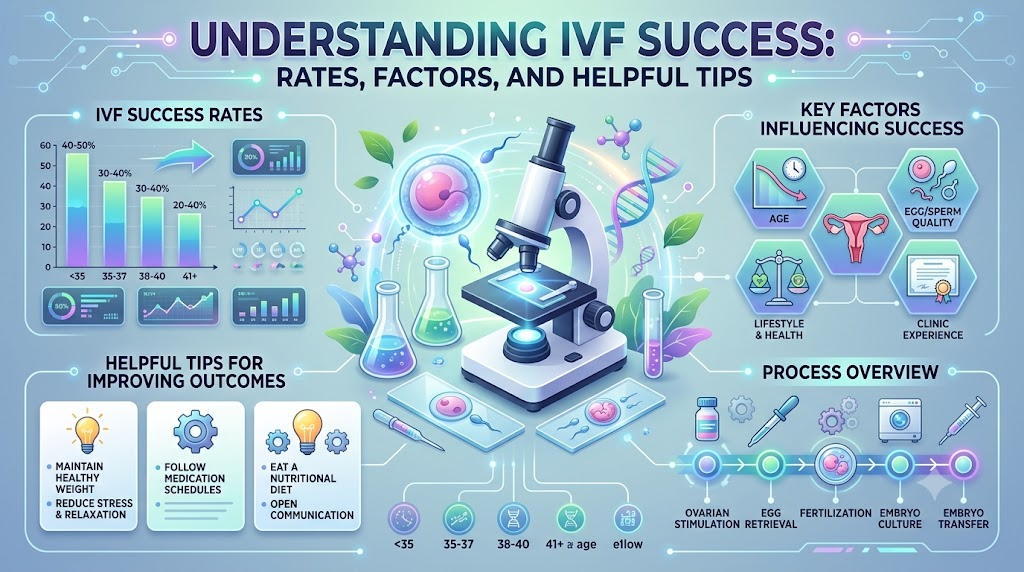
IVF can bring hope to people who want a child. But IVF success rates can feel hard to understand. Clinics may report results in different ways. One clinic may show pregnancy rates. Another may show live birth rates. So, one number cannot predict your own result. Many things can affect IVF success. These include age, egg quality, sperm health, embryo development, and medical history. The IVF laboratory can also play a role. MyHospitalNow.com can help people explore hospitals and fertility care information. You can also learn more at MyHospitalNow.
What Does an IVF Success Rate Mean?
An IVF success rate shows results from a group of patients. It does not predict the result for one person. Clinics may use different ways to measure success. So, always ask how the number was calculated. Ask which patients were included. Also ask what the clinic means by success. This makes IVF success rates easier to understand.
Pregnancy Rate vs Live Birth Rate
Pregnancy rate and live birth rate are different. Pregnancy rate shows how often pregnancy starts after treatment. Live birth rate looks at a later treatment outcome. So, ask which result a clinic reports. Understanding this difference can help you read IVF treatment outcomes clearly.
Why IVF Success Rates Can Differ
IVF numbers can differ between clinics for many reasons. Clinics may treat different patient groups. They may also use different treatment methods. Age is an important factor. Egg quality and sperm quality can also matter. Embryo quality and embryo development may affect results. Previous IVF attempts can also affect reported numbers. Laboratory standards and treatment types may also change results. The number of cycles measured can also affect the rate.
Age and IVF Success Rates
Age can affect IVF outcomes. Egg number and egg quality can change with age. This may affect embryo development during treatment. However, age is not the only factor. Medical history and other fertility factors also matter. A fertility specialist can explain how these factors may affect your treatment. When checking IVF success rate by age, ask which age groups the clinic included.
Egg Quality and IVF Outcomes
Egg quality can play an important role in IVF treatment. Not every egg collected becomes an embryo. Not every embryo develops in the same way. Doctors may use fertility testing to understand different fertility factors. Lifestyle changes cannot promise better egg quality. Supplements should not be treated as a guaranteed way to improve IVF success. Your fertility team can explain your treatment results and options.
Sperm Health and IVF Success
Sperm health also matters during IVF treatment. Doctors may check sperm count, movement, and shape. These checks can give useful information about sperm health. Fertility testing can help doctors understand male fertility factors. ICSI may be used in some IVF treatments. ICSI means placing one sperm directly into an egg. Your fertility specialist can explain if this method is considered for your care.
Embryo Quality and IVF Outcomes
An embryo is an early stage of development after fertilization. During IVF, embryos are watched as they develop. Not every embryo develops in the same way. Embryo development can help the fertility team plan the next step. Fertility professionals handle embryo selection and embryo transfer. No embryo can promise pregnancy. Many factors can affect IVF treatment success after transfer.
IVF Laboratory Quality
The IVF laboratory is an important part of treatment. Eggs and embryos are handled inside this lab. The embryology team works closely with these early stages. Ask about laboratory standards and quality checks. You can also ask about equipment and embryo handling. Laboratory experience is useful to discuss. However, one laboratory cannot be judged by one number alone.
IVF Success Rates by Clinic
Clinic success rates need careful review. First, ask what the number measures. Then ask how many cycles were counted. Ask whether fresh and frozen cycles are reported separately. Also ask if donor and non-donor cycles are separated. Find out if the rate is per cycle or per transfer. Ask what period the data covers. These details help patients compare IVF information more fairly.
Why One IVF Cycle May Not Tell the Full Story
One IVF cycle can have many possible outcomes. IVF treatment includes several steps. These may include ovarian stimulation, egg retrieval, embryo development, and embryo transfer. Each step can bring different results. So, one cycle may not show the full picture. Patients should not judge an IVF hospital using one number alone. Treatment planning may also change after each cycle.
Tips Before Starting IVF
Learn the main IVF treatment steps before starting. Ask what fertility testing may be needed. Understand the expected IVF treatment costs. Ask which services are included in the price. Ask about medicines, testing, laboratory services, and follow-up visits. Write down your questions before each appointment. Ask about treatment risks and possible outcomes. Also ask about emotional support and follow-up care. Review the clinic’s IVF laboratory services before making a decision.
Healthy Habits During IVF
Simple healthy habits can support general health. Try to eat balanced meals and sleep well. Stay active in ways that feel safe for you. Avoid smoking during fertility treatment. Ask your medical team about alcohol use. Keep your medical appointments and follow treatment instructions. Managing stress may also help you feel more supported. These habits do not guarantee IVF success. They can still support your overall well-being during treatment.
Medicines During IVF
IVF may involve prescribed medicines. These medicines can support different parts of treatment. Your fertility team will explain how they are used. Do not start or stop fertility medicine on your own. Do not change a dose without medical advice. Ask your fertility specialist if you have concerns. Every IVF treatment plan can be different. Your care team can explain why each medicine is part of your care.
IVF and Emotional Health
IVF can bring many different feelings. You may feel hope, fear, sadness, or worry. You may also feel frustration or uncertainty. These feelings can change during treatment. Talking with trusted people may help. Some patients may also choose fertility counseling. Ask your IVF clinic about patient support. Having support can make the treatment journey feel easier to manage.
Choosing an IVF Hospital or Clinic
Start by learning about the fertility specialist. Check the team’s training and experience. Ask about the IVF laboratory and embryology team. Clear communication is also important. Ask how the clinic explains results and next steps. Follow-up care should be easy to understand. Cost transparency also matters. Ask for a clear cost breakdown before treatment. MyHospitalNow.com can help patients explore hospitals, fertility specialists, and IVF services.
Understanding IVF Costs and Success Rates
A lower IVF cost should not be the only factor. A low price may not include every service. Ask what the quoted cost covers. Extra costs may include medicines and testing. Laboratory services may also have separate costs. Embryo freezing and storage can add costs. Additional procedures may also cost more. Follow-up visits may have separate fees. Ask for a clear cost breakdown before starting treatment.
One Simple Comparison Table
| Measure | What It Means | Why It Matters |
|---|---|---|
| Pregnancy rate | Pregnancies achieved | Shows pregnancy outcomes |
| Live birth rate | Births after treatment | Shows a later outcome |
| Per-cycle rate | Result measured per cycle | Helps compare treatment attempts |
| Per-transfer rate | Result measured after transfer | Uses a different starting point |
IVF Success Rates and Second Opinions
Some patients seek another fertility opinion. They may want to understand their past treatment better. They may also want to discuss other treatment options. Bring previous treatment records when possible. These may include test reports and treatment details. Another fertility specialist can review this information. A second opinion does not mean one doctor is wrong. It can provide another medical view of your situation.
When IVF Success Claims Need Careful Review
Be careful with success claims that show only one large number. Ask which patients were included. Ask what outcome the number measures. The claim should explain the age group and number of cycles. It should also explain important conditions. A number without context can be difficult to understand. Be careful with claims that promise guaranteed pregnancy. IVF outcomes can vary between patients.
How MyHospitalNow.com Can Help
MyHospitalNow.com can help patients explore healthcare information. It can also help people explore hospitals and fertility specialists. Patients can learn about IVF services and appointment options. The platform does not promise IVF success. Each hospital may offer different services and care. Patients should check treatment details with the hospital directly. The goal is to make healthcare information easier to explore.
Practical Example
Imagine a patient comparing two IVF clinics. One clinic shows a higher success number. The other clinic shows a lower number. The patient should not compare the numbers alone. First, the patient can ask what each number measures. They can also ask about age groups and treatment cycles. The patient can ask if fresh and frozen cycles are separate. They can also ask if donor cycles are included. This shows why context matters more than one number.
Frequently Asked Questions About IVF Success Rates and Tips
1. What does an IVF success rate mean?
An IVF success rate shows results from a group. It does not predict one person’s result.
2. What factors can affect IVF success rates?
Age, egg quality, sperm health, embryos, and medical history can matter. Laboratory care can also affect treatment outcomes.
3. Does age affect IVF success?
Age can affect egg number and quality. Other fertility factors can also affect IVF outcomes.
4. Is pregnancy rate the same as live birth rate?
No. Pregnancy means a pregnancy started. Live birth means treatment later led to a birth.
5. Why can IVF success rates differ between clinics?
Clinics may treat different patient groups. They may also report different treatment types and outcomes.
6. Does egg quality affect IVF outcomes?
Yes, egg quality can affect embryo development. However, many other factors also matter.
7. Does sperm health affect IVF success?
Yes, sperm health can affect fertilization and embryo development. Testing can help doctors understand sperm factors.
8. How should patients compare IVF success rates?
Ask what the rate measures. Check the age groups, cycle numbers, and treatment types.
9. Can healthy habits guarantee IVF success?
No. Healthy habits support general health. They cannot guarantee pregnancy or live birth.
10. Does IVF guarantee pregnancy?
No. IVF cannot guarantee pregnancy. Outcomes vary between patients and treatment cycles.
Final Thoughts
IVF success rates need clear context. One number cannot show your personal chance of success. Age, egg quality, sperm health, embryo development, medical history, and laboratory factors can affect outcomes. Patients should ask clear questions before choosing an IVF clinic. They should also understand costs, laboratory care, and follow-up support. MyHospitalNow.com can help people explore fertility hospitals and specialists. Use clear information to prepare for a conversation with your fertility team. IVF can feel complex, but honest information can make the process easier to understand.

Find Trusted Cardiac Hospitals
Compare heart hospitals by city and services — all in one place.
Explore Hospitals