Introduction
Few things feel scarier than waiting for answers about your stomach. A doctor says you need tests, and your mind races. What will they check? Does it hurt? Who reads the results? This blog explains common digestive tests in plain words. It also shows how to compare the best hospitals for gastroenterology by looking at their testing services. You will learn what a gastroenterologist may order and why. A gastroenterologist is a doctor who treats the gut, liver, and pancreas. GastroHospitals is a research platform that helps readers study hospital services before they book. This page is general education only. It cannot tell you which tests you need or what results mean. Use it to prepare questions and feel calmer before your visit.
What Do Digestive Tests Mean?
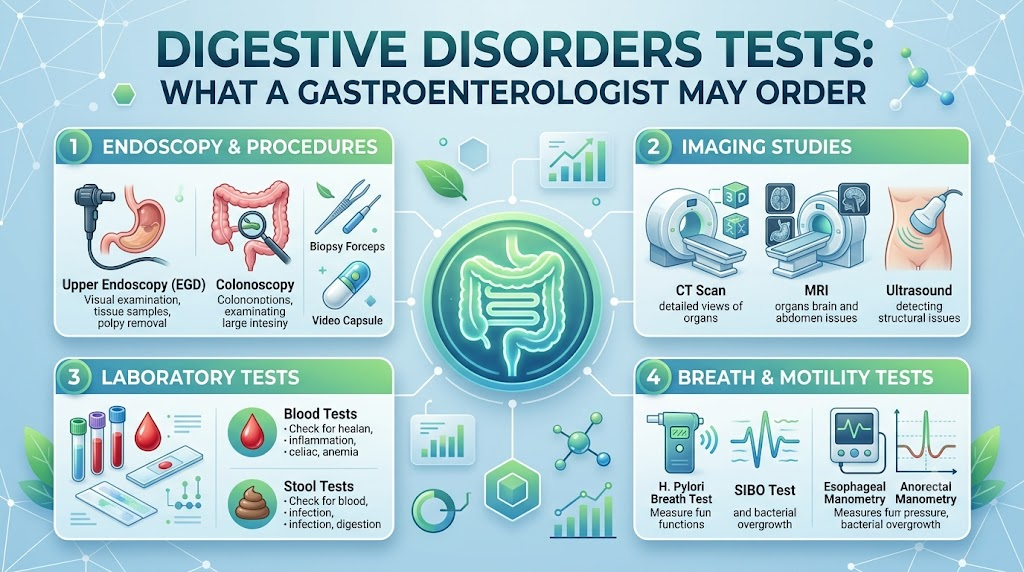
Digestive tests are ways doctors look for clues about the gut, liver, and pancreas. Some tests use blood or stool. Some use pictures, such as scans. Others use a thin tube with a camera to look inside. Each test answers a different question. One may check for infection. Another may show swelling or blockage. A single test rarely tells the whole story. Doctors often combine several, then compare results with your history. That is why they ask so many questions at the first visit. Comfort levels differ from test to test, and each hospital explains its own steps. Before any test, you can ask why it is needed. You can also ask what the doctor hopes to learn. GastroHospitals.com has plain guides that explain many of these tests.
Understanding Digestive Disorders
Digestive disorders cover a wide field. Some start in the food pipe, called the esophagus. Others start in the stomach, bowel, liver, gallbladder, or pancreas. Many digestive disorders share the same early signs, such as pain, gas, or loose stools. That overlap is why tests matter so much. Two people with similar complaints may need very different tests. A doctor chooses based on symptoms, age, history, and exam findings. Some digestive disorders show up in blood work. Others only appear on a scan or scope. A few need tissue samples. Testing also tells doctors how far a problem has moved, which guides the plan. Do not try to link symptoms to digestive disorders on your own. Learning basic terms helps you follow the talk at your visit.
When to See a Gastroenterologist
Testing usually begins after a doctor hears your story. Your family doctor may start with basic exams and blood work. If answers stay unclear, a referral to a gastroenterologist may follow. Signs that often lead to this step include lasting belly pain, trouble swallowing, ongoing diarrhea, and blood in the stool. Yellow skin or steady weight loss also stand out. These signs are clues, not a diagnosis. At the first visit, a gastroenterologist reviews your history and current medicines. Then the doctor explains which tests may help. Heavy bleeding or sudden severe pain needs emergency care, not a scheduled test. Please consult a qualified gastroenterologist or doctor for your own symptoms. Bring past reports, since they can save time and repeat tests.
Common Gastroenterology Treatments
Tests and treatment go hand in hand. Results shape which gastroenterology treatments a doctor offers. A mild finding may lead to food changes and a recheck. A clearer problem may call for medicine. Some tests double as treatment. During a scope test, a doctor may remove a small growth or stop a bleeding spot. Larger problems may need an operation. Gastroenterology treatments also depend on age, other illnesses, and your own wishes. Doctors usually start with the least invasive path that fits. They revisit the plan as new results arrive. Ask how each test result will change your plan. Good teams explain gastroenterology treatments before they begin, not after. Keep a notebook of what each doctor says, so nothing slips away.
Understanding Gastroenteritis Treatment
Most stomach bugs need no special tests. Gastroenteritis is a stomach and bowel upset, usually from a germ. Doctors often judge it from symptoms and a short exam. Tests come into play when illness is severe or lasts long. A stool test can look for the germ. Blood tests can check salt levels and kidney function. These results shape gastroenteritis treatment, which centers on replacing lost fluids. Antibiotics help only in some cases, so a doctor must decide. Gastroenteritis treatment for babies and older adults needs extra care. Seek help fast for blood in stool, high fever, or signs of dehydration. Dehydration means the body has too little water. When you compare hospitals, ask when they order tests during gastroenteritis treatment.
Understanding GERD Treatment
GERD stands for gastroesophageal reflux disease. Stomach acid flows back up into the food pipe. Many people get GERD treatment without any test at first. Doctors may suggest habit changes and medicine, then watch how you respond. Tests come in when symptoms are strong, last long, or fail to ease. A scope exam lets a doctor view the food pipe lining. An acid monitor tracks how often acid rises. Other tests check how well the food pipe muscles work. These results help decide whether surgery should be discussed. Each test has its own steps, which the hospital explains. GERD treatment should match your results, not a general rule. Ongoing GERD treatment also needs regular review. Ask which tests a hospital uses before recommending surgical GERD treatment.
Understanding IBD Treatment
IBD means inflammatory bowel disease. It causes long-term swelling in the gut. Crohn’s disease and ulcerative colitis are the main types. Doctors rely on several tests to learn about IBD. Blood tests can show swelling in the body. A stool test can also signal swelling in the gut. A scope test lets doctors see the bowel lining and take tiny tissue samples. Scans such as MRI show parts of the bowel the scope cannot reach. MRI uses magnets to make detailed pictures. Test results guide IBD treatment, including which medicine fits. Later tests show whether IBD treatment is working. Because IBD changes over time, testing repeats. Ask how a hospital tracks IBD treatment progress. Good IBD treatment plans explain which tests come next.
Understanding Liver Disease Treatment
The liver cleans the blood and helps digest food. Doctors check it with blood tests, which show how well the liver is working. An ultrasound uses sound waves to make pictures of the liver. Another scan can measure how stiff the liver tissue is. Stiff tissue may point to scarring. Sometimes a doctor takes a tiny tissue sample, called a biopsy, for a closer look. Liver disease treatment depends on what these tests show. Some plans use medicine. Others focus on food and daily habits. Advanced cases may lead to a talk about a transplant. Strong liver disease treatment programs repeat tests on a set schedule. Clear liver disease treatment plans list the next tests. Ask how liver disease treatment results reach your home doctor.
The Colonoscopy Procedure Explained
Among all digestive tests, the colonoscopy is one of the best known. The colonoscopy procedure uses a long, flexible scope with a light and camera. It lets a doctor view the full lining of the colon. The colon is the large bowel. During the colonoscopy procedure, doctors can also take tissue samples or remove small growths called polyps. Medicine to relax is common, and staff watch you throughout. Afterward, you rest until the medicine wears off. Preparation rules differ by person and hospital. So follow only your own team’s written steps. A colonoscopy procedure may be advised for symptoms or for routine checking, and a doctor decides which applies. Ask how soon results are shared after a colonoscopy procedure. GastroHospitals.com has a plain guide to the colonoscopy procedure.
Understanding Gastrointestinal Surgery
Sometimes tests show a problem that needs an operation. Gastrointestinal surgery means surgery on the gut or nearby organs. Before it, surgeons order more tests, such as blood work, scans, and heart checks. These show how ready the body is. A colectomy removes part of the colon. A gastrectomy removes part of the stomach. Other types include gallbladder removal, pancreatic surgery, and liver resection. Scans help surgeons plan exactly where to work. Every gastrointestinal surgery has risks, such as bleeding or infection. No team can promise a result. Ask why surgery is recommended and which test results support that choice. Ask who will explain the results before gastrointestinal surgery. Hospitals with strong imaging tools can help plan gastrointestinal surgery in more detail.
Finding the Best Hospitals for Gastroenterology
When tests are needed, the hospital behind them matters. This guide does not name or rank any hospital. It gives you a checklist for finding the best hospitals for gastroenterology. First, confirm accreditation, which means an outside group has reviewed the hospital’s standards. Next, look at specialist experience. Who reads the scans and scope results? Then check technology. Modern scopes and imaging tools give clearer pictures. Also note how fast results arrive and how they are explained. A hospital that shares reports in plain words helps you act on them. Finally, check what happens after the test. Who calls you? Who plans the next step? GastroHospitals.com lets you compare hospital profiles side by side. It does not claim one hospital beats another. The best hospitals for gastroenterology for you depend on your needs and your doctor’s advice.
Table: What to Check in a Gastroenterology Hospital
| Factor to Check | What It Means | Why It Matters |
|---|---|---|
| Accreditation | Outside review of hospital standards | Shows set quality rules are met |
| Specialist Reading | A gastroenterologist and imaging experts who read results | Skilled readers help spot details in digestive disorders |
| Scope Tools | Modern endoscopy equipment | Supports a clear colonoscopy procedure |
| Imaging Tools | Ultrasound and other scans | Gives pictures for planning surgery and care |
| Lab Services | In-house or trusted partner labs | Speeds blood and tissue results |
| Treatment Range | Gastroenterology treatments plus gastrointestinal surgery | Shows what comes after the tests |
| Specialty Clinics | Liver and bowel programs | Helps with liver disease treatment and IBD treatment |
| Result Sharing | Plain reports and a clear call-back plan | Keeps you informed |
Common Mistakes Patients Make
- Skipping the test: Fear delays answers that could ease worry.
- Not asking why a test is needed: Knowing the reason helps you follow the plan.
- Following another person’s prep steps: Your team gives instructions made for you.
- Forgetting the medicine list: Some medicines affect test results.
- Not collecting results: Keep copies for future doctors.
- Assuming silence means normal: Ask when and how you will hear back.
- Reading results alone: Numbers need a doctor’s context.
- Repeating tests without need: Bring old reports to avoid duplicates.
- Ignoring new symptoms after a test: Report them quickly.
- Searching the web for a diagnosis: Websites cannot examine you.
A Simple Example
Here is an imagined case. A caregiver, left unnamed on purpose, is helping a relative who has ongoing bloating. The family doctor orders basic blood work and refers them to a gastroenterologist. While waiting, the caregiver reads about common digestive disorders and tests on GastroHospitals.com. Then she writes down questions. Why this test? How long will it take? Who explains the results? At the visit, she shares her list. The doctor explains the plan in plain words. We stop here because no outcome is claimed. The story shows a method. Learn the terms, write questions, and ask for clear explanations.
How GastroHospitals Can Help
GastroHospitals.com is a specialized digestive-health discovery and education platform. It features a directory of leading gastroenterology hospitals, structured around GI, liver, pancreas, IBD, endoscopy, and advanced digestive care. Its pages cover conditions affecting the esophagus, stomach, intestines, colon, liver, gallbladder, and pancreas. They also describe procedures including colonoscopy, endoscopy, colectomy, gastrectomy, anti-reflux surgery, gallbladder removal, pancreatic surgery, liver resection, and transplantation. For readers facing tests, three features help. Hospital profiles show which services each hospital lists. Condition education explains medical words before you hear them in the clinic. Treatment guides outline how care often moves from testing to a plan. You can read at your own pace and jot down questions. If you are comparing the best hospitals for gastroenterology, these pages give you a calm starting point. The platform exists for learning. It does not recommend one hospital over another. It also makes no promise about results. Always confirm details with the hospital and your own doctor.
Frequently Asked Questions About Digestive Tests
- How do I compare testing services at the best hospitals for gastroenterology?
Ask the same questions at each hospital. Which tests are done on site? How soon are results shared? Who explains them? Is a nurse available for follow-up calls? Write down each reply. Compare notes later with your doctor. Clear, patient answers are a good sign. - Will a gastroenterologist order every test at the first visit?
Usually not. A gastroenterologist often starts with questions and a physical exam. Then the doctor picks tests that fit your story. Some are done the same day. Others are booked for later. Results from early tests may lead to more. Ask what the plan is and why. - Why do gastroenterology treatments sometimes start before all test results arrive?
Doctors may begin gentle steps while waiting, such as food habit advice or short-term medicine. Waiting for results may mean more days of discomfort. The plan can change once results arrive. Only your doctor can say what is safe to start. Do not begin new medicines on your own. - Can digestive disorders show up as normal on a test?
Sometimes, yes. A single test may miss a problem or not be the right one. Some conditions come and go. That is why doctors combine tests with your history. If symptoms continue after a normal result, tell your doctor. More testing or a different test may help. - Does gastroenteritis treatment ever need a stool test?
Sometimes. Doctors may order a stool test when illness is severe, lasts long, or includes blood. The test can help find which germ is involved. Many mild cases need no test at all. A doctor decides what fits each person. Call quickly if there are signs of dehydration or high fever. - Why might a doctor suggest a pressure test during GERD treatment?
A pressure test measures how the food pipe muscles squeeze and relax. It is often considered before anti-reflux surgery. The results show if the muscles work well enough for the operation. Not everyone needs this test. Your doctor explains if it fits your case and how it is done. - Are IBD treatment tests different for children?
Children may need tests adjusted for age and size. Pediatric gastroenterologists, who treat young patients, often lead care. They explain each step to the child and parents. Growth is also tracked closely. Ask the hospital whether it has a children’s digestive team. - How should I share my medicine list before liver disease treatment tests?
Write every medicine, vitamin, and herbal product with its dose. Some can affect liver blood tests. Bring the list on paper or on your phone. Update it after any change. Share it with each doctor you see. Never stop a medicine before a test unless your doctor says so. - Is the colonoscopy procedure the only way to check the colon?
No. Doctors can also use stool tests and certain scans. Each has its own strengths and limits. A scope test can remove growths during the same visit. Other tests may point to a need for a scope. Your doctor picks the right option for your case. - How does GastroHospitals.com help me understand gastrointestinal surgery tests?
GastroHospitals.com explains common scans and checks used before gastrointestinal surgery. Its guides use plain words and short steps. Use them to prepare questions for your surgeon. The platform does not rank hospitals or promise results. Your care team explains which tests apply to you.
Final Thoughts
Tests are tools, not verdicts. They give your doctors the facts they need to plan care. Begin by learning the language of digestive disorders. Then see how a gastroenterologist uses blood work, scans, and scopes to build a picture. Remember that gastroenteritis treatment, GERD treatment, IBD treatment, and liver disease treatment differ. Each depends on different results. The same goes for gastroenterology treatments, a colonoscopy procedure, and gastrointestinal surgery. When you compare the best hospitals for gastroenterology, look closely at testing services. Also check how they share results. GastroHospitals.com can help you research and prepare. Still, no website can read your results. Please consult a qualified gastroenterologist or doctor for personal advice. Ask questions, keep copies of every report, and follow up on each result.

Find Trusted Cardiac Hospitals
Compare heart hospitals by city and services — all in one place.
Explore Hospitals