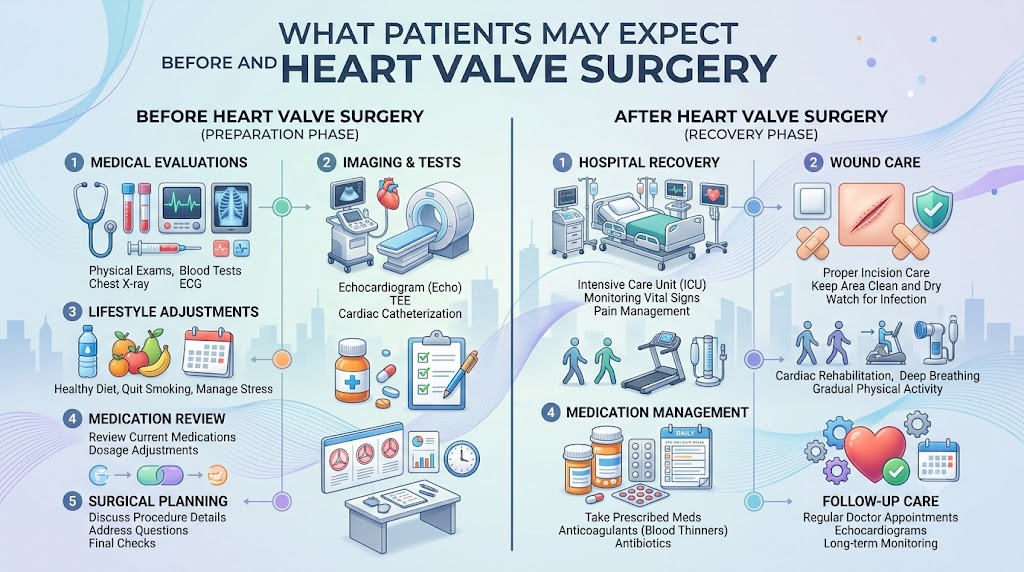
Heart valve surgery can feel stressful for patients and families. Many people have questions before the treatment begins. They may wonder what happens before surgery. They may also worry about hospital care and recovery. Knowing what to expect can make the process easier to understand. Heart valve surgery may involve valve repair or replacement. The choice depends on the patient’s heart problem and health. Every patient has a different care plan. MyHospitalNow can help families explore heart care options.
What Is Heart Valve Surgery?
Heart valve surgery treats a damaged heart valve. Heart valves help blood move through the heart. They open and close as blood moves forward. A valve can become narrow or start leaking. A narrow valve may not open well. A leaking valve may not close well.Doctors may repair a valve when possible. They may also replace a damaged valve. Treatment depends on many medical factors. These factors differ from one patient to another. Heart valve surgery can involve several types of valves. These include the aortic, mitral, tricuspid, and pulmonary valves.
Why Might Heart Valve Surgery Be Needed?
Some heart valves become too narrow. This problem is called valve stenosis. Other valves may leak too much. This problem is called valve regurgitation. Severe valve damage can affect heart function.Some people may have shortness of breath. Others may feel tired during daily activities. Chest discomfort can also occur. Dizziness or fainting may happen in some cases. Some people notice fast or uneven heartbeats. Leg swelling may also occur.These symptoms can have many causes. They do not always mean valve disease. A heart specialist checks each patient carefully. Surgery is not needed for every valve problem. The heart team decides care based on medical findings.
What to Expect Before Surgery
Heart valve surgery preparation often starts with testing. Your team may review your medical history. They may perform a physical examination. Blood tests may also be needed.An echocardiogram can show heart valve movement. An ECG checks the heart’s electrical activity. Other cardiac imaging may also be used. The exact tests depend on the patient.Your medicines may also be reviewed. Your surgical team will explain the planned care. They may discuss the hospital process with you. Families can also ask questions before surgery.
Meeting the Heart Team
Several healthcare professionals may support your care. A cardiologist checks heart health and valve problems. A cardiac surgeon handles surgical care. An anesthesiologist supports care during surgery.Nurses provide care before and after treatment. ICU specialists may support early recovery. Rehabilitation professionals can help with later recovery.The heart team may work together closely. Patients should feel free to ask questions. Clear questions can help families understand the care plan.
Understanding Valve Repair and Replacement
Valve repair aims to keep the patient’s own valve. Repair may be possible for some valve problems. The surgeon decides if repair is suitable.Valve replacement uses a new valve. Some replacement valves are mechanical valves. Others use tissue valves. Each type has different features.The choice depends on many medical factors. Your heart team will explain the available options. Patients should discuss benefits and risks with them. There is no single choice for every patient.
What to Expect on Surgery Day
The hospital team will prepare you for surgery. Pre-surgery checks may happen before the procedure. You may meet members of your care team again.Anesthesia is used during many valve operations. The surgical team then performs the planned procedure. Your heart and other body functions receive close monitoring.After surgery, you move to an area for close care. Major heart surgery needs careful monitoring afterward. The exact process varies between patients.
What Happens After Surgery?
Patients often receive close care after surgery. Many patients first receive care in a cardiac ICU. The team checks heart rhythm and other body functions.Some patients may need breathing support for a time. Others may need oxygen support. IV lines may also be present. Nurses and doctors check patients often.Pain control is also part of recovery. Fluid levels may receive close attention. Movement often starts slowly and with support. Your team decides what is safe for you.
What to Expect in the Cardiac ICU
The cardiac ICU provides close medical monitoring. Patients may see several monitors near their bed. IV lines and other tubes may also be present.Oxygen support may be used when needed. Nurses check patients often during early recovery. Doctors also review progress closely.These items can be part of routine care. They may look unusual at first. Your care team can explain their purpose. Family members may also receive basic updates.
Hospital Recovery After Surgery
Recovery continues after leaving the ICU. Patients usually move to a hospital room. The team continues checking the heart and wound.Movement usually increases slowly. Patients may walk with support when appropriate. Eating and drinking may also increase gradually.The team watches for recovery changes. They also prepare patients for going home. Hospital stays differ between patients. Your medical team can explain your progress.
Pain and Discomfort After Surgery
Some pain or discomfort can occur after surgery. The chest area may feel sore. Muscles near the chest may also hurt. Back and shoulder discomfort can happen too.Tiredness can also affect daily activities. Pain can change during the recovery process. The healthcare team can help manage discomfort.Patients should report pain that worries them. They should follow their team’s treatment instructions. They should not change medicines without medical advice.
Wound Care After Heart Valve Surgery
A chest incision may need time to heal. The care team will explain wound care. Patients should follow those instructions carefully.Watch for changes around the wound. Increasing redness can need medical attention. Worsening swelling may also need review. New drainage can also be important.Increasing pain or fever should be reported. Your care team can explain which changes matter most. Avoid using home remedies unless your team approves them.
Fatigue During Recovery
Feeling tired can happen after major heart surgery. Energy may return slowly during recovery. Some days may feel better than others.Rest can support the recovery process. Gentle activity may increase as recovery continues. Follow-up visits help the team check progress.Cardiac rehabilitation may also support recovery. It can help patients build confidence safely. Your team can explain if it suits you.
What Is Cardiac Rehabilitation?
Cardiac rehabilitation is a supervised recovery program. It supports people after heart problems or surgery. The program can include safe physical activity.It may also include health education. Lifestyle support can form another part. Health monitoring may also be included.The program can help patients understand recovery. It can also support a gradual return to activity. Your healthcare team can explain available rehabilitation services.
Returning to Daily Activities
Daily activities often return step by step. Walking may become easier over time. Personal care may also become easier.Household tasks may return gradually. Work and travel may need medical clearance. Driving may also require clearance.The timing differs for every patient. Recovery depends on many health factors. Follow your cardiac team’s personal advice.
Food and Hydration During Recovery
Good nutrition can support general recovery. Fruits and vegetables can form part of meals. Whole grains can also provide useful nutrients.Protein-rich foods may support body healing. Fluids may also be important for some patients. However, some patients need fluid limits.Diet needs can differ between patients. Follow the food advice from your care team. Do not start supplements as treatment without medical advice.
Medicines After Valve Surgery
Some patients receive medicines after valve surgery. The medicines depend on the procedure and patient. Some artificial valves may need long-term blood-thinning treatment.Your prescribing team will explain your medicines. Follow their instructions carefully. Do not start or stop medicines yourself.Ask your team about side effects and missed doses. Keep your follow-up visits as advised. Medicine plans may change as recovery continues.
Emotional Health After Heart Surgery
Major surgery can affect emotions too. Some patients may feel worried or nervous. Others may feel tired or frustrated.Mood can change during recovery. These feelings can also affect family members. Talking with your care team can help.Patients should mention ongoing emotional concerns. Family support can also make recovery easier. Each person’s recovery experience can feel different.
Possible Risks and Complications
Heart valve surgery is major medical treatment. Like other major surgery, it has possible risks. These risks can differ between patients.Possible problems include bleeding and infection. Abnormal heart rhythm can also occur. Blood clots and stroke are possible complications.Kidney or breathing problems may also occur. Some patients may need additional treatment. Your surgical team can explain your personal risks.
Warning Signs After Heart Valve Surgery
Some symptoms need prompt medical assessment. Severe or worsening chest pain is important. Severe breathing problems also need urgent attention.Fainting can be another warning sign. New severe weakness should also be reported. Heavy bleeding needs prompt medical attention.High fever may need medical review. Worsening wound redness can also matter. New drainage or sudden swelling should be reported.New severe heartbeat changes also need attention. Severe chest pain or major breathing difficulty needs urgent emergency care.
Long-Term Follow-Up
Heart valve surgery does not always end medical care. Follow-up visits may continue after recovery. A cardiologist may check your heart regularly.Heart imaging may be advised when needed. Valve function may also need monitoring. Medicine reviews can remain part of care.Lifestyle support may also continue. Cardiac rehabilitation may help some patients. Follow-up needs depend on the procedure and health.
Life After Heart Valve Surgery
Many patients work toward normal daily activities. Recovery can happen at different speeds. Some people may need more support than others.Healthy eating can support long-term heart health. Regular medical care also remains important. Following medicine instructions is also important.Patients should keep their follow-up visits. They should also learn warning signs. Life after heart valve surgery can involve ongoing care.
Choosing a Hospital for Heart Valve Surgery
Patients can review several practical factors. Look at the cardiac surgery team. Ask about valve surgery experience.Check whether the hospital has a cardiac ICU. Diagnostic facilities can also matter. Rehabilitation support may help after surgery.Follow-up services are another useful factor. Emergency support can also be important. Clear communication helps patients understand their care.MyHospitalNow.com can help families explore cardiac hospitals. It can also help them explore specialist information. Patients can compare available care information carefully.
Recovery Stages at a Glance
| Recovery Stage | What Patients May Experience | Main Focus |
|---|---|---|
| Before surgery | Tests and consultations | Understand the plan |
| ICU recovery | Close monitoring and rest | Stable recovery |
| Hospital recovery | Gradual movement and care | Prepare for discharge |
| Home recovery | Rest and gradual activity | Build strength |
| Long-term care | Follow-up and healthy habits | Ongoing heart care |
Common Patient Expectations vs Reality
Expectation: Recovery happens quickly.
Reality: Recovery can take time. Each patient heals differently.
Expectation: Pain disappears immediately.
Reality: Discomfort may improve gradually. Pain can change during recovery.
Expectation: Everyone follows the same recovery path.
Reality: Recovery differs between patients. Health factors can affect progress.
Expectation: Surgery ends all heart care.
Reality: Follow-up may continue. Heart health may need long-term monitoring.
Expectation: Feeling tired means something is wrong.
Reality: Fatigue can occur after major surgery. Concerning symptoms should still be discussed.
How MyHospitalNow.com Can Help
MyHospitalNow.com can help patients explore heart care information. Families can explore cardiac hospitals and heart specialists. They can also review hospital profiles.The platform can help people explore treatment information. Patients may also explore consultation opportunities. Treatment cost information may be available for review.Families can use this information while comparing care options. Medical decisions should still involve qualified healthcare professionals. MyHospitalNow.com does not replace personal medical advice.
Practical Example
Educational example: A patient learns about possible valve surgery. They meet the cardiac team and ask questions.The team explains the planned care process. After surgery, the patient follows their recovery plan. They also attend follow-up visits as advised.This example shows a general recovery process. It does not describe one person’s actual treatment.
Frequently Asked Questions
1. What should I expect before heart valve surgery?
You may have tests and medical consultations. Your team will explain the planned care.
2. What happens after heart valve surgery?
You may receive close monitoring after surgery. Recovery then continues in the hospital.
3. How long does recovery after valve surgery take?
Recovery time differs between patients. Your health team can explain your expected progress.
4. Is pain normal after heart valve surgery?
Some pain or discomfort can occur. Tell your care team about concerning pain.
5. What is cardiac rehabilitation?
It is a supervised program that supports recovery. It may include activity, education, and health support.
6. Can I return to normal activities after valve surgery?
Daily activities usually return gradually. Your team can advise when activities are safe.
7. What warning signs should I watch for after surgery?
Severe chest pain and major breathing problems need urgent care. Other concerning changes should also be reported.
8. Will I need long-term follow-up after valve surgery?
Many patients need follow-up care. The schedule depends on the procedure and health.
9. What questions should I ask my cardiac surgeon?
Ask about your valve problem, procedure, risks, and recovery. Also ask about follow-up care.
10. How can MyHospitalNow.com help me explore heart valve care?
It can help you explore cardiac hospitals and specialists. It can also provide treatment and care information.
Final Thoughts
Heart valve surgery is a major medical procedure. Good preparation can help patients understand the process. Realistic expectations can also reduce confusion during recovery.Every patient has a different recovery journey. Health, age, valve problems, and treatment can affect recovery. Your cardiac team knows your personal medical needs.Follow your cardiologist’s and cardiac surgeon’s instructions. Keep your follow-up visits as advised. Ask questions whenever you feel unsure.MyHospitalNow.com can help families explore heart care options. Use reliable information to support informed healthcare discussions.

Find Trusted Cardiac Hospitals
Compare heart hospitals by city and services — all in one place.
Explore Hospitals