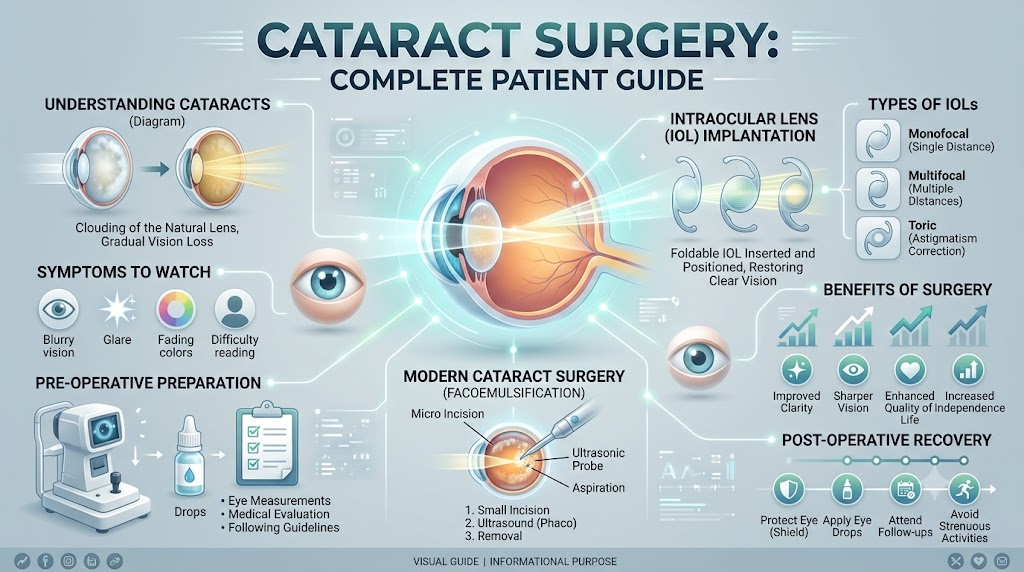
Cataracts are common eye problems that can make vision cloudy. They happen when the eye’s natural lens becomes cloudy.
At first, a cataract may cause only small changes. Later, it may affect reading, driving, walking, or work. Some people also find bright lights harder to handle.
Cataract surgery may help when vision problems affect daily life. But not every cataract needs surgery right away. An eye doctor can check your eyes and discuss your choices.
This guide explains cataract surgery in simple terms. MyHospitalNow can also help patients learn about hospital and eye care options.
What Is a Cataract?
A cataract is a cloudy area in the eye’s natural lens. The lens sits behind the colored part of your eye. It helps focus light so you can see clearly.
With a cataract, the lens slowly becomes less clear. Light may not pass through it well. This can make your vision blurry or cloudy.
Cataracts can also change how colors look. Bright lights may cause glare. Some people see rings called halos around lights.
A cataract can make daily tasks harder. Reading small words may become difficult. Driving at night may also feel less safe.
Walking can become harder when vision gets cloudy. Work and hobbies may also become more difficult.
Cataracts often develop slowly. So, some people may not notice them at first.
When Is Cataract Surgery Needed?
Cataract surgery is usually considered when a cataract affects daily life. Your eye doctor will check your vision and eye health first.
The doctor may ask about reading, driving, work, and other tasks. Your personal needs also matter.
Some people may manage well with new glasses for some time. Others may need surgery when cloudy vision becomes more limiting.
Your eye doctor will check for other eye problems too. Similar vision changes can have causes other than cataracts.
The decision depends on your vision, health, needs, and eye condition. Your doctor can explain the possible benefits and risks.
You should also ask questions before choosing surgery. A clear discussion can help you feel ready.
Common Symptoms of Cataracts
Cataract symptoms can differ from person to person. They often grow slowly over time.
Common symptoms include:
- Blurry vision
- Cloudy vision
- Glare from lights
- Trouble seeing at night
- Faded or dull colors
- Halos around lights
- Frequent changes in glasses
- Trouble reading
- Trouble doing daily tasks
For example, headlights may look very bright at night. Words on a page may also look less clear.
These symptoms do not always mean you have cataracts. Other eye problems can cause similar changes.
So, an eye exam is the best way to find the cause. Do not rely only on symptoms.
How Cataract Surgery Works
Cataract surgery removes the cloudy natural lens. The surgeon then places a clear artificial lens inside the eye.
The artificial lens is called an intraocular lens, or IOL. It stays inside the eye and helps focus light.
Most cataract surgery uses a small opening in the eye. The surgeon removes the cloudy lens through this opening.
The process usually follows these steps:
- The eye doctor checks your eyes.
- The team takes eye measurements.
- You discuss your IOL choice.
- The eye is numbed before surgery.
- The surgeon removes the cloudy lens.
- The surgeon places the new IOL.
- You spend a short time in recovery.
You usually stay awake during the procedure. Your care team will guide you through each step.
The exact process can vary based on your eye and health.
Cataract Surgery Preparation
Good preparation can make the surgery day easier. Your eye care team will give you specific instructions.
Before surgery, you may have several eye tests. These tests help the doctor plan your care and choose the IOL.
Tell your doctor about all medicines you take. Also share your health conditions and past eye problems.
Do not stop any prescribed medicine unless your doctor tells you to do so. Your doctor will explain any changes needed before surgery.
Ask about food and drink before the procedure. Follow the instructions given by your care team.
You should also plan how you will get home. Your vision may not be ready for driving after surgery.
Plan your follow-up visit before surgery when possible. Keep your doctor’s phone number nearby too.
Simple Surgery-Day Checklist
| Cataract Surgery Stage | What Happens | What Patients Should Know |
|---|---|---|
| Eye check | The team checks your eye | Ask questions about your care |
| Eye measurements | The team measures your eye | These help with IOL planning |
| Surgery | The cloudy lens is removed | The eye is numbed first |
| IOL placement | The new lens goes inside | The IOL stays in the eye |
| Recovery | You rest after surgery | Follow all care instructions |
Types of Intraocular Lenses
An IOL replaces the cloudy natural lens. Different lens choices can meet different vision needs.
Some IOLs mainly help with clear distance vision. Some can help with more than one viewing distance.
Your eye health and daily needs can affect the choice. Your doctor will explain which options may suit your eyes.
For example, your work may require a lot of reading. You may also spend much time outdoors or driving.
Tell your doctor about these daily needs. This can help you understand your lens choices.
No single IOL works best for every person. Your eye doctor can explain the benefits and limits of each choice.
What to Expect After Surgery
Your eye may feel different after surgery. Some people have mild discomfort or blurry vision at first.
The eye may also look red for a short time. These changes can improve as the eye heals.
Your doctor may give you eye drops. Use them exactly as directed.
You may need an eye shield while sleeping or during certain activities. Follow your doctor’s advice about eye protection.
You will also have follow-up visits. These visits help your doctor check your healing.
Most people return to normal activities step by step. Healing time can differ from person to person.
Do not rush back to activities. Ask your doctor when it is safe to drive or exercise.
Cataract Surgery Risks and Safety
Cataract surgery is common, but it still has possible risks. Your doctor should explain these risks before surgery.
Possible problems can include infection, bleeding, or eye swelling. Retinal problems can also occur.
The artificial lens can sometimes move from its intended position. Some people may also have vision problems after surgery.
Serious problems are not the usual outcome, but they can happen. Your own risk depends on your eye health and other factors.
Ask your doctor about the risks that apply to you. Also ask about the expected benefits.
This helps you make a choice based on clear information. Never assume that any surgery has zero risk.
Cataract Surgery Aftercare
Good aftercare helps protect your eye while it heals. Follow the instructions from your eye care team.
Use eye drops as directed. Do not rub or press on the eye.
Protect your eye as your doctor advises. Use a protective shield if your doctor recommends one.
Attend every follow-up visit. These visits let your doctor check your healing.
Follow your activity limits. Some activities may need to wait until your eye heals.
Ask your doctor before driving again. Your vision needs to be safe for driving.
Also, report unusual changes quickly. Early medical care can help when a serious problem occurs.
When to Contact an Eye Doctor
Some symptoms need quick medical attention after surgery. Do not wait if your symptoms suddenly become worse.
Contact your eye doctor if you notice:
- Sudden vision loss
- Strong or increasing eye pain
- New flashes of light
- A dark curtain or shadow
- Severe eye swelling
- Sudden worsening vision
- Other serious or unusual symptoms
These signs can have several causes. Some causes need urgent treatment.
If you cannot reach your eye doctor, seek urgent medical care. Tell the care team that you recently had eye surgery.
Frequently Asked Questions About Cataract Surgery
1. What is cataract surgery?
Cataract surgery removes a cloudy eye lens. The surgeon replaces it with an artificial lens called an IOL. The new lens helps focus light inside the eye.
2. When is cataract surgery needed?
Surgery may be considered when a cataract affects daily life. Your eye doctor checks your vision and eye health first. The timing can differ for each person.
3. How is cataract surgery performed?
The eye is numbed before surgery. The surgeon removes the cloudy lens through a small opening. The surgeon then places an IOL inside the eye.
4. What is an IOL?
IOL means intraocular lens. It is an artificial lens placed inside the eye. It replaces the cloudy natural lens removed during surgery.
5. How should patients prepare for cataract surgery?
Have your eye tests and share your health history. Tell your doctor about all medicines you take. Also arrange transport home and follow all surgery instructions.
6. Is cataract surgery painful?
The eye is usually numbed during surgery. You may feel some pressure or mild discomfort. Tell your care team if you feel pain or worry.
7. How long does cataract surgery recovery take?
Recovery can differ from person to person. Blurry vision and mild discomfort may happen early on. Your doctor will guide you as your eye heals.
8. What activities should be avoided after surgery?
Your doctor may limit some activities during healing. Do not rub the eye. Ask when you can drive, exercise, or return to work.
9. What are possible risks of cataract surgery?
Possible risks include infection, bleeding, swelling, and retinal problems. The IOL can also move in some cases. Your doctor can explain your personal risks.
10. When should a patient contact a doctor?
Contact your eye doctor for sudden vision loss or strong pain. Also seek help for new flashes or a dark curtain. Sudden worsening vision also needs prompt attention.
Final Thoughts
Cataracts can slowly change how you see the world. They may make reading, driving, or daily tasks harder.
Cataract surgery removes the cloudy lens and adds an IOL. Good preparation and aftercare can support safe healing.
Your eye doctor can explain when surgery may help you. They can also discuss lens choices, risks, and recovery.

Find Trusted Cardiac Hospitals
Compare heart hospitals by city and services — all in one place.
Explore Hospitals