Introduction
Wi-Fi Planning Tools help organizations design, optimize, simulate, and validate wireless network deployments before implementation. These platforms allow IT teams and wireless engineers to model RF coverage, analyze interference, optimize access point placement, and improve wireless performance across offices, campuses, warehouses, retail stores, hospitals, stadiums, and industrial environments. As enterprises adopt Wi-Fi 6, Wi-Fi 6E, and Wi-Fi 7 technologies alongside hybrid work, IoT expansion, edge computing, and high-density connectivity requirements, wireless planning has become increasingly complex. Modern Wi-Fi planning tools now include AI-assisted RF analysis, predictive heatmapping, cloud-based collaboration, real-time spectrum analytics, and automated site survey capabilities to support enterprise-scale wireless operations.
Common Real-world use cases include:
- Designing wireless networks for offices and campuses
- Optimizing high-density Wi-Fi deployments
- Conducting predictive RF heatmap analysis
- Troubleshooting wireless interference issues
- Validating Wi-Fi coverage before production rollout
Key Evaluation criteria buyers should consider include:
- RF simulation and heatmapping accuracy
- Wi-Fi 6E and Wi-Fi 7 support
- Spectrum analysis capabilities
- Predictive planning automation
- Multi-vendor access point compatibility
- Cloud collaboration and reporting
- Real-time survey and troubleshooting features
- Ease of deployment and usability
- Integration with network monitoring platforms
- Scalability for enterprise environments
Best for: Wireless engineers, network architects, managed service providers, enterprises, educational institutions, healthcare organizations, retail chains, warehouses, and organizations deploying large-scale wireless infrastructure.
Not ideal for: Very small offices or home environments with basic wireless coverage requirements and minimal RF complexity.
Key Trends in Wi-Fi Planning Tools
- AI-driven RF optimization is improving wireless planning accuracy and automation.
- Wi-Fi 7 support is becoming a major evaluation factor for enterprise buyers.
- Cloud-based wireless planning platforms are replacing standalone desktop-only tools.
- Predictive analytics are helping reduce manual site survey requirements.
- Digital twin modeling for wireless environments is gaining adoption.
- Spectrum analysis and interference detection are becoming more intelligent.
- IoT-aware wireless planning is expanding in industrial and healthcare environments.
- Real-time telemetry integration with network observability tools is increasing.
- Automated access point placement recommendations are improving deployment efficiency.
- Hybrid cloud collaboration features are simplifying distributed project management.
How We Selected These Tools Methodology
The tools below were selected using practical wireless engineering and enterprise networking criteria including:
- Market adoption and wireless industry reputation
- RF simulation and predictive planning quality
- Wi-Fi 6E and Wi-Fi 7 readiness
- Spectrum analysis capabilities
- Enterprise scalability and operational flexibility
- Ease of use and workflow efficiency
- Automation and AI-assisted functionality
- Reporting and collaboration capabilities
- Integration ecosystem maturity
- Support quality and community adoption
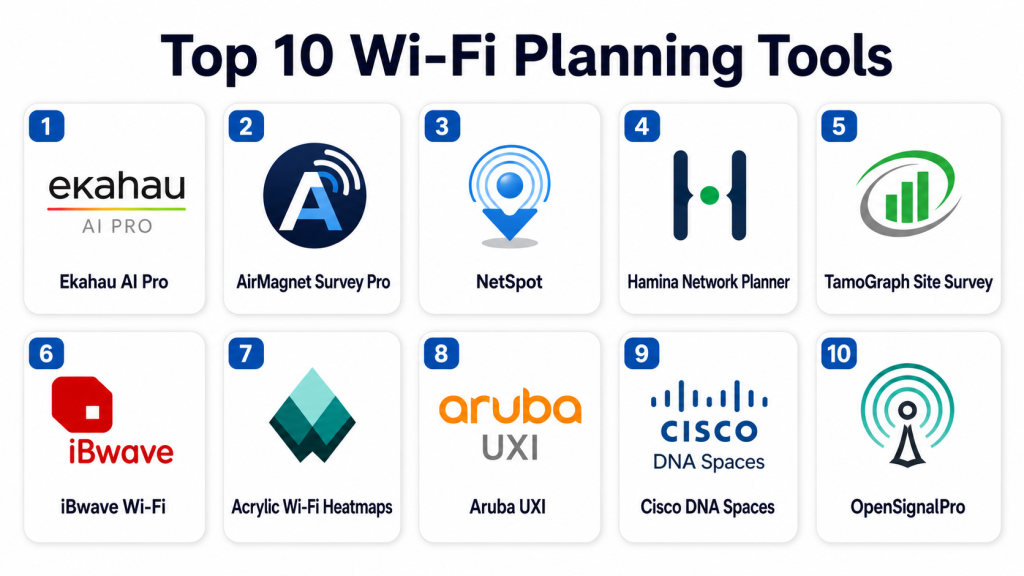
Top 10 Wi-Fi Planning Tools
1- Ekahau AI Pro
Short description: Ekahau AI Pro is one of the most widely adopted enterprise Wi-Fi planning and site survey platforms for predictive RF analysis and wireless optimization.
Key Features
- Predictive Wi-Fi planning
- AI-assisted RF analysis
- Heatmap visualization
- Real-time site surveys
- Spectrum analysis
- Wi-Fi 6E support
- Automated reporting
Pros
- Excellent RF modeling accuracy
- Strong enterprise adoption
- Advanced troubleshooting capabilities
Cons
- Premium pricing
- Learning curve for advanced analysis
- Hardware ecosystem can increase costs
Platforms / Deployment
- Windows
- macOS
- Cloud
Security & Compliance
- RBAC
- Secure cloud access
- Audit controls
Integrations & Ecosystem
Ekahau integrates with enterprise wireless ecosystems and network operations workflows.
- Cisco integrations
- Aruba integrations
- APIs
- Reporting exports
- Collaboration tools
Support & Community
Strong wireless engineering community with excellent enterprise documentation and training resources.
2- AirMagnet Survey Pro
Short description: AirMagnet Survey Pro provides wireless site survey, predictive modeling, and RF troubleshooting capabilities for enterprise wireless environments.
Key Features
- Predictive RF modeling
- Active and passive surveys
- Spectrum analysis
- Heatmap generation
- Interference detection
- Capacity planning
- Reporting automation
Pros
- Mature enterprise feature set
- Strong troubleshooting tools
- Reliable survey capabilities
Cons
- Interface feels dated
- Windows-only environment
- Premium licensing costs
Platforms / Deployment
- Windows
- Self-hosted
Security & Compliance
- Role-based access controls
- Secure reporting capabilities
Integrations & Ecosystem
AirMagnet integrates with wireless infrastructure and enterprise reporting ecosystems.
- Cisco integrations
- Aruba integrations
- Reporting tools
- Spectrum analysis hardware
Support & Community
Established enterprise support with broad wireless engineering adoption.
3- NetSpot
Short description: NetSpot is a user-friendly Wi-Fi survey and planning platform designed for SMBs, IT teams, and wireless troubleshooting professionals.
Key Features
- Wi-Fi heatmapping
- Site survey tools
- Signal analysis
- Interference detection
- Coverage visualization
- Speed testing
- Wi-Fi troubleshooting
Pros
- Easy-to-use interface
- Affordable pricing
- Strong SMB suitability
Cons
- Limited advanced enterprise features
- Fewer automation capabilities
- Smaller ecosystem integrations
Platforms / Deployment
- Windows
- macOS
Security & Compliance
- Basic authentication controls
- Secure local project storage
Integrations & Ecosystem
NetSpot focuses primarily on standalone wireless analysis workflows.
- Reporting exports
- Wireless adapter integrations
- Local analytics tools
Support & Community
Strong usability-focused documentation and growing SMB adoption.
4- Hamina Network Planner
Short description: Hamina Network Planner is a modern cloud-based Wi-Fi design platform focused on predictive planning and collaborative wireless engineering workflows.
Key Features
- Cloud-based Wi-Fi planning
- Predictive heatmaps
- AI-assisted optimization
- Multi-floor planning
- Wi-Fi 6E support
- Collaboration tools
- Automated design recommendations
Pros
- Modern user experience
- Strong collaboration features
- Cloud-native flexibility
Cons
- Smaller ecosystem compared to legacy vendors
- Enterprise adoption still growing
- Advanced RF analysis depth varies
Platforms / Deployment
- Cloud
- Web
Security & Compliance
- Secure cloud access
- RBAC
- Audit capabilities
Integrations & Ecosystem
Hamina integrates with wireless planning and cloud collaboration workflows.
- APIs
- Collaboration exports
- Wireless vendor integrations
Support & Community
Growing wireless engineering community with responsive vendor support.
5- TamoGraph Site Survey
Short description: TamoGraph Site Survey provides wireless heatmapping and RF analysis for SMB and enterprise wireless planning environments.
Key Features
- Heatmap visualization
- Predictive wireless modeling
- Signal strength analysis
- Coverage mapping
- Channel overlap analysis
- Multi-floor planning
- Survey reporting
Pros
- Competitive pricing
- Good RF visualization
- Flexible survey workflows
Cons
- Smaller enterprise ecosystem
- Limited advanced automation
- UI modernization could improve
Platforms / Deployment
- Windows
- macOS
Security & Compliance
- Local project security
- Authentication support
Integrations & Ecosystem
TamoGraph integrates primarily with wireless survey and reporting workflows.
- Reporting exports
- Wireless adapters
- Analytics integrations
Support & Community
Solid technical documentation with SMB and consultant adoption.
6- iBwave Wi-Fi
Short description: iBwave Wi-Fi focuses on enterprise-grade wireless design and predictive modeling for complex indoor wireless environments.
Key Features
- Predictive RF simulation
- High-density wireless planning
- CAD integration
- Heatmap analysis
- Capacity planning
- Multi-building support
- Automated reporting
Pros
- Excellent enterprise modeling depth
- Strong large-building support
- Advanced capacity planning
Cons
- Complex learning curve
- Premium pricing
- Heavy enterprise focus
Platforms / Deployment
- Windows
- Cloud
Security & Compliance
- Secure project management
- Access controls
- Collaboration security
Integrations & Ecosystem
iBwave integrates with enterprise wireless design and architecture workflows.
- CAD tools
- Wireless infrastructure vendors
- Reporting systems
- APIs
Support & Community
Strong enterprise support with professional wireless engineering adoption.
7- Acrylic Wi-Fi Heatmaps
Short description: Acrylic Wi-Fi Heatmaps provides wireless site survey and coverage analysis tools for SMB and professional Wi-Fi troubleshooting environments.
Key Features
- Wi-Fi heatmapping
- Signal analysis
- Coverage visualization
- Channel analysis
- Access point discovery
- Wireless diagnostics
- Reporting exports
Pros
- Affordable pricing
- Easy deployment
- Good troubleshooting visibility
Cons
- Limited enterprise-scale features
- Smaller automation ecosystem
- Advanced RF modeling is limited
Platforms / Deployment
- Windows
Security & Compliance
- Local project security
- User authentication support
Integrations & Ecosystem
Acrylic integrates with lightweight wireless troubleshooting workflows.
- Reporting exports
- Wireless adapters
- Network diagnostics tools
Support & Community
Good documentation for SMB and consultant environments.
8- Aruba UXI
Short description: Aruba UXI combines wireless experience monitoring with predictive Wi-Fi performance analytics and troubleshooting capabilities.
Key Features
- Wireless experience analytics
- Automated monitoring
- Performance troubleshooting
- AI-driven insights
- Connectivity validation
- Remote visibility
- Real-time telemetry
Pros
- Strong user experience visibility
- Excellent Aruba ecosystem integration
- Good AI-assisted analytics
Cons
- Best suited for Aruba environments
- Less focused on predictive RF design
- Enterprise pricing structure
Platforms / Deployment
- Cloud
- Hybrid
Security & Compliance
- RBAC
- Encryption
- Audit controls
Integrations & Ecosystem
Aruba UXI integrates with Aruba networking and observability ecosystems.
- Aruba Central
- APIs
- Monitoring tools
- Cloud analytics platforms
Support & Community
Strong enterprise support and Aruba networking ecosystem adoption.
9- Cisco DNA Spaces
Short description: Cisco DNA Spaces provides location analytics, wireless visibility, and Wi-Fi operational intelligence for enterprise networking environments.
Key Features
- Wireless analytics
- Location intelligence
- Wi-Fi monitoring
- Device visibility
- AI-assisted insights
- Real-time telemetry
- Cloud dashboards
Pros
- Strong Cisco ecosystem integration
- Advanced analytics capabilities
- Enterprise scalability
Cons
- Best within Cisco environments
- Complex enterprise deployments
- Premium licensing model
Platforms / Deployment
- Cloud
- Hybrid
Security & Compliance
- RBAC
- MFA
- Audit logging
- Secure cloud management
Integrations & Ecosystem
Cisco DNA Spaces integrates deeply with Cisco networking and enterprise operations ecosystems.
- Cisco Catalyst
- APIs
- Network monitoring tools
- Security platforms
Support & Community
Extensive enterprise documentation and large networking ecosystem.
10- OpenSignalPro
Short description: OpenSignalPro is a lightweight wireless planning and RF analysis platform focused on survey simplicity and operational visibility.
Key Features
- Wi-Fi surveys
- Signal analysis
- Coverage visualization
- Access point mapping
- RF diagnostics
- Reporting tools
- Lightweight deployment
Pros
- Simple operational workflows
- Lower deployment complexity
- Cost-effective for smaller teams
Cons
- Limited enterprise functionality
- Smaller ecosystem support
- Advanced analytics capabilities are limited
Platforms / Deployment
- Windows
- Self-hosted
Security & Compliance
- Local authentication controls
- Basic project security
Integrations & Ecosystem
OpenSignalPro supports lightweight wireless analysis workflows.
- Reporting exports
- Wireless adapters
- Survey integrations
Support & Community
Smaller support ecosystem with consultant-focused adoption.
Comparison Table
| Tool Name | Best For | Platform(s) Supported | Deployment | Standout Feature | Public Rating |
|---|---|---|---|---|---|
| Ekahau AI Pro | Enterprise wireless design | Windows, macOS | Cloud | AI-assisted RF planning | N/A |
| AirMagnet Survey Pro | Enterprise site surveys | Windows | Self-hosted | Advanced RF troubleshooting | N/A |
| NetSpot | SMB wireless analysis | Windows, macOS | Self-hosted | User-friendly heatmaps | N/A |
| Hamina Network Planner | Cloud collaboration | Web | Cloud | Cloud-native planning | N/A |
| TamoGraph Site Survey | SMB predictive planning | Windows, macOS | Self-hosted | Flexible RF visualization | N/A |
| iBwave Wi-Fi | Large enterprise facilities | Windows | Cloud | High-density wireless planning | N/A |
| Acrylic Wi-Fi Heatmaps | Affordable wireless surveys | Windows | Self-hosted | Lightweight troubleshooting | N/A |
| Aruba UXI | Wireless experience analytics | Cloud | Hybrid | AI-driven monitoring | N/A |
| Cisco DNA Spaces | Enterprise wireless analytics | Cloud | Hybrid | Location intelligence | N/A |
| OpenSignalPro | Lightweight Wi-Fi surveys | Windows | Self-hosted | Simple RF diagnostics | N/A |
Evaluation & Scoring of Wi-Fi Planning Tools
| Tool Name | Core | Ease | Integrations | Security | Performance | Support | Value | Weighted Total |
|---|---|---|---|---|---|---|---|---|
| Ekahau AI Pro | 9 | 8 | 8 | 8 | 9 | 9 | 6 | 8.2 |
| AirMagnet Survey Pro | 9 | 7 | 7 | 7 | 9 | 8 | 6 | 7.8 |
| NetSpot | 7 | 9 | 6 | 6 | 7 | 7 | 9 | 7.5 |
| Hamina Network Planner | 8 | 8 | 7 | 7 | 8 | 7 | 8 | 7.8 |
| TamoGraph Site Survey | 7 | 8 | 6 | 6 | 7 | 7 | 8 | 7.1 |
| iBwave Wi-Fi | 9 | 6 | 7 | 7 | 9 | 8 | 6 | 7.7 |
| Acrylic Wi-Fi Heatmaps | 6 | 8 | 5 | 6 | 6 | 6 | 9 | 6.7 |
| Aruba UXI | 8 | 7 | 8 | 8 | 8 | 8 | 7 | 7.8 |
| Cisco DNA Spaces | 8 | 7 | 9 | 8 | 8 | 8 | 6 | 7.8 |
| OpenSignalPro | 6 | 7 | 5 | 5 | 6 | 6 | 8 | 6.2 |
These scores are comparative and intended to help organizations evaluate Wi-Fi planning platforms across operational priorities. Higher-scoring platforms generally provide stronger RF analysis, automation, scalability, and enterprise ecosystem support. Organizations should balance advanced functionality with operational simplicity, pricing, and deployment requirements before selecting a wireless planning platform.
Which Wi-Fi Planning Tool Is Right for You
Solo Freelancer
NetSpot and Acrylic Wi-Fi Heatmaps are good options for consultants and smaller environments needing affordable wireless planning capabilities.
SMB
TamoGraph Site Survey and Hamina Network Planner provide strong usability and predictive planning flexibility for growing businesses.
Mid-Market
Ekahau AI Pro and Aruba UXI offer advanced wireless optimization and analytics without requiring extremely large enterprise infrastructure.
Enterprise
Cisco DNA Spaces, iBwave Wi-Fi, and AirMagnet Survey Pro are best suited for large-scale wireless operations and high-density deployments.
Budget vs Premium
Lightweight survey platforms reduce operational costs, while enterprise-grade RF planning tools provide deeper analytics and automation capabilities.
Feature Depth vs Ease of Use
Advanced RF simulation platforms offer stronger predictive modeling but often require more wireless engineering expertise.
Integrations & Scalability
Organizations with large networking ecosystems should prioritize platforms with APIs and enterprise wireless integrations.
Security & Compliance Needs
Healthcare, finance, and government environments should prioritize secure collaboration, audit visibility, and centralized governance controls.
Frequently Asked Questions FAQs
1. What are Wi-Fi Planning Tools?
Wi-Fi Planning Tools help organizations design, simulate, optimize, and troubleshoot wireless networks before and after deployment.
2. Why are predictive heatmaps important?
Predictive heatmaps help estimate signal coverage, interference, and access point placement before physical deployment begins.
3. What is RF analysis in Wi-Fi planning?
RF analysis evaluates wireless signal behavior, interference, channel utilization, and environmental obstacles affecting connectivity.
4. Are these tools useful for Wi-Fi 6E and Wi-Fi 7 deployments?
Yes. Modern Wi-Fi planning platforms increasingly support advanced wireless standards including Wi-Fi 6E and Wi-Fi 7.
5. Can Wi-Fi planning tools reduce deployment costs?
Yes. Proper wireless planning reduces access point overdeployment, interference issues, and post-deployment troubleshooting costs.
6. What industries commonly use Wi-Fi planning tools?
Healthcare, education, retail, warehousing, manufacturing, hospitality, and large enterprises commonly rely on wireless planning platforms.
7. Are cloud-based Wi-Fi planning platforms reliable?
Modern cloud platforms provide strong collaboration, scalability, and centralized project management capabilities.
8. How difficult is wireless site surveying?
Advanced RF analysis may require wireless engineering expertise, but many tools now include AI-assisted workflows and automation.
9. Can Wi-Fi planning tools integrate with monitoring systems?
Many enterprise platforms integrate with observability, wireless analytics, and network monitoring ecosystems.
10. How should organizations evaluate Wi-Fi planning vendors?
Organizations should assess RF accuracy, automation, scalability, integrations, reporting quality, and long-term operational usability.
Conclusion
Wi-Fi Planning Tools have become essential platforms for designing, optimizing, and maintaining reliable wireless infrastructure across modern enterprise environments. As organizations continue adopting Wi-Fi 6E, Wi-Fi 7, IoT expansion, and hybrid workplace connectivity, accurate wireless planning and RF optimization are becoming increasingly important. The best platform depends heavily on deployment scale, wireless complexity, operational maturity, and budget requirements. Some organizations prioritize advanced RF simulation and enterprise analytics, while others focus on usability, affordability, or cloud-based collaboration. Enterprises should shortlist a few platforms aligned with their wireless strategy, validate compatibility with existing networking ecosystems, and conduct pilot planning projects before large-scale deployment. Careful evaluation can significantly improve wireless reliability, user experience, and long-term infrastructure efficiency.

Find Trusted Cardiac Hospitals
Compare heart hospitals by city and services — all in one place.
Explore Hospitals
I am trying to learn more about Wi-Fi planning tools, and this blog helped me understand how they improve network coverage and performance.