Introduction
Enterprise Social Networks are internal collaboration platforms designed to connect employees, departments, leadership teams, and business units across an organization. Unlike traditional communication tools that focus on direct messaging, Enterprise Social Networks emphasize knowledge sharing, employee engagement, company-wide communication, communities of practice, and collaborative innovation. As organizations continue to embrace hybrid work, distributed teams, AI-powered collaboration, and digital workplace transformation, Enterprise Social Networks have become strategic platforms for maintaining culture, improving communication, reducing information silos, and increasing employee engagement. These platforms function as internal social networks where employees can share updates, join communities, collaborate on projects, recognize achievements, and access organizational knowledge.
Real-world use cases include:
- Company-wide announcements and executive communications
- Employee engagement and recognition programs
- Cross-functional collaboration and knowledge sharing
- Internal communities and interest groups
- Digital workplace transformation initiatives
Evaluation Criteria for Buyers
- Employee engagement capabilities
- Knowledge sharing features
- Community management tools
- Mobile accessibility
- AI-powered search and recommendations
- Security and compliance controls
- Integration ecosystem
- Scalability
- Analytics and reporting
- Administrative governance
Best for: Enterprises, large organizations, distributed workforces, government agencies, educational institutions, healthcare providers, and businesses focused on employee engagement.
Not ideal for: Small teams that primarily need simple messaging or organizations already satisfied with existing collaboration platforms.
Key Trends in Enterprise Social Networks
- AI-powered content recommendations are becoming standard.
- Employee experience platforms are merging with social networking capabilities.
- Intelligent knowledge discovery is reducing information silos.
- Employee recognition and engagement tools are expanding.
- Video-first communication is becoming increasingly important.
- Advanced workplace analytics are helping HR teams measure engagement.
- Digital workplace platforms are consolidating multiple collaboration functions.
- Mobile-first experiences are driving adoption.
- AI assistants are helping employees discover relevant expertise.
- Security and governance requirements continue to increase.
How We Selected These Tools (Methodology)
Our selection process focused on:
- Market adoption and industry recognition
- Employee engagement capabilities
- Collaboration and communication features
- Knowledge management functionality
- Integration ecosystem strength
- Security and compliance posture
- Enterprise scalability
- User experience quality
- Mobile platform support
- Overall value across organization sizes
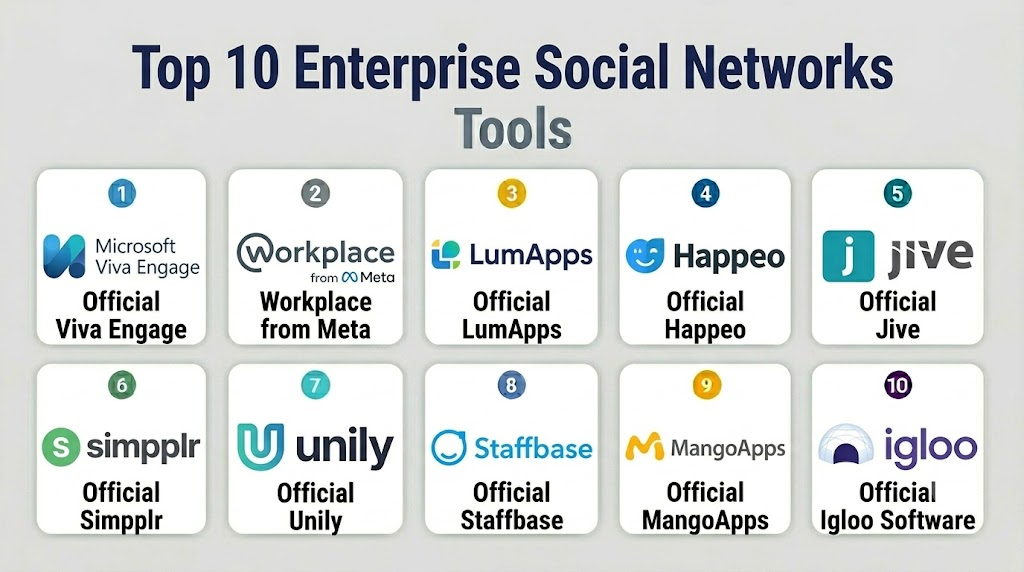
Top 10 Enterprise Social Networks
1- Microsoft Viva Engage
Short description: Microsoft Viva Engage, formerly Yammer, serves as Microsoft’s enterprise social networking platform designed to foster communities, leadership engagement, and organizational communication.
Key Features
- Enterprise communities
- Leadership engagement
- Employee communications
- AI-powered content discovery
- Knowledge sharing
- Recognition programs
- Microsoft 365 integration
Pros
- Deep Microsoft integration
- Strong enterprise capabilities
- Excellent scalability
Cons
- Best within Microsoft environments
- Advanced features may require premium licensing
- Learning curve for administrators
Platforms / Deployment
- Web
- Windows
- macOS
- iOS
- Android
- Cloud
Security & Compliance
- SSO/SAML
- MFA
- RBAC
- Audit logs
- Enterprise compliance controls
Integrations & Ecosystem
Strong integration across the Microsoft ecosystem.
- Microsoft Teams
- SharePoint
- OneDrive
- Microsoft 365
- Power Platform
Support & Community
Extensive Microsoft support and documentation.
2- Workplace from Meta
Short description: Workplace from Meta provides a familiar social media-like experience for internal organizational collaboration and communication.
Key Features
- News feeds
- Groups and communities
- Live video streaming
- Employee communications
- Knowledge sharing
- Mobile-first experience
- Leadership engagement
Pros
- Familiar social experience
- Strong mobile usability
- Easy adoption
Cons
- Future roadmap considerations vary
- Limited customization
- Enterprise governance limitations compared to some competitors
Platforms / Deployment
- Web
- iOS
- Android
- Cloud
Security & Compliance
- Access controls
- Administrative governance
Integrations & Ecosystem
- Productivity platforms
- Enterprise systems
- APIs
Support & Community
Strong onboarding and customer support.
3- LumApps
Short description: LumApps combines enterprise social networking, intranet functionality, and employee experience capabilities.
Key Features
- Social communities
- Personalized employee experiences
- Knowledge sharing
- Intranet functionality
- Employee engagement tools
- Analytics
- AI-powered recommendations
Pros
- Strong employee experience focus
- Excellent personalization
- Modern interface
Cons
- Premium pricing
- Advanced customization complexity
- Enterprise-oriented
Platforms / Deployment
- Web
- iOS
- Android
- Cloud
Security & Compliance
- SSO
- Access controls
- Enterprise governance
Integrations & Ecosystem
- Google Workspace
- Microsoft 365
- HR systems
- APIs
Support & Community
Comprehensive enterprise support.
4- Happeo
Short description: Happeo is a social intranet platform that combines communication, collaboration, and employee engagement.
Key Features
- Social channels
- Knowledge management
- Employee communications
- AI-powered search
- Community building
- Analytics
- Mobile access
Pros
- Strong social intranet capabilities
- User-friendly interface
- Good Google Workspace integration
Cons
- Smaller ecosystem
- Enterprise pricing
- Limited market presence compared to larger vendors
Platforms / Deployment
- Web
- iOS
- Android
- Cloud
Security & Compliance
- SSO
- Access controls
Integrations & Ecosystem
- Google Workspace
- Microsoft 365
- HR platforms
- APIs
Support & Community
Strong customer success resources.
5- Jive
Short description: Jive is a mature enterprise collaboration and social networking platform designed for large organizations.
Key Features
- Enterprise communities
- Knowledge management
- Employee engagement
- Collaboration spaces
- Content management
- Analytics
- Governance controls
Pros
- Mature platform
- Strong knowledge sharing
- Enterprise scalability
Cons
- Complex implementation
- Premium licensing
- Older user interface compared to newer competitors
Platforms / Deployment
- Web
- Mobile
- Cloud
Security & Compliance
- RBAC
- Audit controls
- Enterprise governance
Integrations & Ecosystem
- CRM platforms
- Productivity suites
- APIs
Support & Community
Long-standing enterprise customer base.
6- Simpplr
Short description: Simpplr focuses on employee experience, communications, and social engagement within enterprises.
Key Features
- Employee engagement
- Personalized content
- Social communities
- AI-powered recommendations
- Employee recognition
- Analytics
- Mobile access
Pros
- Strong employee experience focus
- Easy deployment
- Modern design
Cons
- Premium pricing
- Enterprise focus
- Limited self-hosting options
Platforms / Deployment
- Web
- iOS
- Android
- Cloud
Security & Compliance
- SSO
- Administrative controls
Integrations & Ecosystem
- Microsoft 365
- Google Workspace
- HR systems
- APIs
Support & Community
Strong implementation support.
7- Unily
Short description: Unily provides a digital workplace platform combining intranet, employee engagement, and enterprise social networking.
Key Features
- Social collaboration
- Employee communications
- Knowledge sharing
- Personalization
- Mobile experiences
- Analytics
- Employee journeys
Pros
- Strong digital workplace capabilities
- Advanced personalization
- Enterprise scalability
Cons
- Premium pricing
- Complex deployment
- Best for larger organizations
Platforms / Deployment
- Web
- Mobile
- Cloud
Security & Compliance
- Enterprise governance
- Access controls
Integrations & Ecosystem
- Microsoft 365
- Google Workspace
- Enterprise applications
Support & Community
Enterprise support services.
8- Staffbase
Short description: Staffbase specializes in internal communications, employee engagement, and enterprise social networking.
Key Features
- Employee communications
- News feeds
- Social engagement
- Mobile workforce support
- Analytics
- Campaign management
- Content targeting
Pros
- Strong communication capabilities
- Excellent mobile experience
- Employee engagement focus
Cons
- Premium pricing
- Communication-centric
- Advanced collaboration features vary
Platforms / Deployment
- Web
- iOS
- Android
- Cloud
Security & Compliance
- Access controls
- Enterprise administration
Integrations & Ecosystem
- Microsoft 365
- HR systems
- Communication platforms
Support & Community
Strong customer support.
9- MangoApps
Short description: MangoApps combines social networking, intranet, collaboration, and employee experience capabilities.
Key Features
- Social communities
- Employee engagement
- Intranet functionality
- Collaboration tools
- Knowledge sharing
- Mobile support
- Workflow automation
Pros
- Comprehensive platform
- Flexible deployment
- Good value
Cons
- Smaller ecosystem
- Less brand recognition
- Advanced customization may require expertise
Platforms / Deployment
- Web
- Mobile
- Cloud
Security & Compliance
- Access controls
- Administrative governance
Integrations & Ecosystem
- Productivity platforms
- HR systems
- APIs
Support & Community
Growing customer community.
10- Igloo Software
Short description: Igloo Software provides a digital workplace and enterprise social networking solution focused on knowledge sharing and collaboration.
Key Features
- Social communities
- Knowledge management
- Employee engagement
- Content management
- Collaboration spaces
- Mobile support
- Analytics
Pros
- Strong knowledge management
- Flexible collaboration
- Enterprise capabilities
Cons
- Smaller ecosystem
- Premium pricing
- Learning curve
Platforms / Deployment
- Web
- Mobile
- Cloud
Security & Compliance
- Access controls
- Governance capabilities
Integrations & Ecosystem
- Microsoft 365
- Google Workspace
- Business applications
Support & Community
Enterprise support offerings.
Comparison Table
| Tool Name | Best For | Platform(s) Supported | Deployment | Standout Feature | Public Rating |
|---|---|---|---|---|---|
| Microsoft Viva Engage | Microsoft enterprises | Web, Mobile | Cloud | Microsoft integration | N/A |
| Workplace from Meta | Social collaboration | Web, Mobile | Cloud | Familiar social experience | N/A |
| LumApps | Employee experience | Web, Mobile | Cloud | Personalization engine | N/A |
| Happeo | Social intranets | Web, Mobile | Cloud | Knowledge sharing | N/A |
| Jive | Large enterprises | Web, Mobile | Cloud | Community management | N/A |
| Simpplr | Employee engagement | Web, Mobile | Cloud | AI-driven experience | N/A |
| Unily | Digital workplace | Web, Mobile | Cloud | Enterprise personalization | N/A |
| Staffbase | Internal communications | Web, Mobile | Cloud | Mobile workforce support | N/A |
| MangoApps | All-in-one workplace | Web, Mobile | Cloud | Integrated collaboration | N/A |
| Igloo Software | Knowledge sharing | Web, Mobile | Cloud | Content collaboration | N/A |
Evaluation & Scoring of Enterprise Social Networks
| Tool Name | Core | Ease | Integrations | Security | Performance | Support | Value | Weighted Total |
|---|---|---|---|---|---|---|---|---|
| Microsoft Viva Engage | 10 | 8 | 10 | 9 | 9 | 9 | 8 | 9.00 |
| Workplace from Meta | 8 | 9 | 7 | 8 | 8 | 8 | 8 | 8.05 |
| LumApps | 9 | 8 | 9 | 8 | 8 | 8 | 8 | 8.40 |
| Happeo | 8 | 8 | 8 | 8 | 8 | 8 | 8 | 8.00 |
| Jive | 9 | 7 | 8 | 9 | 8 | 8 | 7 | 8.10 |
| Simpplr | 9 | 9 | 8 | 8 | 8 | 8 | 8 | 8.45 |
| Unily | 9 | 8 | 9 | 8 | 8 | 8 | 7 | 8.25 |
| Staffbase | 8 | 9 | 8 | 8 | 8 | 8 | 8 | 8.15 |
| MangoApps | 8 | 8 | 8 | 8 | 8 | 8 | 9 | 8.15 |
| Igloo Software | 8 | 8 | 8 | 8 | 8 | 8 | 8 | 8.00 |
Which Enterprise Social Network Is Right for You?
Solo / Freelancer
Enterprise Social Networks are generally designed for larger organizations. Smaller teams may benefit more from collaboration platforms such as team messaging apps.
SMB
MangoApps, Happeo, and Staffbase provide strong functionality without the complexity of larger enterprise platforms.
Mid-Market
LumApps, Simpplr, and Unily offer strong employee engagement and collaboration capabilities.
Enterprise
Microsoft Viva Engage, Jive, Unily, and LumApps provide advanced governance, scalability, and enterprise integrations.
Budget vs Premium
MangoApps and Happeo often provide strong value, while Unily, LumApps, and Viva Engage target larger enterprise investments.
Feature Depth vs Ease of Use
Simpplr and Staffbase prioritize user experience. Viva Engage and Unily emphasize enterprise capabilities.
Integrations & Scalability
Microsoft Viva Engage leads for Microsoft-centric organizations, while LumApps offers strong cross-platform integration.
Security & Compliance Needs
Organizations in regulated industries should prioritize Viva Engage, Jive, LumApps, and Unily.
Frequently Asked Questions (FAQs)
1- What is an Enterprise Social Network?
An Enterprise Social Network is an internal platform that helps employees communicate, collaborate, share knowledge, and build workplace communities.
2- How is it different from a team messaging app?
Team messaging apps focus on real-time communication, while enterprise social networks emphasize community engagement, knowledge sharing, and organizational communication.
3- Why are Enterprise Social Networks important?
They improve employee engagement, strengthen organizational culture, and reduce information silos.
4- Are these platforms suitable for remote work?
Yes. Most modern platforms are designed to support distributed and hybrid workforces.
5- Do Enterprise Social Networks support mobile devices?
Most leading solutions provide dedicated mobile applications for iOS and Android.
6- Can they integrate with Microsoft 365?
Many platforms offer deep integrations with Microsoft 365 and other productivity suites.
7- What industries use these platforms?
Large enterprises, healthcare organizations, educational institutions, government agencies, and financial services firms commonly use them.
8- How do they improve employee engagement?
They provide recognition programs, social communities, leadership communications, and collaboration opportunities.
9- What are common implementation mistakes?
Lack of executive sponsorship, poor content strategies, and insufficient employee onboarding often limit adoption.
10- What alternatives exist?
Alternatives include intranet platforms, team messaging apps, employee communication platforms, and knowledge management systems.
Conclusion
Enterprise Social Networks continue to play a vital role in helping organizations build stronger cultures, improve communication, and support collaboration across distributed workforces. As digital workplace initiatives evolve, modern platforms increasingly combine social networking, employee engagement, AI-powered knowledge discovery, and internal communications into unified experiences. Microsoft Viva Engage remains a leading choice for Microsoft-centric organizations, while LumApps, Simpplr, Unily, and Staffbase offer compelling employee experience solutions. The right platform depends on your workforce size, collaboration goals, technology ecosystem, and employee engagement priorities. Before selecting a solution, identify your communication objectives, evaluate integration requirements, pilot shortlisted platforms, and measure employee adoption to ensure long-term success.

Find Trusted Cardiac Hospitals
Compare heart hospitals by city and services — all in one place.
Explore Hospitals
I didn’t know much about enterprise social networks before, and this article helped me understand how they can improve communication and collaboration within teams.