Introduction
Intranet platforms have evolved from simple internal document repositories into comprehensive digital workplaces that connect employees, streamline communication, centralize knowledge, and improve organizational productivity. as hybrid work, distributed teams, and digital transformation initiatives continue to expand, modern intranet platforms serve as the central hub for employee engagement, collaboration, company communications, knowledge management, and business processes. Organizations use intranet platforms to reduce information silos, improve employee experiences, simplify access to critical resources, and create a unified digital workplace. Today’s leading solutions integrate communication tools, document management, employee directories, social collaboration, workflow automation, AI-powered search, analytics, and enterprise applications into a single platform.
Real-world use cases include:
- Internal communications and company announcements
- Knowledge management and document sharing
- Employee onboarding and training
- Cross-functional collaboration
- Digital workplace transformation initiatives
Evaluation Criteria for Buyers
- Content management capabilities
- Employee engagement features
- AI-powered search and discovery
- Integration ecosystem
- Mobile accessibility
- Security and compliance controls
- Personalization capabilities
- Workflow automation
- Analytics and reporting
- Scalability and governance
Best for: Enterprises, mid-market organizations, distributed workforces, government agencies, healthcare organizations, educational institutions, and businesses focused on employee experience.
Not ideal for: Very small teams that primarily need basic file sharing or simple team communication tools.
Key Trends in Intranet Platforms
- AI-powered enterprise search is becoming a core requirement.
- Employee experience platforms are merging with intranet solutions.
- Personalized content delivery is improving employee engagement.
- Knowledge management capabilities are expanding significantly.
- Mobile-first intranet experiences are becoming standard.
- AI-generated content summaries are reducing information overload.
- Employee engagement analytics are becoming more sophisticated.
- Workflow automation is increasingly embedded within intranet platforms.
- Cross-platform collaboration integrations continue to expand.
- Digital workplace platforms are consolidating multiple workplace tools.
How We Selected These Tools (Methodology)
Our evaluation process focused on:
- Market adoption and customer base
- Employee experience capabilities
- Knowledge management functionality
- Communication and collaboration features
- Integration ecosystem maturity
- Security and compliance controls
- AI-powered capabilities
- Scalability for enterprise environments
- Mobile and remote workforce support
- Overall value and long-term viability
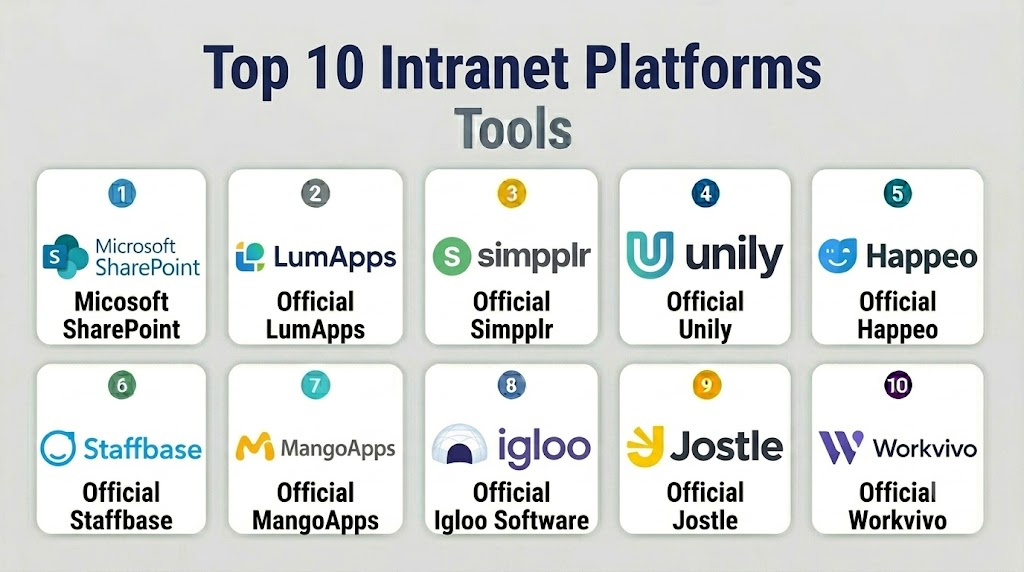
Top 10 Intranet Platforms
1- Microsoft SharePoint
Short description: Microsoft SharePoint remains one of the most widely deployed intranet platforms globally, offering content management, collaboration, knowledge sharing, and deep Microsoft ecosystem integration.
Key Features
- Document management
- Team sites
- Corporate intranet portals
- Knowledge management
- Workflow automation
- Enterprise search
- Microsoft 365 integration
Pros
- Extensive enterprise capabilities
- Deep Microsoft integration
- Highly scalable
Cons
- Complex administration
- Customization can require expertise
- Learning curve for new users
Platforms / Deployment
- Web
- Windows
- macOS
- iOS
- Android
- Cloud
- Hybrid
Security & Compliance
- SSO/SAML
- MFA
- RBAC
- Audit logs
- Enterprise compliance capabilities
Integrations & Ecosystem
SharePoint benefits from one of the largest enterprise ecosystems available.
- Microsoft Teams
- OneDrive
- Power Platform
- Dynamics 365
- Microsoft Viva
- APIs
Support & Community
Extensive documentation, community resources, and global partner ecosystem.
2- LumApps
Short description: LumApps is an employee experience and intranet platform designed to improve communication, knowledge sharing, and employee engagement.
Key Features
- Personalized employee experiences
- AI-powered recommendations
- Knowledge management
- Social collaboration
- Employee communications
- Mobile experience
- Analytics
Pros
- Excellent personalization
- Strong employee experience focus
- Modern user interface
Cons
- Premium pricing
- Enterprise-focused
- Advanced customization complexity
Platforms / Deployment
- Web
- iOS
- Android
- Cloud
Security & Compliance
- SSO
- Access controls
- Enterprise governance
Integrations & Ecosystem
- Google Workspace
- Microsoft 365
- HR platforms
- Productivity tools
- APIs
Support & Community
Strong customer success and onboarding programs.
3- Simpplr
Short description: Simpplr focuses on employee engagement, communications, and AI-powered digital workplace experiences.
Key Features
- Personalized content
- Employee communications
- Knowledge management
- AI recommendations
- Social collaboration
- Mobile access
- Analytics
Pros
- Easy implementation
- Strong user adoption
- Excellent employee engagement tools
Cons
- Premium licensing
- Enterprise-oriented pricing
- Limited self-hosting options
Platforms / Deployment
- Web
- iOS
- Android
- Cloud
Security & Compliance
- Access controls
- Enterprise security features
Integrations & Ecosystem
- Microsoft 365
- Google Workspace
- Salesforce
- HR systems
- APIs
Support & Community
Comprehensive support and implementation services.
4- Unily
Short description: Unily provides a comprehensive digital workplace platform combining intranet, employee experience, and enterprise communications.
Key Features
- Employee experience platform
- Content personalization
- Social collaboration
- Knowledge management
- Mobile applications
- Analytics
- Enterprise communications
Pros
- Strong enterprise capabilities
- Advanced personalization
- Excellent scalability
Cons
- Premium pricing
- Complex deployment
- Best suited for larger organizations
Platforms / Deployment
- Web
- Mobile
- Cloud
Security & Compliance
- Enterprise governance
- Access management
Integrations & Ecosystem
- Microsoft 365
- Google Workspace
- HR platforms
- Enterprise applications
Support & Community
Strong enterprise support organization.
5- Happeo
Short description: Happeo combines social intranet functionality, employee communication tools, and knowledge sharing capabilities.
Key Features
- Social channels
- Knowledge management
- AI search
- Employee communications
- Mobile access
- Community engagement
- Analytics
Pros
- Strong Google Workspace integration
- User-friendly interface
- Good employee engagement capabilities
Cons
- Smaller ecosystem
- Enterprise-focused pricing
- Limited market share
Platforms / Deployment
- Web
- Mobile
- Cloud
Security & Compliance
- Access controls
- Authentication support
Integrations & Ecosystem
- Google Workspace
- Microsoft 365
- Productivity tools
- APIs
Support & Community
Responsive support team and onboarding resources.
6- Staffbase
Short description: Staffbase focuses on employee communications, engagement, and mobile-first workforce experiences.
Key Features
- Employee communications
- News publishing
- Mobile workforce support
- Employee engagement
- Analytics
- Campaign management
- Personalized content
Pros
- Excellent mobile experience
- Strong communication tools
- High employee engagement focus
Cons
- Communication-centric platform
- Advanced collaboration features vary
- Premium pricing
Platforms / Deployment
- Web
- iOS
- Android
- Cloud
Security & Compliance
- Administrative controls
- Enterprise governance
Integrations & Ecosystem
- Microsoft 365
- HR systems
- Enterprise tools
- APIs
Support & Community
Strong customer support organization.
7- MangoApps
Short description: MangoApps combines intranet, employee engagement, collaboration, and knowledge management within a unified platform.
Key Features
- Employee engagement
- Social collaboration
- Knowledge sharing
- Workflow automation
- Mobile applications
- Content management
- Analytics
Pros
- Comprehensive feature set
- Flexible deployment
- Good value proposition
Cons
- Smaller ecosystem
- Less brand recognition
- Customization complexity
Platforms / Deployment
- Web
- Mobile
- Cloud
Security & Compliance
- Access controls
- Governance features
Integrations & Ecosystem
- Business applications
- HR systems
- Productivity tools
- APIs
Support & Community
Growing customer community and support services.
8- Igloo Software
Short description: Igloo Software provides digital workplace and intranet capabilities focused on knowledge management and collaboration.
Key Features
- Knowledge management
- Social collaboration
- Content management
- Employee engagement
- Analytics
- Mobile access
- Governance tools
Pros
- Strong knowledge management
- Flexible collaboration capabilities
- Enterprise-ready features
Cons
- Premium pricing
- Smaller integration ecosystem
- Learning curve
Platforms / Deployment
- Web
- Mobile
- Cloud
Security & Compliance
- Governance controls
- Administrative capabilities
Integrations & Ecosystem
- Microsoft 365
- Google Workspace
- Enterprise applications
Support & Community
Strong enterprise customer support.
9- Jostle
Short description: Jostle is an employee success platform that combines communications, engagement, and intranet functionality.
Key Features
- Employee communications
- Social collaboration
- Recognition tools
- Knowledge sharing
- Mobile access
- Employee directories
- Community features
Pros
- Simple user experience
- Strong engagement focus
- Quick deployment
Cons
- Smaller ecosystem
- Limited enterprise customization
- Fewer advanced capabilities
Platforms / Deployment
- Web
- Mobile
- Cloud
Security & Compliance
- Access controls
- Security monitoring
Integrations & Ecosystem
- Productivity tools
- HR systems
- APIs
Support & Community
Responsive customer support.
10- Workvivo
Short description: Workvivo combines employee communications, engagement, recognition, and intranet capabilities in a social-media-inspired experience.
Key Features
- Social feeds
- Employee recognition
- Internal communications
- Mobile experiences
- Analytics
- Employee engagement
- Community building
Pros
- High employee adoption
- Excellent engagement features
- Modern interface
Cons
- Premium pricing
- Social-focused approach may not fit all organizations
- Advanced customization varies
Platforms / Deployment
- Web
- Mobile
- Cloud
Security & Compliance
- Access controls
- Enterprise administration
Integrations & Ecosystem
- Microsoft 365
- HR platforms
- Productivity tools
- APIs
Support & Community
Strong customer success focus.
Comparison Table
| Tool Name | Best For | Platform(s) Supported | Deployment | Standout Feature | Public Rating |
|---|---|---|---|---|---|
| Microsoft SharePoint | Enterprise intranets | Web, Mobile | Cloud/Hybrid | Microsoft ecosystem integration | N/A |
| LumApps | Employee experience | Web, Mobile | Cloud | AI personalization | N/A |
| Simpplr | Employee engagement | Web, Mobile | Cloud | Employee experience focus | N/A |
| Unily | Digital workplace | Web, Mobile | Cloud | Enterprise personalization | N/A |
| Happeo | Social intranets | Web, Mobile | Cloud | Google Workspace integration | N/A |
| Staffbase | Internal communications | Web, Mobile | Cloud | Mobile workforce engagement | N/A |
| MangoApps | All-in-one workplace | Web, Mobile | Cloud | Unified collaboration | N/A |
| Igloo Software | Knowledge management | Web, Mobile | Cloud | Content collaboration | N/A |
| Jostle | Employee success | Web, Mobile | Cloud | Simplicity and engagement | N/A |
| Workvivo | Employee engagement | Web, Mobile | Cloud | Social workplace experience | N/A |
Evaluation & Scoring of Intranet Platforms
| Tool Name | Core | Ease | Integrations | Security | Performance | Support | Value | Weighted Total |
|---|---|---|---|---|---|---|---|---|
| Microsoft SharePoint | 10 | 7 | 10 | 10 | 9 | 9 | 8 | 9.05 |
| LumApps | 9 | 8 | 9 | 8 | 8 | 8 | 8 | 8.40 |
| Simpplr | 9 | 9 | 8 | 8 | 8 | 8 | 8 | 8.45 |
| Unily | 9 | 8 | 9 | 8 | 8 | 8 | 7 | 8.25 |
| Happeo | 8 | 8 | 8 | 8 | 8 | 8 | 8 | 8.00 |
| Staffbase | 8 | 9 | 8 | 8 | 8 | 8 | 8 | 8.15 |
| MangoApps | 8 | 8 | 8 | 8 | 8 | 8 | 9 | 8.15 |
| Igloo Software | 8 | 8 | 8 | 8 | 8 | 8 | 8 | 8.00 |
| Jostle | 7 | 9 | 7 | 8 | 8 | 8 | 9 | 7.95 |
| Workvivo | 8 | 9 | 8 | 8 | 8 | 8 | 8 | 8.15 |
Which Intranet Platform Is Right for You?
Solo / Freelancer
Most intranet platforms are designed for organizations. Smaller teams may find lightweight collaboration platforms more appropriate.
SMB
Jostle, MangoApps, and Workvivo provide strong functionality without excessive complexity.
Mid-Market
Simpplr, Happeo, and Staffbase offer a strong balance between employee engagement and operational efficiency.
Enterprise
Microsoft SharePoint, LumApps, Unily, and Simpplr provide enterprise-scale governance, integrations, and personalization.
Budget vs Premium
Jostle and MangoApps offer attractive value, while SharePoint, LumApps, and Unily target larger enterprise investments.
Feature Depth vs Ease of Use
SharePoint offers extensive capabilities, while Simpplr and Workvivo prioritize user experience and adoption.
Integrations & Scalability
SharePoint leads in Microsoft environments, while LumApps excels in mixed-platform organizations.
Security & Compliance Needs
Regulated industries should prioritize SharePoint, LumApps, Unily, and Simpplr due to their governance capabilities.
Frequently Asked Questions
1- What is an intranet platform?
An intranet platform is a private digital workplace that helps employees access information, communicate, collaborate, and share knowledge.
2- Why are intranet platforms important?
They centralize resources, improve communication, reduce information silos, and enhance employee productivity.
3- How are modern intranets different from traditional intranets?
Modern intranets include AI search, employee engagement tools, mobile experiences, social collaboration, and workflow automation.
4- Are intranet platforms suitable for remote teams?
Yes. Most modern solutions are specifically designed to support hybrid and distributed workforces.
5- What integrations should buyers prioritize?
Organizations should focus on productivity suites, HR systems, communication platforms, and business applications.
6- Do intranet platforms support mobile devices?
Most leading platforms offer dedicated mobile applications for iOS and Android users.
7- How does AI improve intranet platforms?
AI helps employees discover content, locate expertise, personalize experiences, and summarize information.
8- What are common implementation mistakes?
Poor governance, outdated content, limited executive sponsorship, and inadequate user adoption planning are common issues.
9- Which platform is best for Microsoft organizations?
Microsoft SharePoint remains one of the strongest choices for organizations invested in Microsoft 365.
10- What alternatives exist?
Alternatives include employee communication platforms, enterprise social networks, team messaging apps, and knowledge management systems.
Conclusion
Intranet platforms have become essential components of the modern digital workplace. As organizations continue to embrace hybrid work, AI-powered productivity, and employee experience initiatives, intranet solutions now serve as strategic hubs for communication, collaboration, knowledge management, and engagement. Microsoft SharePoint continues to dominate enterprise deployments due to its extensive capabilities and Microsoft ecosystem integration, while LumApps, Simpplr, Unily, Staffbase, and Workvivo provide compelling alternatives focused on employee experience and engagement. The best intranet platform depends on your organization’s size, technology ecosystem, communication goals, governance requirements, and employee experience priorities. Start by identifying your primary business objectives, shortlist two or three platforms, conduct pilot programs, evaluate integration requirements, and measure employee adoption before making a long-term investment decision.

Find Trusted Cardiac Hospitals
Compare heart hospitals by city and services — all in one place.
Explore Hospitals
I had been curious about intranet platforms, and this comparison helped me understand how they support communication and collaboration within organizations.