Introduction
Secure Data Enclaves are specialized computing environments designed to protect sensitive data while enabling analysis and collaboration. They isolate data from general access, ensuring that only authorized users and processes can interact with it. regulations tighten and data breaches become more sophisticated, secure data enclaves have emerged as a critical component for organizations handling high-value or regulated data.
Real-world use cases include:
- Healthcare organizations analyzing patient data while remaining HIPAA-compliant.
- Financial institutions performing risk modeling without exposing sensitive client information.
- Government agencies sharing classified datasets for research or inter-agency collaboration.
- Enterprises leveraging AI and machine learning on confidential datasets.
- Academic and research institutions enabling secure collaboration on sensitive scientific data.
What buyers should evaluate:
- Level of data isolation and encryption
- Compliance certifications (SOC 2, ISO 27001, GDPR, HIPAA)
- Access control granularity and identity management
- Integration with existing analytics or ML workflows
- Scalability for large datasets and high-performance computing
- User interface and usability for data scientists
- Audit and monitoring capabilities
- Cost and pricing flexibility
- Deployment models (cloud, on-prem, hybrid)
Best for: Organizations in highly regulated industries such as healthcare, finance, government, and research institutions requiring controlled data environments. Enterprises using sensitive datasets for analytics or AI workloads will benefit most.
Not ideal for: Small businesses or teams handling non-sensitive data where standard cloud storage and analytics tools suffice, as enclaves add complexity and cost.
Key Trends in Secure Data Enclaves
- Increasing adoption of confidential computing hardware, including Intel SGX and AMD SEV for in-memory encryption.
- AI-driven anomaly detection and monitoring for secure enclave access.
- Broader support for multi-cloud and hybrid deployments, allowing secure analytics across environments.
- Integration of federated learning to enable AI training without centralizing sensitive data.
- Enhanced policy-based access controls and automated compliance reporting.
- Growing demand for real-time collaboration on sensitive datasets with audit trails.
- Adoption of zero-trust security models, ensuring strict verification for all enclave users.
- Standardization of APIs for analytics and ML workloads within secure enclaves.
- Cost models evolving to include pay-as-you-go enclave provisioning for temporary projects.
How We Selected These Tools (Methodology)
- Evaluated market adoption and brand recognition across industries.
- Assessed feature completeness, including encryption, access control, and auditing.
- Considered performance and reliability, particularly for analytics workloads.
- Reviewed security posture, including certifications and support for confidential computing.
- Analyzed integration capabilities with existing analytics, ML, and cloud environments.
- Verified customer fit across SMBs, mid-market, and enterprise organizations.
- Examined scalability for large datasets and multi-user scenarios.
- Considered ease of use and learning curve for technical and non-technical users.
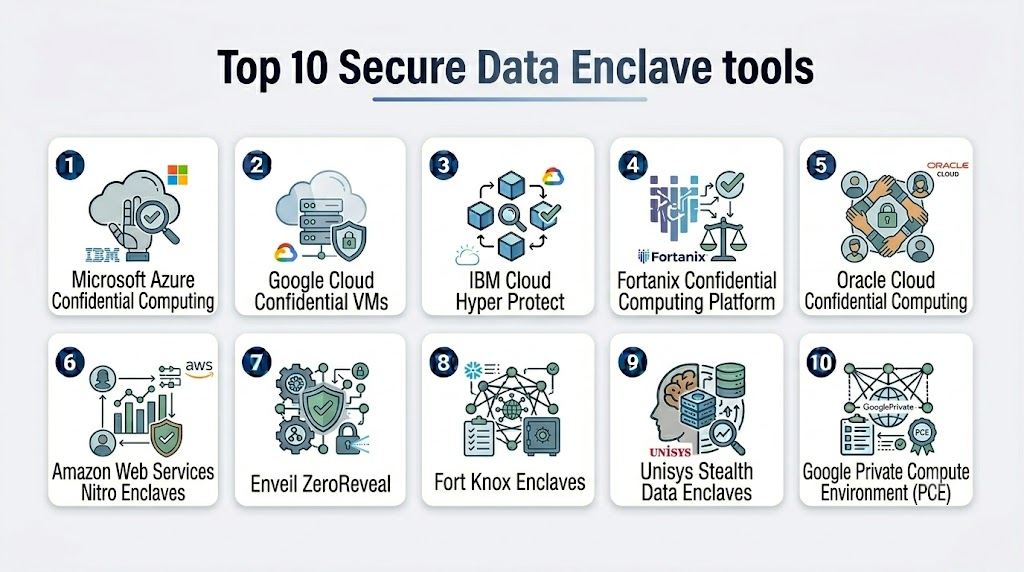
Top 10 Secure Data Enclaves Tools
1- Microsoft Azure Confidential Computing
Short description: Provides encrypted virtual machines and enclaves for sensitive workloads in the cloud. Ideal for enterprises handling regulated datasets.
Key Features
- Hardware-based in-memory encryption (Intel SGX).
- Integration with Azure ML and analytics services.
- Granular access controls with Azure Active Directory.
- Audit logging and monitoring.
- Support for hybrid and multi-cloud environments.
- APIs for secure AI model training.
Pros
- Tight integration with Microsoft ecosystem.
- Scalable and reliable cloud infrastructure.
Cons
- Cost can be high for large workloads.
- Learning curve for configuring enclaves.
Platforms / Deployment
- Web / Windows / Linux
- Cloud
Security & Compliance
- SSO/SAML, MFA, RBAC
- Not publicly stated: SOC 2, ISO 27001, HIPAA compliance
Integrations & Ecosystem
Enables secure AI and analytics integration with Azure ecosystem.
- Azure ML
- Power BI
- Databricks
- Custom APIs
Support & Community
- Strong enterprise support tiers.
- Extensive documentation and active community.
2- Google Cloud Confidential VMs
Short description: Offers confidential virtual machines that encrypt data in use for high-security cloud workloads, supporting secure computation for developers and enterprises.
Key Features
- Memory encryption with AMD SEV.
- Native support for BigQuery and AI/ML workflows.
- Integrated IAM policies.
- Monitoring and audit logs.
- Flexible multi-region deployment.
Pros
- Strong cloud performance and scalability.
- Simple integration with Google Cloud services.
Cons
- Limited support for some third-party analytics tools.
- May require specialized knowledge for full optimization.
Platforms / Deployment
- Web / Linux
- Cloud
Security & Compliance
- RBAC, audit logging, MFA
- Not publicly stated: HIPAA, ISO 27001
Integrations & Ecosystem
- BigQuery
- Vertex AI
- Cloud Storage
- Kubernetes
Support & Community
- Comprehensive documentation.
- Google Cloud support plans.
3- IBM Cloud Hyper Protect
Short description: Enterprise-grade secure enclave solution designed for sensitive workloads, including financial services and healthcare applications.
Key Features
- Hardware-based encryption and isolation.
- Integration with IBM Watson for AI workflows.
- Fine-grained access control policies.
- Compliance audit support.
- Multi-cloud deployment options.
Pros
- High security standards for regulated industries.
- Enterprise support for complex deployments.
Cons
- Complexity in setup.
- Cost may be prohibitive for SMBs.
Platforms / Deployment
- Web / Linux
- Cloud / Hybrid
Security & Compliance
- SSO/SAML, MFA, RBAC
- HIPAA, Not publicly stated: SOC 2, ISO 27001
Integrations & Ecosystem
- IBM Watson
- Db2
- Kubernetes
- APIs for analytics integration
Support & Community
- Strong enterprise support.
- Active technical community.
4- Fortanix Confidential Computing Platform
Short description: Provides a software-defined enclave platform for securing sensitive data in multi-cloud and hybrid environments.
Key Features
- Hardware-agnostic secure enclaves.
- Key management and encryption lifecycle.
- Secure AI/ML model training.
- Multi-tenant access control.
- Audit and logging compliance.
Pros
- Flexibility across cloud providers.
- Strong focus on AI and analytics workloads.
Cons
- May require integration expertise.
- Limited consumer-focused tools.
Platforms / Deployment
- Web / Linux
- Cloud / Hybrid
Security & Compliance
- Encryption, RBAC, audit logs
- Not publicly stated: SOC 2, ISO 27001, HIPAA
Integrations & Ecosystem
- APIs for ML frameworks
- Kubernetes
- Data lake connectors
Support & Community
- Technical support and documentation.
- Developer community forums.
5- Oracle Cloud Confidential Computing
Short description: Enables secure computation with hardware-based encryption for Oracle workloads and analytics pipelines.
Key Features
- Intel SGX enclaves.
- Integration with Oracle Autonomous Database.
- Identity and access management.
- Logging and compliance tracking.
- Multi-region availability.
Pros
- Strong integration with Oracle ecosystem.
- Enterprise-grade security.
Cons
- Oracle-specific tooling may limit flexibility.
- Pricing can be high.
Platforms / Deployment
- Web / Linux
- Cloud
Security & Compliance
- RBAC, MFA, audit logs
- Not publicly stated: HIPAA, ISO 27001
Integrations & Ecosystem
- Oracle Database
- Oracle Analytics
- ML integration APIs
Support & Community
- Enterprise support available.
- Active documentation.
6- Amazon Web Services Nitro Enclaves
Short description: Isolated compute environments for processing sensitive data in AWS, suitable for AI/ML and compliance-focused workloads.
Key Features
- Hardware-enforced isolation with AWS Nitro.
- Secure key management.
- Integration with AWS analytics and ML services.
- Fine-grained access policies.
- Temporary enclave provisioning.
Pros
- Deep AWS integration.
- Highly scalable and performant.
Cons
- Requires AWS-specific expertise.
- Limited direct access to the host instance.
Platforms / Deployment
- Web / Linux
- Cloud
Security & Compliance
- RBAC, audit logging, encryption
- Not publicly stated: SOC 2, ISO 27001, HIPAA
Integrations & Ecosystem
- SageMaker
- S3
- KMS
- CloudWatch
Support & Community
- AWS support tiers.
- Large community and resources.
7- Enveil ZeroReveal
Short description: Enables secure analytics on encrypted data without exposing the underlying sensitive information.
Key Features
- Encryption-in-use for analytics.
- Privacy-preserving ML model support.
- Role-based access control.
- API-driven integration.
- Compliance monitoring.
Pros
- Strong focus on privacy and security.
- Suitable for AI and analytics teams.
Cons
- Limited public documentation.
- May require specialized configuration.
Platforms / Deployment
- Web / Linux
- Cloud / Hybrid
Security & Compliance
- Encryption, RBAC
- Not publicly stated: SOC 2, ISO 27001
Integrations & Ecosystem
- Data warehouses
- ML frameworks
- APIs for analytics
Support & Community
- Technical support available.
- Community forums limited.
8- Fort Knox Enclaves (Varies / N/A)
Short description: Offers secure, isolated data environments for enterprises requiring compliance-driven data processing.
Key Features
- Data isolation and encryption.
- Fine-grained user access.
- Audit-ready logging.
- Secure multi-cloud support.
- Integration APIs for analytics.
Pros
- Compliance-focused solution.
- Supports multi-cloud deployments.
Cons
- Limited public adoption data.
- Documentation varies.
Platforms / Deployment
- Web / Linux
- Cloud / Hybrid
Security & Compliance
- Not publicly stated
Integrations & Ecosystem
- APIs for analytics
- Hybrid cloud connectors
Support & Community
- Varies / Not publicly stated
9- Unisys Stealth Data Enclaves
Short description: Enterprise-focused solution providing secure enclaves with micro-segmentation and access controls.
Key Features
- Hardware-based encryption.
- Role-based access and micro-segmentation.
- Compliance logging and monitoring.
- Secure remote collaboration.
- APIs for integration.
Pros
- Strong enterprise security.
- Supports sensitive cross-location projects.
Cons
- Setup complexity.
- Higher cost for SMBs.
Platforms / Deployment
- Web / Windows / Linux
- Cloud / Hybrid
Security & Compliance
- RBAC, MFA
- Not publicly stated: ISO 27001
Integrations & Ecosystem
- APIs for analytics and ML
- Cloud connectors
Support & Community
- Enterprise support.
- Limited public community.
10- Google Private Compute Environment (PCE)
Short description: Private enclave solution for sensitive data processing on Google Cloud, supporting AI and analytics workloads.
Key Features
- Hardware-enforced isolation.
- Encryption-in-use for workloads.
- Integration with AI/ML pipelines.
- Compliance auditing.
- Identity-based access controls.
Pros
- Tight Google Cloud integration.
- Strong security for AI workloads.
Cons
- Limited support outside Google ecosystem.
- Requires cloud expertise.
Platforms / Deployment
- Web / Linux
- Cloud
Security & Compliance
- RBAC, encryption, audit logs
- Not publicly stated: HIPAA, ISO 27001
Integrations & Ecosystem
- BigQuery
- Vertex AI
- Cloud Storage APIs
Support & Community
- Google Cloud support tiers.
- Community and documentation available.
Comparison Table (Top 10)
| Tool Name | Best For | Platform(s) Supported | Deployment | Standout Feature | Public Rating |
|---|---|---|---|---|---|
| Microsoft Azure Confidential Computing | Enterprises | Web, Windows, Linux | Cloud | Intel SGX VMs | N/A |
| Google Cloud Confidential VMs | Developers & Enterprises | Web, Linux | Cloud | AMD SEV encryption | N/A |
| IBM Cloud Hyper Protect | Enterprise workloads | Web, Linux | Cloud / Hybrid | Watson AI integration | N/A |
| Fortanix Confidential Computing Platform | Multi-cloud AI workloads | Web, Linux | Cloud / Hybrid | Hardware-agnostic enclaves | N/A |
| Oracle Cloud Confidential Computing | Oracle enterprise users | Web, Linux | Cloud | SGX-enabled VMs | N/A |
| AWS Nitro Enclaves | AWS cloud workloads | Web, Linux | Cloud | Enclave isolation | N/A |
| Enveil ZeroReveal | Privacy-focused analytics | Web, Linux | Cloud / Hybrid | Analytics on encrypted data | N/A |
| Fort Knox Enclaves | Compliance-driven enterprises | Web, Linux | Cloud / Hybrid | Multi-cloud security | N/A |
| Unisys Stealth Data Enclaves | Large enterprises | Web, Windows, Linux | Cloud / Hybrid | Micro-segmentation | N/A |
| Google Private Compute Environment | AI/ML workloads | Web, Linux | Cloud | Private enclaves | N/A |
Evaluation & Scoring of Secure Data Enclaves
| Tool Name | Core (25%) | Ease (15%) | Integrations (15%) | Security (10%) | Performance (10%) | Support (10%) | Value (15%) | Weighted Total (0–10) |
|---|---|---|---|---|---|---|---|---|
| Microsoft Azure Confidential Computing | 9 | 8 | 9 | 8 | 9 | 8 | 7 | 8.6 |
| Google Cloud Confidential VMs | 8 | 8 | 8 | 8 | 9 | 8 | 7 | 8.2 |
| IBM Cloud Hyper Protect | 9 | 7 | 8 | 9 | 8 | 8 | 6 | 8.1 |
| Fortanix Confidential Computing Platform | 8 | 7 | 8 | 8 | 8 | 7 | 7 | 7.8 |
| Oracle Cloud Confidential Computing | 8 | 7 | 7 | 8 | 8 | 7 | 6 | 7.5 |
| AWS Nitro Enclaves | 8 | 7 | 8 | 8 | 9 | 7 | 7 | 7.9 |
| Enveil ZeroReveal | 7 | 7 | 7 | 8 | 8 | 6 | 6 | 7.1 |
| Fort Knox Enclaves | 7 | 6 | 7 | 8 | 7 | 6 | 6 | 6.9 |
| Unisys Stealth Data Enclaves | 8 | 6 | 7 | 8 | 8 | 7 | 6 | 7.3 |
| Google Private Compute Environment | 7 | 7 | 7 | 8 | 8 | 7 | 6 | 7.2 |
Which Secure Data Enclaves Tool Is Right for You?
Solo / Freelancer
- Typically do not require enterprise-grade enclaves; lighter cloud solutions or developer-focused tools like Google Cloud Confidential VMs may suffice.
SMB
- Fortanix or AWS Nitro Enclaves offer flexibility and pay-as-you-go models suitable for smaller teams.
Mid-Market
- Azure Confidential Computing or IBM Hyper Protect provide scalable and secure options with moderate complexity.
Enterprise
- Oracle Cloud, IBM Hyper Protect, or Unisys Stealth Enclaves provide compliance and multi-cloud support for regulated large datasets.
Budget vs Premium
- Budget options may prioritize cloud-native enclaves with limited features; premium options offer comprehensive compliance, integration, and AI support.
Feature Depth vs Ease of Use
- Fortanix and Enveil focus on advanced analytics and AI security; Azure and AWS emphasize ease of deployment within existing cloud ecosystems.
Integrations & Scalability
- Enterprises leveraging multiple analytics platforms should choose solutions like Fortanix or IBM that support hybrid and multi-cloud integration.
Security & Compliance Needs
- Regulated industries must select solutions with robust encryption, audit logging, and HIPAA/SOC 2 capabilities like Azure Confidential Computing or IBM Hyper Protect.
Frequently Asked Questions (FAQs)
1- What is the pricing model for secure data enclaves?
Most vendors offer pay-as-you-go cloud pricing, though enterprise subscriptions with fixed costs are common for large deployments. Costs vary by dataset size and compute time.
2- How long does onboarding take?
Onboarding depends on tool complexity; cloud-native options can be configured within days, whereas enterprise-grade hybrid solutions may require weeks.
3- Can I use secure enclaves for AI workloads?
Yes, most modern enclaves support ML frameworks, allowing training and inference without exposing raw data.
4- Are these solutions compliant with regulations?
Many provide HIPAA, GDPR, and SOC 2 alignment, but buyers must verify certification validity and coverage.
5- How scalable are these platforms?
Cloud-based enclaves typically scale horizontally; hybrid solutions offer flexibility for enterprise datasets.
6- What integrations are available?
Integrations include AI/ML pipelines, data lakes, analytics dashboards, and APIs for custom applications.
7- Can I switch providers easily?
Migration can be complex due to encryption and isolation; careful planning and vendor support are required.
8- What are common mistakes?
Overestimating internal security expertise, ignoring compliance requirements, and misconfiguring access policies.
9- Do enclaves support multi-cloud environments?
Several vendors support hybrid and multi-cloud, but feature parity across clouds may vary.
10- Are there alternatives to secure data enclaves?
Alternatives include traditional encrypted cloud storage, VPN-based access, or confidential computing hardware for specific workloads.
Conclusion
Secure data enclaves are critical for organizations that handle sensitive or regulated data, offering strong isolation and encryption. They enable advanced analytics and AI workflows without exposing underlying datasets. The right solution depends on organizational size, regulatory requirements, and deployment preferences. Enterprises benefit from multi-cloud and hybrid options, while SMBs may prioritize ease of use and cost efficiency. Security, compliance, and integration capabilities should guide the selection process. It is essential to shortlist 2–3 tools, run a pilot, and verify integrations and compliance before scaling. With careful evaluation, organizations can securely leverage their data while maintaining trust and operational efficiency.

Find Trusted Cardiac Hospitals
Compare heart hospitals by city and services — all in one place.
Explore Hospitals
One area that could be explored further is data governance and access auditing within secure data enclaves. As environments scale, organizations need clear policies, monitoring capabilities, and integration with existing security frameworks to maintain compliance and operational efficiency.