Introduction
API Security Platforms help organizations discover, monitor, test, and protect APIs from security threats, abuse, data leakage, misconfigurations, and compliance risks. As modern applications increasingly rely on APIs to connect services, mobile apps, cloud platforms, AI systems, and third-party integrations, APIs have become one of the most targeted attack surfaces. In today’s cloud-native and AI-driven environments, organizations often manage hundreds or thousands of APIs across multiple teams and environments. Traditional web application security tools are often insufficient for API-specific threats such as broken object-level authorization, excessive data exposure, API abuse, and shadow APIs.
Real-World Use Cases
- API discovery and inventory management
- Runtime API threat detection
- API posture management and governance
- Compliance and data protection monitoring
- DevSecOps API testing and security validation
- Multi-cloud and hybrid API security operations
Evaluation Criteria for Buyers
When evaluating API Security Platforms, consider:
- API discovery capabilities
- Runtime protection effectiveness
- AI-assisted threat detection
- API testing and vulnerability assessment
- Compliance and governance support
- Integration ecosystem
- Scalability for enterprise environments
- Ease of deployment
- Reporting and analytics
- Pricing and operational efficiency
Best for: Enterprises, SaaS companies, fintech organizations, healthcare providers, cloud-native businesses, DevSecOps teams, security operations centers, and API product teams managing large API ecosystems.
Not ideal for: Small organizations with only a handful of internal APIs or businesses that primarily require basic API gateway functionality rather than comprehensive API security.
Key Trends in API Security Platforms
- AI-powered API threat detection is becoming a standard capability.
- Shadow API discovery is gaining importance due to rapid application growth.
- API posture management is evolving into a dedicated security category.
- Continuous API security testing is moving earlier into development pipelines.
- Runtime behavioral analytics are replacing signature-based detection methods.
- Multi-cloud API visibility is becoming a critical enterprise requirement.
- Compliance-driven API governance is expanding across regulated industries.
- Integration with CNAPP, SIEM, and XDR platforms is increasing.
- Automated risk prioritization is reducing security team workloads.
- API security is increasingly incorporated into Zero Trust architectures.
How We Selected These Tools (Methodology)
The platforms in this list were evaluated using:
- Market adoption and industry recognition
- Feature completeness across API security lifecycle
- API discovery and inventory capabilities
- Runtime protection effectiveness
- Security analytics and threat detection depth
- Integration ecosystem maturity
- Enterprise scalability and deployment flexibility
- Developer and DevSecOps support
- Documentation and support quality
- Long-term product innovation and roadmap strength
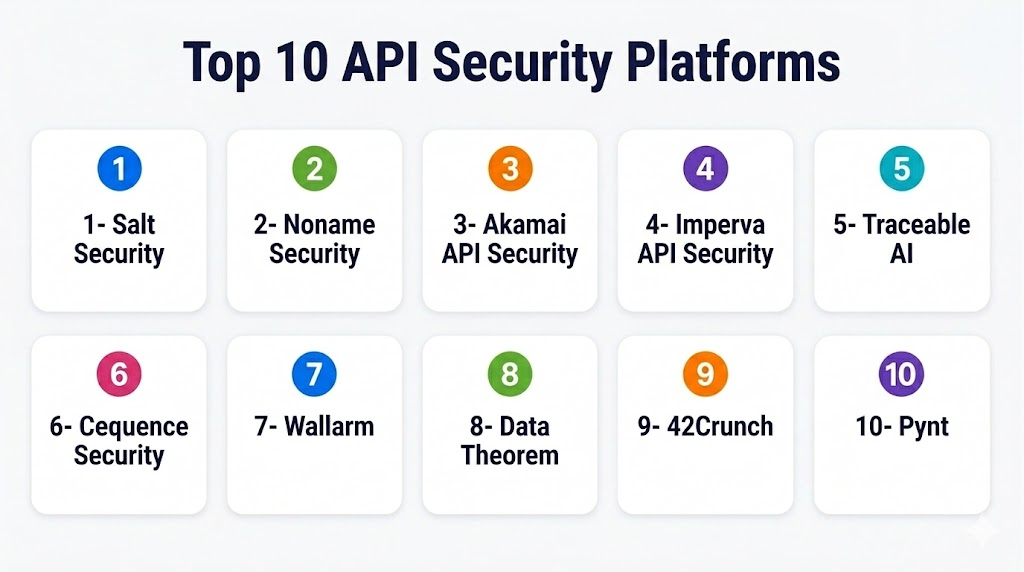
Top 10 API Security Platforms Tools
1- Salt Security
Short Description: Salt Security is one of the most recognized API security platforms, focusing on API discovery, posture management, and runtime threat protection for enterprise environments.
Key Features
- Automatic API discovery
- Runtime threat detection
- API posture management
- Behavioral analytics
- Shadow API identification
- Sensitive data exposure detection
- Risk prioritization
Pros
- Strong API behavioral analytics
- Excellent discovery capabilities
- Enterprise-focused visibility
Cons
- Premium pricing
- Complex enterprise deployments
- May exceed SMB requirements
Platforms / Deployment
Cloud
Security & Compliance
Supports RBAC, audit logging, encryption, SSO/SAML, MFA.
Integrations & Ecosystem
Integrates with enterprise security and DevOps ecosystems.
- SIEM platforms
- Cloud environments
- CI/CD pipelines
- Security operations tools
- Ticketing platforms
Support & Community
Strong enterprise support model with extensive documentation and onboarding resources.
2- Noname Security
Short Description: Noname Security provides comprehensive API security across discovery, testing, posture management, and runtime protection.
Key Features
- API inventory management
- Vulnerability detection
- Runtime monitoring
- Compliance reporting
- API risk scoring
- Sensitive data protection
- Shadow API detection
Pros
- Broad feature coverage
- Strong governance tools
- Enterprise scalability
Cons
- Learning curve for new users
- Configuration complexity
- Premium licensing costs
Platforms / Deployment
Cloud, Hybrid
Security & Compliance
Supports RBAC, SSO, MFA, audit logging, encryption.
Integrations & Ecosystem
Extensive enterprise integrations.
- SIEM platforms
- API gateways
- Cloud providers
- DevSecOps tools
- Security orchestration platforms
Support & Community
Well-developed enterprise support and implementation services.
3- Akamai API Security
Short Description: Akamai delivers API security capabilities integrated with its broader application and network security ecosystem.
Key Features
- API discovery
- Runtime protection
- Bot mitigation
- Threat intelligence
- Behavioral analytics
- API abuse prevention
- Risk monitoring
Pros
- Strong global infrastructure
- Integrated security ecosystem
- Mature threat intelligence
Cons
- Best suited for existing Akamai customers
- Enterprise-focused pricing
- Complex deployment options
Platforms / Deployment
Cloud
Security & Compliance
Supports enterprise authentication, encryption, audit controls.
Integrations & Ecosystem
Works closely with Akamai’s security portfolio.
- WAF platforms
- CDN services
- DDoS protection
- Security analytics
- Enterprise monitoring tools
Support & Community
Strong enterprise support with extensive professional services.
4- Imperva API Security
Short Description: Imperva offers API security alongside web application and data security capabilities for large enterprises.
Key Features
- API discovery
- Data protection
- Runtime threat monitoring
- Risk assessment
- Compliance reporting
- API attack prevention
- Sensitive data monitoring
Pros
- Strong data security capabilities
- Mature enterprise platform
- Effective compliance support
Cons
- Higher implementation complexity
- Enterprise pricing model
- Extensive configuration options
Platforms / Deployment
Cloud, Hybrid
Security & Compliance
Supports RBAC, MFA, encryption, audit logs.
Integrations & Ecosystem
Broad integration capabilities.
- SIEM platforms
- Cloud providers
- Data security tools
- DevOps environments
- Security operations tools
Support & Community
Comprehensive enterprise support programs.
5- Traceable AI
Short Description: Traceable AI combines API security, application protection, and AI-driven threat analytics.
Key Features
- API discovery
- Runtime protection
- AI-powered threat detection
- API posture management
- Sensitive data monitoring
- Risk prioritization
- Attack investigation
Pros
- Strong AI-driven detection
- Excellent visibility
- Modern architecture
Cons
- Newer vendor compared to legacy providers
- Enterprise-focused pricing
- Requires tuning for optimal results
Platforms / Deployment
Cloud
Security & Compliance
Supports encryption, RBAC, SSO, MFA.
Integrations & Ecosystem
Integrates with modern cloud and DevSecOps environments.
- Kubernetes
- Cloud platforms
- SIEM tools
- Security analytics
- CI/CD pipelines
Support & Community
Strong documentation and enterprise customer support.
6- Cequence Security
Short Description: Cequence focuses on API security and bot defense, helping organizations prevent automated attacks and abuse.
Key Features
- API discovery
- Bot management
- Runtime protection
- Fraud prevention
- API monitoring
- Threat analytics
- Risk management
Pros
- Excellent bot mitigation
- Strong fraud detection
- Enterprise-grade scalability
Cons
- Specialized focus may exceed some requirements
- Premium pricing
- Enterprise deployment effort
Platforms / Deployment
Cloud, Hybrid
Security & Compliance
Supports enterprise security controls and auditing.
Integrations & Ecosystem
Broad integration support.
- WAF solutions
- SIEM platforms
- Fraud systems
- Cloud providers
- Security operations tools
Support & Community
Enterprise-oriented support services.
7- Wallarm
Short Description: Wallarm is a developer-friendly API security platform that combines API discovery, protection, and security testing.
Key Features
- API discovery
- API protection
- Security testing
- Vulnerability detection
- Runtime monitoring
- Attack analytics
- Multi-cloud support
Pros
- Developer-focused experience
- Flexible deployment models
- Strong API testing capabilities
Cons
- Smaller ecosystem than large vendors
- Advanced features require expertise
- Enterprise features may increase costs
Platforms / Deployment
Cloud, Self-hosted, Hybrid
Security & Compliance
Supports RBAC, SSO, encryption, audit logging.
Integrations & Ecosystem
Strong DevSecOps alignment.
- Kubernetes
- API gateways
- CI/CD pipelines
- Cloud providers
- SIEM tools
Support & Community
Good documentation and active customer support.
8- Data Theorem
Short Description: Data Theorem delivers application and API security with strong posture management and continuous monitoring capabilities.
Key Features
- API discovery
- Security posture management
- Runtime monitoring
- Vulnerability assessment
- Compliance support
- Data exposure monitoring
- Risk analytics
Pros
- Strong visibility
- Continuous monitoring
- Good compliance capabilities
Cons
- Enterprise-oriented approach
- Learning curve
- Limited SMB focus
Platforms / Deployment
Cloud
Security & Compliance
Supports enterprise authentication and auditing capabilities.
Integrations & Ecosystem
Integrates with enterprise security environments.
- Cloud providers
- SIEM tools
- Ticketing systems
- Security analytics
- Monitoring platforms
Support & Community
Strong enterprise support structure.
9- 42Crunch
Short Description: 42Crunch focuses on API security testing and shift-left security practices for development teams.
Key Features
- API security testing
- OpenAPI validation
- Security audits
- CI/CD integration
- Risk scoring
- Governance controls
- Developer security workflows
Pros
- Strong shift-left security
- Developer-friendly
- Excellent CI/CD integration
Cons
- Less focused on runtime protection
- Better for development than SOC operations
- Requires API specification maturity
Platforms / Deployment
Cloud, Self-hosted
Security & Compliance
Supports enterprise authentication and security controls.
Integrations & Ecosystem
Strong DevSecOps ecosystem integration.
- GitHub
- GitLab
- Jenkins
- Azure DevOps
- Kubernetes
Support & Community
Strong developer documentation and onboarding resources.
10- Pynt
Short Description: Pynt provides API security testing through dynamic security analysis designed for modern DevSecOps workflows.
Key Features
- API security testing
- Dynamic analysis
- Automated discovery
- CI/CD integration
- Vulnerability validation
- Risk reporting
- Developer workflows
Pros
- Modern developer experience
- Fast implementation
- Strong testing automation
Cons
- More testing-focused than runtime-focused
- Smaller market presence
- Limited enterprise breadth compared to larger platforms
Platforms / Deployment
Cloud
Security & Compliance
Not publicly stated.
Integrations & Ecosystem
Developer-centric integration model.
- GitHub
- GitLab
- CI/CD pipelines
- Cloud environments
- Security testing tools
Support & Community
Growing community and strong documentation focus.
Comparison Table
| Tool Name | Best For | Platforms Supported | Deployment | Standout Feature | Public Rating |
|---|---|---|---|---|---|
| Salt Security | Enterprise API Protection | Web | Cloud | Behavioral Analytics | N/A |
| Noname Security | API Governance | Web | Cloud, Hybrid | API Inventory | N/A |
| Akamai API Security | Large Enterprises | Web | Cloud | Threat Intelligence | N/A |
| Imperva API Security | Data Protection | Web | Cloud, Hybrid | Sensitive Data Security | N/A |
| Traceable AI | Modern Cloud Security | Web | Cloud | AI-Powered Detection | N/A |
| Cequence Security | Fraud Prevention | Web | Cloud, Hybrid | Bot Mitigation | N/A |
| Wallarm | DevSecOps Teams | Web | Cloud, Self-hosted, Hybrid | API Testing + Protection | N/A |
| Data Theorem | Posture Management | Web | Cloud | Continuous Monitoring | N/A |
| 42Crunch | Shift-Left Security | Web | Cloud, Self-hosted | API Security Audits | N/A |
| Pynt | Automated API Testing | Web | Cloud | Dynamic API Testing | N/A |
Evaluation & Scoring of API Security Platforms
| Tool | Core | Ease | Integrations | Security | Performance | Support | Value | Weighted Total |
|---|---|---|---|---|---|---|---|---|
| Salt Security | 10 | 8 | 9 | 10 | 9 | 9 | 7 | 8.95 |
| Noname Security | 9 | 8 | 9 | 9 | 9 | 8 | 7 | 8.40 |
| Traceable AI | 9 | 8 | 8 | 9 | 9 | 8 | 8 | 8.45 |
| Imperva API Security | 9 | 7 | 8 | 9 | 9 | 8 | 7 | 8.15 |
| Akamai API Security | 9 | 7 | 8 | 9 | 10 | 8 | 7 | 8.15 |
| Cequence Security | 8 | 7 | 8 | 9 | 9 | 8 | 7 | 7.95 |
| Wallarm | 8 | 8 | 8 | 8 | 8 | 8 | 8 | 8.00 |
| Data Theorem | 8 | 7 | 7 | 8 | 8 | 8 | 7 | 7.60 |
| 42Crunch | 8 | 8 | 8 | 8 | 8 | 8 | 9 | 8.15 |
| Pynt | 7 | 8 | 7 | 7 | 8 | 7 | 9 | 7.65 |
Which API Security Platform Is Right for You?
Solo / Freelancer
Most individual developers do not require enterprise API security platforms. Pynt and 42Crunch offer more practical options for API testing and development-stage security.
SMB
Wallarm and 42Crunch provide a strong balance between security, deployment flexibility, and cost efficiency for growing organizations.
Mid-Market
Traceable AI and Noname Security deliver comprehensive API visibility and protection without requiring the largest enterprise-scale investments.
Enterprise
Salt Security, Imperva API Security, Akamai API Security, and Cequence Security offer advanced capabilities for large-scale environments with complex compliance and governance requirements.
Budget vs Premium
- Budget-Friendly: Pynt, 42Crunch, Wallarm
- Premium Enterprise: Salt Security, Noname Security, Akamai, Imperva
Feature Depth vs Ease of Use
- Deepest Feature Sets: Salt Security, Noname Security, Imperva
- Easier Adoption: Wallarm, Traceable AI, Pynt
Integrations & Scalability
- Strongest Enterprise Integrations: Akamai, Imperva, Salt Security
- Strong DevSecOps Integrations: Wallarm, 42Crunch, Pynt
Security & Compliance Needs
- Regulated Industries: Imperva, Salt Security, Noname Security
- Cloud-Native Organizations: Traceable AI, Wallarm
- Fraud-Sensitive Environments: Cequence Security
Frequently Asked Questions
1. What is an API Security Platform?
An API Security Platform helps organizations discover, monitor, test, and protect APIs from security threats, misconfigurations, abuse, and sensitive data exposure.
2. Why is API security important?
APIs expose critical business services and data. Effective API security helps prevent breaches, unauthorized access, and compliance violations.
3. Are API gateways enough for API security?
No. API gateways primarily manage traffic and access control, while dedicated API security platforms provide discovery, testing, posture management, and threat detection.
4. What are shadow APIs?
Shadow APIs are undocumented or unmanaged APIs that exist outside official inventories and can introduce significant security risks.
5. Can API security tools detect sensitive data exposure?
Many modern API security platforms can identify exposed sensitive information and help reduce compliance and privacy risks.
6. How long does implementation usually take?
Implementation timelines vary from a few days for developer-focused tools to several weeks for large enterprise deployments.
7. Do API security platforms support cloud environments?
Yes. Most leading vendors support AWS, Azure, Google Cloud, Kubernetes, and hybrid infrastructure environments.
8. What is API posture management?
API posture management continuously evaluates API configurations, permissions, risks, and governance controls to improve security.
9. Are these tools suitable for DevSecOps teams?
Yes. Many API security solutions integrate directly into CI/CD pipelines and developer workflows to support shift-left security practices.
10. How should organizations evaluate vendors?
Organizations should focus on discovery accuracy, runtime protection, integrations, deployment flexibility, reporting capabilities, and overall operational cost.
Conclusion
API security has become a foundational requirement for modern digital businesses. As organizations expand their API ecosystems across cloud platforms, mobile applications, AI services, and partner integrations, security teams need visibility far beyond traditional network and application security controls. The strongest platforms now combine API discovery, posture management, runtime threat detection, behavioral analytics, governance, and DevSecOps integration into a unified security strategy. Salt Security, Noname Security, Imperva, Akamai, and Traceable AI lead the enterprise segment, while Wallarm, 42Crunch, and Pynt provide strong options for developer-focused and mid-market environments. Rather than searching for a single universal winner, organizations should identify their primary priorities runtime protection, compliance, API testing, developer enablement, or enterprise governance and evaluate platforms accordingly. Start by shortlisting two or three solutions, run a proof-of-concept using real API traffic, validate integrations with your security stack, and confirm that the platform aligns with both current requirements and future API growth plans.

Find Trusted Cardiac Hospitals
Compare heart hospitals by city and services — all in one place.
Explore Hospitals
API security platforms provide the greatest value when they can keep pace with rapidly changing APIs and undocumented endpoints. As development teams release updates more frequently, maintaining visibility into API sprawl and identifying forgotten or deprecated interfaces becomes increasingly important for reducing hidden attack surfaces.