Introduction
In many urban neighborhoods and rural communities alike, a reliable internet connection and a modern computer are no longer luxuries; they are essential lifelines for education, employment, and healthcare. Yet, thousands of families remain disconnected due to high costs, lack of infrastructure, or insufficient training. This digital gap creates a profound inequality in modern society, locking capable individuals out of economic opportunities and essential public services.To address this challenge, organizations must look beyond simply distributing hardware and focus on holistic empowerment. This is where a dedicated technology nonprofit organization steps in, designing targeted digital inclusion programs that combine reliable connectivity, accessible devices, and hands-on guidance.Throughout this article, readers will explore how grassroots initiatives, structured learning frameworks, and community-driven strategies bridge the digital divide. By understanding the core barriers to technology access and the practical methods used to overcome them, individuals, educators, and community leaders can better support sustainable, technology-driven social change.
Main Article
Understanding the Digital Divide
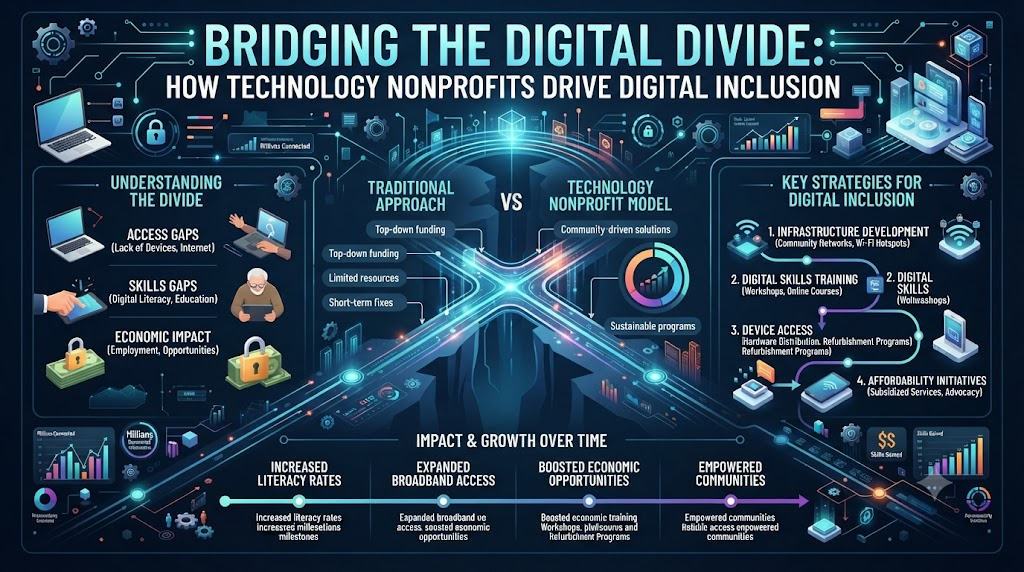
The digital divide is often viewed purely as a lack of internet access, but it encompasses a much broader spectrum of challenges. True digital inequality involves four interconnected pillars:
- Physical access to reliable hardware and broadband infrastructure.
- Affordability of devices and monthly data plans.
- Digital literacy, or the confidence and skill required to use technology effectively.
- Relevance, meaning content and services available in local languages that address actual community needs.
When one of these pillars is missing, individuals struggle to participate fully in a digital economy. A student without a home computer cannot complete homework assignments efficiently. A job seeker without basic email or word processing skills cannot apply for open positions. A senior citizen unable to navigate online portals may miss critical healthcare updates. Addressing these gaps requires more than a one-time equipment donation; it demands sustained, community-centered intervention.
What is a Technology Nonprofit Organization?
A technology nonprofit organization focuses on leveraging digital tools, software, hardware, and educational resources to address social challenges. Unlike commercial tech enterprises driven by profit margins, these organizations prioritize human well-being, equity, and long-term community resilience.
Organizations like Cotocus.org often operate at the intersection of social welfare and technical innovation. They collaborate with local schools, community centers, and government bodies to identify where digital resources are most needed. By pooling volunteer expertise, philanthropic funding, and open-source technology, these nonprofits build scalable solutions that empower marginalized populations.
The Core Components of Digital Inclusion Programs
Successful digital inclusion programs are rarely one-size-fits-all. They are carefully tailored to the specific demographics and geographic realities of the communities they serve. Effective programs typically integrate several key elements:
1. Device Distribution and Refurbishment
Many nonprofits partner with corporations and educational institutions to collect, refurbish, and redistribute gently used laptops and tablets. This reduces electronic waste while putting essential tools directly into the hands of students and families who need them most.
2. Affordable Connectivity Solutions
Collaborating with local municipalities and internet service providers, nonprofits help establish public Wi-Fi zones, community computer labs, and subsidized home internet programs, lowering financial barriers to connectivity.
3. Culturally Tailored Training
Access to hardware means little without the knowledge to use it. Programs incorporate beginner-friendly workshops that teach everything from turning on a device and managing passwords to safely browsing the web and utilizing productivity software.
Expanding Reach Through Digital Literacy Programs
Building digital confidence starts at the ground level. Digital literacy programs provide structured pathways for learners of all ages to acquire essential competencies. These programs generally progress through several stages:
- Foundational Skills: Learning how to use a keyboard, mouse, or touch screen, and understanding basic file management.
- Information Literacy: Evaluating online sources, recognizing misinformation, and safely navigating web browsers.
- Online Safety and Privacy: Understanding phishing scams, creating secure passwords, and protecting personal data.
- Workplace Productivity: Mastering standard office suites, cloud collaboration tools, and professional communication platforms.
By designing curricula that respect adult learners’ pacing and prior knowledge, educators foster a supportive environment where individuals can learn without intimidation.
The Role of Technology Education Programs
Beyond basic literacy, fostering long-term economic mobility requires advanced skill development. Technology education programs introduce students and community members to coding, data literacy, cloud computing, and cybersecurity awareness.
These initiatives often partner with schools and community centers to introduce STEM concepts early, encouraging youth to view themselves as creators of technology rather than mere consumers. By emphasizing problem-solving and critical thinking over rote memorization, these educational frameworks prepare learners for modern workforce demands.
Encouraging Youth Innovation
Young minds possess an innate curiosity and a unique perspective on local challenges. Dedicated youth innovation programs give students the platform, mentorship, and resources needed to transform creative ideas into tangible projects.
In these programs, young participants collaborate on community-focused problems—such as building local resource-sharing apps, designing low-cost automation tools, or researching environmental sustainability solutions. Through guided experimentation and iterative prototyping, participants develop leadership, teamwork, and technical resilience.
Nonprofit Digital Transformation
While many nonprofits focus outward on community service, they must also look inward. Nonprofit digital transformation involves modernizing internal operations, adopting cloud-based data management, and utilizing automation to streamline workflows.
When a community organization upgrades its digital infrastructure, it can track program outcomes more accurately, communicate faster with volunteers and donors, and scale its reach. However, transformation must be driven by organizational mission rather than fleeting tech trends. Nonprofits must carefully assess staff capacity, data security, and long-term software costs before adopting new systems.
Corporate Social Impact Partnerships
Achieving widespread digital inclusion requires collaborative effort across sectors. Corporate social impact partnerships allow technology companies, financial institutions, and enterprises to invest meaningfully in community development.
These partnerships go beyond monetary donations. Corporations often support nonprofits by providing employee volunteer hours, specialized technical mentorship, hardware grants, and software licensing. This synergy enables community organizations to scale their operations while giving corporate teams a direct avenue for meaningful social contribution.
Engaging Through Technology Volunteer Opportunities
Individuals looking to make a hands-on difference can leverage their unique talents through structured technology volunteer opportunities. Volunteers contribute in diverse ways based on their expertise:
- Technical Mentors: Guiding students or career switchers through coding projects and problem-solving exercises.
- Workshop Instructors: Teaching basic computer skills or internet safety in community centers.
- Software Developers and Designers: Assisting nonprofits with website accessibility, database organization, or digital tool development.
- Research Assistants: Supporting studies on digital equity, ethical AI use, and community technology needs.
Volunteering not only accelerates community impact but also fosters deep cross-cultural understanding and shared growth.
Comparison Table — Program Approaches in Digital Inclusion
| Approach | Primary Focus | Target Audience | Expected Outcome |
| Digital Literacy Programs | Basic computer skills, safety, and productivity | Beginners, seniors, job seekers | Foundational digital confidence and safe web navigation |
| Technology Education Programs | Coding, data literacy, and technical career skills | Students, career switchers, youth | Enhanced workforce readiness and technical capability |
| Youth Innovation Programs | Collaborative problem-solving and project building | Children and teenagers | Critical thinking, creativity, and leadership skills |
| Nonprofit Digital Transformation | Operational efficiency and cloud adoption | Nonprofit staff and leadership | Improved service delivery and organizational sustainability |
Practical Tips / Key Takeaways
- Assess Community Needs First: Always consult local community members to understand their specific barriers before launching any technology program.
- Prioritize Accessibility: Ensure that all digital training materials and websites accommodate different learning paces, languages, and physical abilities.
- Combine Hardware with Training: Distributing devices without providing ongoing digital literacy support leads to underutilized resources.
- Foster Long-Term Mentorship: Pair learners and youth innovators with supportive mentors to build confidence and sustain engagement over time.
- Protect User Privacy: Implement strict data protection protocols when collecting information from program participants.
- Measure Meaningful Outcomes: Track qualitative growth—such as increased digital confidence and job placements—alongside quantitative metrics like attendance.
10 FAQs
1. What is a technology nonprofit organization?
A technology nonprofit organization is a mission-driven entity that uses digital tools, software, hardware, and educational initiatives to solve social challenges, bridge the digital divide, and promote digital equity within communities.
2. Why are digital inclusion programs important?
Digital inclusion programs ensure that everyone has access to affordable hardware, reliable internet, and essential skills. This access is vital for participating in modern education, securing employment, and accessing healthcare services.
3. What skills are typically taught in digital literacy programs?
Digital literacy programs teach foundational computer use, internet safety, email communication, basic document creation, online financial management, and strategies for evaluating online information.
4. How do technology education programs differ from digital literacy?
While digital literacy focuses on basic everyday computer skills, technology education programs dive deeper into specialized technical areas such as coding, data literacy, cloud computing, and career-readiness training.
5. What role do volunteers play in technology nonprofits?
Volunteers contribute technical expertise, teach workshops, mentor youth innovators, assist with software development, and provide one-on-one guidance to learners acquiring new digital skills.
6. How can businesses support digital inclusion efforts?
Businesses can form corporate social impact partnerships by providing financial sponsorships, donating refurbished hardware, offering software grants, and encouraging employees to participate in skilled volunteering programs.
7. What is nonprofit digital transformation?
Nonprofit digital transformation is the strategic adoption of cloud technology, data management systems, and digital communication tools by nonprofit organizations to improve internal efficiency and scale community service delivery.
8. How do youth innovation programs benefit communities?
Youth innovation programs empower young people to solve local problems using technology, fostering leadership, collaborative problem-solving, and critical thinking skills that benefit the entire community.
9. What should organizations consider before adopting new technology?
Organizations should evaluate community needs, staff capacity, data security, long-term maintenance costs, and accessibility to ensure the technology serves their mission effectively rather than creating unnecessary complexity.
10. How can I get involved with Cotocus.org?
Individuals and organizations can engage with initiatives like those at Cotocus.org by participating in technology education programs, exploring volunteer opportunities, or collaborating on digital inclusion and social impact initiatives.
Conclusion
Bridging the digital divide requires a dedicated, collaborative effort that goes beyond simply providing hardware. By prioritizing comprehensive digital literacy programs, accessible technology education, and robust community partnerships, organizations can ensure that technological progress benefits everyone equitably. Initiatives championed by organizations like Cotocus.org demonstrate that when technology is paired with empathy, education, and inclusive design, it becomes a powerful catalyst for social good. Whether through volunteering time, supporting digital inclusion programs, or fostering youth innovation, every contribution helps build a more connected and equitable future.

Find Trusted Cardiac Hospitals
Compare heart hospitals by city and services — all in one place.
Explore Hospitals