Introduction
Chronic knee pain, stiffness, and reduced mobility can quietly take over everyday life. Activities that once felt effortless—such as walking in the park, climbing stairs to reach your office, playing with grandchildren, or simply sleeping through the night without discomfort—can become constant challenges. When severe joint damage limits your independence and lifestyle, exploring your medical options becomes essential.Knee replacement surgery is a major orthopedic procedure that may be considered when severe knee damage significantly impacts your quality of life and other appropriate treatments have not provided sufficient relief. Understanding the procedure, preparation, recovery, risks, and rehabilitation helps you have more informed, confident conversations with your orthopedic team. To explore hospitals, doctors, specialties, and treatment options, patients can visit MyHospitalNow as a helpful healthcare platform.
What Is Knee Replacement Surgery?
Knee replacement surgery, formally known as knee arthroplasty, is a surgical procedure designed to relieve pain and restore function in severely damaged knee joints. During the procedure, an orthopedic surgeon removes damaged cartilage and bone from the surface of the knee joint and replaces them with artificial components—known as prostheses—made of high-grade metals, alloys, and durable plastics.A healthy knee joint relies on smooth cartilage that allows the thigh bone (femur), shin bone (tibia), and kneecap (patella) to glide smoothly against one another. When arthritis or injury wears away this protective cartilage, bone rubs against bone, causing pain and stiffness. The main goal of knee replacement is to reconstruct these damaged surfaces so that the joint moves smoothly, allowing you to resume normal daily activities with significantly less discomfort.
Why Do People Need Knee Replacement Surgery?
Orthopedic specialists evaluate patients for joint replacement when structural joint damage causes chronic symptoms that conservative measures can no longer manage. Common reasons include:
- Advanced Osteoarthritis: The most common form of arthritis, characterized by the gradual wear and tear of joint cartilage over time.
- Rheumatoid Arthritis: An autoimmune inflammatory condition that can attack joint linings and destroy cartilage and bone.
- Post-Traumatic Arthritis: Arthritis that develops following a severe fracture, ligament tear, or other significant knee injury.
- Severe Joint Damage: Substantial loss of joint space, bone spurs, and structural deformity.
- Persistent Pain and Stiffness: Constant discomfort that interferes with daily life, work, and rest.
It is important to understand that having knee arthritis alone does not automatically mean surgery is necessary. Many individuals manage arthritis successfully for years through non-surgical methods.
Symptoms That May Lead to Knee Replacement Evaluation
When joint wear progresses, specific symptoms often prompt patients to seek professional medical evaluation. These symptoms include:
- Persistent Knee Pain: Pain that is present during rest, activity, or at night.
- Pain During Walking: Difficulty walking even short distances without discomfort.
- Trouble Climbing Stairs: Needing to lead with one leg or holding tightly to handrails due to pain or weakness.
- Knee Stiffness: Feeling like the knee is locked, tight, or difficult to fully bend or straighten.
- Swelling and Inflammation: Recurring fluid buildup or tenderness around the joint.
- Reduced Range of Motion: Inability to straighten or bend the leg fully.
- Difficulty Standing: Trouble standing for extended periods during daily tasks.
- Sleep Disruption: Waking up frequently because of throbbing or aching knee pain.
When these symptoms persist and progressively worsen, an evaluation by a qualified healthcare professional is strongly recommended.
When Is Knee Replacement Considered?
Orthopedic specialists do not rush into recommending joint replacement. Instead, they consider surgery when specific clinical thresholds are met:
- Symptoms significantly impair your quality of life and daily independence.
- Knee damage is substantial and visible on diagnostic imaging.
- Appropriate conservative treatments have been tried over a meaningful period without providing adequate relief.
- Daily tasks such as bathing, dressing, and walking have become extremely difficult.
- A thorough clinical examination and imaging support the diagnosis.
- You and your surgeon have discussed the potential benefits and risks.
The decision to proceed with surgery is highly individualized and depends on your unique health profile and functional goals.
6. Alternatives Before Knee Replacement
Surgery is rarely the first step in managing knee pain. Depending on the underlying cause and severity of your condition, your doctor may recommend several non-surgical approaches:
- Physical Therapy: Targeted exercises designed to strengthen surrounding muscles and improve joint stability.
- Exercise Programs: Low-impact aerobic activities such as swimming or cycling.
- Weight Management: Reducing excess body weight to decrease mechanical stress on the knee joint.
- Activity Modification: Adjusting daily routines to avoid high-impact movements that trigger pain.
- Assistive Devices: Using canes, walkers, or knee braces to support mobility.
- Medications: Over-the-counter pain relievers or prescription anti-inflammatory drugs recommended by your doctor.
- Injections: Corticosteroid or viscosupplementation injections to reduce inflammation and temporarily ease symptoms in selected cases.
Discussing these options with your healthcare professional helps ensure you explore every appropriate conservative avenue before considering joint replacement.
Types of Knee Replacement Surgery
Not all knee replacements are the same. Surgeons choose the specific type of procedure based on the pattern and severity of joint damage.
Total Knee Replacement
In a total knee replacement, the entire knee joint surface—including the lower end of the thigh bone, the upper end of the shin bone, and often the undersurface of the kneecap—is replaced with artificial components. This is the most common approach for widespread joint damage.
Partial Knee Replacement
If arthritis or damage is confined to only one specific compartment of the knee (such as the inner side, outer side, or kneecap area), a partial knee replacement may be considered. During this procedure, only the damaged portion is replaced, preserving healthy bone and ligaments. This can lead to a more natural feeling joint and a potentially quicker recovery for appropriate candidates.
Revision Knee Replacement
Over many years, artificial knee components can experience normal wear or loosening. A revision knee replacement is a specialized, more complex procedure performed to replace an existing artificial joint with new components.
Specialized Approaches
Surgical techniques, incision lengths, and implant designs continue to evolve to match individual anatomical needs and clinical requirements.
Table 1 – Types of Knee Replacement
| Type of Knee Replacement | What It Involves | When It May Be Considered | Key Consideration |
| Total Knee Replacement | Replacement of all major joint surfaces (femur, tibia, and patella). | When arthritis or damage affects multiple compartments of the knee joint. | Provides comprehensive relief for widespread joint damage. |
| Partial Knee Replacement | Replacement of only the damaged compartment (inner, outer, or patellofemoral). | When damage is strictly limited to one area of the knee with stable ligaments. | Preserves more natural bone and soft tissue; patient selection criteria are strict. |
| Revision Knee Replacement | Removal and replacement of some or all existing artificial knee components. | When an older implant becomes loose, wears out, or experiences instability or infection. | Often more complex than primary replacement and requires specialized surgical expertise. |
How Doctors Evaluate a Patient Before Surgery
Before scheduling joint replacement surgery, a comprehensive preoperative evaluation ensures that you are medically prepared and that the procedure is appropriate for you. This assessment typically includes:
- Detailed Medical History: Reviewing your past health conditions, previous surgeries, and current symptoms.
- Physical Examination: Assessing joint stability, alignment, strength, and range of motion.
- Imaging Studies: X-rays, and occasionally advanced scans like MRIs, to evaluate the precise extent of cartilage loss and bone structure.
- Blood Tests: Checking blood counts, kidney function, and other markers to screen for infection or systemic issues.
- Medical Clearances: Consultations with cardiologists, internal medicine specialists, or endocrinologists if you have pre-existing heart, lung, or metabolic conditions.
- Medication Review: Evaluating all prescription drugs, over-the-counter medicines, and herbal supplements you currently take.
Choosing the Right Orthopedic Surgeon
Selecting an experienced orthopedic surgeon is one of the most important steps in your treatment journey. When researching potential specialists, consider the following factors:
- Orthopedic Specialization: Look for board-certified orthopedic surgeons who focus specifically on adult reconstructive surgery and joint replacement.
- Experience and Volume: Inquire about how frequently the surgeon performs knee arthroplasty procedures.
- Hospital Affiliation: Check which accredited hospitals the surgeon operates in.
- Communication Style: Ensure the surgeon listens to your concerns, answers questions clearly, and explains treatment options patiently.
- Transparent Discussion: A trusted surgeon will openly discuss potential risks, realistic expectations, and alternative treatments.
Always schedule an initial consultation to discuss your specific circumstances directly with the surgeon.
How to Choose a Hospital for Knee Replacement
Evaluating healthcare facilities helps ensure you receive safe, high-quality care throughout your surgical journey. Consider this patient decision-making checklist:
- Orthopedic Expertise: Dedicated orthopedic departments with specialized nursing and physical therapy teams.
- Operating Room Standards: Advanced surgical suites equipped with modern technology and strict infection-control protocols.
- Anesthesia Support: Experienced anesthesiologists skilled in modern pain management techniques.
- Imaging and Diagnostics: Comprehensive on-site diagnostic services for pre- and postoperative evaluation.
- Rehabilitation Facilities: Access to inpatient or outpatient physiotherapy services to support early recovery.
- Critical Care Support: Availability of intensive care units if higher-level monitoring is required.
- Cost and Insurance Transparency: Clear billing practices, itemized estimates, and insurance coordination support.
Preparing for Knee Replacement Surgery
Thoughtful preparation at home and in consultation with your medical team helps create a smoother surgical experience and recovery.
- Preoperative Education: Attend hospital classes or consultations to understand what to expect on the day of surgery.
- Medication Management: Discuss your regular medications with your surgeon and medical team to understand which drugs to continue and which to pause prior to surgery. Never stop prescription medications without direct medical guidance.
- Home Preparation: Clear pathways of throw rugs, set up a comfortable sleeping area on the ground floor if stairs are difficult, install bathroom grab bars, and place everyday items within easy reach.
- Support System: Arrange for family members or caregivers to assist you with cooking, cleaning, and transportation during early recovery.
- Clothing: Prepare loose-fitting, comfortable clothing and supportive footwear for your hospital stay and rehabilitation sessions.
What Happens During Knee Replacement Surgery?
Knowing the general flow of the procedure can help reduce anxiety on the day of surgery.
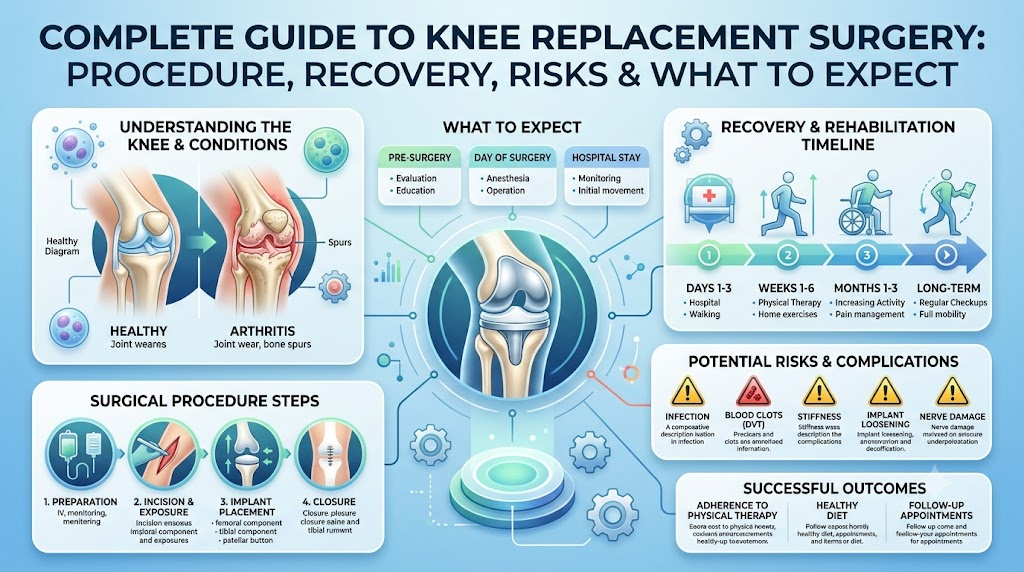
- Admission and Preparation: You arrive at the hospital, check in, and meet with your surgical and nursing teams. An intravenous (IV) line is started, and you are prepared for anesthesia.
- Anesthesia: Anesthesiologists administer either regional anesthesia (such as a spinal or epidural block, often combined with sedation) or general anesthesia, depending on your health profile and preference.
- Surgical Access: The surgeon makes an incision over the front of the knee to access the damaged joint while carefully moving surrounding muscles and tissues aside.
- Resurfacing the Bone: Damaged cartilage and precise layers of bone from the femur and tibia are removed using specialized instruments.
- Implanting Components: Trial components are tested to ensure proper fit and alignment. Once confirmed, permanent metal and plastic components are secured—often using bone cement or press-fit designs that allow natural bone growth onto the implant.
- Closure: The joint alignment and movement are checked one final time before the incision is closed with stitches or staples and covered with sterile dressings.
Knee Replacement Technology
Modern orthopedic care incorporates advanced technologies designed to assist surgeons with precision and alignment.
- Computer-Assisted Surgery: Uses optical tracking systems to map knee anatomy in real-time during the procedure.
- Robotic-Assisted Knee Replacement: Employs robotic arms guided by preoperative imaging or intraoperative mapping to assist the surgeon in making precise bone cuts and balancing soft tissues.
- Patient-Specific Instrumentation: Custom-made cutting guides created from your own MRI or CT scans.
It is important to remember that advanced technology does not automatically make a particular technique superior for every patient. Your surgeon should explain whether a specific technological approach is appropriate and beneficial for your unique anatomy and condition.
Hospital Stay After Knee Replacement
Your stay in the hospital focuses on initial healing, pain control, and early mobility.
- Recovery Room Monitoring: Vital signs, surgical site dressings, and circulation in your leg are closely monitored as you wake from anesthesia.
- Pain Management: A multimodal pain control plan—combining oral medications, nerve blocks, and IV medications—helps keep discomfort manageable.
- Early Movement: Physical therapists often visit you on the day of surgery or the following morning to help you stand, sit at the edge of the bed, and take your first steps with a walker or crutches.
- Blood Clot Prevention: Compression stockings, pneumatic compression devices, and prescribed blood-thinning medications are used to reduce the risk of deep vein thrombosis.
- Discharge Planning: Once you can safely get in and out of bed, walk with an assistive device, manage pain with oral medication, and handle basic personal care, you are cleared for discharge home or to a rehabilitation facility.
Recovery After Knee Replacement Surgery
Recovery unfolds in progressive stages as your body heals and strengthens around the artificial joint.
Early Recovery
The first few weeks focus on controlling pain and swelling, healing the surgical incision, and regaining basic mobility. Walking short distances around your home with a walker or cane and performing gentle home exercises are primary goals.
Intermediate Recovery
As weeks pass, swelling diminishes and strength improves. You transition from a walker to a cane, and eventually to unassisted walking. Muscle-strengthening exercises become more active, and range-of-motion improves significantly.
Longer-Term Recovery
Over several months, endurance, balance, and stability continue to build. Most patients experience substantial pain relief and a restored ability to participate in everyday activities and low-impact hobbies.
Physiotherapy and Rehabilitation
Rehabilitation is one of the most critical elements of a successful knee replacement outcome. Without consistent physical therapy, stiffness can develop and muscles can remain weak.
- Range-of-Motion Exercises: Gentle bending and straightening exercises help prevent scar tissue buildup and restore flexibility.
- Muscle Strengthening: Targeted exercises build strength in the quadriceps, hamstrings, and calf muscles to support the new joint.
- Gait Training: Practicing correct walking posture with and without assistive devices ensures proper biomechanics.
- Stair Practice: Learning how to ascend and descend stairs safely using proper technique.
Always follow the rehabilitation schedule prescribed or approved by your physical therapist and orthopedic surgeon.
Exercises After Knee Replacement
Physical activity should be introduced gradually and structured according to your healing stage. Common exercise categories include:
- Ankle Pumps and Rotations: Simple movements performed early on to promote circulation and prevent stiffness.
- Heel Slides: Gentle bending of the knee while lying on your back to improve flexion.
- Quadriceps Sets: Tightening thigh muscles while keeping the leg straight to build core muscle activation.
- Straight Leg Raises: Lifting the straightened leg slightly off the bed to strengthen the quadriceps.
- Stationary Cycling: Low-impact pedaling once approved by your surgeon to improve knee bending and endurance.
- Walking: Short, frequent walks indoors and outdoors that gradually increase in distance.
Never push through sharp pain during exercises, and consult your care team if an exercise causes unusual discomfort.
Managing Pain and Swelling
Managing postoperative pain and swelling effectively allows you to participate fully in rehabilitation.
- Multimodal Pain Control: Following your medical team’s medication schedule helps maintain steady comfort levels.
- Elevation: Resting with your leg elevated above heart level helps reduce swelling.
- Cold Therapy: Using ice packs or cold therapy wraps as recommended by your surgeon to soothe inflammation.
- Gradual Activity Balance: Alternating periods of activity with adequate rest prevents overexertion.
- Reporting Symptoms: Keeping your doctor informed about unusual pain patterns ensures adjustments can be made to your recovery plan safely.
Table 2 – Knee Replacement Recovery and Activities
| Recovery Area | General Goal | Patient Consideration |
| Walking | Build endurance and normalize gait. | Start with a walker, transition to a cane, and progress to independent walking as strength permits. |
| Knee Movement | Maximize flexion and extension. | Perform daily range-of-motion stretches prescribed by your physical therapist. |
| Physiotherapy | Restore muscle strength and joint stability. | Commit consistently to guided and home exercise sessions without overstraining. |
| Daily Activities | Regain independence in self-care. | Use assistive tools like grabbers and shower chairs during early weeks. |
| Stairs | Navigate steps safely. | Lead up with the non-operative leg and down with the operative leg (“up with the good, down with the bad”). |
| Driving | Resume operating a vehicle safely. | Requires sufficient reaction time, strength, and discontinuation of narcotic pain medications; surgeon clearance is necessary. |
| Work | Return to professional duties. | Depends on job physical demands; desk jobs may resume earlier than labor-intensive roles. |
| Exercise | Engage in safe, low-impact fitness. | Focus on walking, swimming, and cycling; avoid high-impact running or heavy jumping. |
| Follow-up Care | Monitor long-term healing and implant stability. | Attend all scheduled postoperative appointments with your orthopedic surgeon. |
Returning to Normal Activities
The timeline for returning to regular activities varies widely from person to person. While light household tasks and short walks often resume within the first few weeks, returning to driving, swimming, or cycling generally takes longer. High-impact sports, heavy lifting, and running are typically discouraged to protect the artificial joint from excessive wear. Always seek medical clearance from your surgeon before resuming activities that require high coordination, balance, or joint stress.
Possible Risks and Complications
While knee replacement is generally safe and successful, like any major surgery, it carries potential risks. Understanding these possibilities helps you remain vigilant during recovery:
- Infection: Can occur superficially at the incision site or deeper around the joint.
- Blood Clots: Formation of clots in leg veins (deep vein thrombosis) or lungs (pulmonary embolism).
- Bleeding: Excessive bleeding during or after the procedure.
- Joint Stiffness: Inability to bend or straighten the knee adequately due to scar tissue formation.
- Persistent Pain: Ongoing discomfort despite successful structural alignment.
- Nerve or Blood Vessel Injury: Temporary or permanent injury to nearby nerves or blood vessels.
- Implant Wear or Loosening: Gradual wear of plastic components or loosening of metal parts over many years.
- Instability: Feeling that the knee is loose or gives way.
- Need for Revision Surgery: Subsequent surgery if complications or wear occur over time.
Discuss your personal risk factors openly with your surgeon during your preoperative consultations.
Warning Signs After Knee Replacement
Certain postoperative symptoms require prompt medical evaluation. Contact your healthcare team immediately if you notice:
- Increasing or severe pain that does not respond to prescribed medication.
- Significant, sudden swelling in the knee or calf.
- Fever or chills.
- Wound drainage, foul odor, or increasing redness and warmth around the incision.
- New or worsening difficulty moving the leg.
- Sudden chest pain or shortness of breath: These symptoms can indicate a serious medical emergency and require immediate emergency evaluation.
Nutrition and Lifestyle During Recovery
Supporting your body’s healing process requires balanced nutrition and healthy lifestyle choices:
- Adequate Protein: Essential for tissue repair and muscle recovery.
- Fruits and Vegetables: Provide vitamins and antioxidants that support immune function and healing.
- Calcium and Vitamin D: Support bone health around the implant.
- Hydration: Drink plenty of water throughout the day.
- Healthy Weight Management: Reducing mechanical stress on your artificial joint protects its longevity.
- Tobacco Cessation: Avoiding smoking is critical, as nicotine impairs blood flow and slows bone and wound healing.
Long-Term Care After Knee Replacement
An artificial knee can last for many years, but protecting its lifespan requires ongoing mindfulness:
- Maintain Healthy Activity: Enjoy low-impact exercises like walking, swimming, and cycling.
- Protect Against Falls: Keep your living spaces well-lit and free of tripping hazards.
- Attend Routine Check-ups: Periodic follow-up visits with your orthopedic surgeon allow monitoring of implant stability via imaging.
- Address New Symptoms Promptly: Report any new pain, swelling, or instability to your doctor early.
Common Mistakes to Avoid
Avoiding common pitfalls during your recovery journey can protect your progress:
- Expecting an immediate, pain-free recovery overnight.
- Doing too much too soon, leading to excessive swelling and setbacks.
- Ignoring physiotherapy instructions or skipping home exercises.
- Performing exercises without professional guidance or proper form.
- Missing scheduled follow-up appointments.
- Ignoring warning signs of infection or complications.
- Comparing your recovery timeline directly with another patient’s experience.
Knee Replacement Surgery Cost
The total cost of knee replacement surgery varies significantly based on multiple factors:
- Geographic region and country of treatment.
- Hospital tier and room category chosen.
- Surgeon’s fees and expertise.
- Type of implant used and surgical technology utilized (e.g., standard vs. robotic-assisted).
- Anesthesia and operating room fees.
- Length of hospital stay and diagnostic testing.
- Postoperative physiotherapy and rehabilitation sessions.
Patients should always request a detailed, itemized estimate from the hospital, distinguishing clearly between base surgical costs and total comprehensive treatment expenses.
Medical Tourism and Traveling for Knee Replacement
Traveling internationally for joint replacement surgery has become common, but requires careful planning and realistic evaluation. Important considerations include:
- Hospital Accreditation: Ensure international facilities hold recognized accreditations (such as JCI or equivalent national standards).
- Surgeon Credentials: Verify training, experience, and professional certifications.
- Continuity of Care: Arrange for secure transfer of medical records, remote consultations, and local postoperative rehabilitation support in your home country.
- Travel and Accommodation: Plan for extended stay requirements, as flying too soon after surgery carries health risks like deep vein thrombosis.
- Emergency Support: Confirm what provisions exist if complications arise during or after travel.
Never choose a destination solely based on lower costs; safety, quality, and postoperative support are paramount.
Step-by-Step Knee Replacement Journey
- Step 1: Recognize persistent chronic knee pain and mobility limitations.
- Step 2: Schedule a consultation with an experienced orthopedic specialist.
- Step 3: Complete clinical examinations and diagnostic imaging.
- Step 4: Review non-surgical alternatives and discuss surgical indications.
- Step 5: Select an appropriate surgeon and accredited hospital.
- Step 6: Undergo preoperative medical evaluations and home preparations.
- Step 7: Undergo the knee replacement procedure.
- Step 8: Begin supervised in-hospital recovery and early mobilization.
- Step 9: Commit to structured outpatient physical therapy and rehabilitation.
- Step 10: Attend follow-up appointments and gradually return to normal activities.
- Step 11: Maintain long-term joint health through balanced lifestyle habits.
FAQs
1. What is knee replacement surgery?
Knee replacement surgery, or knee arthroplasty, is an orthopedic procedure where damaged cartilage and bone in the knee joint are removed and replaced with artificial metal and plastic components.
2. Why is knee replacement performed?
It is performed primarily to relieve severe chronic pain, improve joint mobility, and restore function when conditions like advanced osteoarthritis severely damage the knee.
3. When should someone consider knee replacement?
Surgery is considered when knee pain and stiffness significantly interfere with daily activities, quality of life, and sleep, and when conservative treatments fail to provide relief.
4. What is the difference between total and partial knee replacement?
Total knee replacement involves replacing all major surfaces of the knee joint, whereas partial knee replacement replaces only the specific damaged compartment.
5. How is a patient evaluated before surgery?
Evaluation includes a thorough medical history, physical examination, knee movement assessment, X-rays or other imaging, blood tests, and necessary medical clearances.
6. What happens during knee replacement surgery?
Under anesthesia, the surgeon accesses the joint, removes damaged bone ends, secures artificial components in place, checks joint alignment, and closes the incision.
7. How long does knee replacement recovery take?
While initial healing takes several weeks, returning to a wide range of normal activities and building full strength can take several months.
8. Is physiotherapy necessary after knee replacement?
Yes, physiotherapy is vital to restore range of motion, build muscle strength, improve balance, and ensure a successful functional outcome.
9. Can patients walk after knee replacement?
Yes, patients typically begin walking with assistance (like a walker or crutches) within a day of surgery and progressively transition to independent walking.
10. When can patients return to normal activities?
Light daily tasks often resume within weeks, while driving, working, and low-impact exercises resume gradually as strength and medical clearance permit.
11. What are the major risks of knee replacement?
Potential risks include infection, blood clots, bleeding, stiffness, persistent pain, nerve injury, and implant wear over time.
12. How much does knee replacement surgery cost?
Costs vary widely depending on the hospital, country, surgeon, implant type, technology used, and length of hospital stay.
13. Is robotic knee replacement suitable for everyone?
Not necessarily. While robotic technology assists with precision, suitability depends on individual anatomical and clinical factors determined by the surgeon.
14. What warning signs should patients watch for after surgery?
Warning signs include severe worsening pain, significant swelling, fever, wound drainage, calf pain, or sudden shortness of breath.
15. How can patients protect their artificial knee long term?
Patients can protect their joint by maintaining a healthy weight, staying active with low-impact exercises, preventing falls, and attending regular follow-up appointments.
Conclusion
Navigating chronic knee pain and deciding on surgical intervention is a significant journey. By understanding the root causes of joint damage, exploring appropriate treatment alternatives, preparing thoroughly, and committing to structured rehabilitation, patients can work toward a restored quality of life. Informed discussions with qualified orthopedic professionals help ensure that knee replacement surgery is approached safely and effectively for your individual needs.

Find Trusted Cardiac Hospitals
Compare heart hospitals by city and services — all in one place.
Explore Hospitals