Introduction
Marketing Attribution Platforms help organizations understand which marketing channels, campaigns, and customer touchpoints contribute to conversions, revenue, and customer acquisition. These platforms collect data from multiple marketing sources and assign credit to the interactions that influence customer decisions. As privacy regulations continue to evolve and customer journeys become increasingly complex, attribution has become a critical capability for modern marketing teams. Organizations need visibility into how paid search, social media, email marketing, content marketing, affiliates, influencers, and offline channels work together to drive business outcomes. Modern attribution platforms leverage AI, machine learning, predictive analytics, and privacy-compliant measurement methods to provide actionable insights.
Real-World Use Cases Include:
- Measuring the impact of marketing campaigns across channels.
- Optimizing advertising budgets based on revenue contribution.
- Understanding customer journey behavior.
- Improving lead generation and sales funnel performance.
- Identifying the most effective acquisition channels.
Evaluation Criteria for Buyers:
- Attribution model flexibility
- Data integration capabilities
- Multi-touch attribution support
- AI-powered insights
- Reporting and visualization
- Cross-channel measurement
- Privacy and compliance capabilities
- Scalability
- Ease of implementation
- Cost and ROI potential
Best for: Marketing teams, growth teams, digital agencies, e-commerce companies, SaaS businesses, enterprise organizations, and revenue operations teams.
Not ideal for: Very small businesses with limited marketing activities, organizations relying on a single marketing channel, or companies without sufficient customer journey data.
Key Trends in Marketing Attribution Platforms
- AI-powered attribution models are replacing simplistic last-click approaches.
- Privacy-first measurement is becoming a strategic priority.
- Incrementality testing is being integrated with attribution reporting.
- Cookieless tracking methods are gaining adoption.
- Customer data platforms are becoming key attribution data sources.
- Predictive analytics are improving budget planning.
- Multi-touch attribution continues to expand across channels.
- Real-time attribution dashboards are becoming standard.
- Marketing and revenue teams are increasingly sharing attribution data.
- Machine learning is automating attribution model selection.
How We Selected These Tools
The platforms included in this list were evaluated using:
- Market adoption and industry reputation.
- Attribution model sophistication.
- Integration ecosystem strength.
- Reporting and analytics capabilities.
- AI and machine learning innovation.
- Security and compliance features.
- Customer support quality.
- Ease of implementation.
- Scalability across business sizes.
- Overall value and flexibility.
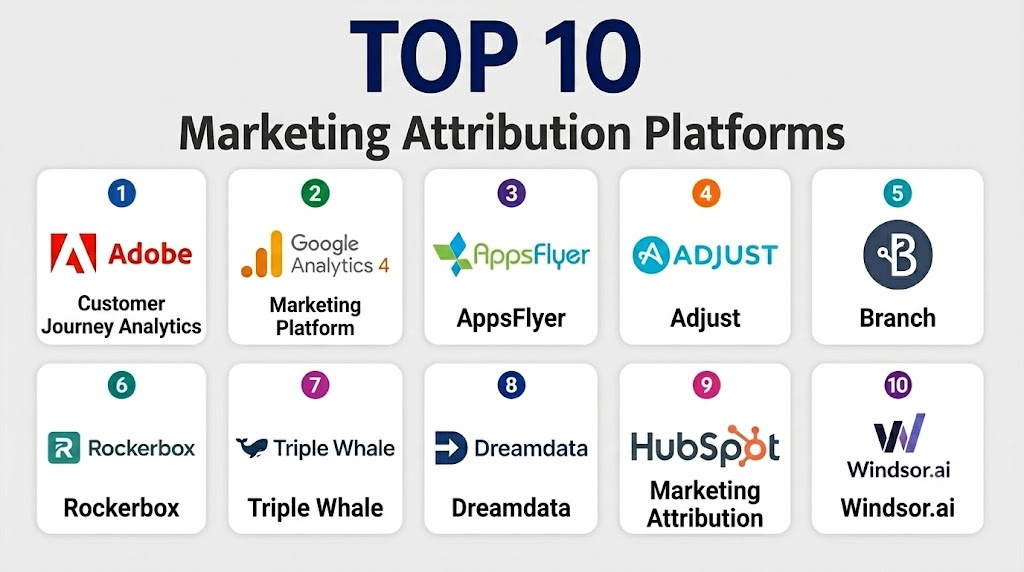
Top 10 Marketing Attribution Platforms
1- Adobe Customer Journey Analytics
Short Description: Adobe Customer Journey Analytics provides enterprise-grade attribution and customer journey analysis capabilities for large organizations managing complex marketing ecosystems.
Key Features
- Multi-touch attribution
- Cross-channel customer journey analysis
- AI-powered insights
- Predictive analytics
- Real-time reporting
- Advanced segmentation
- Custom attribution models
Pros
- Enterprise-level capabilities
- Deep analytics functionality
- Strong Adobe ecosystem integration
Cons
- Premium pricing
- Complex implementation
- Steeper learning curve
Platforms / Deployment
- Web
- Cloud
Security & Compliance
- SSO/SAML
- Role-based access controls
- Enterprise security controls
- Various compliance programs
Integrations & Ecosystem
Adobe Customer Journey Analytics integrates deeply with marketing, analytics, and customer experience platforms.
- Adobe Experience Cloud
- Adobe Analytics
- CRM systems
- Data warehouses
- APIs
Support & Community
Comprehensive enterprise support, documentation, and partner ecosystem.
2- Google Analytics 4
Short Description: Google Analytics 4 provides attribution and customer journey measurement capabilities suitable for organizations of all sizes.
Key Features
- Data-driven attribution
- Cross-device measurement
- Event-based tracking
- Conversion analysis
- Predictive metrics
- Customer journey reporting
- Google ecosystem integration
Pros
- Widely adopted
- Strong Google integrations
- Flexible reporting
Cons
- Learning curve
- Sampling considerations for large datasets
- Customization limitations
Platforms / Deployment
- Web
- Cloud
Security & Compliance
- Encryption
- Access controls
- Privacy-focused controls
Integrations & Ecosystem
- Google Ads
- BigQuery
- Google Marketing Platform
- APIs
- CRM integrations
Support & Community
Large user community and extensive documentation.
3- AppsFlyer
Short Description: AppsFlyer specializes in mobile attribution and marketing measurement for mobile-first businesses.
Key Features
- Mobile attribution
- Fraud prevention
- Deep linking
- Cross-platform measurement
- Audience segmentation
- Privacy controls
- Real-time analytics
Pros
- Strong mobile expertise
- Excellent fraud protection
- Extensive partner ecosystem
Cons
- Mobile-focused
- Advanced features can increase costs
- Enterprise setup complexity
Platforms / Deployment
- Web
- iOS
- Android
- Cloud
Security & Compliance
- Encryption
- Role-based access
- Privacy-focused framework
Integrations & Ecosystem
- Mobile ad networks
- CRM systems
- Analytics platforms
- APIs
- Marketing tools
Support & Community
Strong onboarding and enterprise support options.
4- Adjust
Short Description: Adjust delivers mobile measurement, attribution, and fraud prevention capabilities for app marketers and advertisers.
Key Features
- Mobile attribution
- Fraud prevention
- Deep linking
- Audience building
- Campaign analytics
- Data exports
- Automation tools
Pros
- Strong mobile tracking
- Reliable reporting
- Fraud protection
Cons
- Primarily mobile-focused
- Premium pricing tiers
- Less suitable for offline attribution
Platforms / Deployment
- Web
- iOS
- Android
- Cloud
Security & Compliance
- Enterprise security controls
- Privacy-focused architecture
Integrations & Ecosystem
- Advertising networks
- CRM systems
- APIs
- Analytics tools
Support & Community
Strong documentation and customer success programs.
5- Branch
Short Description: Branch combines attribution, deep linking, and customer journey measurement capabilities for mobile and web experiences.
Key Features
- Deep linking
- Mobile attribution
- Cross-platform analytics
- Customer journey tracking
- Fraud detection
- Campaign measurement
- Engagement analytics
Pros
- Excellent linking capabilities
- Strong mobile experience
- Cross-channel visibility
Cons
- Advanced implementations require expertise
- Mobile-centric focus
- Enterprise pricing
Platforms / Deployment
- Web
- iOS
- Android
- Cloud
Security & Compliance
- Access controls
- Enterprise-grade security
Integrations & Ecosystem
- Marketing tools
- Mobile platforms
- Analytics systems
- APIs
Support & Community
Good documentation and implementation support.
6- Rockerbox
Short Description: Rockerbox provides marketing attribution and measurement solutions designed for modern growth-focused organizations.
Key Features
- Multi-touch attribution
- Marketing mix analysis
- Customer journey tracking
- Incrementality insights
- Cross-channel reporting
- Performance dashboards
- Budget optimization
Pros
- User-friendly interface
- Modern attribution approach
- Strong reporting
Cons
- Enterprise-focused pricing
- Smaller ecosystem than major vendors
- Implementation effort required
Platforms / Deployment
- Web
- Cloud
Security & Compliance
- Not publicly stated
Integrations & Ecosystem
- Advertising platforms
- CRM systems
- Analytics tools
- APIs
Support & Community
Dedicated customer success and onboarding resources.
7- Triple Whale
Short Description: Triple Whale helps e-commerce businesses measure marketing performance and attribution across multiple channels.
Key Features
- E-commerce attribution
- Marketing dashboards
- AI insights
- Customer analytics
- Channel reporting
- Forecasting
- Performance monitoring
Pros
- E-commerce focused
- Easy implementation
- Strong visualization
Cons
- Less suited for non-e-commerce businesses
- Limited enterprise functionality
- Growing ecosystem
Platforms / Deployment
- Web
- Cloud
Security & Compliance
- Not publicly stated
Integrations & Ecosystem
- Shopify
- Advertising platforms
- CRM tools
- APIs
Support & Community
Strong support for e-commerce customers.
8- Dreamdata
Short Description: Dreamdata specializes in B2B revenue attribution and customer journey analytics.
Key Features
- B2B attribution
- Revenue analytics
- Pipeline measurement
- Customer journey reporting
- Account-based insights
- Forecasting
- Marketing ROI analysis
Pros
- Strong B2B focus
- Revenue-centric reporting
- CRM integration strengths
Cons
- Less suitable for B2C businesses
- Learning curve
- Premium pricing
Platforms / Deployment
- Web
- Cloud
Security & Compliance
- Enterprise security controls
- Not publicly stated
Integrations & Ecosystem
- Salesforce
- HubSpot
- Marketing automation tools
- APIs
Support & Community
Strong customer success resources and onboarding.
9- HubSpot Marketing Attribution
Short Description: HubSpot offers built-in attribution reporting for organizations already using its CRM and marketing platform.
Key Features
- Multi-touch attribution
- Revenue attribution
- Campaign analytics
- Lead tracking
- CRM integration
- Funnel reporting
- Dashboard customization
Pros
- Easy to use
- Native CRM integration
- Fast implementation
Cons
- Best within HubSpot ecosystem
- Less advanced than specialist platforms
- Enterprise limitations
Platforms / Deployment
- Web
- Cloud
Security & Compliance
- Access controls
- Enterprise security options
Integrations & Ecosystem
- HubSpot ecosystem
- CRM integrations
- APIs
- Marketing tools
Support & Community
Large community and extensive educational resources.
10- Windsor.ai
Short Description: Windsor.ai provides marketing attribution and data integration solutions for organizations seeking centralized marketing intelligence.
Key Features
- Attribution reporting
- Marketing data aggregation
- Dashboard creation
- Multi-channel measurement
- Automation
- Data connectors
- Analytics exports
Pros
- Extensive integrations
- Cost-effective option
- Flexible reporting
Cons
- Less advanced attribution modeling
- Smaller market presence
- Enterprise features may vary
Platforms / Deployment
- Web
- Cloud
Security & Compliance
- Not publicly stated
Integrations & Ecosystem
- Advertising platforms
- Analytics tools
- CRM systems
- APIs
Support & Community
Growing support ecosystem and documentation.
Comparison Table
| Tool Name | Best For | Platforms Supported | Deployment | Standout Feature | Public Rating |
|---|---|---|---|---|---|
| Adobe Customer Journey Analytics | Enterprise | Web | Cloud | Advanced customer journey analytics | N/A |
| Google Analytics 4 | General analytics | Web | Cloud | Data-driven attribution | N/A |
| AppsFlyer | Mobile attribution | Web, iOS, Android | Cloud | Mobile measurement | N/A |
| Adjust | Mobile marketing | Web, iOS, Android | Cloud | Fraud prevention | N/A |
| Branch | Customer journeys | Web, iOS, Android | Cloud | Deep linking | N/A |
| Rockerbox | Growth marketing | Web | Cloud | Multi-touch attribution | N/A |
| Triple Whale | E-commerce | Web | Cloud | E-commerce analytics | N/A |
| Dreamdata | B2B attribution | Web | Cloud | Revenue attribution | N/A |
| HubSpot Marketing Attribution | CRM users | Web | Cloud | Native CRM reporting | N/A |
| Windsor.ai | Marketing intelligence | Web | Cloud | Data aggregation | N/A |
Evaluation & Scoring of Marketing Attribution Platforms
| Tool Name | Core | Ease | Integrations | Security | Performance | Support | Value | Weighted Total |
|---|---|---|---|---|---|---|---|---|
| Adobe Customer Journey Analytics | 10 | 7 | 10 | 9 | 9 | 9 | 7 | 8.85 |
| Google Analytics 4 | 9 | 8 | 10 | 8 | 9 | 8 | 10 | 8.95 |
| AppsFlyer | 9 | 8 | 9 | 8 | 9 | 8 | 8 | 8.50 |
| Adjust | 9 | 8 | 8 | 8 | 9 | 8 | 8 | 8.35 |
| Branch | 9 | 8 | 9 | 8 | 9 | 8 | 8 | 8.50 |
| Rockerbox | 8 | 8 | 8 | 7 | 8 | 8 | 8 | 7.95 |
| Triple Whale | 8 | 9 | 8 | 7 | 8 | 8 | 9 | 8.20 |
| Dreamdata | 9 | 8 | 8 | 8 | 8 | 8 | 8 | 8.25 |
| HubSpot Marketing Attribution | 8 | 9 | 8 | 8 | 8 | 9 | 9 | 8.45 |
| Windsor.ai | 7 | 8 | 9 | 7 | 8 | 7 | 9 | 7.95 |
Which Marketing Attribution Platform Is Right for You?
Solo / Freelancer
Google Analytics 4 and Windsor.ai offer affordable entry points with strong reporting and attribution capabilities for smaller teams.
SMB
HubSpot Marketing Attribution and Triple Whale provide ease of use, fast deployment, and strong marketing insights.
Mid-Market
Dreamdata, Rockerbox, and Branch deliver advanced attribution functionality while remaining manageable for growing organizations.
Enterprise
Adobe Customer Journey Analytics, AppsFlyer, and Adjust provide enterprise-grade attribution, scalability, and governance capabilities.
Budget vs Premium
Budget-conscious buyers should consider Google Analytics 4 and Windsor.ai. Premium buyers may prefer Adobe, AppsFlyer, or Adjust.
Feature Depth vs Ease of Use
Adobe delivers the deepest functionality, while HubSpot and Triple Whale focus on simplicity and usability.
Integrations & Scalability
Adobe, Google Analytics 4, AppsFlyer, and Dreamdata provide extensive integration ecosystems and scalability.
Security & Compliance Needs
Organizations with strict governance requirements should prioritize Adobe Customer Journey Analytics, AppsFlyer, and enterprise-focused platforms.
Frequently Asked Questions
1- What is marketing attribution?
Marketing attribution is the process of assigning credit to marketing channels and touchpoints that contribute to conversions, revenue, or customer acquisition.
2- Why is attribution important?
Attribution helps organizations understand which marketing investments generate results and where budgets should be allocated for maximum ROI.
3- What is multi-touch attribution?
Multi-touch attribution distributes conversion credit across multiple customer interactions instead of assigning all credit to a single touchpoint.
4- How does attribution differ from analytics?
Analytics focuses on reporting and performance measurement, while attribution specifically determines the contribution of marketing activities to outcomes.
5- Can attribution work without cookies?
Yes. Modern attribution platforms increasingly use privacy-friendly measurement methods, first-party data, and modeled approaches.
6- How long does implementation take?
Implementation can range from a few days for basic platforms to several months for complex enterprise deployments.
7- What are common attribution mistakes?
Common mistakes include relying solely on last-click attribution, poor data quality, missing integrations, and ignoring offline channels.
8- Which industries benefit most from attribution?
E-commerce, SaaS, retail, financial services, telecommunications, and digital-first businesses often gain significant value from attribution platforms.
9- Can attribution platforms integrate with CRM systems?
Most leading platforms integrate with CRM systems, marketing automation tools, advertising networks, and analytics platforms.
10- What alternatives exist to attribution platforms?
Alternatives include marketing mix modeling, incrementality testing, customer journey analytics platforms, and custom analytics solutions.
Conclusion
Marketing Attribution Platforms have become essential for organizations seeking to understand how marketing investments drive revenue and business growth. As customer journeys grow more complex and privacy regulations continue to evolve, marketers need attribution solutions that combine flexibility, accuracy, and scalability. Adobe Customer Journey Analytics stands out for enterprise analytics depth, Google Analytics 4 remains a strong all-around option, AppsFlyer and Adjust dominate mobile attribution, while Dreamdata and Triple Whale serve specialized B2B and e-commerce use cases. The right platform depends on your business model, data maturity, marketing channels, and budget. Start by identifying your attribution goals, shortlist two or three platforms, validate integrations and security requirements, and run a pilot before making a long-term investment decision.

Find Trusted Cardiac Hospitals
Compare heart hospitals by city and services — all in one place.
Explore Hospitals
I recently started exploring marketing attribution platforms, and this post helped me understand how they measure the impact of different marketing channels.