Introduction
Last-mile Delivery Platforms are software systems that manage the final leg of delivery from warehouses or fulfillment centers to the customer’s doorstep. This stage is critical because it directly impacts customer satisfaction, delivery efficiency, and operational costs. Modern platforms leverage AI, GPS, and analytics to ensure deliveries are fast, accurate, and cost-effective.
With e-commerce, grocery, and same-day deliveries growing, businesses need solutions that optimize routes, provide real-time driver tracking, and automate customer communications. These platforms also help reduce fuel consumption, minimize delays, and improve operational efficiency.
Real-world use cases include:
- E-commerce companies managing next-day or same-day home deliveries
- Food and grocery delivery providers handling hundreds of daily orders
- Courier companies optimizing routes to reduce fuel and labor costs
- Field service teams scheduling and tracking technicians
- 3PL providers managing deliveries for multiple clients
Key evaluation criteria for buyers:
- Real-time GPS tracking and traffic-aware routing
- Multi-stop route optimization
- Driver assignment and scheduling
- Customer notifications and proof-of-delivery
- Integration with TMS, ERP, and e-commerce platforms
- Analytics dashboards and reporting
- Fleet management and operational monitoring
- Mobile apps for drivers
- Scalability for small to enterprise fleets
- Security and access control
Best for: Logistics managers, delivery coordinators, fleet operators, e-commerce and 3PL companies
Not ideal for: Small fleets with minimal deliveries or companies outsourcing last-mile delivery
Key Trends in Last-mile Delivery Platforms
- AI-driven route optimization for multi-stop and same-day deliveries
- Real-time GPS tracking and predictive ETAs
- Cloud-based platforms with web and mobile access
- Integration with TMS, ERP, WMS, and e-commerce systems
- Automated customer notifications via SMS, email, or apps
- Multi-vehicle and multi-depot management
- Analytics dashboards for cost and performance
- Subscription-based SaaS pricing models
- EV fleet routing with charging optimization
- Automated exception handling and delivery alerts
How We Selected These Tools
- Market adoption, customer footprint, and mindshare
- Feature completeness across routing, tracking, and customer communication
- Proven reliability and performance in high-volume delivery scenarios
- Security standards, including encryption and role-based access
- Integration capabilities with TMS, ERP, WMS, and e-commerce
- Scalability for SMBs, mid-market, and enterprise operations
- Mobile usability for drivers and dispatchers
- Support, documentation, and training resources
- Cost-to-value assessment for diverse fleet sizes
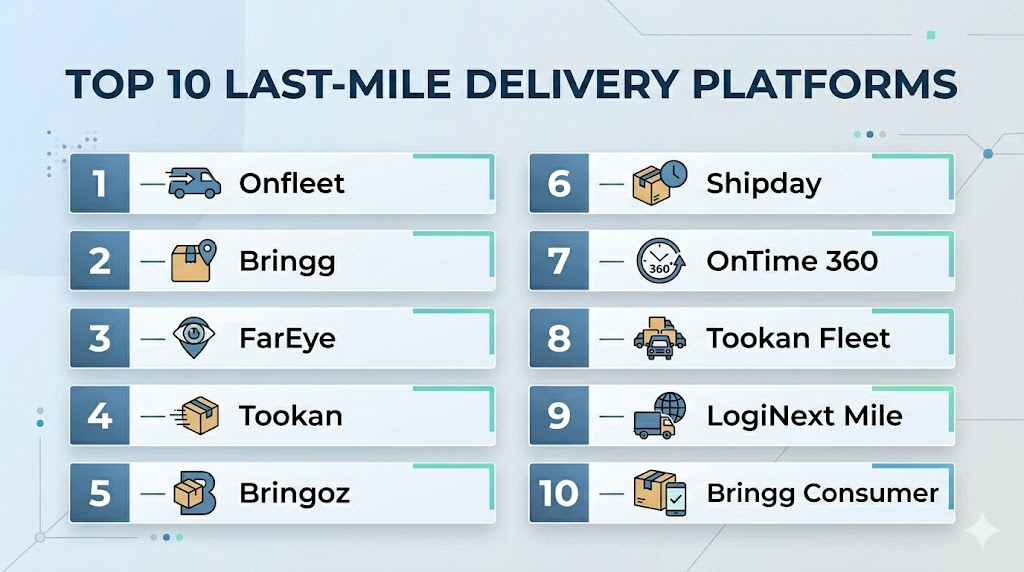
Top 10 Last-mile Delivery Platforms
#1 — Onfleet
Short description: Onfleet is a user-friendly last-mile delivery platform that streamlines driver management, route optimization, and customer communication for SMB and mid-market businesses.
Key Features
- Multi-stop route optimization
- Real-time driver tracking
- Customer notifications and SMS alerts
- Proof-of-delivery collection
- Analytics dashboards
- API integration
- Mobile driver app
Pros
- Intuitive interface for dispatchers and drivers
- Fast onboarding and setup
Cons
- Limited advanced fleet management
- Higher cost for very large operations
Platforms / Deployment
- Web, iOS, Android
- Cloud
Security & Compliance
- SSL encryption, role-based access
- Not publicly stated
Integrations & Ecosystem
- TMS and ERP integrations
- API access
- Mobile driver notifications
Support & Community
- Email and chat support
- Online knowledge base
#2 — Bringg
Short description: Bringg is an enterprise-grade last-mile delivery orchestration platform, providing automation, visibility, and enhanced customer experience.
Key Features
- Multi-vehicle route optimization
- Real-time driver tracking and ETA updates
- Customer notifications and self-service portals
- Delivery orchestration and automation
- Analytics dashboards
- API integrations
Pros
- Enterprise-level orchestration and automation
- Strong visibility and operational control
Cons
- Implementation can be complex
- Premium pricing
Platforms / Deployment
- Web, iOS, Android
- Cloud
Security & Compliance
- SSL encryption, role-based access
- Not publicly stated
Integrations & Ecosystem
- ERP, TMS, and e-commerce platforms
- API connectivity
- Driver apps and telematics
Support & Community
- Enterprise support packages
- Online guides and training
#3 — FarEye
Short description: FarEye leverages AI for predictive last-mile delivery, offering dynamic ETAs, route optimization, and real-time monitoring for large-scale operations.
Key Features
- AI-driven predictive ETAs
- Dynamic route optimization
- Real-time driver tracking
- Customer notifications
- Mobile driver app
- Analytics dashboards
- ERP/TMS integration
Pros
- Predictive analytics improves accuracy
- Scalable for large fleets
Cons
- Higher learning curve
- Enterprise pricing
Platforms / Deployment
- Web, iOS, Android
- Cloud
Security & Compliance
- SSL encryption
- Not publicly stated
Integrations & Ecosystem
- ERP and TMS systems
- API workflow integration
- Customer-facing apps
Support & Community
- Enterprise support tiers
- Training resources
#4 — Tookan
Short description: Tookan is a flexible SMB last-mile platform offering route optimization, dispatch automation, and mobile driver apps.
Key Features
- Multi-stop route optimization
- Real-time driver tracking
- Customer notifications
- Proof-of-delivery collection
- Mobile driver app
- Analytics dashboards
- API integration
Pros
- Affordable for small fleets
- Fast onboarding
Cons
- Limited enterprise functionality
- Basic analytics
Platforms / Deployment
- Web, iOS, Android
- Cloud
Security & Compliance
- SSL encryption
- Not publicly stated
Integrations & Ecosystem
- ERP/TMS connectors
- API access
- Driver notifications
Support & Community
- Email and chat support
- Tutorials and documentation
#5 — Bringoz
Short description: Bringoz provides a full-suite last-mile platform with delivery orchestration, AI routing, and customer engagement for enterprises.
Key Features
- Multi-stop route optimization
- Real-time driver tracking
- Customer notifications
- Delivery orchestration automation
- Analytics dashboards
- API integration
Pros
- Enterprise-grade features
- Strong customer engagement
Cons
- Implementation complexity
- Premium pricing
Platforms / Deployment
- Web, iOS, Android
- Cloud
Security & Compliance
- SSL encryption
- Not publicly stated
Integrations & Ecosystem
- ERP, TMS, e-commerce APIs
- Mobile app integration
Support & Community
- Enterprise support tiers
- Documentation
#6 — Shipday
Short description: Shipday is an affordable SMB platform with multi-stop route optimization, live tracking, and proof-of-delivery capabilities.
Key Features
- Multi-stop route optimization
- Real-time driver tracking
- Customer notifications
- Proof-of-delivery collection
- Analytics dashboards
- Mobile driver app
Pros
- Easy to deploy
- Cost-effective for small fleets
Cons
- Limited enterprise scalability
- Basic integrations
Platforms / Deployment
- Web, iOS, Android
- Cloud
Security & Compliance
- SSL encryption
- Not publicly stated
Integrations & Ecosystem
- E-commerce and delivery platforms
- API access
Support & Community
- Email support
- Knowledge base
#7 — OnTime 360
Short description: OnTime 360 provides efficient scheduling, routing, and driver management for mid-market delivery teams.
Key Features
- Multi-stop route optimization
- Real-time tracking
- Delivery scheduling
- Customer notifications
- Analytics dashboards
- Mobile driver apps
- API integration
Pros
- Strong scheduling features
- Mid-market suitable
Cons
- Limited advanced analytics
- Higher cost for large operations
Platforms / Deployment
- Web, iOS, Android
- Cloud
Security & Compliance
- SSL encryption
- Not publicly stated
Integrations & Ecosystem
- ERP, TMS, e-commerce integration
- API access
Support & Community
- Email and phone support
- Documentation
#8 — Tookan Fleet
Short description: Tookan Fleet is a flexible platform for multi-stop routing, driver tracking, and customer notifications for SMBs.
Key Features
- Route optimization
- Driver monitoring and mobile app
- Customer notifications
- Proof-of-delivery collection
- Analytics dashboards
- API integration
Pros
- Affordable and intuitive
- Easy-to-use driver interface
Cons
- Limited enterprise-grade features
- Basic analytics
Platforms / Deployment
- Web, iOS, Android
- Cloud
Security & Compliance
- SSL encryption
- Not publicly stated
Integrations & Ecosystem
- ERP, delivery apps
- API for workflows
Support & Community
- Email support
- Knowledge base
#9 — LogiNext Mile
Short description: LogiNext Mile is an AI-powered platform for enterprises, with predictive routing, ETA accuracy, and fleet analytics.
Key Features
- AI-based route optimization
- Real-time driver tracking
- Predictive ETAs
- Customer notifications
- Mobile driver apps
- Analytics dashboards
- API integration
Pros
- Predictive routing for efficiency
- Enterprise-scale capability
Cons
- Complexity and premium pricing
- Learning curve for new users
Platforms / Deployment
- Web, iOS, Android
- Cloud
Security & Compliance
- SSL encryption
- Not publicly stated
Integrations & Ecosystem
- ERP, TMS, e-commerce APIs
- Mobile app integration
Support & Community
- Enterprise support tiers
- Documentation
#10 — Bringg Consumer
Short description: Enterprise platform for delivery orchestration, tracking, and customer experience management.
Key Features
- Route optimization and dispatch automation
- Real-time tracking
- Customer notifications and self-service portals
- Analytics dashboards
- Mobile driver apps
- API integration
Pros
- Enterprise-grade orchestration
- Strong customer experience tools
Cons
- Premium pricing
- Complex implementation
Platforms / Deployment
- Web, iOS, Android
- Cloud
Security & Compliance
- SSL, encryption, role-based access
- Not publicly stated
Integrations & Ecosystem
- ERP, TMS, e-commerce APIs
- Driver apps
Support & Community
- Enterprise support tiers
- Documentation
Comparison Table
| Tool Name | Best For | Platform(s) | Deployment | Standout Feature | Public Rating |
|---|---|---|---|---|---|
| Onfleet | SMB / Mid-market | Web, iOS, Android | Cloud | Driver tracking & routing | N/A |
| Bringg | Enterprise | Web, iOS, Android | Cloud | Delivery orchestration | N/A |
| FarEye | Enterprise | Web, iOS, Android | Cloud | Predictive ETAs | N/A |
| Tookan | SMB | Web, iOS, Android | Cloud | Dispatch & mobile app | N/A |
| Bringoz | Enterprise | Web, iOS, Android | Cloud | Customer engagement | N/A |
| Shipday | SMB | Web, iOS, Android | Cloud | Affordable tracking | N/A |
| OnTime 360 | Mid-market | Web, iOS, Android | Cloud | Scheduling & routing | N/A |
| Tookan Fleet | SMB | Web, iOS, Android | Cloud | Multi-stop routing | N/A |
| LogiNext Mile | Enterprise | Web, iOS, Android | Cloud | AI predictive routing | N/A |
| Bringg Consumer | Enterprise | Web, iOS, Android | Cloud | Orchestration & CX | N/A |
Evaluation & Scoring
| Tool Name | Core (25%) | Ease (15%) | Integrations (15%) | Security (10%) | Performance (10%) | Support (10%) | Value (15%) | Weighted Total |
|---|---|---|---|---|---|---|---|---|
| Onfleet | 8 | 8 | 7 | 7 | 8 | 7 | 8 | 7.7 |
| Bringg | 9 | 7 | 8 | 8 | 9 | 8 | 7 | 8.1 |
| FarEye | 9 | 7 | 8 | 7 | 9 | 8 | 7 | 8.0 |
| Tookan | 8 | 8 | 7 | 7 | 8 | 7 | 8 | 7.7 |
| Bringoz | 9 | 7 | 8 | 7 | 8 | 7 | 7 | 7.8 |
| Shipday | 7 | 8 | 6 | 7 | 7 | 7 | 8 | 7.3 |
| OnTime 360 | 8 | 7 | 7 | 7 | 8 | 7 | 7 | 7.5 |
| Tookan Fleet | 7 | 8 | 6 | 7 | 7 | 7 | 7 | 7.1 |
| LogiNext Mile | 9 | 7 | 8 | 7 | 9 | 8 | 7 | 8.0 |
| Bringg Consumer | 9 | 7 | 8 | 7 | 9 | 8 | 7 | 8.0 |
Which Last-mile Delivery Platforms Tool Is Right for You?
Solo / Freelancer
- Shipday or Tookan for easy setup and low-cost deployment
SMB
- Onfleet, Tookan, or Shipday for multi-stop delivery optimization
Mid-Market
- OnTime 360 or Bringoz for scheduling and analytics dashboards
Enterprise
- Bringg, FarEye, LogiNext Mile for AI-driven routing and multi-depot orchestration
Budget vs Premium
- Budget: Tookan, Shipday
- Premium: Bringg, FarEye, Bringoz
Feature Depth vs Ease of Use
- Enterprise tools provide deep optimization but need training
- SMB tools prioritize simplicity and fast deployment
Integrations & Scalability
- Ensure ERP, TMS, and e-commerce integrations
- Cloud platforms scale better across depots and vehicles
Security & Compliance Needs
- Enterprise fleets require encryption, audit logs, and role-based access
- SMB fleets rely on SSL and basic access controls
Frequently Asked Questions (FAQs)
1. What pricing models are used?
Most platforms operate on subscription-based pricing, often tiered by deliveries, vehicles, or feature modules.
2. How long does implementation take?
SMB platforms can be operational in days, while enterprise platforms may take weeks depending on integration complexity.
3. Do platforms integrate with ERP or TMS?
Yes, leading platforms provide APIs and prebuilt connectors to integrate with ERP, TMS, WMS, and e-commerce platforms.
4. How do platforms optimize routes?
AI algorithms calculate the shortest and fastest multi-stop routes, considering traffic, delivery windows, and driver availability.
5. Are driver apps included?
Yes, mobile apps allow drivers to receive routes, update delivery status, and provide proof-of-delivery in real-time.
6. Can multiple depots and vehicles be managed?
Yes, enterprise-grade platforms support multi-depot, multi-vehicle, and multi-day scheduling.
7. Is real-time tracking available?
Yes, GPS tracking and live ETA updates are standard across most platforms.
8. Do platforms support EV fleets?
Many platforms offer EV routing and charging station optimization for sustainable delivery operations.
9. Can customer notifications be automated?
Yes, notifications via SMS, email, or apps can be automated to improve customer experience.
10. What fleet size benefits most?
Platforms benefit SMBs and enterprise fleets, from a few vehicles to hundreds or thousands of daily deliveries.
Conclusion
Last-mile Delivery Platforms are critical for delivering efficiency, reducing costs, and enhancing customer satisfaction. SMBs benefit from affordable, easy-to-use solutions, while enterprises gain from AI-driven routing, predictive ETAs, and multi-depot orchestration. Selecting the right platform depends on fleet size, operational complexity, integrations, and budget. Companies should shortlist top platforms, run pilots, and validate integration with ERP, TMS, and telematics systems to maximize efficiency and improve delivery performance.

Find Trusted Cardiac Hospitals
Compare heart hospitals by city and services — all in one place.
Explore Hospitals
A delivery may fail because of a wrong address, customer not being available, traffic, or a driver issue. Tracking these reasons separately can help teams find repeated problems and improve future planning. This can reduce repeat delivery attempts, wasted fuel, and customer complaints.