Introduction
Transportation Management Systems (TMS) are the engine behind modern logistics, helping businesses plan, execute, and optimize shipments across multiple carriers, transportation modes, and geographies. In simple terms, a TMS ensures your goods arrive on time, at the lowest cost, and with complete visibility into every step of the supply chain.As supply chains grow more complex and customer expectations rise, TMS solutions are no longer optional—they are strategic tools that reduce costs, improve service levels, and increase operational efficiency.
Real-world use cases include:
- Retailers coordinating deliveries across multiple stores and distribution centers
- E-commerce companies optimizing last-mile delivery
- Manufacturers managing inbound raw materials and outbound finished goods
- 3PL providers handling multi-client shipments efficiently
- Distributors optimizing freight across multiple modes and carriers
Key evaluation criteria for buyers:
- Multi-modal route planning and optimization
- Carrier selection, freight auditing, and cost management
- Real-time shipment tracking and visibility
- Integration with ERP, WMS, and e-commerce platforms
- Regulatory compliance and documentation management
- Scalability for multi-location operations
- Analytics and actionable reporting
- Automation and AI-powered optimization
- Mobile access for drivers and logistics teams
- Vendor support, training, and ecosystem strength
Best for: Logistics managers, supply chain directors, 3PL providers, mid-market and enterprise companies, e-commerce businesses
Not ideal for: Small businesses with minimal shipping needs or those outsourcing all transportation
Key Trends in Transportation Management Systems
- AI-powered route optimization to reduce delivery time and costs
- Automation in carrier selection, freight auditing, and billing
- Cloud-native TMS for scalable multi-location operations
- Real-time tracking using GPS, telematics, and IoT
- Integration with ERP, WMS, and e-commerce systems
- Advanced analytics dashboards for cost, performance, and service metrics
- SaaS subscription models replacing legacy licensing
- Mobile-first apps for drivers and logistics managers
- Compliance management for hazardous materials and international shipments
- Multi-modal and last-mile delivery optimization
How We Selected These Tools (Methodology)
- Evaluated market adoption, mindshare, and real-world deployment success
- Assessed feature completeness across planning, execution, and freight auditing
- Reviewed reliability and performance in live logistics operations
- Verified security posture including encryption, authentication, and compliance
- Checked integration potential with ERP, WMS, and carrier networks
- Analyzed customer fit across SMB, mid-market, and enterprise segments
- Considered deployment flexibility: cloud, on-premises, hybrid
- Evaluated support offerings, documentation, and community presence
- Reviewed scalability for multi-location and global operations
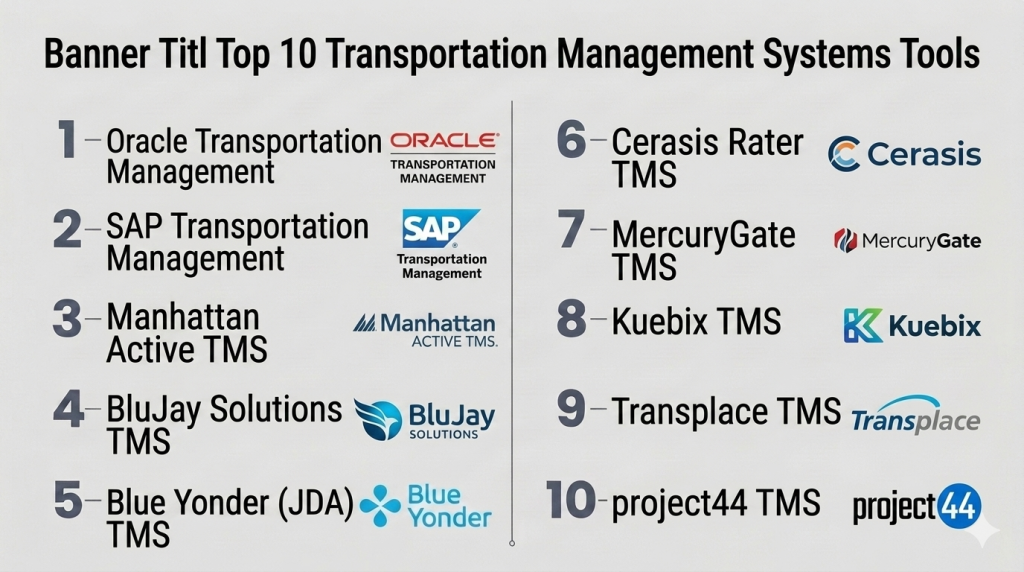
Top 10 Transportation Management Systems Tools
#1 — Oracle Transportation Management
Short description: Oracle TMS is an enterprise-grade platform for complex, multi-modal shipping, offering complete visibility, freight cost control, and route optimization.
Key Features
- Multi-modal transportation planning
- Automated carrier selection and tendering
- Freight auditing and payment
- Route optimization for cost and speed
- Real-time shipment visibility
- ERP integration with Oracle supply chain modules
- Analytics dashboards with actionable insights
Pros
- Comprehensive enterprise functionality
- Strong global carrier network support
Cons
- Complex configuration
- Premium pricing
Platforms / Deployment
- Web, iOS, Android
- Cloud / On-prem / Hybrid
Security & Compliance
- SSO, encryption, RBAC
- Not publicly stated
Integrations & Ecosystem
- ERP, WMS, e-commerce platforms
- API support for custom workflows
- Connectivity with major carriers
Support & Community
- Enterprise-level support packages
- Extensive online training and documentation
#2 — SAP Transportation Management
Short description: SAP TMS integrates tightly with SAP ERP, enabling enterprises to plan, execute, and optimize shipments with real-time visibility.
Key Features
- Multi-modal shipment planning
- Freight cost calculation and auditing
- Carrier management and tendering
- Real-time shipment visibility
- Route optimization and scheduling
- Integration with SAP ERP and WMS
- Analytics and reporting dashboards
Pros
- Tight ERP integration
- Scalable for global operations
Cons
- Steep learning curve
- High implementation cost
Platforms / Deployment
- Web, Windows, iOS, Android
- Cloud / On-prem / Hybrid
Security & Compliance
- Role-based access, encryption
- Not publicly stated
Integrations & Ecosystem
- SAP ecosystem integrations
- Carrier network connectivity
- APIs for custom workflows
Support & Community
- Enterprise support packages
- Extensive documentation and training
#3 — Manhattan Active TMS
Short description: Cloud-native TMS for multi-client, omni-channel logistics, offering real-time visibility, AI-driven optimization, and carrier collaboration.
Key Features
- Route and carrier optimization
- Freight auditing and payment
- Real-time shipment tracking
- Multi-client and multi-modal support
- Analytics dashboards
- Mobile access for logistics teams
- ERP and WMS integration
Pros
- Scalable cloud platform
- Flexible for 3PL providers
Cons
- Complex implementation
- Premium pricing
Platforms / Deployment
- Web, iOS, Android
- Cloud
Security & Compliance
- SSL, RBAC, encryption
- Not publicly stated
Integrations & Ecosystem
- ERP, WMS, carrier networks
- APIs for custom workflows
- E-commerce connectors
Support & Community
- Tiered support packages
- Online knowledge base and forums
#4 — BluJay Solutions TMS
Short description: Cloud-based TMS for mid-market to enterprise shippers, focused on freight optimization, visibility, and actionable analytics.
Key Features
- Freight planning and execution
- Carrier rating and management
- Route optimization
- Real-time shipment tracking
- Freight auditing
- Analytics dashboards
- Multi-modal support
Pros
- Cloud-native and scalable
- Strong analytics capabilities
Cons
- Customization may require technical expertise
- Pricing may be high for smaller companies
Platforms / Deployment
- Web, iOS, Android
- Cloud
Security & Compliance
- SSL, RBAC
- Not publicly stated
Integrations & Ecosystem
- ERP, WMS, and carrier integrations
- APIs for custom workflows
Support & Community
- Email and phone support
- Online tutorials and documentation
#5 — Blue Yonder (JDA) TMS
Short description: Enterprise TMS for retailers and distributors, offering AI-driven route optimization, carrier management, and analytics for logistics excellence.
Key Features
- Multi-modal transportation management
- Freight auditing and payment
- Route and load optimization
- Real-time shipment visibility
- Carrier management
- Analytics dashboards
- Mobile logistics support
Pros
- Proven enterprise-grade functionality
- Strong analytics and optimization
Cons
- Complex implementation
- Premium pricing
Platforms / Deployment
- Web, iOS, Android
- Cloud / On-prem
Security & Compliance
- SSL, encryption
- Not publicly stated
Integrations & Ecosystem
- ERP and WMS integrations
- Carrier network connectivity
- APIs for custom workflows
Support & Community
- Enterprise-level support
- Documentation and training
#6 — Cerasis Rater TMS
Short description: Cloud TMS for mid-market shippers, focused on freight rating, auditing, and cost optimization.
Key Features
- Multi-carrier rating and selection
- Freight auditing and payment
- Route and mode optimization
- Real-time shipment visibility
- Analytics dashboards
- Carrier management
- Mobile support
Pros
- Strong freight auditing features
- Affordable for mid-market companies
Cons
- Limited enterprise scalability
- Less advanced planning features
Platforms / Deployment
- Web, iOS, Android
- Cloud
Security & Compliance
- SSL, RBAC
- Not publicly stated
Integrations & Ecosystem
- ERP, WMS, carrier APIs
- Reporting integrations
Support & Community
- Email and phone support
- Knowledge base
#7 — MercuryGate TMS
Short description: Enterprise and 3PL TMS supporting multi-client, multi-modal operations, real-time visibility, and AI optimization.
Key Features
- Route optimization and planning
- Multi-modal shipping
- Freight auditing and payment
- Real-time shipment tracking
- Carrier management
- Analytics dashboards
- Mobile workforce support
Pros
- Strong 3PL capabilities
- Cloud scalability
Cons
- Complex implementation
- Premium pricing
Platforms / Deployment
- Web, iOS, Android
- Cloud
Security & Compliance
- SSL, RBAC
- Not publicly stated
Integrations & Ecosystem
- ERP, WMS, carrier networks
- APIs for custom workflows
Support & Community
- Tiered enterprise support
- Online tutorials
#8 — Kuebix TMS
Short description: Mid-market cloud TMS offering carrier management, route optimization, and freight analytics with a user-friendly interface.
Key Features
- Multi-carrier shipping
- Route optimization
- Freight auditing and cost management
- Real-time shipment tracking
- Analytics dashboards
- API integration
- Mobile support
Pros
- Affordable for mid-market shippers
- Easy to use
Cons
- Limited enterprise scalability
- Fewer advanced optimization features
Platforms / Deployment
- Web, iOS, Android
- Cloud
Security & Compliance
- SSL, RBAC
- Not publicly stated
Integrations & Ecosystem
- ERP, WMS, carriers
- APIs for workflow automation
Support & Community
- Email and phone support
- Knowledge base
#9 — Transplace TMS
Short description: Enterprise TMS for global shippers and 3PLs, focusing on multi-modal planning and freight optimization.
Key Features
- Multi-modal and multi-site shipping
- Freight auditing
- Route and load optimization
- Real-time visibility
- Carrier management
- Analytics dashboards
- Mobile support
Pros
- Global logistics capability
- Enterprise-grade features
Cons
- Complex implementation
- Premium pricing
Platforms / Deployment
- Web, iOS, Android
- Cloud
Security & Compliance
- SSL, encryption
- Not publicly stated
Integrations & Ecosystem
- ERP, WMS, carrier APIs
- Custom API workflows
Support & Community
- Enterprise support tiers
- Documentation
#10 — project44 TMS
Short description: Cloud-native TMS focused on real-time visibility and tracking, ideal for mid-market to enterprise shippers.
Key Features
- Real-time shipment tracking
- Carrier connectivity
- Multi-modal optimization
- Freight auditing
- Analytics dashboards
- API integration
- Mobile logistics support
Pros
- Strong real-time visibility
- Cloud-native and scalable
Cons
- Limited full planning features
- Requires technical expertise for workflows
Platforms / Deployment
- Web, iOS, Android
- Cloud
Security & Compliance
- SSL, encryption, RBAC
- Not publicly stated
Integrations & Ecosystem
- ERP, WMS, carrier networks
- APIs for integration
Support & Community
- Email and phone support
- Knowledge base
Comparison Table (Top 10)
| Tool Name | Best For | Platform(s) Supported | Deployment | Standout Feature | Public Rating |
|---|---|---|---|---|---|
| Oracle TMS | Enterprise | Web, iOS, Android | Cloud / On-prem / Hybrid | Multi-modal planning | N/A |
| SAP TMS | Enterprise | Web, Windows, iOS, Android | Cloud / On-prem / Hybrid | ERP integration | N/A |
| Manhattan Active TMS | Enterprise | Web, iOS, Android | Cloud | 3PL & omni-channel | N/A |
| BluJay Solutions | Mid-market / Enterprise | Web, iOS, Android | Cloud | Freight management & analytics | N/A |
| Blue Yonder / JDA | Enterprise | Web, iOS, Android | Cloud / On-prem | Route optimization | N/A |
| Cerasis Rater | Mid-market | Web, iOS, Android | Cloud | Freight auditing | N/A |
| MercuryGate | Enterprise / 3PL | Web, iOS, Android | Cloud | Multi-client support | N/A |
| Kuebix | Mid-market | Web, iOS, Android | Cloud | User-friendly interface | N/A |
| Transplace | Enterprise | Web, iOS, Android | Cloud | Global logistics | N/A |
| project44 | Mid-market / Enterprise | Web, iOS, Android | Cloud | Real-time visibility | N/A |
Evaluation & Scoring of TMS
| Tool Name | Core (25%) | Ease (15%) | Integrations (15%) | Security (10%) | Performance (10%) | Support (10%) | Value (15%) | Weighted Total |
|---|---|---|---|---|---|---|---|---|
| Oracle TMS | 9 | 7 | 9 | 8 | 9 | 8 | 7 | 8.4 |
| SAP TMS | 9 | 6 | 9 | 8 | 9 | 8 | 6 | 8.1 |
| Manhattan Active TMS | 8 | 7 | 8 | 7 | 8 | 7 | 7 | 7.6 |
| BluJay Solutions | 8 | 7 | 8 | 7 | 8 | 7 | 7 | 7.6 |
| Blue Yonder / JDA | 9 | 6 | 8 | 7 | 8 | 8 | 6 | 7.8 |
| Cerasis Rater | 7 | 8 | 7 | 7 | 7 | 7 | 7 | 7.0 |
| MercuryGate | 8 | 7 | 8 | 7 | 8 | 7 | 7 | 7.6 |
| Kuebix | 7 | 8 | 7 | 7 | 7 | 7 | 7 | 7.2 |
| Transplace | 9 | 6 | 8 | 7 | 8 | 8 | 6 | 7.8 |
| project44 | 8 | 7 | 8 | 7 | 8 | 7 | 7 | 7.6 |
Interpretation: Weighted totals reflect overall suitability; enterprise TMS emphasize core features and integration, while mid-market solutions prioritize ease of use and value.
Which TMS Tool Is Right for You?
Solo / Freelancer
Small-scale shippers may not need a full TMS. Lightweight tools or cloud-based visibility platforms can suffice.
SMB
Kuebix, Cerasis Rater, or BluJay Solutions provide affordability, ease of use, and multi-carrier management.
Mid-Market
MercuryGate or project44: scalable cloud platforms with strong analytics and multi-modal support.
Enterprise
Oracle TMS, SAP TMS, Manhattan Active, and Blue Yonder/JDA: ideal for global operations, 3PL, and multi-client management.
Budget vs Premium
Budget: Cerasis Rater, Kuebix
Premium: Oracle, SAP, Manhattan Active, Blue Yonder
Feature Depth vs Ease of Use
Enterprise platforms excel in features but require training (Oracle, SAP, Manhattan)
Mid-market platforms offer simpler interfaces with solid functionality (Kuebix, Cerasis)
Integrations & Scalability
Ensure ERP, WMS, and carrier connectivity; cloud platforms offer superior scalability.
Security & Compliance Needs
Enterprise users may require encryption, audit logs, and MFA. Mid-market can rely on SSL and role-based access controls.
Frequently Asked Questions (FAQs)
1. What pricing models do TMS solutions use?
Most TMS platforms operate on a subscription basis, often tiered by shipment volume, users, or warehouses. On-premises licenses may involve upfront and maintenance fees.
2. How long does TMS implementation take?
SMB cloud solutions can go live within weeks; enterprise deployments like Oracle or SAP can require several months.
3. Can TMS integrate with ERP, WMS, and e-commerce?
Yes, most modern TMS provide APIs, prebuilt connectors, and multi-channel integrations. Verify vendor support for your systems.
4. How does TMS optimize routes?
TMS uses AI and algorithms to plan routes based on cost, distance, delivery windows, and traffic data.
5. Is mobile access important for TMS?
Yes, mobile apps allow drivers and logistics teams to track shipments, update statuses, and improve delivery efficiency.
6. Can TMS handle multi-modal and multi-location shipping?
Cloud-native TMS can manage multiple warehouses and transportation modes in real time.
7. How does TMS support compliance?
TMS tracks shipments, documentation, and hazardous materials, ensuring regulatory compliance and traceability.
8. What are common adoption challenges?
Mapping workflows, migrating data, staff training, and integrating with ERP/WMS are typical challenges.
9. Is TMS suitable for 3PL providers?
Yes, TMS platforms like Manhattan Active and MercuryGate support multi-client operations.
10. How does TMS reduce logistics costs?
By optimizing routes, auditing freight, consolidating shipments, and improving carrier selection.
Conclusion
Transportation Management Systems are game-changers for modern supply chains, improving delivery speed, cost-efficiency, and operational visibility. The right TMS depends on business size, shipment volume, and integration needs. SMBs benefit from cloud-based, easy-to-use platforms, while enterprises require feature-rich solutions for global operations, multi-modal logistics, and 3PL support. Evaluating core features, integration capabilities, security, performance, and support will help companies shortlist, pilot, and implement a TMS that boosts efficiency, reduces costs, and elevates customer satisfaction.

Find Trusted Cardiac Hospitals
Compare heart hospitals by city and services — all in one place.
Explore Hospitals
A TMS can create an optimized plan, but real shipments can face traffic, weather, carrier delays, or missed pickups. Teams should have clear exception workflows so the right person is alerted and can quickly adjust the shipment. Tracking how often these exceptions happen can also help improve future planning.