Introduction
Fleet Management Tools are software systems designed to help organizations track, monitor, optimize, and maintain vehicles and mobile assets. In simple terms, they give fleet operators visibility into vehicle location, performance, fuel usage, maintenance, driver behavior, and compliance. These tools help fleets run safer, cleaner, and more cost‑efficiently.
In an age where logistics, delivery, transportation, and field service operations are rapidly scaling, fleet software has become essential. Businesses use these platforms to reduce operational costs, improve driver safety, stay compliant with regulations, and unlock actionable insights using data.
Real‑world use cases include:
- Delivery companies minimizing fuel and route costs
- Logistics providers optimizing scheduling and utilization
- Construction firms monitoring heavy equipment usage
- Public transportation agencies tracking buses and service levels
- Field service providers ensuring timely and safe service visits
What buyers should evaluate:
- Real‑time GPS tracking accuracy
- Route planning & optimization
- Fuel analytics and cost control
- Maintenance scheduling and diagnostics
- Driver behavior monitoring & safety tools
- Regulatory compliance and reporting
- Integrations with telematics and ERP systems
- Mobile app usability
- Security & access control
- Support, onboarding, and training
Best for: Logistics managers, operations leaders, transportation directors, large delivery fleets, field service managers, and regulated industries
Not ideal for: Very small fleets with minimal vehicles where manual tracking or simple spreadsheets suffice
Key Trends in Fleet Management Tools
- AI‑driven route optimization to cut fuel and labor costs
- Predictive maintenance using sensor and engine data
- Telematics standardization across carriers and vehicle types
- Mobile‑first apps for on‑the‑road driver engagement
- Cloud‑based platforms replacing legacy on‑prem systems
- Integration with ERP/WMS and TMS tools for end‑to‑end logistics visibility
- Driver safety scoring and coaching via video and analytics
- Electric vehicle (EV) fleet support including battery and charging insights
- Automated compliance reporting for safety and environmental rules
- Subscription pricing models with modular add‑ons
How We Selected These Tools (Methodology)
- Assessed feature completeness across tracking, analytics, maintenance, and safety
- Prioritized market presence and adoption in fleet‑intensive industries
- Evaluated reliability and performance in real‑world fleet operations
- Checked security posture including encryption, access controls, and audit logs
- Reviewed integration potential with telematics, ERP, and logistics systems
- Analyzed scalability across fleet sizes and geographies
- Investigated mobile usability for drivers and dispatchers
- Evaluated support levels and documentation quality
- Considered value perception versus cost for typical fleet budgets
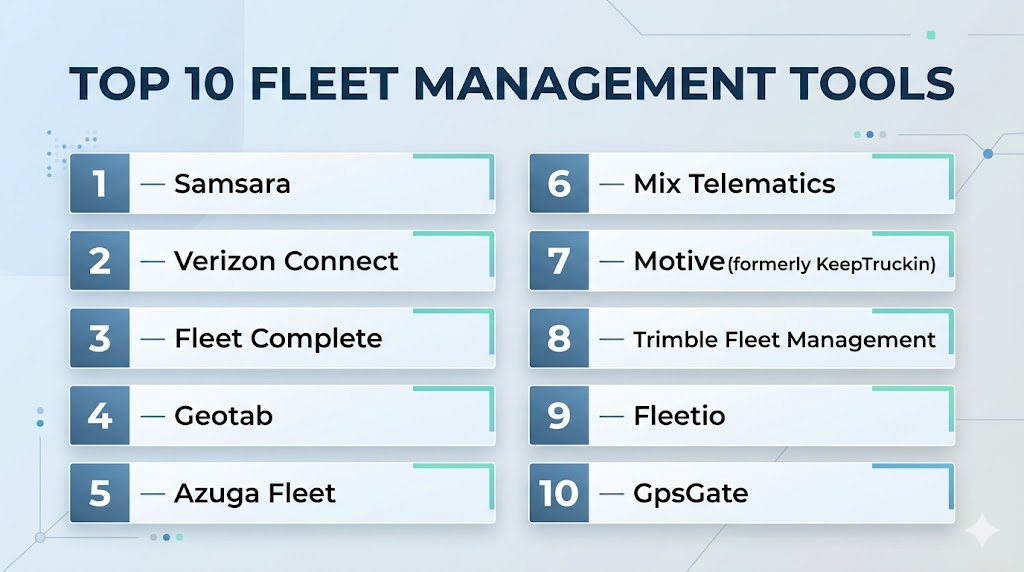
Top 10 Fleet Management Tools
#1 — Samsara
Short description: Samsara offers an all‑in‑one fleet platform combining real‑time tracking, telematics, driver safety, maintenance workflows, and analytics, ideal for medium to large fleets.
Key Features
- Live GPS tracking with location history
- Vehicle diagnostics and fault alerts
- Driver safety monitoring with AI video
- Route planning & optimization
- Fuel usage and emissions analytics
- Maintenance scheduling
- Mobile driver app
Pros
- Comprehensive monitoring and safety features
- Scales well for mixed fleets
Cons
- Can be costly for smaller fleets
- Learning curve for advanced features
Platforms / Deployment
- Web, iOS, Android
- Cloud
Security & Compliance
- SSO, encryption, RBAC
- Not publicly stated
Integrations & Ecosystem
Supports ERP, telematics providers, TMS/WMS systems.
- Telematics & engine data feeds
- API for custom integrations
- Alerts and reporting tools
Support & Community
- Email, phone and chat support
- Onboarding resources and training
#2 — Verizon Connect
Short description: Verizon Connect provides fleet tracking, route planning, driver performance insights, and compliance tools tailored for diverse commercial operations.
Key Features
- Real‑time GPS tracking
- Route optimization
- Driver performance scoring
- Vehicle diagnostics & alerts
- Fuel efficiency analytics
- Maintenance workflows
- Mobile driver app
Pros
- Strong route planning tools
- Clear driver behavior dashboards
Cons
- UX can feel dated in parts
- Add‑ons can raise cost
Platforms / Deployment
- Web, iOS, Android
- Cloud
Security & Compliance
- Encryption, role‑based access
- Not publicly stated
Integrations & Ecosystem
- ERP/WMS and telematics integrations
- API access
- Alerts to dispatch systems
Support & Community
- Dedicated onboarding
- Online knowledge base
#3 — Fleet Complete
Short description: Fleet Complete focuses on real‑time tracking, telematics, dispatching, and service automation, fitting SMBs and mid‑market fleets with mixed vehicle types.
Key Features
- Live GPS and geofencing
- Driver behavior scoring
- Alerts & automated dispatch
- Maintenance tracking
- Fuel usage reporting
- Mobile driver app
Pros
- Good price‑to‑features balance
- Suited for field service fleets
Cons
- Some advanced analytics require add‑ons
- UI may feel busy
Platforms / Deployment
- Web, iOS, Android
- Cloud
Security & Compliance
- SSL, encryption
- Not publicly stated
Integrations & Ecosystem
- ERP, telematics, dispatch systems
- APIs and extensions
Support & Community
- Email and phone support
- Tutorials and guides
#4 — Geotab
Short description: Geotab delivers a powerful telematics‑centric fleet platform built for route analytics, driver scorecards, safety insights, and IoT data aggregation.
Key Features
- High‑precision GPS tracking
- Driver risk scoring
- Fuel & emissions intelligence
- Maintenance scheduling
- IoT sensor support
- Route replay & analytics
Pros
- Highly configurable data platform
- Strong for heavy telematics integration
Cons
- May require technical data skills
- Add‑on costs for safety video
Platforms / Deployment
- Web, iOS, Android
- Cloud
Security & Compliance
- Encrypted data, granular access controls
- Not publicly stated
Integrations & Ecosystem
- Telematics sensors and engine interfaces
- API access
- ERP and analytics system connections
Support & Community
- Support tiers
- Online forums and documentation
#5 — Azuga Fleet
Short description: Azuga offers driver safety analytics, GPS tracking, maintenance alerts, and gamified driver scorecards — ideal for safety‑centric fleets.
Key Features
- GPS tracking and geofencing
- Driver safety scoring & coaching
- Maintenance and alerts
- Fuel usage insights
- Route tracking
- Mobile driver interface
Pros
- Strong safety and driver UX
- Affordable SMB fit
Cons
- Fewer advanced analytics
- Limited ERP integrations
Platforms / Deployment
- Web, iOS, Android
- Cloud
Security & Compliance
- SSL, role‑based access
- Not publicly stated
Integrations & Ecosystem
- Telematics integrations
- API for basic automation
Support & Community
- Support plans
- Training and help guides
#6 — Mix Telematics
Short description: Mix Telematics excels in safety‑focused fleet tracking with global coverage, customizable dashboards, and compliance support.
Key Features
- Real‑time vehicle tracking
- Safety and driver behavior monitoring
- Fleet utilization reporting
- Maintenance scheduling
- Fuel & emissions reporting
- Custom dashboards
Pros
- Strong global presence
- Excellent safety insights
Cons
- Advanced features may cost extra
- Some regional limitations
Platforms / Deployment
- Web, iOS, Android
- Cloud
Security & Compliance
- Encryption and access controls
- Not publicly stated
Integrations & Ecosystem
- Telematics & sensor feeds
- APIs for integration
Support & Community
- Regional support centers
- Documentation
#7 — Motive (formerly KeepTruckin)
Short description: Motive blends GPS tracking, dashcam safety video, compliance support, and fuel analytics into a modern fleet platform.
Key Features
- Live GPS tracking
- AI‑driven safety video insights
- HOS and ELD compliance
- Fuel and idle reporting
- Maintenance tracking
- Driver scorecards
Pros
- Great safety video integration
- Strong compliance tools
Cons
- Best for truck fleets — lighter fleets get fewer perks
- Advanced video may increase cost
Platforms / Deployment
- Web, iOS, Android
- Cloud
Security & Compliance
- Secure data transmission
- ELD/HOS compliance support
Integrations & Ecosystem
- HOS/ELD systems
- Telematics standards
- API extensions
Support & Community
- Dedicated onboarding
- Driver education resources
#8 — Trimble Fleet Management
Short description: Trimble offers fleet, routing, and field operations management tools with strong route optimization and mobile dispatch features.
Key Features
- GPS tracking
- Driver behavior metrics
- Route planning & analytics
- Maintenance scheduling
- Alerts & incident logs
- Mobile applications
Pros
- Strong routing and dispatch
- Fits field service use cases
Cons
- Interface can be complex
- Smaller user community
Platforms / Deployment
- Web, iOS, Android
- Cloud
Security & Compliance
- Role‑based access
- Not publicly stated
Integrations & Ecosystem
- ERP/dispatch systems
- Telematics feeds
Support & Community
- Enterprise support
- Knowledge base
#9 — Fleetio
Short description: Fleetio is a flexible fleet operations suite with maintenance, inspections, fuel tracking, and integrated GPS options.
Key Features
- Maintenance & inspections
- Fuel tracking and analytics
- Vehicle lifecycle reports
- Location tracking via integrations
- Alerts & reminders
- Mobile driver app
Pros
- Excellent maintenance workflows
- Simple UX
Cons
- GPS tracking depends on integrations
- Fewer native telematics tools
Platforms / Deployment
- Web, iOS, Android
- Cloud
Security & Compliance
- Encrypted storage
- Not publicly stated
Integrations & Ecosystem
- Telematics partners
- ERP and routing systems
Support & Community
#10 — GpsGate
Short description: GpsGate offers customizable vehicle tracking and fleet dashboards, ideal for organizations needing tailored views and workflows.
Key Features
- Modular GPS tracking
- Alerts and geofencing
- Dashboards and reporting widgets
- Mobile apps
- Custom data feeds
- Alerts & notifications
Pros
- Highly customizable
- Good value for smaller fleets
Cons
- Requires configuration skills
- Fewer built‑in analytics
Platforms / Deployment
- Web, iOS, Android
- Cloud
Security & Compliance
- SSL and access controls
- Not publicly stated
Integrations & Ecosystem
- Telematics providers
- APIs and webhooks
Support & Community
- Support tiers
- Online help
Comparison Table (Top 10)
| Tool Name | Best For | Platform(s) Supported | Deployment | Standout Feature | Public Rating |
|---|---|---|---|---|---|
| Samsara | Mixed Fleets | Web, iOS, Android | Cloud | AI safety & telematics | N/A |
| Verizon Connect | Commercial Fleets | Web, iOS, Android | Cloud | Route optimization | N/A |
| Fleet Complete | SMB & Mid‑Market | Web, iOS, Android | Cloud | Dispatch automation | N/A |
| Geotab | Telematics‑centric | Web, iOS, Android | Cloud | Data & IoT analytics | N/A |
| Azuga Fleet | Safety‑First | Web, iOS, Android | Cloud | Driver coaching | N/A |
| Mix Telematics | Global Safety | Web, iOS, Android | Cloud | Safety & compliance | N/A |
| Motive | Trucking Focus | Web, iOS, Android | Cloud | AI safety video | N/A |
| Trimble Fleet | Field Ops | Web, iOS, Android | Cloud | Routing & dispatch | N/A |
| Fleetio | Ops & Maintenance | Web, iOS, Android | Cloud | Maintenance workflows | N/A |
| GpsGate | Customizable Tracking | Web, iOS, Android | Cloud | Custom dashboards | N/A |
Evaluation & Scoring of Fleet Management Tools
| Tool Name | Core (25%) | Ease (15%) | Integrations (15%) | Security (10%) | Performance (10%) | Support (10%) | Value (15%) | Weighted Total |
|---|---|---|---|---|---|---|---|---|
| Samsara | 9 | 7 | 8 | 8 | 9 | 8 | 7 | 8.3 |
| Verizon Connect | 8 | 7 | 8 | 7 | 8 | 7 | 7 | 7.6 |
| Fleet Complete | 7 | 8 | 7 | 7 | 7 | 7 | 8 | 7.4 |
| Geotab | 8 | 7 | 9 | 8 | 8 | 7 | 7 | 7.9 |
| Azuga Fleet | 7 | 8 | 6 | 7 | 7 | 7 | 8 | 7.3 |
| Mix Telematics | 8 | 7 | 7 | 8 | 8 | 7 | 7 | 7.6 |
| Motive | 8 | 7 | 7 | 8 | 8 | 7 | 7 | 7.7 |
| Trimble Fleet | 7 | 6 | 6 | 7 | 7 | 6 | 7 | 6.8 |
| Fleetio | 7 | 9 | 6 | 7 | 7 | 7 | 8 | 7.5 |
| GpsGate | 6 | 7 | 6 | 7 | 7 | 6 | 8 | 7.0 |
Interpretation:
- Weighted totals show overall suitability for typical fleet use cases.
- Tools with strong telematics and analytics (Samsara, Geotab) lead in performance and core capabilities.
- Ease of use and value make Fleetio and Azuga stand out for SMB owners.
Which Fleet Management Tool Is Right for You?
Solo / Freelancer
If you manage a handful of vehicles, Fleetio or GpsGate offers simple tracking and maintenance tools without heavy cost or complexity.
SMB
For small to mid‑market logistics or field service fleets, Fleet Complete, Azuga Fleet, or Motive provide affordability and easy onboarding.
Mid‑Market
For growing fleets that need advanced safety and telematics, Verizon Connect, Mix Telematics, or Geotab deliver deeper insights and multi‑vehicle coordination.
Enterprise
Large fleets with mixed vehicles benefit from Samsara, Geotab, or Motive combined with strong safety and analytics.
Budget vs Premium
Budget: Fleetio, GpsGate, Azuga Fleet
Premium: Samsara, Verizon Connect, Geotab
Feature Depth vs Ease of Use
Enterprise tools offer deep analytics but require training; SMB tools focus on simplicity and daily usability.
Integrations & Scalability
Confirm you can integrate with your ERP, telematics hardware, routing, and fuel systems before committing.
Security & Compliance Needs
Look for encryption, role‑based access, audit logs, and compliance workflows, especially for regulated industries.
Frequently Asked Questions (FAQs)
1. What pricing models do fleet management tools use?
Most fleet tools use subscription SaaS pricing tiered by number of vehicles, users, and feature modules.
2. How long does fleet software implementation take?
Cloud‑based tools can be operational in days; full telematics and analytics rollouts might take weeks depending on hardware integration.
3. Can fleet tools integrate with ERP or dispatch systems?
Yes, leading tools provide APIs or connectors to ERP, dispatch, routing, and accounting systems.
4. Do fleet tools help with fuel cost savings?
Yes, by optimizing routes, monitoring idle time, and analyzing fuel usage, you can significantly reduce costs.
5. Can fleet software monitor driver behavior?
Most top systems include scoring for harsh braking, acceleration, speeding, and idle time with coaching alerts.
6. Are real‑time tracking and alerts available?
Yes, GPS tracking paired with customizable alerts keeps operations in sight across vehicles.
7. Will fleet tools improve safety compliance?
Yes, tools with driver scorecards, video, and alerts help fleets maintain safety standards and reduce incidents.
8. Can fleet management handle EVs?
Many tools now support EV telematics, battery metrics, and charging insights as fleets electrify.
9. Is mobile access important?
Mobile apps empower drivers and dispatchers with on‑the‑go access to routing, logs, and alerts.
10. What is the difference between telematics and fleet tools?
Telematics refers to vehicle data streams; fleet tools use that data to provide actionable insights and workflows.
Conclusion
Fleet Management Tools are no longer optional — they are strategic engines for safer, smarter, and more cost‑efficient operations. Whether managing a small delivery fleet or a global logistics arm, the right fleet platform brings real‑time visibility, route optimization, driver safety insights, and operational control into a single pane of glass. SMB and mid‑market fleets can prioritize ease of use and immediate ROI with affordable tools, while large fleets benefit from advanced analytics, AI‑driven safety coaching, and integrated compliance workflows. Start by shortlisting tools based on your fleet size, business needs, integration requirements, and budget, then pilot the top candidates to ensure they deliver measurable efficiency and savings for your team

Find Trusted Cardiac Hospitals
Compare heart hospitals by city and services — all in one place.
Explore Hospitals
GPS and vehicle sensors can sometimes send delayed or incorrect information because of network or hardware problems. Teams should monitor missing data and have alerts when a vehicle stops reporting. This helps avoid making maintenance, routing, or safety decisions based on incorrect information.