Introduction
API Gateways act as the front door for applications to manage, route, and secure API requests between clients and backend services. They provide traffic management, security, authentication, analytics, and orchestration for APIs, making them essential for modern microservices and cloud-native architectures. API Gateways are vital as businesses adopt hybrid-cloud and multi-cloud architectures, leverage microservices, and require robust security for external and internal APIs. They help teams enforce policies, monitor traffic, and ensure reliability in distributed systems.
Real-world use cases include:
- Centralized API security with authentication and throttling.
- Load balancing and routing for microservices.
- API monitoring, analytics, and performance tracking.
- Developer portal for API onboarding and self-service.
- Integration across cloud and on-premise services.
Evaluation Criteria for Buyers:
- Security features (OAuth, JWT, encryption).
- API traffic management and throttling.
- Scalability and high availability.
- Integration with CI/CD pipelines and backend systems.
- Developer experience and portals.
- Analytics, monitoring, and reporting.
- Deployment flexibility (cloud, hybrid, on-prem).
- Automation and API lifecycle support.
- Pricing and licensing options.
Best for: Enterprises, cloud-native teams, and developers managing multiple APIs with performance, security, and governance requirements.
Not ideal for: Small teams or projects with minimal API needs, simple internal APIs, or low traffic where lightweight solutions suffice.
Key Trends in API Gateways
- Cloud-native, serverless, and hybrid deployments.
- AI-assisted traffic analysis, anomaly detection, and predictive scaling.
- Automation of API lifecycle management with CI/CD integration.
- Advanced security enforcement including OAuth, JWT, RBAC, and encryption.
- Integration with API management platforms and DevOps tools.
- Developer portals and self-service onboarding.
- API monetization capabilities and rate-limiting policies.
- Microservices and service mesh integration.
- Real-time analytics dashboards and monitoring.
- Flexible subscription and consumption-based pricing.
How We Selected These Tools (Methodology)
- Evaluated market adoption and enterprise usage.
- Assessed features for routing, security, analytics, and orchestration.
- Reviewed performance and reliability in production environments.
- Verified compliance and security features.
- Examined integration capabilities with backend systems and cloud platforms.
- Considered suitability for SMB, mid-market, and enterprise users.
- Evaluated ease-of-use for administrators and developers.
- Reviewed support, documentation, and community engagement.
- Factored in deployment flexibility (cloud, hybrid, on-prem).
- Prioritized innovation, AI-assistance, and scalability.
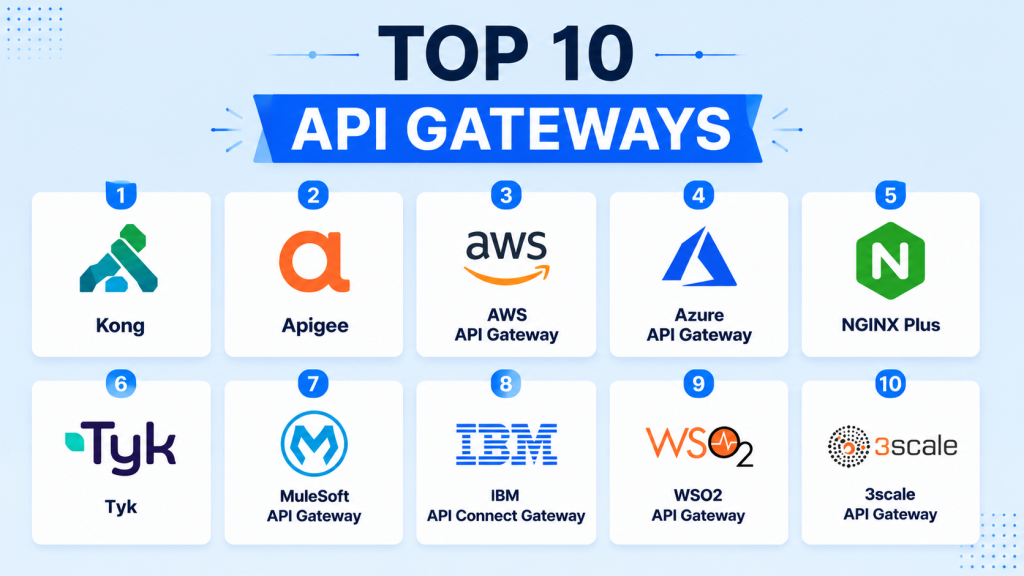
Top 10 API Gateways
1- Kong
Short description: Open-source and enterprise API gateway for cloud-native, microservices, and hybrid architectures.
Key Features
- API routing and traffic management.
- Plugin ecosystem for authentication, logging, and transformation.
- Scalability for high-traffic workloads.
- Cloud-native and hybrid support.
- Analytics and monitoring dashboards.
- Integration with service meshes.
Pros
- High performance and flexibility.
- Strong plugin and community support.
- Scales easily for microservices.
Cons
- Enterprise edition needed for advanced features.
- Requires technical expertise.
- Developer portal features limited in open-source version.
Platforms / Deployment
- Web, Linux
- Cloud / Hybrid / Self-hosted
Security & Compliance
- OAuth, JWT, encryption
- Not publicly stated
Integrations & Ecosystem
- CI/CD pipelines
- Cloud services (AWS, Azure, GCP)
- Backend microservices
Support & Community
- Paid enterprise support.
- Open-source community.
- Documentation and tutorials.
2- Apigee
Short description: Enterprise API gateway with full lifecycle management, analytics, and security.
Key Features
- API traffic routing and rate limiting.
- Analytics dashboards.
- Security policies (OAuth, JWT, RBAC).
- Developer portal and self-service onboarding.
- Multi-cloud and hybrid deployment.
- Monitoring and alerting.
Pros
- Enterprise-grade features.
- Strong analytics and governance.
- Integrates with cloud-native architectures.
Cons
- Premium pricing.
- Learning curve for configuration.
- Some features limited outside Google Cloud ecosystem.
Platforms / Deployment
- Web
- Cloud / Hybrid
Security & Compliance
- OAuth, SAML, encryption
- SOC 2, ISO 27001, GDPR
Integrations & Ecosystem
- Google Cloud
- DevOps pipelines
- Logging and monitoring tools
Support & Community
- Enterprise support packages.
- Documentation and tutorials.
- Developer community.
3- AWS API Gateway
Short description: Managed API gateway service for creating, publishing, and securing APIs on AWS.
Key Features
- API routing, throttling, and caching.
- Security with IAM and Cognito.
- RESTful and WebSocket API support.
- Monitoring via CloudWatch.
- Integration with AWS Lambda and services.
- Auto-scaling and high availability.
Pros
- Fully managed and scalable.
- Deep AWS integration.
- Supports multiple API protocols.
Cons
- AWS-specific; limited outside ecosystem.
- Pricing can be complex.
- Learning curve for beginners.
Platforms / Deployment
- Web
- Cloud (AWS)
Security & Compliance
- IAM, encryption, audit logs
- SOC 2, ISO 27001, GDPR
Integrations & Ecosystem
- AWS Lambda, DynamoDB, S3
- CI/CD pipelines
- Monitoring tools
Support & Community
- AWS support tiers.
- Documentation and forums.
- Active community resources.
4- Azure API Gateway
Short description: Cloud-native API gateway integrated with Microsoft Azure ecosystem.
Key Features
- API routing and versioning.
- OAuth, JWT, and SAML security policies.
- Developer portal and analytics.
- Multi-region deployment.
- CI/CD integration.
- Hybrid deployment support.
Pros
- Enterprise-grade features.
- Deep Azure integration.
- Scalable for high-volume APIs.
Cons
- Azure-focused; limited outside Microsoft ecosystem.
- Premium pricing.
- Some advanced features require enterprise subscription.
Platforms / Deployment
- Web
- Cloud / Hybrid
Security & Compliance
- OAuth, SAML, encryption
- SOC 2, ISO 27001, GDPR
Integrations & Ecosystem
- Azure Functions, Logic Apps
- CI/CD pipelines
- Logging and monitoring
Support & Community
- Enterprise support tiers.
- Documentation and tutorials.
- Developer forums.
5- NGINX Plus
Short description: High-performance API gateway and load balancer for enterprise and hybrid environments.
Key Features
- Traffic routing and load balancing.
- Security policies and SSL termination.
- Monitoring and analytics dashboards.
- Integration with microservices.
- API versioning support.
- Customizable via configuration files.
Pros
- High performance.
- Flexible and lightweight.
- Scales for large traffic.
Cons
- Requires technical expertise.
- Enterprise license needed for full features.
- Limited developer portal functionality.
Platforms / Deployment
- Web, Linux
- Self-hosted / Hybrid
Security & Compliance
- SSL, encryption
- Not publicly stated
Integrations & Ecosystem
- Microservices
- CI/CD pipelines
- Logging and monitoring tools
Support & Community
- Enterprise support available.
- Documentation and tutorials.
- Active NGINX community.
6- Tyk
Short description: Open-source API gateway with enterprise features for security, analytics, and traffic management.
Key Features
- API routing and traffic control.
- OAuth and JWT authentication.
- Analytics dashboards.
- Multi-cloud support.
- Policy management and versioning.
- Open-source extensibility.
Pros
- Open-source and flexible.
- High performance.
- Scales for microservices.
Cons
- Requires technical expertise.
- Community support for advanced features.
- Limited UI customization in free edition.
Platforms / Deployment
- Web, Linux
- Cloud / On-premise / Hybrid
Security & Compliance
- OAuth, encryption
- Not publicly stated
Integrations & Ecosystem
- CI/CD pipelines
- Logging and monitoring
- Cloud services
Support & Community
- Paid support tiers.
- Documentation and forums.
- Open-source community.
7- MuleSoft API Gateway
Short description: Enterprise API gateway with integration and lifecycle management capabilities.
Key Features
- API routing and orchestration.
- Security policies and authentication.
- Monitoring dashboards.
- Developer portal for onboarding.
- Multi-cloud and on-prem support.
- Integration with MuleSoft Anypoint Platform.
Pros
- Strong enterprise integration.
- Governance and analytics.
- Scales for large workloads.
Cons
- Expensive for small teams.
- Steep learning curve.
- Some features require additional licenses.
Platforms / Deployment
- Web
- Cloud / On-prem / Hybrid
Security & Compliance
- OAuth, SAML, encryption
- SOC 2, ISO 27001, GDPR
Integrations & Ecosystem
- MuleSoft connectors
- Backend APIs
- Cloud platforms
Support & Community
- Enterprise support.
- Documentation and forums.
- Developer community.
8- IBM API Connect Gateway
Short description: API gateway for enterprises with security, monitoring, and developer portal features.
Key Features
- API routing and traffic management.
- Analytics dashboards.
- OAuth, SAML, and RBAC support.
- Developer portal.
- Multi-cloud support.
- Lifecycle and governance tools.
Pros
- Enterprise-grade features.
- Strong analytics.
- Secure and compliant.
Cons
- High cost.
- Complex configuration.
- Steep learning curve.
Platforms / Deployment
- Web
- Cloud / Hybrid
Security & Compliance
- OAuth, SSO, MFA
- SOC 2, ISO 27001, GDPR
Integrations & Ecosystem
- IBM Cloud
- CI/CD pipelines
- Backend services
Support & Community
- Enterprise support.
- Documentation and knowledge base.
- Developer community.
9- WSO2 API Gateway
Short description: Open-source API gateway for routing, security, and analytics.
Key Features
- API routing and throttling.
- Security and authentication policies.
- Analytics dashboards.
- Open-source extensibility.
- On-premise or cloud deployment.
- Policy and version management.
Pros
- Free and open-source.
- Flexible deployment.
- Customizable for enterprise.
Cons
- Requires technical expertise.
- Smaller community than commercial options.
- Paid support needed for enterprise.
Platforms / Deployment
- Web, Linux
- Cloud / On-prem / Hybrid
Security & Compliance
- OAuth, encryption
- Not publicly stated
Integrations & Ecosystem
- CI/CD pipelines
- Backend services
- Cloud integrations
Support & Community
- Paid support tiers.
- Documentation and forums.
- Open-source community.
10- 3scale API Gateway
Short description: API gateway integrated with Red Hat’s API management for analytics, security, and developer engagement.
Key Features
- API routing and throttling.
- Analytics dashboards.
- Developer portal.
- Security and policy enforcement.
- Multi-cloud support.
- Lifecycle management.
Pros
- Enterprise-grade scalability.
- Strong analytics and monitoring.
- Integration with Red Hat ecosystem.
Cons
- Premium pricing.
- Requires Red Hat familiarity.
- Advanced features may need enterprise edition.
Platforms / Deployment
- Web, Linux
- Cloud / On-prem / Hybrid
Security & Compliance
- OAuth, JWT, encryption
- SOC 2, ISO 27001, GDPR
Integrations & Ecosystem
- Red Hat middleware
- CI/CD pipelines
- Cloud platforms
- Backend integrations
Support & Community
- Enterprise support packages.
- Documentation and tutorials.
- Developer community.
Comparison Table (Top 10)
| Tool Name | Best For | Platform(s) Supported | Deployment | Standout Feature | Public Rating |
|---|---|---|---|---|---|
| Kong | Cloud-native & microservices | Web/Linux | Cloud/Hybrid/Self-hosted | Plugin ecosystem | N/A |
| Apigee | Enterprise APIs | Web | Cloud/Hybrid | Analytics & gateway | N/A |
| AWS API Gateway | AWS apps | Web | Cloud | AWS integration | N/A |
| Azure API Gateway | Azure ecosystem | Web | Cloud/Hybrid | Enterprise-grade features | N/A |
| NGINX Plus | Load balancing & traffic | Web/Linux | Self-hosted/Hybrid | High-performance | N/A |
| Tyk | Open-source & flexible | Web/Linux | Cloud/On-prem/Hybrid | Scalability & analytics | N/A |
| MuleSoft API Gateway | Enterprise integration | Web | Cloud/On-prem/Hybrid | API orchestration | N/A |
| IBM API Connect Gateway | Enterprise APIs | Web | Cloud/Hybrid | Governance & analytics | N/A |
| WSO2 API Gateway | Open-source | Web/Linux | Cloud/On-prem/Hybrid | Customizable & free | N/A |
| 3scale API Gateway | Enterprise & hybrid | Web/Linux | Cloud/On-prem/Hybrid | Developer portal & analytics | N/A |
Evaluation & Scoring of API Gateways
| Tool Name | Core (25%) | Ease (15%) | Integrations (15%) | Security (10%) | Performance (10%) | Support (10%) | Value (15%) | Weighted Total (0–10) |
|---|---|---|---|---|---|---|---|---|
| Kong | 8 | 7 | 8 | 8 | 9 | 7 | 8 | 8.0 |
| Apigee | 9 | 8 | 9 | 9 | 9 | 8 | 7 | 8.6 |
| AWS API Gateway | 8 | 8 | 8 | 8 | 9 | 7 | 8 | 8.1 |
| Azure API Gateway | 8 | 8 | 8 | 8 | 8 | 8 | 7 | 7.9 |
| NGINX Plus | 8 | 7 | 7 | 8 | 9 | 7 | 8 | 7.9 |
| Tyk | 8 | 7 | 7 | 8 | 8 | 7 | 8 | 7.7 |
| MuleSoft API Gateway | 9 | 7 | 8 | 9 | 8 | 8 | 7 | 8.3 |
| IBM API Connect Gateway | 9 | 7 | 8 | 9 | 8 | 8 | 7 | 8.3 |
| WSO2 API Gateway | 8 | 7 | 7 | 8 | 8 | 7 | 8 | 7.7 |
| 3scale API Gateway | 8 | 7 | 8 | 8 | 8 | 8 | 7 | 7.9 |
Interpretation: Weighted totals compare core features, usability, integrations, security, performance, support, and value. Higher scores indicate stronger suitability for enterprise-grade API routing, security, and analytics.
Which API Gateway Tool Is Right for You?
Solo / Freelancer
- Tyk and WSO2 are accessible for smaller teams focusing on lightweight API management.
SMB
- AWS API Gateway, Azure API Gateway, and NGINX Plus offer cost-effective, scalable solutions for mid-sized teams.
Mid-Market
- Kong, 3scale, and MuleSoft provide enterprise-grade routing, analytics, and monitoring features.
Enterprise
- Apigee, IBM API Connect, MuleSoft, and 3scale deliver high security, governance, and multi-cloud deployment.
Budget vs Premium
- Open-source platforms (WSO2, Tyk) are ideal for budget-conscious teams.
- Premium platforms (Apigee, MuleSoft, IBM API Connect) provide analytics, governance, and enterprise support.
Feature Depth vs Ease of Use
- Postman and Tyk offer easier setup and testing.
- Apigee and MuleSoft provide advanced enterprise-level API lifecycle and orchestration.
Integrations & Scalability
- AWS API Gateway and Azure API Gateway scale dynamically with cloud resources.
- Kong, 3scale, and MuleSoft integrate well with microservices and hybrid cloud.
Security & Compliance Needs
- Apigee, IBM, MuleSoft, and Azure provide robust enterprise security suitable for regulated industries.
Frequently Asked Questions (FAQs)
1. What pricing models do API gateways use?
Platforms offer subscription-based, usage-based, or enterprise licensing. Open-source options are free but may require paid support for advanced features.
2. Can I manage APIs without coding experience?
Some gateways like Tyk and Postman allow GUI-based configuration for basic routing and testing, though advanced enterprise features require technical expertise.
3. How long does it take to deploy an API?
Simple APIs can be deployed in hours; complex enterprise APIs may take days or weeks for testing, security, and integration.
4. Do these platforms provide monitoring and analytics?
Yes, most include dashboards and logging for performance, usage, and error tracking.
5. Can I integrate APIs with existing systems?
Yes, they support REST, SOAP, and other standards to connect with cloud, on-premise, and third-party services.
6. Are open-source API gateways secure?
Security depends on configuration and hosting; enterprise support often adds authentication, encryption, and compliance features.
7. Do these platforms support multi-cloud deployment?
Many enterprise gateways like Kong, 3scale, and Apigee provide hybrid and multi-cloud options for scalability and redundancy.
8. Can I monetize APIs?
Yes, platforms like Apigee and 3scale support subscription, pay-per-use, or tiered access monetization models.
9. How do I switch platforms?
Migration involves exporting API definitions and reconfiguring security, routing, and policies, often with support from the vendor.
10. Which gateway is best for beginners?
Postman and Tyk are user-friendly for small teams or beginners, offering simple setup, GUI-based routing, and monitoring tools.
Conclusion
API Gateways provide centralized control, security, and analytics for APIs, making them critical in modern microservices and hybrid-cloud environments. Open-source options like Tyk and WSO2 offer cost-effective solutions, while enterprise gateways like Apigee, IBM API Connect, and MuleSoft deliver governance, compliance, and analytics at scale. Selection depends on team size, technical expertise, integrations, and budget. Shortlist 2–3 platforms, run pilot projects, and validate security, monitoring, and scalability before full deployment.

Find Trusted Cardiac Hospitals
Compare heart hospitals by city and services — all in one place.
Explore Hospitals
I learned how API gateways help manage traffic, security, and routing between different services in a much more organized way. I’d like to explore more about how they improve performance in microservices architecture.