Introduction
Facing a sudden medical emergency or managing a severe health condition can feel overwhelming for patients and their families. When health crises strike, understanding where to find specialized medical help becomes vital. Critical care medicine plays a lifesaving role in modern healthcare, providing immediate, highly specialized interventions for individuals facing life-threatening illnesses or injuries.This educational guide explores what intensive care involves, the conditions commonly treated in ICUs, advanced technologies utilized in modern medicine, and how families can make informed decisions. For reliable educational resources, hospital comparisons, and healthcare guidance, readers can visit MYHOSPITALNOW.
What Is Critical Care?
Critical care medicine is a specialized branch of healthcare focused on treating patients with severe, life-threatening illnesses or injuries. Unlike routine medical care, critical care involves continuous, round-the-clock monitoring of vital signs and immediate intervention by trained specialists when a patient’s condition becomes unstable.The primary purpose of an Intensive Care Unit (ICU) is to provide a controlled, highly monitored environment where patients receive advanced life-support and specialized medical therapies. The fundamental difference between an ICU and a general hospital ward lies in the staff-to-patient ratio and the level of technological integration. While general wards accommodate recovering or stable patients, ICUs are engineered specifically for continuous physiological tracking and rapid life-support management.
Medical Conditions Commonly Treated in ICUs
Intensive care units manage a wide spectrum of acute medical emergencies and severe complications. Understanding these conditions helps families recognize why ICU admission is necessary.
Severe Infections and Sepsis
Sepsis occurs when the body has an extreme, life-threatening response to an infection, leading to organ dysfunction. Patients require aggressive fluid resuscitation, targeted antibiotic therapy, and continuous hemodynamic monitoring.
Heart Attack
Acute myocardial infarctions require rapid intervention to restore blood flow to the heart muscle. Cardiac ICUs provide continuous rhythm monitoring and rapid emergency response capabilities for unstable cardiac patients.
Stroke
Severe cerebrovascular events require specialized neurological monitoring to manage brain swelling, control blood pressure, and prevent secondary neurological damage.
Respiratory Failure
Conditions such as severe pneumonia, acute respiratory distress syndrome (ARDS), or chronic obstructive pulmonary disease exacerbations often require mechanical ventilation to support breathing and maintain adequate oxygenation.
Major Trauma
Accidents, falls, and physical injuries often result in polytrauma. Trauma ICUs provide integrated surgical, orthopedic, and critical care management to stabilize multiple injured organ systems.
Serious Burns
Severe thermal or chemical injuries disrupt skin integrity and fluid balance, demanding specialized burn ICU care to manage infection risks, fluid resuscitation, and wound management.
Organ Failure
Acute failure of the kidneys, liver, or lungs requires specialized organ support therapies, such as continuous dialysis or mechanical ventilation, to bridge the patient through critical phases.
Post-Operative Monitoring After Major Surgery
Complex surgical procedures, such as open-heart surgery, neurosurgery, or major organ transplants, require intensive post-operative observation to manage surgical stress and prevent complications.
Severe Neurological Disorders
Traumatic brain injuries, severe seizures, and intracranial hemorrhages require specialized neuro-intensive care to protect brain function.
Multi-Organ Dysfunction
When multiple organ systems fail simultaneously, coordinated multidisciplinary critical care is essential to support overlapping physiological functions.
ICU Services Comparison Table
| ICU Service | Purpose | Patient Benefit |
| Mechanical Ventilation | Supports breathing | Life-saving respiratory care |
| Continuous Cardiac Monitoring | Tracks heart function | Early detection of complications |
| Hemodynamic Monitoring | Monitors blood circulation | Guides critical treatment decisions |
| Dialysis Support | Manages kidney failure | Supports organ function |
| Infection Control Programs | Reduces healthcare-associated infections | Improves patient safety |
| 24/7 Specialist Care | Continuous monitoring | Rapid emergency response |
Services Offered by Advanced Critical Care Hospitals
Modern medical institutions structure their critical care departments into specialized units to cater to distinct patient populations.
- Medical ICU (MICU): Focuses on severe internal medical illnesses, infections, and metabolic crises.
- Surgical ICU (SICU): Dedicated to post-operative recovery for complex surgical interventions.
- Cardiac ICU (CICU): Specializes in acute coronary syndromes, heart failure, and post-cardiac arrest care.
- Neurological ICU (Neuro ICU): Equipped for stroke, brain trauma, and complex neurosurgeries.
- Pediatric ICU (PICU): Tailored specifically for critically ill infants, children, and adolescents.
- Neonatal ICU (NICU): Provides specialized life support for premature newborns and neonates with congenital conditions.
- Trauma ICU: Manages severe physical injuries resulting from accidents or major trauma.
- Organ Support Services: Provides advanced temporary replacement for failing kidneys, lungs, and hearts.
- Emergency Medicine: Serves as the primary entry point for rapid triage and stabilization.
- Rehabilitation Planning: Initiates early physical and occupational therapy to prevent muscle deconditioning.
Advanced Technologies Used in Modern ICUs
Cutting-edge technology forms the backbone of successful critical care medicine. Advanced medical equipment allows clinical teams to track physiological data with extreme precision.
- Mechanical Ventilators: Deliver controlled oxygen and assist or fully replace patient breathing during respiratory failure.
- Bedside Ultrasound: Enables rapid, non-invasive diagnostic imaging directly at the patient’s bedside.
- Continuous Cardiac Monitoring: Tracks electrical rhythms and hemodynamic parameters in real-time.
- Extracorporeal Membrane Oxygenation (ECMO): Provides prolonged cardiac and respiratory support for patients whose heart and lungs cannot function independently.
- Advanced Infusion Systems: Deliver precise, metered doses of critical medications and intravenous fluids.
- Portable Imaging: Allows X-ray and diagnostic scans without risking patient transport out of the unit.
- Point-of-Care Laboratory Testing: Delivers rapid blood gas and biochemical analysis results instantly.
- Tele-ICU Services: Facilitates remote specialist consultations and continuous digital monitoring where available.
Multidisciplinary ICU Care Team
Critical care is delivered by a synchronized team of healthcare professionals working around the clock.
- Intensivists: Physician leaders specializing in critical care medicine.
- Critical Care Nurses: Provide direct, continuous bedside observation and nursing interventions.
- Respiratory Therapists: Manage ventilators, airway equipment, and pulmonary therapies.
- Cardiologists: Diagnose and manage acute heart conditions.
- Neurologists: Assess and treat acute brain and nervous system disorders.
- Surgeons: Perform emergency operations and manage surgical recovery.
- Pharmacists: Optimize medication dosages and prevent drug interactions.
- Dietitians: Oversee specialized nutritional support and tube feeding regimens.
- Physiotherapists: Implement early mobilization and rehabilitation exercises.
- Infection Prevention Specialists: Monitor and enforce strict hospital hygiene protocols.
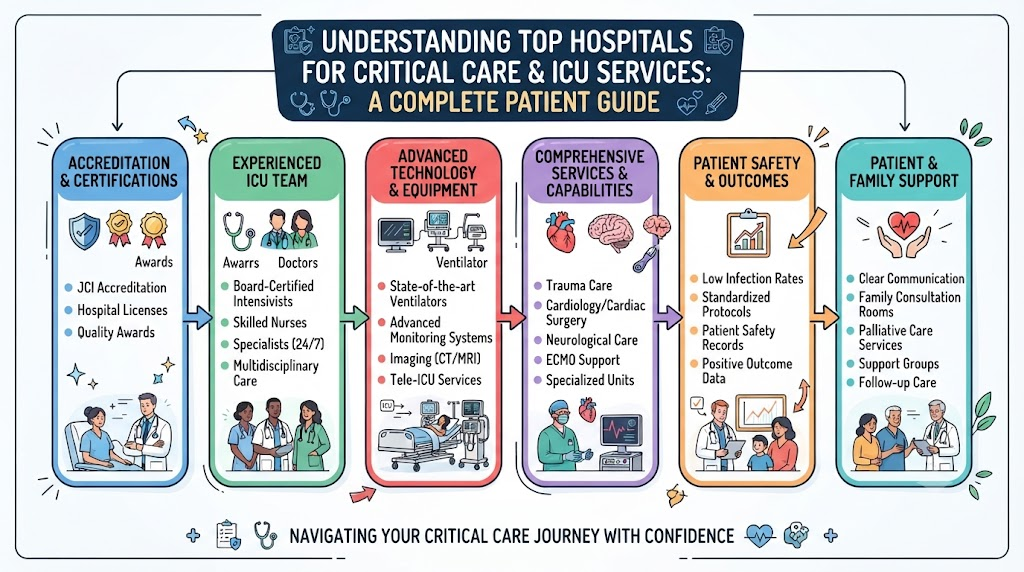
How to Choose the Right ICU Hospital
Selecting an appropriate healthcare facility during a medical crisis requires evaluating several core capabilities.
- Experienced Intensivists: Presence of board-certified critical care specialists on-site.
- Advanced Life-Support Equipment: Availability of modern ventilators, monitoring arrays, and ECMO capabilities.
- Specialized ICUs: Dedicated units for cardiac, neurological, surgical, and pediatric patients.
- Infection Prevention Measures: Rigorous protocols to minimize hospital-acquired infections.
- Emergency Response Capabilities: Rapid-response triage and stabilization systems.
- 24/7 Specialist Availability: Constant access to expert physicians across multiple disciplines.
- Family Communication Policies: Structured updates and transparent communication channels for loved ones.
- Rehabilitation Support: Integrated post-ICU recovery programs.
Hospital Selection Checklist
| Feature | Why It Matters |
| Board-Certified Intensivists | Specialized critical care expertise |
| Advanced ICU Equipment | Supports complex treatments |
| Dedicated Specialty ICUs | Comprehensive patient care |
| Infection Prevention Programs | Patient safety |
| 24/7 Emergency Services | Immediate medical response |
| Rehabilitation Services | Recovery planning |
What Families Can Expect During an ICU Stay
Navigating an intensive care admission can be daunting. Understanding the standard care pathway helps families prepare for what lies ahead.
- Initial Evaluation: Rapid assessment, stabilization, and diagnostic testing upon arrival.
- Continuous Monitoring: Hooking up continuous telemetry, blood pressure lines, and oxygen sensors.
- Daily Medical Reviews: Regular rounds conducted by intensivists and multidisciplinary specialists.
- Family Communication: Scheduled updates regarding prognosis, treatment plans, and daily progress.
- Infection Prevention Measures: Strict hand hygiene and protective protocols for visitors.
- Rehabilitation Planning: Assessing early movement and physical therapy requirements.
- Transition to General Ward: Step-down care once the patient’s condition stabilizes.
- Discharge Planning: Organizing post-hospital care, medications, and follow-up appointments.
Recovery After Critical Illness
The journey toward health does not end when a patient leaves the intensive care unit. Comprehensive recovery requires targeted post-discharge support.
- Physical Rehabilitation: Restoring muscle strength, mobility, and endurance through structured physiotherapy.
- Nutritional Support: Rebuilding body mass and addressing metabolic deficits.
- Mental Health Recovery: Managing anxiety, depression, and post-intensive care syndrome (PICS).
- Follow-up Appointments: Regular check-ins with primary care physicians and specialists.
- Medication Management: Ensuring correct dosing schedules and managing post-discharge prescriptions.
- Long-term Monitoring: Tracking organ function and chronic disease markers over time.
- Family Support: Providing emotional and educational resources for caregivers.
Possible Challenges During Critical Care
Managing severe illnesses involves navigating potential clinical complexities and emotional obstacles.
- Serious Underlying Illness: Severe baseline health conditions can complicate acute recovery.
- Infection Risks: Vulnerable patients face heightened risks of hospital-acquired infections.
- Long ICU Stays: Prolonged bed rest can lead to muscle wasting and physical deconditioning.
- Organ Complications: Secondary stress on kidneys, lungs, or cardiovascular systems.
- Need for Prolonged Rehabilitation: Extensive physical therapy may be required to regain independence.
- Emotional Stress for Patients and Families: Coping with uncertainty, fear, and lifestyle disruptions.
Recovery varies depending on the patient’s medical condition, age, complications, and response to treatment.
How MYHOSPITALNOW Helps Patients
Finding reliable medical guidance is essential when evaluating healthcare options. Platforms like MYHOSPITALNOW assist patients and families by offering:
- Hospital Discovery: Helping users locate nearby medical facilities and specialized centers.
- Critical Care Education: Providing clear, accessible information regarding ICU procedures and terminology.
- ICU Awareness: Raising understanding about the importance of specialized intensive care infrastructure.
- Hospital Comparison Resources: Offering structured insights to compare facility capabilities.
- Patient Guidance: Equipping families with the right questions to ask healthcare providers.
- Informed Healthcare Decisions: Supporting empowered choices during critical health situations.
Common Mistakes Families Make
- Delaying Emergency Medical Care: Waiting too long to seek professional help during acute symptom onset.
- Choosing Hospitals Based Only on Location: Overlooking crucial clinical specialties and ICU capabilities.
- Not Understanding ICU Services: Failing to ask questions about life-support technology and team expertise.
- Missing Follow-up Care: Neglecting post-discharge rehabilitation and specialist appointments.
- Overlooking Rehabilitation Needs: Underestimating the importance of physical therapy after critical illness.
Practical Solutions: Always prioritize clinical capability over proximity alone, engage actively with multidisciplinary care teams, and establish structured post-discharge follow-up plans.
Common Myths vs Facts
| Myth | Fact |
| Every ICU patient requires a ventilator | ICU treatments vary depending on the patient’s condition |
| ICU care is only for surgical patients | Many medical emergencies also require intensive care |
| Recovery ends after hospital discharge | Rehabilitation and follow-up are often essential |
| All ICUs offer identical services | ICU capabilities vary by hospital and specialty |
FAQs (15 Questions)
1. What is an Intensive Care Unit (ICU)?
An ICU is a specialized hospital department designed to provide constant monitoring and advanced life support for critically ill or injured patients.
2. Who needs ICU care?
Patients experiencing acute organ failure, severe trauma, major surgical recovery, or life-threatening infections require intensive care.
3. What conditions are commonly treated in ICUs?
Common conditions include sepsis, heart attacks, strokes, respiratory failure, severe burns, and multi-organ dysfunction.
4. What is the difference between ICU and a regular hospital ward?
ICUs feature higher staff-to-patient ratios, continuous electronic vital sign monitoring, and advanced life-support technologies not found in regular wards.
5. What specialists work in an ICU?
The team includes intensivists, critical care nurses, respiratory therapists, pharmacists, dietitians, and various medical specialists.
6. What equipment is commonly used in intensive care?
Standard equipment includes mechanical ventilators, infusion pumps, continuous cardiac monitors, and dialysis machines.
7. How long do patients stay in the ICU?
Length of stay varies widely based on the severity of the illness, ranging from a few days to several weeks.
8. Can family members visit ICU patients?
Yes, though visiting hours and guidelines are carefully regulated to ensure patient rest and infection control.
9. What happens after ICU discharge?
Patients typically transition to a step-down unit or general ward before being discharged home or to a rehabilitation facility.
10. How important is rehabilitation after critical illness?
Rehabilitation is vital for rebuilding muscle strength, regaining physical independence, and recovering from post-intensive care syndrome.
11. What should families ask when choosing an ICU hospital?
Families should inquire about intensivist availability, specialized ICU units, equipment standards, and infection prevention protocols.
12. What is ECMO?
Extracorporeal Membrane Oxygenation is an advanced life-support technology that temporarily pumps and oxygenates a patient’s blood outside the body.
13. How do hospitals prevent infections in ICUs?
Hospitals enforce strict hand hygiene, sterile procedures, isolation protocols, and continuous environmental cleaning.
14. How do I choose the right hospital for critical care?
Evaluate hospitals based on their clinical specialties, advanced technology availability, intensivist expertise, and emergency response capabilities.
15. How does MYHOSPITALNOW help patients find hospitals for critical care and ICU services?
MYHOSPITALNOW offers educational resources, hospital comparisons, and guidance to help patients and families navigate critical care options effectively.
Final Thoughts
Specialized critical care services serve as a cornerstone of modern medicine, offering expert intervention when health crises strike. The combination of experienced ICU teams, advanced life-support technology, and comprehensive multidisciplinary care ensures that patients receive the highest standard of medical attention during life-threatening situations. Choosing hospitals with robust intensive care capabilities significantly enhances patient safety and clinical outcomes. Furthermore, structured rehabilitation and long-term follow-up remain essential for complete recovery after critical illness.

Find Trusted Cardiac Hospitals
Compare heart hospitals by city and services — all in one place.
Explore Hospitals