Introduction
IVR (Interactive Voice Response) and Voice Bot Platforms are intelligent communication systems that allow businesses to automate voice interactions using menus, speech recognition, and AI-driven conversational bots. These platforms help organizations handle high call volumes, reduce agent workload, and improve customer experience by enabling self-service over phone calls. customer experience environments, IVR systems have evolved far beyond simple “press 1 for support” menus. Today’s voice bot platforms use natural language processing, AI speech recognition, sentiment analysis, and omnichannel integration to deliver human-like conversational experiences. Businesses use these tools to streamline support operations, automate routine queries, and improve call resolution speed.
Real-world use cases include:
- Automated customer support call handling
- Appointment scheduling and reminders
- Banking and account verification flows
- Order tracking and status updates
- Call routing and smart IVR menus
Evaluation Criteria for Buyers
- Speech recognition accuracy and NLP capabilities
- Ease of IVR flow design and management
- AI voice bot intelligence and adaptability
- Integration with CRM and contact center systems
- Call routing and automation efficiency
- Scalability for high call volumes
- Security and compliance controls
- Analytics and reporting capabilities
- Deployment flexibility (cloud/hybrid)
- Cost efficiency and licensing model
Best for: Enterprises, contact centers, banks, healthcare providers, eCommerce businesses, telecom companies, and customer support operations.
Not ideal for: Very small businesses with minimal inbound call volume or teams that rely only on chat/email support.
Key Trends in IVR & Voice Bot Platforms
- AI-powered conversational IVR is replacing traditional menu-based systems
- Natural language processing is improving voice understanding accuracy
- Voice bots are increasingly integrated with omnichannel CX platforms
- Hyper-automation is reducing human intervention in call flows
- Real-time sentiment analysis is improving customer experience routing
- Cloud-native IVR systems are replacing legacy on-premise PBX systems
- Multilingual voice bots are expanding global customer support capabilities
- Low-code/no-code IVR builders are increasing adoption among SMBs
- AI voice cloning and personalization are enhancing engagement
- Integration with CRM and data platforms is becoming essential
How We Selected These Tools (Methodology)
- Market adoption across enterprise and SMB segments
- AI voice and NLP capability strength
- IVR flow design flexibility and usability
- Reliability in high-volume call environments
- Integration ecosystem maturity (CRM, CCaaS, APIs)
- Security and compliance readiness
- Multichannel and omnichannel support
- Automation and AI capability depth
- Deployment flexibility and scalability
- Customer support and enterprise readiness
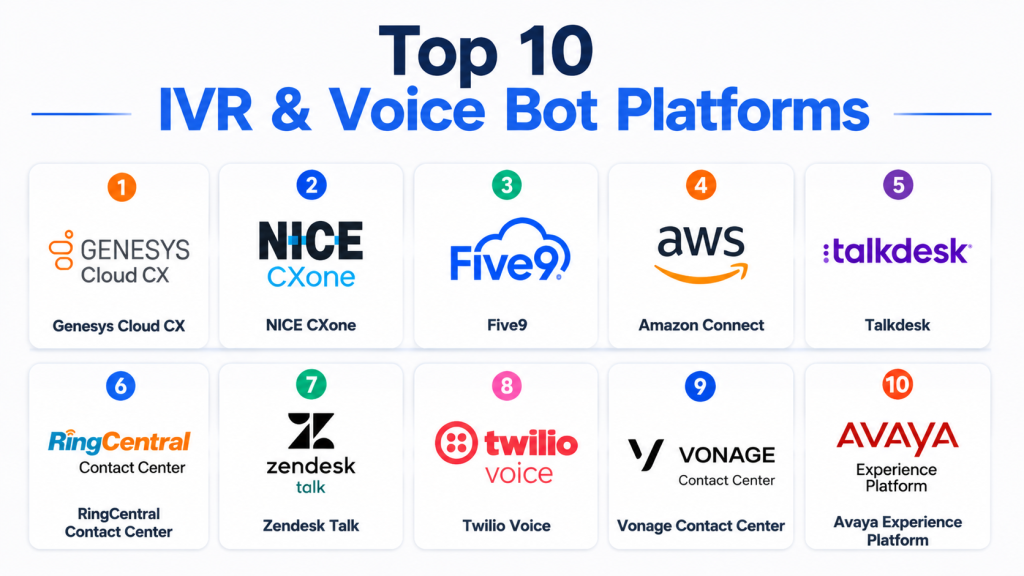
Top 10 IVR & Voice Bot Platforms
1 — Genesys Cloud CX
Short description: Enterprise-grade customer experience platform with advanced IVR, AI voice bots, and omnichannel automation capabilities.
Key Features
- AI-powered conversational IVR
- Omnichannel customer routing
- Natural language processing
- Smart call flow builder
- Real-time analytics
- Workforce engagement tools
- CRM integrations
Pros
- Strong enterprise scalability
- Advanced AI capabilities
- Mature CX ecosystem
Cons
- Complex implementation
- Premium pricing model
Platforms / Deployment
Cloud
Security & Compliance
SSO/SAML, MFA, encryption, audit logs, RBAC (others not publicly stated)
Integrations & Ecosystem
Supports deep integration with enterprise CX and CRM systems.
- Salesforce
- Microsoft Dynamics
- ServiceNow
- APIs
Support & Community
Strong global enterprise support and onboarding services.
2 — NICE CXone
Short description: AI-driven contact center platform offering intelligent IVR, voice automation, and workforce optimization tools.
Key Features
- AI conversational IVR
- Smart call routing
- Workforce optimization
- Speech analytics
- Omnichannel support
- Real-time dashboards
- Self-service automation
Pros
- Strong analytics capabilities
- Excellent AI-driven workflows
- Enterprise scalability
Cons
- Steep learning curve
- Higher complexity setup
Platforms / Deployment
Cloud
Security & Compliance
SSO/SAML, MFA, encryption, audit logs, RBAC (others not publicly stated)
Integrations & Ecosystem
Supports enterprise CRM and service integrations.
- Salesforce
- ServiceNow
- Microsoft Dynamics
- APIs
Support & Community
Enterprise onboarding and global implementation support.
3 — Five9
Short description: Cloud contact center platform with predictive dialing, AI IVR, and intelligent call routing capabilities.
Key Features
- Predictive IVR routing
- AI voice automation
- Omnichannel support
- Workforce optimization
- Real-time analytics
- CRM integrations
- Speech analytics
Pros
- Strong automation engine
- Reliable performance
- Scalable architecture
Cons
- Complex configuration
- Premium enterprise pricing
Platforms / Deployment
Cloud
Security & Compliance
SSO/SAML, MFA, encryption, audit logs (others not publicly stated)
Integrations & Ecosystem
Strong integration with enterprise systems.
- Salesforce
- Zendesk
- Microsoft Teams
- APIs
Support & Community
Enterprise-grade onboarding and support ecosystem.
4 — Amazon Connect
Short description: AWS-native contact center platform with flexible IVR design and AI-powered voice automation.
Key Features
- Cloud-native IVR builder
- AI voice bot integration
- AWS Lex integration
- Real-time call analytics
- Intelligent routing
- Pay-as-you-go pricing
- CRM integration support
Pros
- Highly scalable architecture
- Flexible customization
- Strong AWS ecosystem
Cons
- Requires technical expertise
- Setup complexity for beginners
Platforms / Deployment
Cloud
Security & Compliance
IAM, encryption, MFA, audit logs (others not publicly stated)
Integrations & Ecosystem
Deep AWS ecosystem integration.
- AWS Lex
- Lambda
- Salesforce
- Zendesk
Support & Community
Strong developer documentation and AWS support ecosystem.
5 — Talkdesk
Short description: AI-first contact center platform with advanced IVR automation and conversational voice bot capabilities.
Key Features
- AI IVR workflows
- Omnichannel support
- Voice bot automation
- Real-time analytics
- CRM integrations
- Workflow automation
- Industry-specific solutions
Pros
- Modern AI features
- Flexible deployment
- Strong UX design
Cons
- Premium pricing
- Requires onboarding time
Platforms / Deployment
Cloud
Security & Compliance
SSO/SAML, MFA, encryption, audit logs (others not publicly stated)
Integrations & Ecosystem
Supports enterprise CX integrations.
- Salesforce
- Zendesk
- ServiceNow
- Microsoft Teams
Support & Community
Strong enterprise onboarding and implementation support.
6 — RingCentral Contact Center
Short description: Unified communications platform with IVR automation and AI-driven customer routing.
Key Features
- Smart IVR workflows
- Omnichannel routing
- AI-powered automation
- CRM integration
- Workforce tools
- Real-time dashboards
- Call analytics
Pros
- Strong UCaaS ecosystem
- Reliable performance
- Good scalability
Cons
- Complex configuration
- Higher cost for advanced features
Platforms / Deployment
Cloud
Security & Compliance
SSO/SAML, MFA, encryption, audit logs (others not publicly stated)
Integrations & Ecosystem
Supports enterprise communication systems.
- Salesforce
- Microsoft 365
- Zendesk
- APIs
Support & Community
Strong enterprise support ecosystem.
7 — Zendesk Talk
Short description: Customer support platform with integrated IVR and voice automation for service teams.
Key Features
- IVR call routing
- Omnichannel support
- Ticketing integration
- Call recording
- Workflow automation
- CRM integration
- Analytics dashboards
Pros
- Easy to deploy
- Strong support workflow integration
- User-friendly interface
Cons
- Limited advanced AI capabilities
- Less suitable for complex IVR flows
Platforms / Deployment
Cloud
Security & Compliance
SSO, MFA, encryption, GDPR (others not publicly stated)
Integrations & Ecosystem
Strong integration with support tools.
- Salesforce
- Slack
- Shopify
- APIs
Support & Community
Extensive documentation and strong support ecosystem.
8 — Twilio Voice + IVR
Short description: Developer-first communications platform for building custom IVR and voice bot solutions.
Key Features
- Programmable IVR workflows
- Voice API integration
- AI speech recognition support
- Global call routing
- Real-time call control
- Custom bot building
- Scalable cloud infrastructure
Pros
- Highly flexible customization
- Strong developer ecosystem
- Global scalability
Cons
- Requires developer expertise
- No out-of-the-box UI system
Platforms / Deployment
Cloud
Security & Compliance
Encryption, MFA, IAM (others not publicly stated)
Integrations & Ecosystem
Developer-focused integration ecosystem.
- APIs
- CRM systems
- AI services
- Third-party bots
Support & Community
Strong developer documentation and community support.
9 — Vonage Contact Center
Short description: Cloud communication platform with IVR automation and voice bot capabilities for business communication.
Key Features
- IVR call routing
- Voice API automation
- Omnichannel communication
- CRM integration
- Call analytics
- Workflow automation
- AI enhancements
Pros
- Strong API flexibility
- Good omnichannel support
- Scalable infrastructure
Cons
- Interface complexity
- Advanced setup required
Platforms / Deployment
Cloud
Security & Compliance
SSO, MFA, encryption (others not publicly stated)
Integrations & Ecosystem
Supports enterprise communication integrations.
- Salesforce
- Microsoft Teams
- Zendesk
- APIs
Support & Community
Good enterprise support and developer ecosystem.
10 — Avaya Experience Platform
Short description: Enterprise communication platform offering IVR automation, AI voice bots, and contact center capabilities.
Key Features
- Intelligent IVR systems
- AI voice bots
- Omnichannel routing
- Workforce optimization
- Real-time analytics
- CRM integration
- Enterprise communication tools
Pros
- Strong enterprise reliability
- Mature communication infrastructure
- Scalable architecture
Cons
- Complex deployment
- Enterprise-focused pricing
Platforms / Deployment
Cloud / Hybrid
Security & Compliance
SSO/SAML, MFA, encryption, audit logs, RBAC (others not publicly stated)
Integrations & Ecosystem
Supports enterprise communication ecosystems.
- Salesforce
- Microsoft 365
- ServiceNow
- APIs
Support & Community
Global enterprise support and implementation services.
Comparison Table
| Tool Name | Best For | Platforms Supported | Deployment | Standout Feature | Public Rating |
|---|---|---|---|---|---|
| Genesys Cloud CX | Enterprise CX | Web, Mobile | Cloud | AI conversational IVR | N/A |
| NICE CXone | Workforce optimization | Web, Mobile | Cloud | AI analytics | N/A |
| Five9 | Contact centers | Web, Mobile | Cloud | Predictive IVR | N/A |
| Amazon Connect | Developers | Web | Cloud | AWS AI integration | N/A |
| Talkdesk | AI CX workflows | Web, Mobile | Cloud | Voice automation | N/A |
| RingCentral | UCaaS users | Web, Mobile | Cloud | Unified communication | N/A |
| Zendesk Talk | Support teams | Web, Mobile | Cloud | Ticketing integration | N/A |
| Twilio | Developers | Web | Cloud | Programmable IVR | N/A |
| Vonage | API communication | Web | Cloud | Voice APIs | N/A |
| Avaya Experience Platform | Enterprises | Web, Mobile | Cloud/Hybrid | Enterprise IVR system | N/A |
Evaluation & Scoring of IVR & Voice Bot Platforms
| Tool Name | Core (25%) | Ease (15%) | Integrations (15%) | Security (10%) | Performance (10%) | Support (10%) | Value (15%) | Weighted Total |
|---|---|---|---|---|---|---|---|---|
| Genesys Cloud CX | 9.5 | 8 | 9 | 9 | 9 | 9 | 7.5 | 8.8 |
| NICE CXone | 9.5 | 7.5 | 8.5 | 9 | 9 | 8.5 | 7.5 | 8.6 |
| Five9 | 9 | 8 | 8.5 | 8.5 | 9 | 8.5 | 8 | 8.5 |
| Amazon Connect | 8.5 | 7 | 9 | 8.5 | 9 | 8 | 8.5 | 8.3 |
| Talkdesk | 9 | 8 | 8.5 | 8.5 | 8.5 | 8 | 8 | 8.4 |
| RingCentral | 8.5 | 8 | 8.5 | 8.5 | 8.5 | 8.5 | 8 | 8.4 |
| Zendesk Talk | 8 | 8.5 | 8 | 8 | 8 | 8.5 | 8.5 | 8.2 |
| Twilio | 9 | 7 | 9 | 8.5 | 9 | 8 | 8 | 8.4 |
| Vonage | 8.5 | 7.5 | 8.5 | 8 | 8.5 | 8 | 8 | 8.2 |
| Avaya Platform | 9 | 7.5 | 8 | 9 | 9 | 8.5 | 7 | 8.4 |
Scoring is comparative and based on enterprise readiness, AI capability, and ecosystem strength. Higher scores generally reflect stronger scalability and automation, while mid-range scores reflect ease of use or developer flexibility.
Which IVR & Voice Bot Platform Is Right for You?
Solo / Freelancer
Twilio and Zendesk Talk are suitable due to flexibility and simple deployment options.
SMB
Zendesk Talk, Talkdesk, and RingCentral provide balanced IVR capabilities with ease of use.
Mid-Market
Five9 and Vonage are strong choices for scaling voice automation and customer routing.
Enterprise
Genesys Cloud CX, NICE CXone, and Avaya Experience Platform are ideal for complex AI-driven IVR environments.
Budget vs Premium
Budget-friendly options include Zendesk Talk and Twilio (usage-based), while enterprise solutions include Genesys and NICE CXone.
Feature Depth vs Ease of Use
Genesys and NICE CXone offer deep AI capabilities, while Zendesk Talk offers simplicity.
Integrations & Scalability
Twilio, Amazon Connect, and Genesys provide the strongest integration ecosystems.
Security & Compliance Needs
Highly regulated industries should prioritize NICE CXone, Genesys Cloud CX, or Avaya Experience Platform.
Frequently Asked Questions (FAQs)
1. What is an IVR & Voice Bot Platform?
IVR and Voice Bot platforms are systems that automate phone interactions using menus, voice commands, and AI-driven conversations. They help customers get answers without waiting for a live agent. Modern systems use AI and NLP for smarter responses. They are widely used in customer support and contact centers.
2. How does an IVR system work?
An IVR system interacts with callers through voice or keypad inputs. It routes calls based on user selections or spoken commands. Advanced systems use AI to understand natural language. This reduces agent workload and improves response time.
3. What is the difference between IVR and a voice bot?
IVR is rule-based and uses predefined menu options like “press 1 or 2.” Voice bots use AI to understand natural language and respond conversationally. Voice bots feel more human-like and flexible. IVR is simpler but less intelligent compared to voice bots.
4. Why do businesses use IVR systems?
Businesses use IVR systems to handle large call volumes efficiently. It reduces wait time and improves customer service. It also helps route calls to the right department automatically. This improves productivity and reduces operational cost.
5. Are IVR systems expensive to implement?
Costs depend on features, scale, and provider. Basic IVR systems are affordable for SMBs. Advanced AI-powered solutions can be more expensive. Cloud-based models usually reduce upfront infrastructure costs.
6. Can IVR systems integrate with CRM tools?
Yes, most modern IVR platforms integrate with CRM systems like Salesforce and HubSpot. This helps agents access customer data during calls. It improves personalization and faster issue resolution. Integration is a key feature in enterprise systems.
7. What industries benefit most from IVR systems?
Industries like banking, telecom, healthcare, eCommerce, and travel benefit the most. These sectors handle high customer call volumes. IVR helps automate routine queries and support tasks. It improves efficiency and customer experience.
8. Are IVR systems still relevant ?
Yes, IVR systems are still very relevant but have evolved significantly. They now include AI, voice bots, and omnichannel support. Traditional menu-based IVRs are being replaced with smart conversational systems. They are more powerful and customer-friendly today.
9. What are the benefits of AI-powered voice bots?
AI voice bots provide human-like conversations and faster resolutions. They reduce dependency on human agents for simple queries. They also work 24/7 without interruption. This improves customer satisfaction and reduces operational costs.
10. What should I consider before choosing an IVR platform?
You should evaluate AI capabilities, scalability, integrations, and ease of use. Security and compliance are also important factors. Cost and deployment model should match your business size. Always test real call flows before final selection.
Conclusion
IVR & Voice Bot Platforms are transforming customer communication by replacing traditional menu-based systems with intelligent, AI-driven conversational experiences. Platforms like Genesys Cloud CX, NICE CXone, and Five9 lead the enterprise segment with advanced automation and scalability, while Twilio and Zendesk Talk provide flexible and accessible solutions for developers and SMBs. The best platform depends on your business size, integration needs, AI requirements, and customer experience goals. Organizations should shortlist multiple tools, test IVR flows in real scenarios, validate integrations, and evaluate scalability before final deployment to ensure long-term success.

Find Trusted Cardiac Hospitals
Compare heart hospitals by city and services — all in one place.
Explore Hospitals
It helped me understand how IVR and voice bot platforms improve customer support and automate call handling. I’d like to explore which platform fits best for smart business communication.