Introduction
Remote Desktop Tools allow users to securely access, control, and manage computers or servers from another location through the internet or private networks. These platforms have become essential for modern IT operations, hybrid work environments, technical support teams, managed service providers, developers, and enterprises managing distributed infrastructure. As organizations continue adopting remote and hybrid work models, Remote Desktop Tools are no longer limited to simple screen-sharing functionality. Modern solutions now include unattended access, remote troubleshooting, file transfer, session recording, endpoint monitoring, multi-user collaboration, mobile device access, and enterprise-grade security controls. Businesses increasingly rely on these tools to improve operational continuity, reduce downtime, simplify IT support, and securely manage systems across global teams.
Real-world use cases include:
- Remote IT troubleshooting and help desk operations
- Hybrid employee workstation access
- Secure server administration and DevOps workflows
- Managed service provider client support
- Vendor and third-party remote maintenance
When Evaluating Remote Desktop Tools, buyers should assess:
- Security and encryption standards
- Ease of deployment and onboarding
- Cross-platform support
- Session performance and reliability
- Unattended access capabilities
- Multi-user collaboration features
- Identity and access management integration
- Compliance and audit logging
- Scalability for enterprise operations
- Pricing flexibility and licensing structure
Best for: IT administrators, MSPs, enterprise support teams, hybrid workforce organizations, developers, and businesses requiring secure remote connectivity.
Not ideal for: Organizations that only require lightweight communication or basic cloud file sharing without full remote desktop control functionality.
Key Trends in Remote Desktop Tools
- Zero-trust remote access security is becoming a standard enterprise requirement.
- AI-assisted diagnostics and troubleshooting are gradually being introduced in advanced remote support platforms.
- Browser-based remote access is reducing deployment complexity.
- Cloud-native remote desktop infrastructure adoption continues growing rapidly.
- MFA and SSO integrations are now expected in enterprise deployments.
- Session recording and compliance logging are increasingly required in regulated industries.
- Mobile-first remote support capabilities are becoming more important for distributed teams.
- Remote monitoring and management convergence is blending RMM and remote access workflows.
- GPU acceleration and low-latency streaming improvements are helping creative and technical workloads.
- Third-party vendor access governance is becoming a major enterprise security priority.
How We Selected These Tools
The tools in this list were selected using practical evaluation criteria focused on operational performance, security, usability, and enterprise readiness.
Our methodology included:
- Market adoption and brand recognition
- Security and encryption capabilities
- Ease of onboarding and deployment
- Cross-platform compatibility
- Session stability and performance
- Enterprise scalability
- Integration ecosystem maturity
- Automation and administrative capabilities
- Vendor support quality
- Suitability across SMB, mid-market, and enterprise environments
The final selection balances enterprise-grade platforms, SMB-friendly solutions, open-source tools, and performance-focused remote desktop providers.
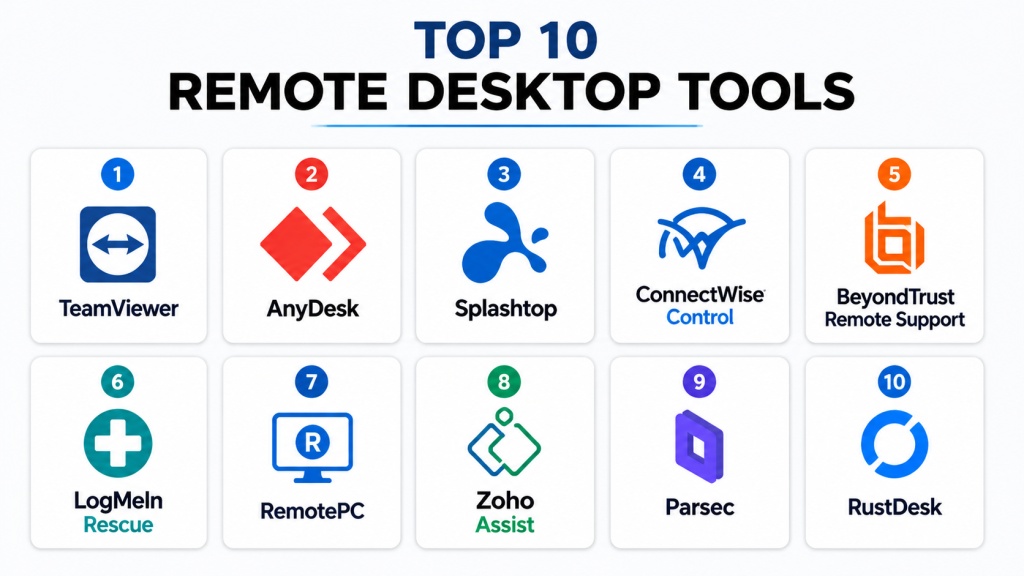
Top 10 Remote Desktop Tools
1- TeamViewer
Short Description:
TeamViewer is one of the most widely used remote desktop platforms globally, designed for enterprise remote support, hybrid workforce operations, and cross-device management. It is trusted by enterprises, MSPs, and support organizations because of its scalability, reliability, and broad platform support.
Key Features
- Remote desktop control
- Unattended access
- Multi-platform compatibility
- Session recording
- File transfer and remote printing
- Mobile device support
- Multi-user collaboration
Pros
- Extremely easy deployment
- Strong enterprise scalability
- Broad device compatibility
Cons
- Premium licensing costs
- Licensing rules can be complex
- Higher resource usage during sessions
Platforms / Deployment
Windows / macOS / Linux / iOS / Android / Web / Cloud
Security & Compliance
Supports MFA, SSO, encryption, RBAC, audit logging, and enterprise-grade access management.
Integrations & Ecosystem
TeamViewer integrates with enterprise IT operations and remote support environments.
- Microsoft Teams integration
- ServiceNow support
- Salesforce integration
- API access
- Endpoint monitoring integrations
Support & Community
Strong enterprise support ecosystem with extensive documentation and global community adoption.
2- AnyDesk
Short Description:
AnyDesk is a lightweight remote desktop platform focused on high performance and low-latency connectivity. It is widely used by SMBs, technical support teams, and remote workers requiring fast and responsive remote access.
Key Features
- Lightweight architecture
- Low-latency remote access
- Unattended access
- Session recording
- Mobile device support
- File transfer capabilities
- Low-bandwidth optimization
Pros
- Excellent performance efficiency
- Fast connection responsiveness
- Easy deployment process
Cons
- Limited enterprise governance
- Fewer advanced integrations
- Reporting capabilities vary by plan
Platforms / Deployment
Windows / macOS / Linux / Android / iOS / Cloud
Security & Compliance
Supports TLS encryption, MFA, secure authentication, and encrypted sessions.
Integrations & Ecosystem
AnyDesk focuses on streamlined remote support and operational workflows.
- API support
- Cross-platform workflows
- Mobile integrations
- Lightweight deployment compatibility
Support & Community
Growing enterprise support ecosystem with strong SMB adoption and user-friendly onboarding.
3- Splashtop
Short Description:
Splashtop is a business-focused remote desktop solution designed for hybrid work, education, and IT support environments. It provides strong performance, affordable pricing, and reliable remote workstation access.
Key Features
- Remote desktop access
- Multi-monitor support
- Wake-on-LAN
- File transfer support
- Session recording
- Endpoint management
- High-definition streaming
Pros
- Strong pricing value
- Reliable remote performance
- Easy setup process
Cons
- Fewer enterprise governance tools
- Some integrations require premium plans
- Limited deep automation
Platforms / Deployment
Windows / macOS / Linux / Android / iOS / Cloud
Security & Compliance
Supports MFA, encryption, secure authentication, and endpoint access management.
Integrations & Ecosystem
Splashtop integrates with support and endpoint management workflows.
- RMM integrations
- PSA compatibility
- Microsoft ecosystem support
- API access
- Endpoint management workflows
Support & Community
Strong SMB and educational support ecosystem with accessible documentation resources.
4- ConnectWise Control
Short Description:
ConnectWise Control is a remote support and unattended access platform built for MSPs, IT service providers, and enterprise administration teams. It emphasizes deep customization and scalable remote management.
Key Features
- Unattended remote access
- Multi-session management
- Session auditing
- Remote command execution
- File transfer
- Custom branding
- Role-based permissions
Pros
- Excellent MSP functionality
- Strong customization flexibility
- Scalable administrative controls
Cons
- Steeper learning curve
- Interface can feel technical
- Advanced configuration required
Platforms / Deployment
Windows / macOS / Linux / Web / Cloud / Self-hosted
Security & Compliance
Supports MFA, SSO, RBAC, audit logging, and encrypted session management.
Integrations & Ecosystem
ConnectWise Control integrates deeply into MSP and enterprise support ecosystems.
- ConnectWise integrations
- PSA systems
- Ticketing platforms
- Automation workflows
- API support
Support & Community
Strong MSP-focused documentation and technical support community.
5- BeyondTrust Remote Support
Short Description:
BeyondTrust Remote Support is an enterprise-grade remote access platform focused on privileged access management, compliance, and secure administrative workflows. It is commonly used in highly regulated enterprise environments.
Key Features
- Privileged remote access
- Session recording
- Vendor access management
- Compliance reporting
- Granular permissions
- Secure credential handling
- Enterprise policy enforcement
Pros
- Excellent enterprise security
- Strong compliance support
- Advanced access governance
Cons
- Premium pricing structure
- Complex implementation
- More advanced than SMBs may require
Platforms / Deployment
Windows / macOS / Linux / Web / Cloud / Hybrid
Security & Compliance
Supports MFA, SSO, RBAC, audit logging, encryption, and privileged access governance.
Integrations & Ecosystem
BeyondTrust integrates with enterprise security and identity management infrastructure.
- SIEM integrations
- PAM workflows
- Enterprise APIs
- Active Directory support
- Security orchestration tools
Support & Community
Enterprise-focused support organization with implementation and compliance guidance.
6- LogMeIn Rescue
Short Description:
LogMeIn Rescue is a remote support platform designed for enterprise service desks, customer support teams, and IT troubleshooting operations requiring scalable technician collaboration.
Key Features
- Remote support sessions
- Technician collaboration
- Mobile device support
- Remote diagnostics
- Session recording
- File transfer
- Multi-platform connectivity
Pros
- Strong enterprise support workflows
- Reliable diagnostics tools
- Good technician collaboration
Cons
- Higher pricing
- Interface modernization needed
- Advanced capabilities require premium plans
Platforms / Deployment
Windows / macOS / iOS / Android / Web / Cloud
Security & Compliance
Supports encryption, secure authentication, access management, and audit logging.
Integrations & Ecosystem
LogMeIn Rescue integrates into enterprise support operations.
- CRM integrations
- Help desk systems
- API access
- Mobile support workflows
Support & Community
Enterprise-grade onboarding resources and operational documentation.
7- RemotePC
Short Description:
RemotePC is a cost-effective remote desktop platform built for SMBs, hybrid workforce environments, and distributed teams requiring reliable remote connectivity with straightforward deployment.
Key Features
- Always-on remote access
- Remote printing
- Session recording
- File transfer
- Web-based remote access
- Mobile support
- Multi-monitor compatibility
Pros
- Affordable pricing
- Simple deployment
- Good hybrid work support
Cons
- Limited enterprise governance
- Basic reporting features
- Less advanced automation
Platforms / Deployment
Windows / macOS / Linux / iOS / Android / Web / Cloud
Security & Compliance
Supports encrypted remote sessions, MFA, and secure authentication.
Integrations & Ecosystem
RemotePC focuses on lightweight business continuity and productivity workflows.
- Mobile device access
- Browser-based connectivity
- File sharing workflows
- Collaboration support
Support & Community
Good SMB-focused onboarding and customer support resources.
8- Zoho Assist
Short Description:
Zoho Assist is a cloud-based remote support and unattended access platform designed for SMBs and organizations already using the Zoho ecosystem. It emphasizes simplicity and browser-based connectivity.
Key Features
- Browser-based remote sessions
- Unattended access
- Remote reboot
- Multi-monitor support
- File transfer
- Session scheduling
- Technician collaboration
Pros
- Strong value for SMBs
- Easy cloud deployment
- Good Zoho ecosystem integration
Cons
- Limited advanced governance
- Enterprise workflows may require alternatives
- Fewer enterprise automation tools
Platforms / Deployment
Windows / macOS / Linux / iOS / Android / Web / Cloud
Security & Compliance
Supports MFA, encryption, secure browser sessions, and access controls.
Integrations & Ecosystem
Zoho Assist integrates well with Zoho business applications and support operations.
- Zoho Desk
- Zoho CRM
- API support
- Help desk workflows
Support & Community
Strong onboarding resources with cloud-focused documentation and SMB support.
9- Parsec
Short Description:
Parsec is a high-performance remote desktop platform optimized for low-latency streaming and graphics-intensive workloads. It is popular among creators, developers, and remote collaboration teams.
Key Features
- Ultra-low latency streaming
- GPU acceleration
- Multi-user collaboration
- Cross-platform support
- High-frame-rate sessions
- Secure peer connections
- Cloud workstation compatibility
Pros
- Excellent graphics performance
- Very low latency
- Strong collaboration capabilities
Cons
- Limited enterprise governance
- Fewer compliance-focused features
- Less suitable for traditional IT support
Platforms / Deployment
Windows / macOS / Linux / Android / Cloud
Security & Compliance
Supports encrypted sessions and secure authentication workflows.
Integrations & Ecosystem
Parsec focuses on creative and performance-oriented remote workflows.
- GPU workstation support
- Creative collaboration workflows
- Cloud infrastructure compatibility
- Remote production environments
Support & Community
Strong creator and developer community with growing documentation resources.
10- RustDesk
Short Description:
RustDesk is an open-source remote desktop platform focused on privacy, self-hosting flexibility, and cost-effective remote management. It is gaining popularity among technical teams and privacy-focused organizations.
Key Features
- Open-source deployment
- Self-hosted infrastructure
- Cross-platform compatibility
- Unattended access
- File transfer
- Encryption support
- Lightweight deployment
Pros
- Strong privacy control
- Open-source transparency
- Cost-effective deployment
Cons
- Smaller ecosystem
- Enterprise support maturity varies
- Limited advanced governance
Platforms / Deployment
Windows / macOS / Linux / Android / iOS / Self-hosted
Security & Compliance
Supports encrypted sessions and self-hosted operational control. Broader compliance certifications are not publicly stated.
Integrations & Ecosystem
RustDesk focuses on infrastructure-controlled and privacy-focused deployments.
- Self-hosted infrastructure
- Open-source customization
- Cross-platform support
- Lightweight operational workflows
Support & Community
Growing open-source community with active developer engagement.
Comparison Table
| Tool Name | Best For | Platform(s) Supported | Deployment | Standout Feature | Public Rating |
|---|---|---|---|---|---|
| TeamViewer | Enterprise remote support | Windows, macOS, Linux, Mobile | Cloud | Global enterprise adoption | N/A |
| AnyDesk | Fast lightweight access | Windows, macOS, Linux, Mobile | Cloud | Low-latency connectivity | N/A |
| Splashtop | SMB hybrid work | Windows, macOS, Linux, Mobile | Cloud | Strong value pricing | N/A |
| ConnectWise Control | MSP operations | Windows, macOS, Linux, Web | Hybrid | Deep customization | N/A |
| BeyondTrust Remote Support | Enterprise security | Windows, macOS, Linux, Web | Hybrid | Privileged access management | N/A |
| LogMeIn Rescue | Enterprise support teams | Windows, macOS, Mobile | Cloud | Technician collaboration | N/A |
| RemotePC | SMB remote workforce | Windows, macOS, Linux, Mobile | Cloud | Affordable deployment | N/A |
| Zoho Assist | Zoho ecosystem users | Windows, macOS, Linux, Mobile | Cloud | Browser-based support | N/A |
| Parsec | Creative remote workloads | Windows, macOS, Linux | Cloud | GPU acceleration | N/A |
| RustDesk | Open-source deployments | Windows, macOS, Linux, Mobile | Self-hosted | Self-hosting flexibility | N/A |
Evaluation & Scoring of Remote Desktop Tools
| Tool Name | Core 25% | Ease 15% | Integrations 15% | Security 10% | Performance 10% | Support 10% | Value 15% | Weighted Total |
|---|---|---|---|---|---|---|---|---|
| TeamViewer | 9 | 9 | 8 | 9 | 8 | 9 | 7 | 8.5 |
| AnyDesk | 8 | 9 | 7 | 8 | 9 | 7 | 9 | 8.2 |
| Splashtop | 8 | 8 | 7 | 8 | 8 | 8 | 9 | 8.1 |
| ConnectWise Control | 9 | 7 | 9 | 9 | 8 | 8 | 7 | 8.2 |
| BeyondTrust Remote Support | 10 | 7 | 9 | 10 | 9 | 9 | 6 | 8.8 |
| LogMeIn Rescue | 8 | 8 | 8 | 8 | 8 | 8 | 6 | 7.8 |
| RemotePC | 7 | 9 | 6 | 7 | 7 | 7 | 9 | 7.6 |
| Zoho Assist | 7 | 8 | 8 | 7 | 7 | 8 | 9 | 7.8 |
| Parsec | 8 | 8 | 6 | 7 | 10 | 7 | 8 | 7.9 |
| RustDesk | 7 | 7 | 6 | 8 | 7 | 6 | 10 | 7.4 |
These scores are comparative rather than absolute measurements. Enterprise organizations often prioritize governance, auditing, and security, while SMBs typically focus on usability, affordability, and deployment simplicity. Technical teams may prioritize performance, scripting flexibility, and infrastructure control over beginner-friendly interfaces. Buyers should evaluate the scoring model based on their operational requirements and long-term scalability needs.
Which Remote Desktop Tool Is Right for You?
Solo / Freelancer
Freelancers and independent professionals often benefit most from AnyDesk, RemotePC, and RustDesk because they provide affordable pricing, simple deployment, and reliable remote connectivity.
SMB
SMBs typically prefer Splashtop, Zoho Assist, and RemotePC due to their balance of usability, pricing, and remote workforce support capabilities.
Mid-Market
Mid-sized organizations requiring better governance and operational visibility should evaluate TeamViewer and ConnectWise Control for their scalability and administrative capabilities.
Enterprise
Large enterprises often prioritize BeyondTrust Remote Support and TeamViewer because of their advanced security, compliance management, privileged access governance, and enterprise integration ecosystems.
Budget vs Premium
RustDesk and AnyDesk provide strong value-focused deployments, while enterprise-grade platforms justify higher costs through governance, compliance, advanced administration, and centralized visibility.
Feature Depth vs Ease of Use
AnyDesk and Splashtop focus heavily on simplicity and fast onboarding. BeyondTrust and ConnectWise Control provide deeper enterprise functionality but require more configuration and administrative expertise.
Integrations & Scalability
Organizations with large IT operations should prioritize tools offering APIs, SIEM integration, ticketing connectivity, identity management support, and workflow orchestration.
Security & Compliance Needs
Highly regulated industries should prioritize MFA, SSO, RBAC, session recording, audit logging, vendor access governance, and privileged access controls.
Frequently Asked Questions FAQs
1. What are Remote Desktop Tools used for?
Remote Desktop Tools allow users to securely access and control computers or servers from another location. They are widely used for IT support, remote work, troubleshooting, and infrastructure management.
2. Are Remote Desktop Tools secure for enterprise use?
Most enterprise-grade platforms support encryption, MFA, SSO, RBAC, audit logging, and secure authentication to protect remote sessions and sensitive operational workflows.
3. Which Remote Desktop Tool is best for enterprises?
BeyondTrust Remote Support and TeamViewer are commonly selected by enterprises because of their governance, security controls, scalability, and enterprise support ecosystems.
4. Are open-source Remote Desktop Tools reliable?
Yes. Open-source platforms such as RustDesk are increasingly popular among organizations prioritizing self-hosting, privacy, and infrastructure control.
5. What features should businesses prioritize when choosing a Remote Desktop Tool?
Organizations should evaluate security, performance, unattended access, session stability, integrations, scalability, administrative visibility, and pricing flexibility.
6. Can Remote Desktop platforms support mobile devices?
Yes. Most leading remote desktop platforms support Android and iOS devices for mobile administration and remote support workflows.
7. Which Remote Desktop Tool is best for MSPs?
ConnectWise Control is especially popular among MSPs because of its customization flexibility, multi-session management, and operational integration capabilities.
8. Is cloud deployment better than self-hosted deployment?
Cloud deployment simplifies scalability and infrastructure management, while self-hosted deployment offers greater control and customization flexibility.
9. Can Remote Desktop platforms integrate with ITSM and ticketing systems?
Yes. Many enterprise platforms integrate with ticketing systems, CRMs, SIEM tools, PSA solutions, and identity management platforms.
10. When should businesses move to enterprise-grade Remote Desktop platforms?
Organizations should upgrade when they require centralized governance, compliance auditing, vendor access management, advanced security controls, and large-scale operational management.
Conclusion
Remote Desktop Tools have become foundational infrastructure for hybrid work, IT operations, enterprise administration, and distributed support environments. While lightweight platforms such as AnyDesk, RemotePC, and RustDesk provide excellent flexibility and value for SMBs and technical teams, enterprise organizations increasingly require advanced governance, privileged access management, compliance auditing, and centralized operational visibility offered by platforms such as BeyondTrust Remote Support and TeamViewer. The best solution ultimately depends on operational scale, security priorities, infrastructure complexity, and integration requirements. Some organizations prioritize affordability and simplicity, while others require enterprise-grade administration and compliance management. Before making a final decision, businesses should shortlist several tools, test them in real-world workflows, validate security requirements, confirm integration compatibility, and evaluate long-term scalability for future operational growth.

Find Trusted Cardiac Hospitals
Compare heart hospitals by city and services — all in one place.
Explore Hospitals
It helped me understand how remote desktop tools improve access, support, and productivity. I’d like to explore which tool fits best for secure remote work.