Introduction
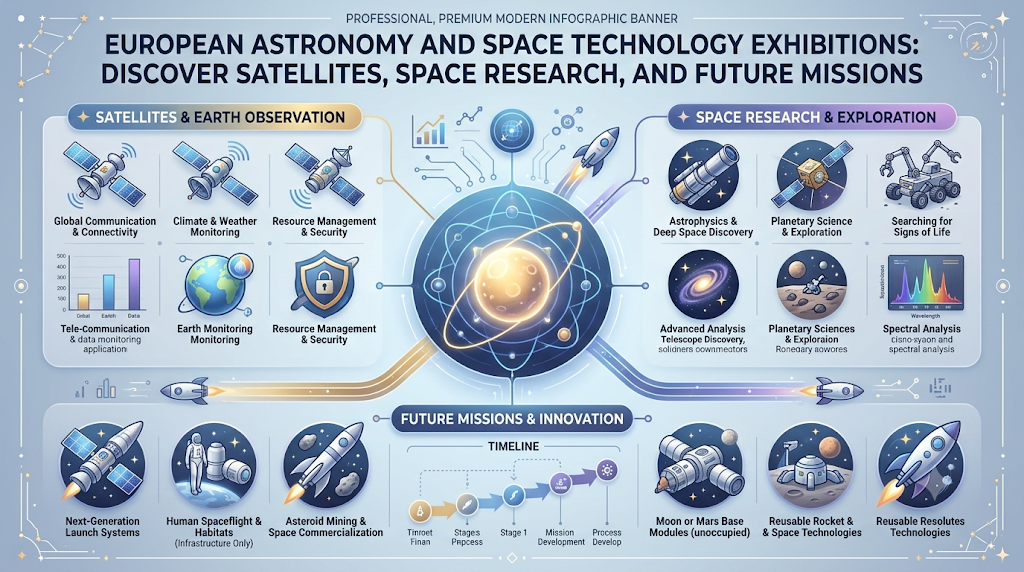
Space technology is changing how people understand Earth and the wider universe. European astronomy and space technology exhibitions make these developments easier to explore. They bring together researchers, engineers, educators, students, technology companies, and curious visitors. These events may feature satellite models, telescope demonstrations, space mission displays, and discussions about future discoveries. Visitors can learn how space research supports communication, navigation, weather forecasting, and scientific study. People searching for Upcoming Events in Europe may discover exhibitions and educational programmes that make complex subjects easier to understand. MyEventsNow helps visitors explore event opportunities across European destinations. Whether you enjoy astronomy or want to learn about modern technology, these exhibitions offer an interesting way to explore the world of space science.
What Are European Space Technology Exhibitions?
Space technology exhibitions are organised gatherings that present developments in astronomy, satellites, spacecraft, and related research. They may take place in science centres, museums, exhibition halls, universities, and technology venues.
Some events focus on scientific education. Others bring together engineers, research organisations, suppliers, and industry professionals. Visitors may explore displays, attend presentations, watch demonstrations, and speak with specialists.
Common exhibition themes include:
- Satellite communication and navigation.
- Spacecraft design and engineering.
- Earth observation technology.
- Astronomy instruments and telescopes.
- Space exploration research.
- Robotics and automated systems.
People exploring Upcoming Events in Europe can look for exhibitions based on their interests and experience. An Event Ticketing Platform Europe can help organisers share admission details and visitor information.
Satellite Technology and Its Everyday Uses
Satellites play an important role in modern life. They support communication, navigation, weather monitoring, environmental research, and many other activities.
Satellite exhibitions explain how these systems work and why their design matters. Visitors may see models of communication satellites, navigation equipment, and Earth observation systems.
Some displays explain how satellites collect information about forests, oceans, clouds, and changing landscapes. Others focus on how signals help people understand location and movement.
Educational demonstrations can make technical subjects easier to follow. A simple model may show how a satellite moves around Earth. Interactive displays may explain how ground stations communicate with spacecraft.
People interested in Events in Berlin may explore technology exhibitions and public science activities when available. Visitors can check local event programmes for satellite-related displays and demonstrations.
Astronomy Exhibitions and Telescope Demonstrations
Astronomy exhibitions introduce visitors to stars, planets, galaxies, and other objects in space. They often combine scientific information with images, models, videos, and interactive displays.
Some events include telescope demonstrations. Visitors can learn how telescopes collect light and why different instruments are used for different observations.
Workshops may explain basic sky observation, star maps, and the movement of planets. Some programmes also teach visitors how to identify major constellations.
Astronomy exhibitions can welcome families, students, hobbyists, and beginners. Organisers should clearly explain whether an activity requires previous knowledge or special equipment.
Visitors searching for Upcoming Events in Europe may find astronomy exhibitions in museums, science centres, and educational venues. MyEventsNow.eu can help people explore event information while planning their activities.
Spacecraft Engineering and Mission Displays
Spacecraft are designed to operate in difficult environments. Their systems must support communication, power, navigation, temperature control, and scientific instruments.
Space technology exhibitions can explain these engineering challenges through models and demonstrations. Visitors may learn about spacecraft structures, solar panels, onboard computers, and instruments used for research.
Some events display mission models or explain how spacecraft are prepared before launch. Others focus on the stages of a mission, from planning and testing to communication and data collection.
These displays help visitors understand that space missions involve many different teams. Engineers, scientists, software specialists, and mission operators all contribute to the process.
People who enjoy Business Conferences in Europe may also be interested in professional technology exhibitions. These gatherings can provide opportunities to understand how research and engineering projects are developed.
Earth Observation and Environmental Research
Space technology is useful for studying changes on Earth. Satellites can collect images and measurements that help researchers understand weather patterns, land use, forests, oceans, and environmental conditions.
Earth observation exhibitions show how this information is collected and used. Visitors may compare satellite images of the same location over different periods.
Some displays explain how researchers monitor coastal changes, vegetation, ice coverage, and urban development. Others show how satellite information supports disaster monitoring and environmental planning.
These exhibitions connect space research with everyday concerns. They help visitors understand why information from above Earth can support decisions on the ground.
An educational session may also explain the limits of satellite data. Images require careful interpretation, and different instruments provide different types of information.
Robotics and Automation in Space Research
Robotics helps scientists and engineers carry out tasks in places that are difficult for humans to reach. Space technology exhibitions may feature robotic arms, exploration vehicles, automated instruments, and sample collection models.
Visitors can learn how robots are controlled and why sensors are important. Some demonstrations allow people to operate simple robotic systems through guided activities.
Space robotics also introduces important engineering ideas. Machines must work reliably, respond to instructions, and handle unexpected conditions.
Educational workshops may connect robotics with programming, mechanical design, and problem-solving. These sessions can be useful for students interested in science and engineering.
People exploring Events in Paris may find technology exhibitions, educational workshops, and innovation programmes that include robotics. The available activities depend on the local event schedule.
Space Technology Events in European Cities
European cities host science exhibitions, research meetings, educational events, and technology gatherings. Their programmes may include astronomy, engineering, satellite systems, and space exploration.
Events in Berlin
People searching for Events in Berlin may discover science exhibitions, technology presentations, astronomy activities, and educational workshops. Check the event programme for specific space-related sessions, venue details, and visitor requirements.
Events in Paris
Visitors exploring Events in Paris may find science exhibitions, engineering discussions, educational displays, and technology presentations. Some events may focus on satellite applications, astronomy, or the future of space research.
Other European destinations also organise space-related activities. Visitors should compare dates, themes, and admission details before selecting an event.
MyEventsNow.eu can help people explore different event opportunities across European destinations.
Educational Programmes for Students
Space technology exhibitions can support classroom learning by making scientific concepts more visible. Students may see models, watch demonstrations, and ask questions about real research activities.
Educational programmes may include:
- Basic astronomy lessons.
- Satellite model demonstrations.
- Spacecraft design activities.
- Robotics workshops.
- Science communication sessions.
- Interactive engineering challenges.
Teachers and group organisers should check age requirements and group booking arrangements. Some workshops may need advance registration because equipment and instructor time are limited.
Students can also benefit from preparing questions before attending. They might ask how satellites receive power, how telescopes work, or why spacecraft need different instruments.
An Event Registration Platform Europe can help organisers manage student groups and communicate practical instructions to teachers.
Planning a Visit to a Space Exhibition
Planning ahead helps visitors make the most of a science exhibition. Start by checking the event theme and identifying the displays or sessions that interest you.
Large exhibitions may cover several topics, so reviewing the programme can help you use your time well.
A visitor checklist includes:
- Confirm the event date and opening hours.
- Check the venue and transport options.
- Review the exhibition map or programme.
- Check whether demonstrations need separate booking.
- Confirm age limits for workshops.
- Review photography and recording rules.
- Keep ticket confirmation details available.
Online Event Ticket Booking Europe can help visitors arrange admission for ticketed exhibitions and presentations. Some educational activities may require separate registration.
People combining Events in Berlin or Events in Paris with a technology exhibition should allow enough time between venues. This makes it easier to attend scheduled sessions without rushing.
How Organisers Can Plan Space Technology Events
Organising a space technology exhibition requires a clear theme and careful coordination. The programme should help visitors understand what they will see and learn.
Organisers should identify the target audience before selecting displays and speakers. A family exhibition may need simple explanations and interactive demonstrations. A professional event may require technical presentations and networking sessions.
Important planning steps include:
- Define the event’s main subject.
- Choose a suitable venue.
- Invite relevant researchers and exhibitors.
- Prepare clear display descriptions.
- Arrange demonstrations and workshops.
- Confirm safety and equipment requirements.
- Share visitor and registration information.
An Event Registration Platform Europe can help organisers manage attendance and workshop bookings. MyEventsNow.eu can provide another place to present event details to people exploring European activities.
Promoting Space Exhibitions Online
Online promotion helps organisers reach students, families, science enthusiasts, and technology professionals. A good listing should explain the main theme in clear language.
Include the event name, date, venue, programme, speaker details, and ticket information. Explain whether visitors can attend demonstrations or need to reserve separate sessions.
Organisers can also share short previews of exhibition displays. Images should be accurate and approved for promotional use. Technical descriptions should be checked by suitable experts.
They can List Your Event Online to make the exhibition easier to discover. Sharing the listing with educational groups and science communities may help reach interested visitors.
For ticketed events, organisers can Sell Event Tickets Online through a suitable booking process. An Event Ticketing Platform Europe can help visitors review admission options.
MyEventsNow.eu can support event discovery by providing a place to present space technology activities across Europe.
Ticketing and Registration for Science Exhibitions
Space exhibitions may offer different admission categories. A visitor may need a general entry ticket, while a student group may require a separate booking.
Workshops and demonstrations can have limited capacity. Organisers should explain whether these activities are included with general admission or need separate registration.
Online Event Ticket Booking Europe gives visitors a convenient way to arrange admission before travelling. Clear ticket descriptions help people understand what their booking covers.
An Event Registration Platform Europe can help manage workshop participants, school groups, and session choices. Organisers should also explain arrival times and any preparation requirements.
For free exhibitions, registration may still help estimate visitor numbers. This information can support staffing, seating, and visitor flow arrangements.
Networking and Professional Learning
Space technology events can bring together researchers, engineers, educators, students, and companies. They create opportunities to share ideas and understand different areas of the industry.
Professional sessions may cover satellite applications, engineering methods, research tools, and future technology challenges. Smaller discussions can help visitors ask detailed questions.
Students may use these gatherings to learn about career paths. Researchers can exchange ideas with people working in related fields. Companies may discover new research interests and possible areas of cooperation.
People who attend Business Conferences in Europe may recognise the value of presentations and professional networking. Space technology exhibitions offer a setting where these conversations focus on science and engineering.
Visitors should check whether a programme includes networking sessions or professional-only areas.
Making Space Science Accessible to Everyone
Space science can seem complicated when it is explained only through technical language. Exhibitions can make it more accessible by using models, images, simple demonstrations, and clear descriptions.
Organisers should provide explanations for different age groups and knowledge levels. Interactive activities can help visitors understand concepts through practical experience.
Accessibility also includes suitable venue facilities, clear signs, comfortable seating, and helpful visitor information. Where possible, organisers can provide written materials in more than one language.
A welcoming exhibition encourages questions. Visitors should feel comfortable asking basic questions without worrying about their level of scientific knowledge.
Clear communication can help more people enjoy the event and develop an interest in science.
Comparing Different Space Technology Event Formats
Space-related events can have different purposes. The following comparison can help visitors select a suitable experience.
| Event format | Main focus | Suitable audience |
|---|---|---|
| Astronomy exhibition | Stars, planets, and observation | Families and astronomy enthusiasts |
| Satellite display | Communication and Earth observation | Students and technology learners |
| Spacecraft exhibition | Engineering and mission design | Science enthusiasts and professionals |
| Robotics workshop | Automation and practical activities | Students and beginners |
| Research conference | Scientific developments | Researchers and professionals |
| Educational presentation | Space science fundamentals | School groups and general visitors |
| Check the full programme because some exhibitions combine several formats. Workshops and specialist presentations may require separate registration. |
The Role of MyEventsNow.eu in Event Discovery
Finding space technology activities can take time when event details are spread across museums, research organisations, science centres, and educational institutions.
MyEventsNow.eu can help visitors explore event opportunities across Europe. People can discover activities that match their interests, preferred locations, and available dates.
Organisers can prepare useful listings with:
- A clear event title and description.
- Dates, opening hours, and venue details.
- Exhibition themes and demonstrations.
- Speaker and workshop information.
- Ticket categories and registration instructions.
- Contact details for visitor questions.
People searching for Upcoming Events in Europe can explore different types of science and technology gatherings.
Organisers can also List Your Event Online to make their programmes easier to discover. For ticketed exhibitions and presentations, they can explore options to Sell Event Tickets Online.
Frequently Asked Questions
1. What are European space technology exhibitions?
European space technology exhibitions are events that introduce visitors to satellites, spacecraft, astronomy, robotics, and related research. They may include displays, demonstrations, workshops, and expert talks. Some are designed for families and students, while others focus on professionals.
2. How can I find Upcoming Events in Europe related to space technology?
Explore science centres, museums, research organisations, and event listings. Check the exhibition theme, date, and visitor programme before booking. MyEventsNow.eu can also help people discover event opportunities across European destinations.
3. Are space technology exhibitions suitable for children?
Many exhibitions welcome children and families. Some include interactive displays, astronomy activities, and beginner-friendly workshops. Check age limits and supervision requirements before booking a session. Educational programmes can also help children understand scientific ideas through practical demonstrations.
4. What can I discover through Events in Berlin?
People exploring Events in Berlin may find science exhibitions, technology presentations, astronomy sessions, and educational workshops. The available programme changes throughout the year. Check the organiser’s information for the exact theme, venue, and admission details.
5. Are space-related activities available among Events in Paris?
Visitors searching for Events in Paris may discover science exhibitions, engineering presentations, educational programmes, and technology gatherings. Some may include satellite displays or robotics demonstrations. Review the programme to identify activities that match your interests.
6. What should I check before Online Event Ticket Booking Europe?
Check the event date, venue, ticket category, and entry conditions. Find out whether demonstrations or workshops require separate registration. Review the age requirements and keep your booking confirmation available when visiting the exhibition.
7. How can organisers List Your Event Online?
Organisers should prepare a clear event title, description, date, venue, programme, and registration details. They can explore MyEventsNow.eu as a place to present space technology exhibitions to people interested in activities across Europe.
8. Can organisers Sell Event Tickets Online for space exhibitions?
Yes. Organisers can offer online admission for ticketed exhibitions, conferences, and workshops. They should clearly explain ticket categories, prices in the local currency, and which activities are included with each booking.
9. Why is an Event Registration Platform Europe useful for science workshops?
An Event Registration Platform Europe can help organisers manage workshop spaces, student groups, and attendee information. It can also provide preparation instructions and session details before visitors arrive.
10. How can MyEventsNow.eu help visitors discover space events?
MyEventsNow.eu gives visitors a place to explore event information across European destinations. People interested in astronomy, satellites, and engineering can discover activities that match their interests and schedules.
Final Thoughts
European space technology exhibitions make astronomy and engineering easier to explore. Visitors can learn about satellites, spacecraft, robotics, and Earth observation through displays, workshops, and expert discussions.
The right event depends on your interests and experience. Families may enjoy interactive exhibitions, while students and professionals may prefer practical sessions or technical presentations. Organisers can improve the visitor experience with clear programmes and simple registration.
Whether you are exploring Upcoming Events in Europe, searching for Events in Berlin, or discovering Events in Paris, MyEventsNow.eu can help you explore space science and technology events across Europe.

Find Trusted Cardiac Hospitals
Compare heart hospitals by city and services — all in one place.
Explore Hospitals