Introduction
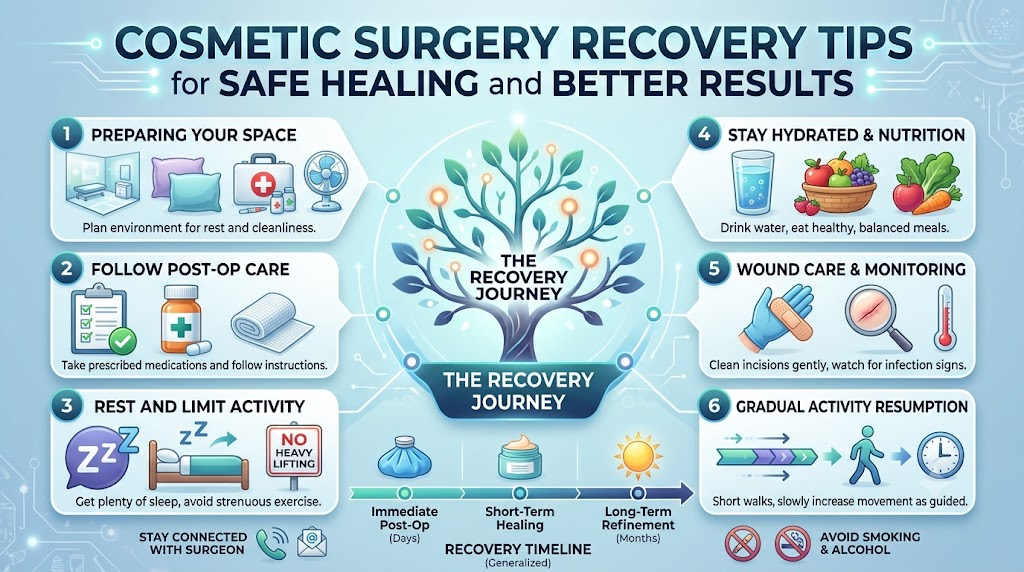
Cosmetic surgery recovery tips can help you prepare for healing and feel more confident after an operation. Recovery is an important part of cosmetic surgery because your body needs time to repair itself. Good aftercare can support healing and help lower the risk of problems.
Swelling, bruising, tiredness, and discomfort may occur after surgery. These effects depend on the procedure, your health, and how your body heals. Some people recover quickly, while others need more time and support.
The cosmetic surgery healing process takes patience. Following your surgeon’s advice, eating balanced meals, resting, and knowing when to seek help can make recovery easier to manage. You can also visit Myhospitalnow for helpful healthcare information.
Remember that general advice cannot replace your surgeon’s instructions. Always follow the care plan prepared for your specific operation.
What to Expect After Cosmetic Surgery
The first few days after surgery may involve swelling, bruising, tenderness, and tiredness. You may also have limits on walking, bending, lifting, or other daily activities. These changes can be part of normal healing, but symptoms should follow the expected pattern for your procedure.
Recovery differs between operations. After rhinoplasty, which changes the shape of the nose, swelling and bruising around the eyes may occur. Breast surgery can cause soreness and tightness. Liposuction may lead to swelling and bruising in treated areas, while a tummy tuck can make movement harder for a time. Eyelid surgery may cause temporary puffiness and bruising around the eyes.
Visible healing and final cosmetic results do not happen at the same speed. Swelling may hide the early result, and scars can continue to change for months. Do not compare your recovery with another person’s experience. Ask your surgeon what changes are normal after your operation.
Common Cosmetic Surgery Recovery Experiences
| Recovery experience | What it may mean | Helpful next step |
|---|---|---|
| Swelling | The body is responding to surgery. | Follow approved care instructions and report worsening swelling. |
| Bruising | Small blood vessels may have been affected. | Protect the area and watch for unusual changes. |
| Tiredness | Your body may need more rest. | Rest and increase activity only as advised. |
| Discomfort | Healing tissues may feel sore or tight. | Take prescribed medicines as directed. |
| Incision changes | The wound may be healing, but problems can also occur. | Report spreading redness, unusual drainage, or wound separation. |
Symptoms depend on the procedure. New, severe, or worsening symptoms should not be dismissed as normal healing.
Follow Your Surgeon’s Aftercare Instructions
Your surgeon gives instructions based on the operation you had and your health needs. These directions are a key part of cosmetic surgery aftercare. Following them helps protect healing tissues and lowers the chance of avoidable problems.
Take prescribed medicines exactly as directed. Do not change a dose, stop a regular medicine, or add a new medicine without professional advice. If you have dressings, drains, or compression garments, learn how to care for them before going home.
Do not remove dressings, adjust drains, or change wound-care routines unless your surgical team tells you to do so. Attend follow-up appointments, even if you feel well. These visits allow your team to check healing and answer questions.
If an instruction is unclear, contact your surgical team rather than guessing. Keep written instructions nearby so you and anyone helping you can check them easily.
Manage Pain, Bruising, and Swelling
Some pain, bruising, and swelling are common after many operations. The amount and duration vary. Your surgeon can explain which symptoms are expected and which need medical review.
Use comfort measures only when approved for your procedure. Cold packs may help after some operations, but direct ice or pressure can harm healing skin. Elevation or a particular sleeping position may help in some cases, while other procedures need different care.
Take pain medicine only as directed. Do not start aspirin, anti-inflammatory medicines, herbal products, or supplements without checking with your surgeon. Some products can increase bleeding or interact with other medicines. Ask your care team before using any new product, even if it is sold without a prescription.
If pain becomes severe, increases instead of improving, or does not respond to your care plan, seek medical advice promptly.
Keep the Surgical Area Clean and Protected
Clean hands help reduce the risk of infection. Wash your hands before touching dressings or carrying out wound care. Follow the exact steps your surgical team provides for cleaning and covering the incision.
Ask when you may shower and how to protect the wound. Do not soak healing wounds in a bath, swimming pool, or hot tub until your surgeon confirms it is safe. Wet dressings and unapproved cleaning methods may affect healing.
Avoid putting creams, oils, cosmetics, disinfectants, or home remedies on an incision unless your surgeon approves them. Do not pick scabs or pull at stitches. These actions can irritate the skin and delay healing.
Contact your surgical team if redness spreads, drainage becomes unusual, the wound opens, or pain gets worse. Increasing warmth, swelling, or a bad smell may also need medical assessment. Early advice helps your team decide whether treatment is needed.
Eat Well and Stay Hydrated
Your body needs energy and nutrients during recovery. Balanced meals and enough fluids support general health while tissues heal. They cannot guarantee faster healing, but they help your body meet its needs.
Include protein-rich foods such as eggs, beans, lentils, fish, chicken, tofu, or yogurt, depending on your diet. Eat fruits, vegetables, and whole grains for a range of vitamins, minerals, and fiber. Drink fluids as advised by your healthcare team.
If you feel sick or have a low appetite, try smaller meals if your care team says this is suitable. Ask for advice if you have diabetes, kidney disease, food allergies, or another condition that affects your diet. Do not start high-dose vitamins or supplements without checking first.
Rest, Sleep, and Arrange Help
Rest is important, especially during the early days after surgery. Prepare a quiet recovery area with water, your phone, medicines, and other approved supplies within easy reach. Keep walkways clear to lower the risk of falls.
Arrange help with meals, dressing, transport, and daily tasks if needed. Some patients can manage simple tasks soon after surgery, while others need more support. Your mobility and the type of operation will affect how much help you need.
Follow your surgeon’s advice about sleeping positions. You may need to sleep on your back, keep your head raised, or avoid pressure on a treated area. Do not change your position against medical advice just to feel more comfortable.
Return to Walking, Work, and Exercise Gradually
Do not rush back into hard exercise or heavy tasks. Too much activity can strain healing tissues, increase swelling, or cause bleeding. However, gentle movement may be encouraged when approved by your surgical team.
Short walks can help you move safely and may reduce some risks linked to staying still for too long. Start only as advised, and increase activity at a pace your care team recommends. Stop and seek advice if movement causes concerning symptoms.
Lifting, bending, driving, swimming, and exercise restrictions vary by procedure. Do not drive while affected by anesthesia, sedating medicines, pain, or limited movement. You must be able to move safely and respond quickly before driving again.
Return-to-work plans also depend on your job. Desk work may require a different recovery period from work that involves lifting or long hours on your feet. Ask your surgeon for personal guidance rather than relying on a fixed timeline.
Protect Healing Skin and Scars
Scars change as they mature, and their final appearance can take time to develop. Their size and appearance depend on factors such as the procedure, incision location, skin type, and individual healing. No method can promise scar-free skin.
Once your surgeon confirms it is suitable, protect healing skin from the sun with approved clothing or sun protection. Sun exposure can make some scars look darker. Do not apply sunscreen directly to an open or unhealed incision unless your care team says it is safe.
Silicone sheets, gels, and other scar treatments may suit some patients after the wound has closed. Use them only when approved for your incision. Avoid harsh skin products, picking scabs, or rubbing the area while it heals.
Emotional Well-Being During Recovery
Recovery can affect how you feel as well as how you look. You may feel tired, worried, impatient, or frustrated when daily tasks become harder. These feelings can be temporary, but you do not need to manage them alone.
Early swelling and bruising may make your appearance different from what you expected. This does not always show the final result. Give your body time to heal and discuss your concerns with your surgical team.
Stay in touch with supportive friends or family members. If low mood, worry, or emotional distress becomes severe or lasts for a long time, seek help from a qualified healthcare professional.
Warning Signs That Need Medical Attention
Some changes need prompt medical assessment. Contact your surgical team urgently if you notice worsening pain, spreading redness, increasing swelling, unusual drainage, wound separation, persistent bleeding, or fever. Do not wait for a routine appointment if symptoms are getting worse.
One-sided leg swelling or pain after surgery may be a sign of a blood clot. Seek urgent medical evaluation, especially if the symptoms are new. Do not massage the affected leg while waiting for medical advice.
Get emergency medical help for chest pain, sudden shortness of breath, fainting, or severe difficulty breathing. These may be signs of a life-threatening problem. Call your local emergency service rather than waiting for your surgeon to reply.
When in doubt, contact a healthcare professional. It is safer to ask about a worrying change than to assume it is part of normal healing.
How to Prepare for a Smoother Recovery
Good preparation can make recovery after plastic surgery easier to manage. Plan ahead so you can focus on rest, wound care, and the instructions from your surgical team.
Arrange transport home before surgery. You may not be able to drive after anesthesia, and you may need someone to stay with you during the first part of recovery. Ask your surgeon how much help you should arrange.
Prepare easy meals, comfortable clothing, prescribed supplies, and a clean place to rest. Choose clothes that are easy to put on without pulling over a sensitive area. Keep your surgeon’s contact details and follow-up schedule where you can find them quickly.
Before surgery, ask about likely recovery needs, activity limits, possible complications, and whom to contact after hours. Make sure you understand how to take your medicines and care for your wound.
Smoking and nicotine can reduce blood flow and interfere with wound healing. Tell your surgeon if you smoke or use nicotine products. Ask how far ahead of surgery you should stop and when it is safe to remain nicotine-free after the operation. Do not make medication changes without professional guidance.
Cosmetic Surgery Recovery Checklist
| Recovery task | Why it matters | Important reminder |
|---|---|---|
| Follow aftercare instructions | Supports safe healing. | Ask questions if anything is unclear. |
| Take medicines as directed | Helps manage symptoms safely. | Check before adding any medicine or supplement. |
| Follow wound-care steps | Helps protect the incision. | Do not change dressings without advice. |
| Drink fluids and eat balanced meals | Supports general health and healing. | Follow any medical or dietary restrictions. |
| Move as advised | Helps maintain safe mobility. | Avoid strenuous activity until cleared. |
| Attend follow-up visits | Allows your team to assess healing. | Keep every scheduled appointment. |
| Watch for warning signs | Helps identify possible complications. | Seek prompt help for concerning changes. |
These cosmetic surgery recovery tips provide a starting point, but your personal care plan always comes first. Good post-operative care includes knowing what to do, what to avoid, and when to ask for help.
Frequently Asked Questions About Cosmetic Surgery Recovery
1. How long does cosmetic surgery recovery usually take?
Recovery may take days, weeks, or months, depending on the operation and your health. Swelling and scars may continue to change after daily activities become easier. Follow your surgeon’s advice for your specific procedure.
2. Is swelling normal after cosmetic surgery?
Yes, swelling is common after many cosmetic procedures. It should follow the expected pattern for your operation. Seek medical advice if swelling suddenly increases, becomes severe, or occurs with other worrying symptoms.
3. How can I manage pain after cosmetic surgery?
Take prescribed pain medicine as directed and use only approved comfort measures. Do not add aspirin, anti-inflammatory medicines, supplements, or herbal products without checking with your surgeon.
4. What foods can support recovery after surgery?
Choose balanced meals with protein, fruits, vegetables, whole grains, and enough fluids. Your nutritional needs may vary if you have a health condition or dietary restriction, so ask your healthcare team for advice.
5. When can I return to work after cosmetic surgery?
This depends on your procedure, healing, and job duties. Desk work may have different demands from a job involving lifting or standing. Ask your surgeon when it is safe to return.
6. When can I start exercising after cosmetic surgery?
Start gentle movement only when your surgical team approves it. Wait for specific clearance before returning to strenuous exercise, swimming, heavy lifting, or other restricted activities.
7. How should I care for my surgical incisions?
Wash your hands before wound care and follow your surgeon’s cleaning and dressing instructions. Avoid unapproved products and seek advice if redness spreads, drainage changes, or the wound opens.
8. When can I shower after cosmetic surgery?
The timing depends on the procedure, dressing, and wound. Ask your surgeon when you can shower and how to keep the area protected. Avoid baths, pools, and hot tubs until cleared.
9. What warning signs should I watch for during recovery?
Watch for worsening pain, spreading redness, increasing swelling, unusual drainage, wound separation, persistent bleeding, or fever. Chest pain, sudden breathing problems, fainting, and one-sided leg swelling or pain need urgent assessment.
10. How can I help reduce scars after cosmetic surgery?
Follow wound-care instructions, avoid picking scabs, and protect healed skin from the sun when approved. Silicone products may help some scars, but use them only when your surgeon says they are suitable. No treatment can guarantee a scar-free result.
Final Thoughts
A safe recovery takes patience, careful aftercare, and regular communication with your surgical team. Rest when needed, eat balanced meals, protect your incision, and return to daily activities at the pace your surgeon recommends.
The best tips for surgery recovery are those suited to your procedure and health needs. If something feels wrong or a symptom worsens, ask for medical advice promptly. Your surgeon’s instructions should guide every stage of your cosmetic surgery healing process.

Find Trusted Cardiac Hospitals
Compare heart hospitals by city and services — all in one place.
Explore Hospitals