Introduction
Kidney stones are hard deposits that form inside the kidneys. They develop when certain minerals and salts collect in the urine. These deposits can grow over time and may cause pain when they move through the urinary tract.Some small kidney stones pass naturally without a medical procedure. However, larger stones may block urine flow and cause serious discomfort. In such cases, medical treatment may be needed.There are several kidney stone treatment options available today. These include observation, medicines, shock wave lithotripsy, ureteroscopy, and percutaneous nephrolithotomy (PCNL).
The right treatment depends on several factors. These include the stone’s size, location, type, symptoms, and the patient’s overall health.Understanding these options can help patients make informed decisions with their doctors. This articleMyhospitalnow explains kidney stone treatments, recovery, warning signs, and prevention methods in simple language.
What Are Kidney Stones?
Kidney stones are hard pieces of material that develop inside one or both kidneys. They form when certain substances in urine become too concentrated.
Normally, urine contains water and dissolved minerals. When there is not enough water, some minerals can form tiny crystals. These crystals may join together and grow into stones.
Kidney stones can remain inside the kidney or move into the ureter. The ureter is the thin tube that carries urine from the kidney to the bladder.
There are four common types of kidney stones:
- Calcium oxalate stones: These are common stones made from calcium and oxalate.
- Uric acid stones: These may form when urine contains too much uric acid or is too acidic.
- Struvite stones: These stones can develop after certain urinary tract infections.
- Cystine stones: These are linked to a rare inherited condition called cystinuria.
Stone type matters because it can affect treatment and prevention. Doctors may test a passed or removed stone to identify its composition.
Some stones cause severe pain, while others produce no symptoms. Their size and movement through the urinary tract can explain this difference.
Common Symptoms of Kidney Stones
Kidney stone symptoms can differ from person to person. Some people may have no symptoms until a stone moves.
Common warning signs include:
- Sharp pain in the back or side.
- Pain that moves toward the lower abdomen or groin.
- Pain that comes and goes in waves.
- Blood in the urine.
- Burning or pain during urination.
- A frequent urge to urinate.
- Nausea or vomiting.
- Cloudy or unpleasant-smelling urine.
Pain may become stronger when a stone blocks the normal flow of urine. Some people also find it difficult to sit or remain comfortable.
Blood in the urine may appear pink, red, or brown. Sometimes, it can only be found through a urine test.
These symptoms do not always confirm kidney stones. A doctor may recommend tests to identify the actual cause.
What Causes Kidney Stones?
Kidney stones develop for different reasons. Often, several factors work together to increase the risk.
Common causes and risk factors include:
- Not drinking enough water: Low fluid intake makes urine more concentrated. This allows minerals to collect and form crystals.
- High salt intake: Too much salt can increase the amount of calcium in urine. This may raise the risk of certain stones.
- Eating patterns: Some diets with excessive animal protein or certain foods may increase stone risk.
- Family history: People with close family members who have kidney stones may have a higher risk.
- Obesity and metabolic conditions: These can affect urine composition and increase the chance of some stones.
- Repeated urinary infections: Certain infections can lead to struvite stone formation.
- Digestive conditions: Some bowel diseases and previous intestinal surgeries can affect mineral absorption.
- Medicines and supplements: Certain medicines and high supplement intake may increase the risk in some people.
- The cause depends on the stone type and the person’s health. A doctor can help identify important risk factors.
How Are Kidney Stones Diagnosed?
Doctors use different tests to confirm kidney stones. These tests also help identify their size, number, and location.
Urine Tests
A urine test can identify blood and signs of infection. It may also show high levels of minerals linked to stone formation.
Blood Tests
Blood tests help check kidney function and levels of substances such as calcium and uric acid. They may also help identify signs of infection.
Ultrasound
Ultrasound uses sound waves to create images of the urinary system. It can identify many kidney stones and signs of blocked urine flow.
CT Scan
A CT scan creates detailed images of the kidneys and urinary tract. It can help doctors identify stone size, location, and number.
Stone Analysis
If a patient passes or has a stone removed, the doctor may send it for testing. This helps identify the stone type and plan future prevention.
Doctors choose tests according to symptoms, age, pregnancy status, and medical needs.
When Can Kidney Stones Pass Naturally?
Some small kidney stones can pass through the urinary tract without a procedure. They travel from the kidney through the ureter and leave the body during urination.
However, not every stone can pass naturally. Several factors affect the process:
- Stone size and shape.
- Stone location.
- Pain and other symptoms.
- Whether urine flow is blocked.
- Signs of infection.
- Overall kidney function.
A doctor may recommend observation for patients with suitable stones and no serious complications.
During observation, patients may receive pain relief and other medicines. The doctor may also arrange follow-up tests to check whether the stone has passed.
Some patients may need medical help if the stone does not move. Others may require treatment if pain continues or kidney function becomes affected.
Important: Do not wait at home if you have fever, chills, severe pain, or difficulty passing urine. These symptoms need urgent medical assessment.
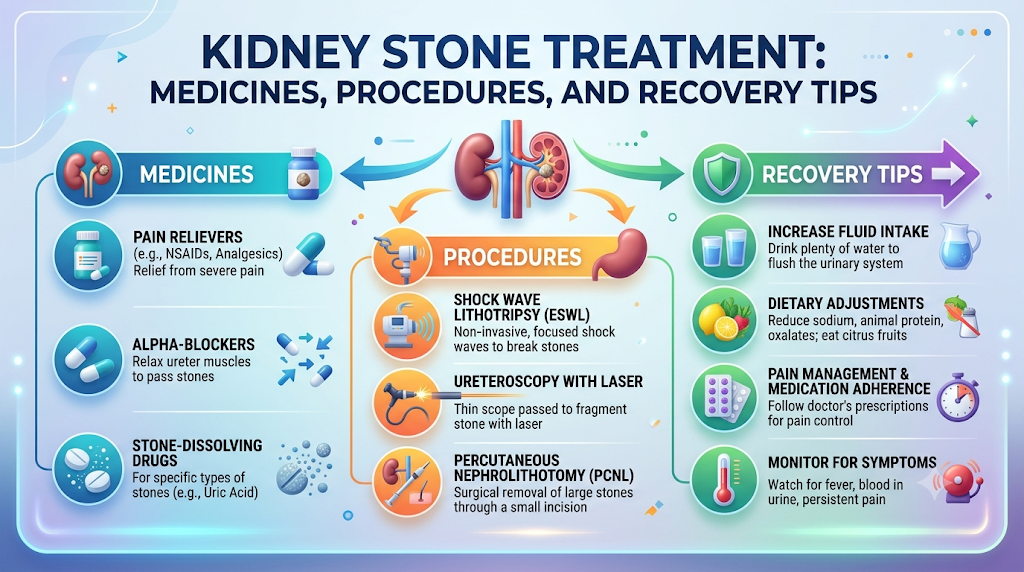
Medicines Used for Kidney Stone Treatment
Medicines can help manage kidney stone symptoms. Some may also help selected stones pass or prevent new stones from forming.
Common medicine categories include:
- Pain relief medicines: Doctors may prescribe suitable medicines to control kidney stone pain.
- Medicines for stone passage: Certain medicines may relax the ureter and help selected stones pass.
- Medicines for uric acid stones: Some medicines change urine chemistry and may help dissolve suitable uric acid stones.
- Preventive medicines: Certain medicines can reduce the risk of recurring stones.
- Antibiotics: Doctors may prescribe antibiotics when a bacterial urinary infection is present.
Not every medicine works for every stone. The choice depends on the stone type, symptoms, and medical history.
Patients should not start, stop, or change medicines without medical advice. Antibiotics should only be used when prescribed for an appropriate infection.
Non-Surgical Kidney Stone Treatment Options
Several kidney stone removal procedures do not require traditional open surgery. Doctors select a suitable method based on the stone and the patient’s condition.
Extracorporeal Shock Wave Lithotripsy (ESWL)
ESWL is a treatment that uses focused shock waves to break kidney stones into smaller pieces.
The patient usually lies on a treatment table. A machine directs shock waves toward the stone using imaging guidance.
The smaller pieces may then pass out through urine.
ESWL may be suitable for selected kidney or ureter stones. Its success depends on:
- Stone size.
- Stone location.
- Stone hardness.
- Patient’s body structure.
- Other medical conditions.
Some patients may need more than one treatment session. Others may need another procedure if stone fragments remain.
Ureteroscopy (URS)
Ureteroscopy is another common kidney stone treatment.
During this procedure, the doctor passes a thin instrument called a ureteroscope through the urinary opening and bladder. It then moves into the ureter or kidney to reach the stone.
The doctor may remove the stone using a small instrument. A laser may also break it into smaller pieces.
A temporary ureteral stent may be placed in selected cases. This small tube helps urine flow from the kidney to the bladder.
Some patients may notice frequent urination, discomfort, or mild blood in the urine while the stent is in place.
Ureteroscopy does not need a large external cut. However, it usually requires anesthesia and proper medical monitoring.
Surgical Treatment for Larger or Complex Kidney Stones
Some kidney stones are too large or difficult to treat with other methods. In these situations, a more involved procedure may be needed.
Percutaneous Nephrolithotomy (PCNL)
PCNL is a procedure commonly used for larger or complex kidney stones.
During the procedure, the surgeon makes a small opening in the patient’s back. A thin instrument passes through this opening and reaches the kidney.
The surgeon uses special tools to break and remove the stone pieces.
PCNL may be considered when:
- The kidney stone is large.
- Several stones are present.
- Other treatments may not work well.
- The stone has a complex shape.
- The stone causes repeated problems.
The procedure requires hospital-based care. Patients are monitored during recovery for pain, bleeding, and other possible complications.
Open or laparoscopic surgery is now less common for kidney stones. It may be considered in unusual situations when other treatments are unsuitable or unsuccessful.
How Doctors Choose the Right Treatment
There is no single treatment that works for every kidney stone patient.
A urologist considers several factors before recommending a procedure or medicine.
Important factors include:
- Stone size: Larger stones may need active removal.
- Stone location: A stone in the kidney may need a different approach from one in the ureter.
- Stone type: Some stones respond to medicines, while others need removal.
- Stone hardness: Hard stones may respond differently to shock waves.
- Number of stones: Multiple stones may require a different treatment plan.
- Pain and symptoms: Severe or ongoing symptoms may require treatment.
- Urine blockage: Blocked urine flow can affect kidney function.
- Infection risk: Infection with an obstruction requires urgent care.
- Medical history: Other health conditions can affect treatment safety.
- Patient preferences: Recovery needs, treatment risks, and available facilities also matter.
A doctor may discuss more than one treatment option. Patients should ask about the benefits, risks, recovery, and chance of needing another procedure.
The European Association of Urology also recommends choosing treatment based on stone characteristics and individual patient factors. Uroweb+1
Recovery After Kidney Stone Treatment
Recovery depends on the procedure, stone size, and overall health. Some patients return to normal activities sooner than others.
Following medical instructions can support a safer recovery.
Important recovery steps include:
- Drink fluids according to your doctor’s advice.
- Follow the prescribed pain management plan.
- Take medicines as directed.
- Watch for fever, chills, or worsening pain.
- Follow instructions about physical activity.
- Attend all follow-up appointments.
- Complete recommended urine and imaging tests.
- Follow instructions about returning to work.
Some patients pass small stone fragments after ESWL or laser treatment. This can cause temporary discomfort.
Patients with a ureteral stent may experience frequent urination or bladder discomfort. The doctor will explain when and how the stent should be removed.
After PCNL, patients may need additional monitoring because the procedure involves access through the back.
Do not ignore new or worsening symptoms after treatment. Contact your healthcare team if something does not feel right.
Diet and Lifestyle Changes to Prevent Kidney Stones
Kidney stones can return even after successful treatment. Healthy habits may help lower this risk.
However, prevention advice should match the type of stone and the patient’s medical history.
Consider these practical steps:
Drink Enough Water
Water helps dilute urine and reduce the concentration of minerals. Drink enough fluids unless your doctor has advised a restriction.
Reduce Excess Salt
Too much salt may increase calcium in urine. Limit highly salted snacks and processed foods when advised.
Follow a Balanced Diet
Include suitable amounts of vegetables, fruits, whole grains, and other healthy foods.
Discuss Animal Protein Intake
Excessive animal protein may increase the risk of certain stones. Ask your doctor whether you need to change your intake.
Do Not Avoid Calcium-Rich Foods Without Advice
Normal dietary calcium can help reduce oxalate absorption in the gut. Removing calcium-rich foods without medical advice may not be helpful.
Discuss High-Oxalate Foods
Some patients with calcium oxalate stones may need to manage foods high in oxalate. The advice depends on their test results.
Maintain a Healthy Weight
Healthy eating and regular physical activity may support better metabolic health.
Review Medicines and Supplements
Discuss your supplements and medicines with your doctor. Some may affect stone formation.
Patients with repeated stones may need additional urine tests and a personalised prevention plan.
When Should Someone Seek Urgent Medical Care?
Kidney stones can sometimes cause serious complications. Certain symptoms need urgent medical attention.
Watch for these warning signs:
- Fever or chills with suspected kidney stones.
- Severe or uncontrolled back or side pain.
- Repeated vomiting or inability to keep fluids down.
- Difficulty passing urine.
- No urine output.
- Signs of dehydration.
- Kidney stone symptoms in someone with only one functioning kidney.
- Suspected kidney stones during pregnancy.
A blocked urinary system with an infection can become a medical emergency. It may require urgent drainage and antibiotics before the stone itself is treated.
Do not delay medical care when these warning signs appear.
Kidney Stone Symptoms and Medical Action
The following table provides general awareness. Symptoms alone cannot confirm a kidney stone.
| Symptom | What It May Indicate | Suggested Action |
|---|---|---|
| Pain in the side or back | Possible kidney stone movement | Arrange medical assessment |
| Blood in urine | Possible irritation or urinary tract problem | Contact a healthcare professional |
| Painful urination | Possible stone or urinary infection | Seek medical advice |
| Fever and chills | Possible infection | Seek urgent medical care |
| Repeated vomiting | Severe symptoms or dehydration risk | Seek prompt medical assessment |
| Difficulty passing urine | Possible urinary blockage | Seek urgent medical care |
Kidney Stone Treatment Options: Quick Comparison
Different treatments work in different ways. The following table explains the main options.
| Treatment Option | How It Works | When It May Be Considered |
|---|---|---|
| Observation | Allows a suitable stone to pass naturally with medical monitoring | Selected small stones without urgent complications |
| Medicines | Helps manage symptoms or supports treatment of certain stone types | Based on symptoms and stone characteristics |
| ESWL | Uses shock waves to break stones into smaller pieces | Selected stones suitable for shock wave treatment |
| Ureteroscopy | Uses a thin instrument to remove or break stones | Stones in the ureter or kidney when suitable |
| PCNL | Removes stones through a small opening in the back | Selected large or complex kidney stones |
Frequently Asked Questions
1. What is the best treatment for kidney stones?
The best treatment depends on the stone’s size, location, and type. Small stones may pass naturally with medical monitoring. Other stones may need medicines, ESWL, ureteroscopy, or PCNL. A urologist examines the patient’s symptoms and health before recommending a suitable treatment.
2. Can small kidney stones pass naturally?
Yes, some small kidney stones can pass through the urinary tract without a procedure. However, the chances depend on the stone’s size, shape, and location. Doctors may recommend observation and suitable pain relief. Follow-up checks help confirm whether the stone has passed.
3. When is surgery needed for kidney stones?
A procedure may be needed when a stone is too large to pass naturally. It may also be necessary when there is severe pain, repeated blockage, infection, or a risk to kidney function. The doctor decides whether a minimally invasive procedure or surgery is suitable.
4. What is the difference between ESWL and ureteroscopy?
ESWL uses focused shock waves to break stones into smaller pieces. Ureteroscopy uses a thin instrument to reach and remove or break the stone. ESWL does not require an instrument inside the urinary tract. Ureteroscopy usually requires anesthesia and may involve a temporary stent.
5. Is PCNL used for large kidney stones?
Yes, PCNL is commonly used for large or complex kidney stones. The surgeon reaches the kidney through a small opening in the back and removes the stone. It may be recommended when other procedures are less suitable. Patients need hospital-based care and recovery monitoring.
6. How long does recovery take after kidney stone treatment?
Recovery time depends on the treatment and the patient’s health. Some people recover quickly after a less invasive procedure. Others may need more time after PCNL or treatment for complex stones. Follow your doctor’s instructions about medicines, activity, fluids, and follow-up appointments.
7. Can kidney stones come back after treatment?
Yes, kidney stones can develop again after successful treatment. The risk depends on the stone type, diet, fluid intake, family history, and other health conditions. Stone analysis and follow-up tests can help doctors identify the cause and recommend suitable prevention steps.
8. What foods should people with kidney stones discuss with their doctor?
People with kidney stones may need to discuss salty foods, animal protein, and foods high in oxalate. The advice depends on the stone type. Calcium-rich foods should not be removed without medical guidance. A doctor or dietitian can suggest suitable dietary changes.
9. Are kidney stones a medical emergency?
Some kidney stones need urgent medical care. Fever, chills, severe pain, repeated vomiting, or difficulty passing urine are important warning signs. Infection combined with urinary blockage can be dangerous. People with these symptoms should seek urgent medical assessment instead of waiting at home.
10. How can people reduce their risk of developing kidney stones?
Drinking enough water, reducing excess salt, and following a balanced diet may help prevent kidney stones. Some patients may also need changes in animal protein or oxalate intake. Regular follow-up and a prevention plan based on stone type can help lower the risk of recurrence.
Final Thoughts
Kidney stones can cause pain and affect daily life. However, several treatment options are available to manage them.
Some stones pass naturally, while others need medicines or medical procedures. ESWL, ureteroscopy, and PCNL are important options for selected patients.
Early diagnosis can help doctors identify the right treatment. Following medical advice and making suitable lifestyle changes may also reduce the risk of future stones.
Every patient’s condition is different. Always consult a qualified healthcare professional before choosing a treatment.

Find Trusted Cardiac Hospitals
Compare heart hospitals by city and services — all in one place.
Explore Hospitals