Introduction
Application Servers are software platforms that provide the runtime environment required to deploy, manage, execute, and scale enterprise applications, APIs, middleware services, and business logic across distributed infrastructure environments. They handle application processing, session management, security enforcement, transaction management, database connectivity, and integration services while supporting modern cloud-native and enterprise architectures. As organizations continue modernizing applications, adopting microservices, deploying hybrid cloud infrastructure, and supporting AI-driven workloads, application servers remain foundational components for enterprise software delivery. Modern application servers now support containers, Kubernetes orchestration, API integrations, distributed transactions, observability tooling, and cloud-native scalability while enabling reliable enterprise-grade application execution.
Common Real-world use cases include:
- Enterprise web application hosting
- API and middleware deployment
- Microservices orchestration
- Java and enterprise application runtime management
- Hybrid cloud application delivery
When Evaluating Application Servers, buyers should assess:
- Runtime performance and scalability
- Security and compliance capabilities
- Kubernetes and container compatibility
- Application framework support
- Transaction and session management
- API and integration ecosystem
- Observability and monitoring support
- Hybrid cloud deployment flexibility
- Administration and automation capabilities
- Vendor support and lifecycle management
Best for: Enterprises, developers, DevOps teams, cloud infrastructure teams, SaaS providers, financial institutions, telecom organizations, and businesses running mission-critical applications.
Not ideal for: Small websites or lightweight workloads that can operate entirely on static hosting or simplified web server environments.
Key Trends in Application Servers
- Cloud-native application runtimes are replacing monolithic infrastructure architectures.
- AI-assisted application optimization is improving performance management and scaling decisions.
- Kubernetes-native deployment models are becoming standard for enterprise applications.
- Microservices and API-first architectures continue driving application server modernization.
- Zero-trust application security is becoming mandatory across enterprise deployments.
- Serverless and container integration is reshaping runtime management workflows.
- Observability-first operations are improving distributed application troubleshooting.
- Lightweight Java runtimes are gaining popularity for cloud-native scalability.
- Hybrid cloud application portability is becoming increasingly important.
- eBPF-powered observability is improving runtime monitoring and performance visibility.
How We Selected These Tools (Methodology)
The application servers in this list were selected using practical enterprise infrastructure evaluation criteria focused on scalability, runtime reliability, ecosystem maturity, and enterprise adoption.
Our evaluation methodology included:
- Market adoption and enterprise mindshare
- Runtime performance and scalability
- Security and compliance capabilities
- Cloud-native and Kubernetes compatibility
- Application framework ecosystem support
- API and integration flexibility
- Reliability and operational performance
- Ease of deployment and administration
- Customer fit across SMB, mid-market, and enterprise environments
- Vendor support and open-source community strength
The final list balances enterprise-grade application runtimes, open-source ecosystems, lightweight developer-focused platforms, and cloud-native deployment technologies.
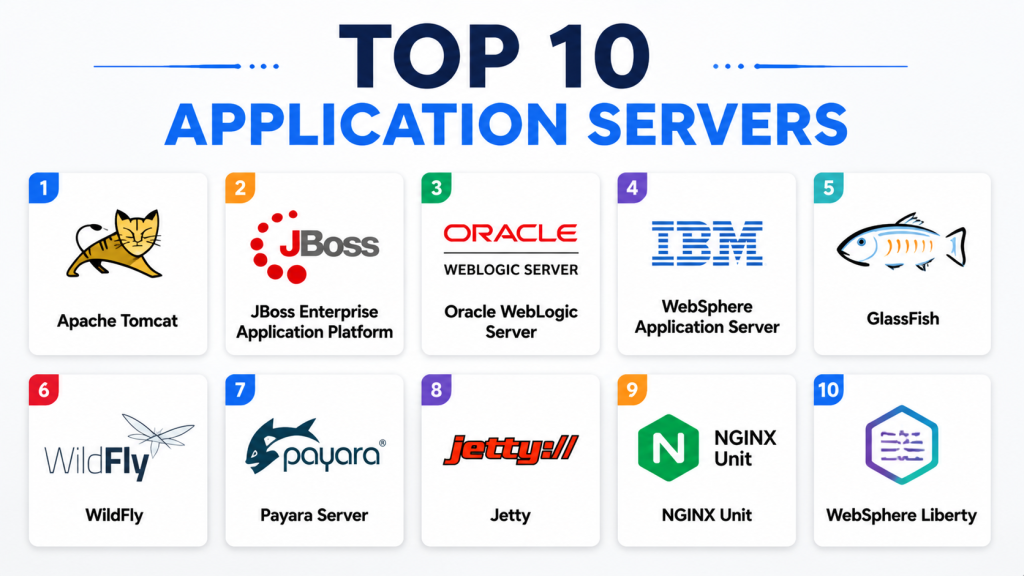
Top 10 Application Servers
1 — Apache Tomcat
Short description:
Apache Tomcat is one of the most widely adopted Java application servers designed for hosting web applications, APIs, and enterprise Java workloads in scalable infrastructure environments.
Key Features
- Java servlet support
- JSP compatibility
- Lightweight runtime architecture
- Web application hosting
- Session management
- TLS support
- Enterprise deployment tooling
Pros
- Massive Java ecosystem adoption
- Lightweight compared to full Java EE platforms
- Strong enterprise compatibility
Cons
- Primarily Java-focused
- Advanced enterprise features may require additional tooling
- Complex large-scale tuning
Platforms / Deployment
Linux / Windows / Cloud / Hybrid / Self-hosted
Security & Compliance
Supports TLS encryption, RBAC compatibility, authentication controls, and secure Java application deployment.
Integrations & Ecosystem
Tomcat integrates deeply into enterprise Java ecosystems.
- Java frameworks support
- Kubernetes compatibility
- CI/CD integrations
- Database ecosystem support
- Monitoring integrations
Support & Community
Massive global Java community with extensive enterprise adoption.
2 — JBoss EAP
Short description:
JBoss Enterprise Application Platform is a Red Hat enterprise application server designed for mission-critical Java workloads and hybrid cloud deployments.
Key Features
- Enterprise Java support
- High availability clustering
- Kubernetes compatibility
- Security and compliance tooling
- Distributed transaction management
- API integrations
- Cloud-native deployment support
Pros
- Strong enterprise scalability
- Excellent Red Hat ecosystem integration
- Good hybrid cloud flexibility
Cons
- Enterprise licensing costs
- Complex administration
- Java-centric ecosystem focus
Platforms / Deployment
Linux / Cloud / Hybrid / Self-hosted
Security & Compliance
Supports RBAC, TLS encryption, audit logging, enterprise identity integration, and secure deployment controls.
Integrations & Ecosystem
JBoss integrates deeply into Red Hat and enterprise infrastructure ecosystems.
- OpenShift compatibility
- Kubernetes integrations
- Database ecosystem support
- API management integrations
- DevOps tooling
Support & Community
Strong enterprise support ecosystem with mature documentation.
3 — Oracle WebLogic Server
Short description:
Oracle WebLogic Server is an enterprise-grade application server optimized for large-scale enterprise applications, middleware services, and Oracle infrastructure environments.
Key Features
- Enterprise Java runtime
- Distributed application management
- Transaction processing
- Security management
- High availability support
- Cloud integration
- Middleware compatibility
Pros
- Excellent enterprise scalability
- Strong Oracle ecosystem integration
- Mature transaction management
Cons
- Premium enterprise licensing
- Complex operational management
- Resource-intensive deployments
Platforms / Deployment
Linux / Windows / Cloud / Hybrid
Security & Compliance
Supports TLS encryption, RBAC, enterprise authentication integration, and audit logging.
Integrations & Ecosystem
WebLogic integrates deeply into Oracle enterprise ecosystems.
- Oracle Database integrations
- Kubernetes compatibility
- API management support
- Middleware ecosystem integrations
Support & Community
Strong enterprise ecosystem with enterprise-grade Oracle support.
4 — IBM WebSphere Application Server
Short description:
IBM WebSphere Application Server is a robust enterprise application runtime platform designed for mission-critical business applications and large-scale enterprise infrastructure.
Key Features
- Enterprise Java runtime
- Transaction management
- Security and compliance controls
- High availability clustering
- Hybrid cloud compatibility
- Middleware integrations
- Enterprise workload optimization
Pros
- Excellent enterprise reliability
- Strong compliance capabilities
- Mature transaction processing
Cons
- Complex deployment and administration
- Enterprise licensing costs
- Higher operational overhead
Platforms / Deployment
Linux / Windows / Cloud / Hybrid
Security & Compliance
Supports RBAC, encryption, enterprise identity integration, audit logging, and governance controls.
Integrations & Ecosystem
WebSphere integrates deeply into IBM enterprise infrastructure environments.
- Kubernetes compatibility
- IBM Cloud integrations
- Middleware ecosystem support
- DevOps tooling integrations
Support & Community
Strong enterprise support organization with mature enterprise adoption.
5 — GlassFish
Short description:
GlassFish is an open-source Java application server designed for enterprise Java applications, development environments, and lightweight enterprise deployments.
Key Features
- Java EE support
- Web application hosting
- REST API support
- Session management
- Modular runtime architecture
- Lightweight deployment
- Developer tooling compatibility
Pros
- Open-source flexibility
- Good developer experience
- Lightweight enterprise runtime
Cons
- Smaller enterprise ecosystem
- Limited commercial support
- Enterprise scalability varies
Platforms / Deployment
Linux / Windows / Cloud / Self-hosted
Security & Compliance
Supports TLS encryption, authentication controls, RBAC compatibility, and secure Java application deployment.
Integrations & Ecosystem
GlassFish integrates into Java development and deployment ecosystems.
- Java frameworks support
- Kubernetes compatibility
- Database integrations
- DevOps tooling
Support & Community
Strong developer-focused open-source ecosystem.
6 — WildFly
Short description:
WildFly is a lightweight open-source application server optimized for enterprise Java applications, cloud-native deployments, and microservices architectures.
Key Features
- Lightweight Java runtime
- Cloud-native deployment support
- Microservices optimization
- Modular architecture
- Kubernetes compatibility
- Distributed transaction support
- Fast startup performance
Pros
- Excellent performance optimization
- Lightweight deployment footprint
- Strong cloud-native flexibility
Cons
- Advanced administration complexity
- Enterprise support depends on ecosystem
- Java-focused architecture
Platforms / Deployment
Linux / Windows / Cloud / Hybrid / Self-hosted
Security & Compliance
Supports TLS encryption, RBAC compatibility, secure deployments, and enterprise authentication integrations.
Integrations & Ecosystem
WildFly integrates into modern Java and cloud-native ecosystems.
- Kubernetes support
- API integrations
- DevOps tooling
- Observability ecosystem compatibility
Support & Community
Strong open-source Java community with enterprise ecosystem alignment.
7 — Payara Server
Short description:
Payara Server is an enterprise Java application server focused on cloud-native deployments, Jakarta EE workloads, and modern enterprise application delivery.
Key Features
- Jakarta EE support
- Cloud-native deployment
- Kubernetes compatibility
- Monitoring and observability
- Security integrations
- High availability clustering
- Automated deployment tooling
Pros
- Modern Jakarta EE support
- Good cloud-native flexibility
- Strong developer usability
Cons
- Smaller ecosystem than Tomcat or WebLogic
- Enterprise scalability varies
- Advanced enterprise tooling may differ
Platforms / Deployment
Linux / Windows / Cloud / Hybrid
Security & Compliance
Supports TLS encryption, secure authentication, RBAC compatibility, and enterprise deployment controls.
Integrations & Ecosystem
Payara integrates into modern Java and enterprise ecosystems.
- Kubernetes integrations
- Database support
- Monitoring ecosystem compatibility
- API management integrations
Support & Community
Growing enterprise ecosystem with strong Java developer adoption.
8 — Jetty
Short description:
Jetty is a lightweight Java application server and HTTP runtime designed for embedded applications, APIs, and cloud-native deployments.
Key Features
- Lightweight Java runtime
- Embedded deployment support
- WebSocket compatibility
- HTTP/2 support
- Cloud-native deployment
- API hosting
- Fast startup performance
Pros
- Lightweight operational footprint
- Excellent embedded application support
- Strong developer flexibility
Cons
- Smaller enterprise ecosystem
- Limited enterprise middleware features
- Advanced enterprise management may vary
Platforms / Deployment
Linux / Windows / Cloud / Self-hosted
Security & Compliance
Supports TLS encryption, secure HTTP serving, authentication controls, and RBAC compatibility.
Integrations & Ecosystem
Jetty integrates into lightweight Java and cloud-native ecosystems.
- Kubernetes compatibility
- Java framework support
- API ecosystem integrations
- DevOps tooling compatibility
Support & Community
Strong developer ecosystem with lightweight deployment adoption.
9 — NGINX Unit
Short description:
NGINX Unit is a modern application runtime and web application server designed for dynamic application deployment and multi-language support.
Key Features
- Multi-language runtime support
- Dynamic configuration
- Lightweight architecture
- Cloud-native compatibility
- API-driven management
- Container deployment support
- Reverse proxy integrations
Pros
- Lightweight and modern architecture
- Flexible runtime management
- Good cloud-native deployment support
Cons
- Smaller ecosystem than traditional application servers
- Enterprise feature maturity varies
- Advanced scaling may require expertise
Platforms / Deployment
Linux / Cloud / Hybrid / Self-hosted
Security & Compliance
Supports TLS encryption, secure application deployment, and access control configurations.
Integrations & Ecosystem
NGINX Unit integrates into modern application delivery ecosystems.
- Kubernetes compatibility
- Container integrations
- API management support
- Cloud-native deployments
Support & Community
Growing cloud-native ecosystem with strong NGINX community backing.
10 — WebSphere Liberty
Short description:
WebSphere Liberty is a lightweight modular application server from IBM designed for cloud-native enterprise Java applications and containerized environments.
Key Features
- Modular runtime architecture
- Cloud-native deployment
- Kubernetes compatibility
- Fast startup performance
- Microservices optimization
- Enterprise security tooling
- Observability integrations
Pros
- Strong enterprise reliability
- Lightweight compared to traditional WebSphere
- Good Kubernetes compatibility
Cons
- Enterprise licensing considerations
- Smaller ecosystem than Tomcat
- Advanced administration complexity
Platforms / Deployment
Linux / Windows / Cloud / Hybrid
Security & Compliance
Supports RBAC, TLS encryption, enterprise identity integration, audit logging, and secure deployment controls.
Integrations & Ecosystem
WebSphere Liberty integrates into enterprise Java and cloud-native ecosystems.
- Kubernetes support
- API integrations
- DevOps tooling compatibility
- IBM Cloud ecosystem support
Support & Community
Strong enterprise ecosystem with enterprise-grade IBM support.
Comparison Table
| Tool Name | Best For | Platform(s) Supported | Deployment | Standout Feature | Public Rating |
|---|---|---|---|---|---|
| Apache Tomcat | Java web applications | Linux, Windows | Hybrid | Lightweight Java runtime | N/A |
| JBoss EAP | Enterprise Java workloads | Linux | Hybrid | Red Hat ecosystem integration | N/A |
| Oracle WebLogic Server | Enterprise middleware | Linux, Windows | Hybrid | Distributed transaction management | N/A |
| IBM WebSphere Application Server | Mission-critical enterprise apps | Linux, Windows | Hybrid | Enterprise reliability | N/A |
| GlassFish | Open-source Java hosting | Linux, Windows | Self-hosted | Lightweight enterprise Java support | N/A |
| WildFly | Cloud-native Java applications | Linux, Windows | Hybrid | Lightweight microservices runtime | N/A |
| Payara Server | Modern Jakarta EE workloads | Linux, Windows | Hybrid | Cloud-native Java deployment | N/A |
| Jetty | Embedded Java applications | Linux, Windows | Self-hosted | Lightweight embedded runtime | N/A |
| NGINX Unit | Multi-language applications | Linux | Hybrid | Dynamic runtime management | N/A |
| WebSphere Liberty | Containerized enterprise Java | Linux, Windows | Hybrid | Modular cloud-native runtime | N/A |
Evaluation & Scoring of Application Servers
| Tool Name | Core 25% | Ease 15% | Integrations 15% | Security 10% | Performance 10% | Support 10% | Value 15% | Weighted Total |
|---|---|---|---|---|---|---|---|---|
| Apache Tomcat | 9 | 8 | 9 | 8 | 9 | 9 | 10 | 8.9 |
| JBoss EAP | 9 | 7 | 9 | 9 | 9 | 8 | 7 | 8.3 |
| Oracle WebLogic Server | 10 | 6 | 9 | 9 | 9 | 8 | 6 | 8.1 |
| IBM WebSphere Application Server | 10 | 6 | 8 | 9 | 9 | 8 | 6 | 8.0 |
| GlassFish | 7 | 8 | 7 | 7 | 7 | 7 | 10 | 7.6 |
| WildFly | 8 | 7 | 8 | 8 | 9 | 8 | 9 | 8.1 |
| Payara Server | 8 | 8 | 8 | 8 | 8 | 8 | 9 | 8.2 |
| Jetty | 8 | 8 | 7 | 7 | 9 | 8 | 9 | 8.0 |
| NGINX Unit | 7 | 8 | 8 | 7 | 8 | 7 | 9 | 7.8 |
| WebSphere Liberty | 9 | 7 | 8 | 9 | 9 | 8 | 7 | 8.2 |
These scores are comparative evaluations rather than absolute rankings. Enterprise organizations generally prioritize scalability, security, transaction management, and hybrid cloud support, while SMBs and developers often focus more heavily on lightweight deployment, operational simplicity, and cost efficiency. Open-source application servers provide excellent flexibility and long-term value but may require additional operational expertise. Buyers should align scoring priorities with workload complexity, runtime requirements, and infrastructure strategy.
Which Application Server Is Right for You?
Solo / Freelancer
Developers and lightweight workloads often benefit most from Jetty, Tomcat, or GlassFish because of operational simplicity and lightweight deployment models.
SMB
SMBs typically prefer Tomcat, WildFly, and Payara Server due to strong Java compatibility and lower operational overhead.
Mid-Market
Mid-sized organizations requiring scalability and hybrid cloud flexibility should evaluate JBoss EAP and WebSphere Liberty.
Enterprise
Large enterprises generally prioritize Oracle WebLogic, IBM WebSphere, and JBoss EAP because of scalability, compliance, and enterprise middleware integration.
Budget vs Premium
Open-source platforms such as Tomcat, WildFly, and GlassFish provide strong operational value, while enterprise platforms justify higher costs through support and advanced middleware capabilities.
Feature Depth vs Ease of Use
Jetty and Tomcat prioritize simplicity and lightweight operations, while WebLogic and WebSphere provide deeper enterprise transaction and middleware functionality.
Integrations & Scalability
Organizations operating hybrid cloud and Kubernetes environments should prioritize API integrations, observability tooling, cloud-native deployment compatibility, and container support.
Security & Compliance Needs
Highly regulated industries should prioritize RBAC, audit logging, enterprise identity integration, TLS encryption, and secure transaction management capabilities.
Frequently Asked Questions (FAQs)
1. What is an Application Server?
An Application Server provides the runtime environment required to execute enterprise applications, APIs, middleware services, and business logic.
2. Why are Application Servers important?
They simplify application deployment, transaction management, scalability, security, and distributed enterprise application delivery.
3. Which Application Server is best for enterprises?
Oracle WebLogic, IBM WebSphere, and JBoss EAP are among the most widely adopted enterprise-grade application server platforms.
4. Is Apache Tomcat still widely used?
Yes. Apache Tomcat remains one of the most popular Java application servers because of its lightweight architecture and broad ecosystem support.
5. What security features should organizations prioritize?
Organizations should prioritize TLS encryption, RBAC compatibility, secure identity integration, audit logging, and secure deployment controls.
6. Can Application Servers support Kubernetes environments?
Yes. Most modern application servers increasingly support Kubernetes and containerized cloud-native deployment models.
7. What is the difference between a Web Server and an Application Server?
Web servers primarily handle HTTP traffic and static content, while application servers execute business logic and enterprise applications.
8. Are lightweight Application Servers better for cloud-native environments?
Lightweight platforms such as WildFly, Jetty, and WebSphere Liberty are often better suited for containerized and microservices deployments.
9. Which Application Server is best for Java applications?
Tomcat, WildFly, JBoss EAP, and WebLogic are among the most widely used Java application server platforms.
10. When should organizations modernize their Application Servers?
Organizations should modernize when scalability, security, observability, or cloud-native deployment limitations affect operational efficiency.
Conclusion
Application Servers continue to play a foundational role in enterprise software delivery, middleware management, cloud-native infrastructure, and mission-critical business application operations. While lightweight platforms such as Tomcat, Jetty, and WildFly provide strong flexibility and cloud-native compatibility, enterprise organizations increasingly depend on platforms such as JBoss EAP, Oracle WebLogic, and IBM WebSphere for advanced transaction management, security, and large-scale middleware operations. The right application server ultimately depends on workload architecture, operational scale, cloud strategy, developer workflows, and enterprise governance requirements. Some organizations prioritize lightweight deployment and microservices scalability, while others require deep middleware integrations, enterprise compliance, and high-availability transaction processing. Before selecting a platform, organizations should shortlist several solutions, validate application compatibility, evaluate Kubernetes and observability integrations, test runtime performance, and confirm long-term security and operational alignment.

Find Trusted Cardiac Hospitals
Compare heart hospitals by city and services — all in one place.
Explore Hospitals
This gave me a better understanding of how application servers support deployment, scalability, and performance for enterprise apps. I’d like to explore which server fits different project needs best.