Introduction
Disaster Recovery DR Tools help organizations restore applications, infrastructure, workloads, and business operations after cyberattacks, hardware failures, natural disasters, accidental deletions, or operational outages. These platforms automate replication, failover, backup recovery, and infrastructure restoration to minimize downtime and protect business continuity. Modern enterprises now operate across hybrid cloud infrastructure, remote work environments, SaaS platforms, virtualization layers, and distributed data ecosystems. Because downtime can cause financial losses, compliance violations, reputational damage, and operational disruption, disaster recovery has become a critical part of enterprise resilience and cybersecurity planning. Organizations now prioritize faster recovery objectives, ransomware resilience, automated failover, and cloud-native recovery orchestration.
Real-world use cases include:
- Recovering workloads after ransomware attacks
- Restoring cloud infrastructure after outages
- Supporting business continuity for remote teams
- Protecting virtualized and hybrid environments
- Meeting regulatory recovery and compliance requirements
Evaluation Criteria for Buyers
- Recovery time objective and recovery point objective capabilities
- Cloud and hybrid infrastructure support
- Automation and failover orchestration
- Security and ransomware resilience
- Scalability across distributed environments
- Integration with backup and virtualization platforms
- Ease of deployment and operational management
- Compliance reporting and audit readiness
- Recovery testing and validation workflows
- Pricing flexibility and operational value
Best for: Enterprises, MSPs, healthcare providers, financial organizations, SaaS companies, government agencies, and hybrid-cloud businesses requiring business continuity and infrastructure resilience.
Not ideal for: Very small organizations with minimal infrastructure dependencies or businesses relying entirely on lightweight local backups without strict uptime requirements.
Key Trends in Disaster Recovery DR Tools
- Immutable recovery infrastructure is becoming a standard enterprise requirement.
- AI-powered anomaly detection is improving ransomware response workflows.
- Cloud-native disaster recovery adoption continues growing rapidly.
- Multi-cloud recovery orchestration is becoming more important for enterprises.
- Automated failover testing is improving compliance and operational readiness.
- Disaster recovery and cybersecurity platforms are becoming increasingly integrated.
- Kubernetes and container disaster recovery support is expanding quickly.
- Zero Trust architecture is influencing DR security design.
- Consumption-based recovery pricing models are gaining popularity.
- SaaS application recovery and cloud workload protection are major priorities.
How We Selected These Tools
The tools in this list were evaluated using practical enterprise resilience and infrastructure recovery requirements.
Selection criteria included:
- Market adoption and enterprise reputation
- Recovery automation and orchestration capabilities
- Scalability across hybrid and cloud environments
- Security and ransomware resilience features
- Recovery performance and operational reliability
- Integration ecosystem maturity
- Disaster recovery testing capabilities
- Ease of deployment and administration
- Support for virtualization and cloud platforms
- Overall operational and financial value
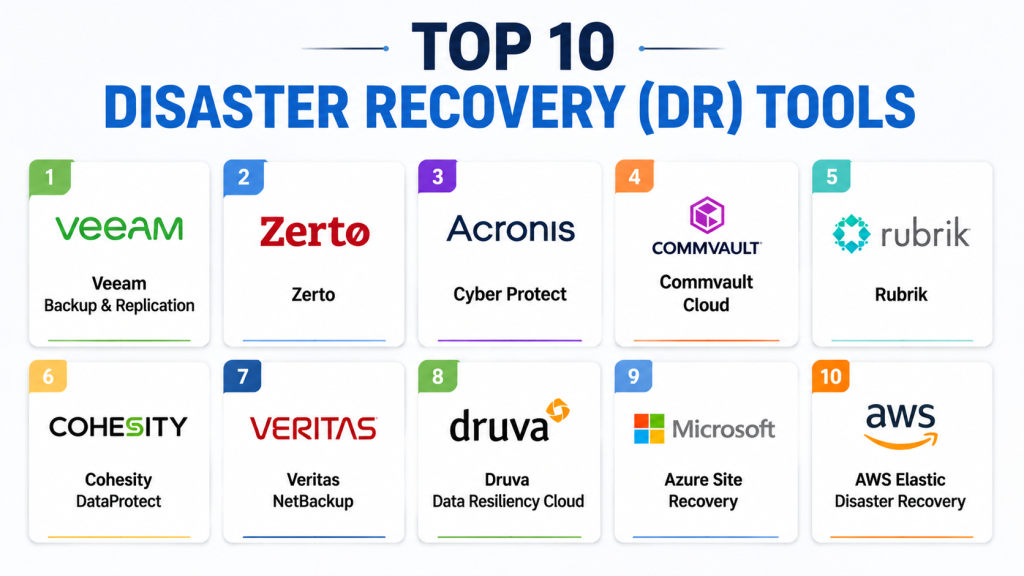
Top 10 Disaster Recovery DR Tools
1 — Veeam Backup & Replication
Short description: Enterprise-grade disaster recovery and backup platform designed for protecting virtual, physical, cloud, and hybrid infrastructure environments.
Key Features
- Instant VM recovery
- Continuous data protection
- Disaster recovery orchestration
- Immutable backup storage
- Automated recovery testing
- Multi-cloud workload protection
- Ransomware resilience features
Pros
- Excellent virtualization support
- Strong recovery performance
- Mature enterprise ecosystem
Cons
- Licensing complexity at scale
- Advanced setup requires expertise
Platforms / Deployment
Cloud / Hybrid / On-premise
Security & Compliance
SSO/SAML, MFA integrations, encryption, RBAC, audit logs, immutable storage
Integrations & Ecosystem
Strong integration with virtualization and cloud infrastructure platforms.
- VMware
- Hyper-V
- AWS
- Microsoft Azure
- Kubernetes
Support & Community
Large enterprise community with extensive documentation and enterprise support resources.
2 — Zerto
Short description: Continuous data protection and disaster recovery platform focused on automated failover and business continuity for enterprise workloads.
Key Features
- Continuous replication
- Automated failover orchestration
- Journal-based recovery
- Multi-site recovery workflows
- Real-time workload protection
- Recovery testing automation
- Cloud migration support
Pros
- Very low recovery point objectives
- Strong failover automation
- Reliable enterprise recovery workflows
Cons
- Premium enterprise pricing
- Requires infrastructure planning
Platforms / Deployment
Cloud / Hybrid
Security & Compliance
Encryption, MFA integrations, RBAC, audit logging
Integrations & Ecosystem
Strong integration with virtualization and enterprise recovery environments.
- VMware
- Hyper-V
- AWS
- Azure
- Enterprise storage systems
Support & Community
Enterprise-focused support ecosystem with mature implementation resources.
3 — Acronis Cyber Protect
Short description: Unified disaster recovery, backup, and cybersecurity platform designed for SMB and mid-market infrastructure protection.
Key Features
- Integrated backup and recovery
- Anti-ransomware protection
- Cloud disaster recovery
- Endpoint security management
- Centralized administration
- Automated recovery workflows
- SaaS workload protection
Pros
- Combines security and recovery
- Good SMB flexibility
- Strong ransomware defense
Cons
- Enterprise scalability varies
- Interface can feel crowded
Platforms / Deployment
Cloud / Hybrid
Security & Compliance
MFA, encryption, RBAC, audit logs, ransomware protection
Integrations & Ecosystem
Strong integration with cloud, virtualization, and endpoint ecosystems.
- Microsoft 365
- VMware
- Hyper-V
- Google Workspace
- MSP management platforms
Support & Community
Strong onboarding experience with MSP-focused support resources.
4 — Commvault Cloud
Short description: Enterprise disaster recovery and cloud workload protection platform built for hybrid and multi-cloud infrastructure environments.
Key Features
- Multi-cloud recovery orchestration
- SaaS application protection
- AI-powered anomaly detection
- Compliance reporting
- Immutable recovery storage
- Automated failover testing
- Disaster recovery automation
Pros
- Excellent enterprise scalability
- Strong cloud workload support
- Advanced recovery orchestration
Cons
- Premium pricing structure
- Steeper learning curve
Platforms / Deployment
Cloud / Hybrid
Security & Compliance
Encryption, RBAC, MFA integrations, audit logs, compliance controls
Integrations & Ecosystem
Deep integration with enterprise cloud and virtualization ecosystems.
- AWS
- Azure
- Google Cloud
- VMware
- Kubernetes
Support & Community
Enterprise-grade support with professional implementation resources.
5 — Rubrik
Short description: Modern cloud-native disaster recovery platform focused on ransomware resilience, immutable recovery, and automated operations.
Key Features
- Immutable architecture
- Automated disaster recovery workflows
- SaaS application protection
- Threat monitoring
- Instant recovery options
- Policy-based automation
- Cloud-native management
Pros
- Strong ransomware resilience
- Modern user experience
- Excellent automation features
Cons
- Enterprise-focused pricing
- Smaller SMB focus
Platforms / Deployment
Cloud / Hybrid
Security & Compliance
Encryption, MFA integrations, RBAC, audit logging, immutable storage
Integrations & Ecosystem
Strong integration with enterprise cloud and SaaS platforms.
- Microsoft 365
- VMware
- AWS
- Azure
- ServiceNow
Support & Community
Strong enterprise onboarding and technical support ecosystem.
6 — Cohesity DataProtect
Short description: Unified disaster recovery and backup platform designed for hybrid cloud scalability, ransomware resilience, and centralized data management.
Key Features
- Unified disaster recovery workflows
- Immutable storage
- Cloud archival
- AI-powered threat detection
- SaaS workload protection
- Automated policy management
- Data deduplication
Pros
- Strong scalability
- Efficient storage optimization
- Good hybrid-cloud support
Cons
- Enterprise pricing
- Complex infrastructure planning
Platforms / Deployment
Cloud / Hybrid
Security & Compliance
Encryption, RBAC, MFA integrations, immutable storage, audit logging
Integrations & Ecosystem
Strong integration with enterprise cloud and virtualization platforms.
- AWS
- Azure
- VMware
- NAS storage
- Kubernetes
Support & Community
Enterprise-focused support with strong operational documentation.
7 — Veritas NetBackup
Short description: Enterprise disaster recovery and business continuity platform designed for large-scale hybrid and multi-cloud environments.
Key Features
- Enterprise recovery orchestration
- Multi-cloud workload protection
- Compliance reporting
- Data deduplication
- Recovery automation
- Virtualization support
- Hybrid infrastructure management
Pros
- Mature enterprise ecosystem
- Broad workload support
- Strong scalability
Cons
- Traditional interface design
- Higher operational complexity
Platforms / Deployment
Cloud / Hybrid / On-premise
Security & Compliance
Encryption, RBAC, audit logging, compliance reporting
Integrations & Ecosystem
Strong integration with enterprise applications and cloud infrastructure.
- VMware
- AWS
- Azure
- Oracle
- SAP systems
Support & Community
Large enterprise support network with mature documentation resources.
8 — Druva Data Resiliency Cloud
Short description: Cloud-native disaster recovery and SaaS protection platform designed for simplified deployment and centralized cloud management.
Key Features
- SaaS application recovery
- Endpoint workload protection
- Cloud-native disaster recovery
- Centralized management
- Compliance reporting
- Ransomware monitoring
- Automated backup workflows
Pros
- Fully cloud-native architecture
- Easy deployment experience
- Strong Microsoft 365 protection
Cons
- Limited on-premise flexibility
- Enterprise customization varies
Platforms / Deployment
Cloud
Security & Compliance
Encryption, MFA, RBAC, audit logging, compliance controls
Integrations & Ecosystem
Strong integration with SaaS and cloud infrastructure platforms.
- Microsoft 365
- Google Workspace
- AWS
- Salesforce
- Endpoint management systems
Support & Community
Cloud-focused support with strong onboarding resources.
9 — Microsoft Azure Site Recovery
Short description: Microsoft-based disaster recovery platform designed for replicating and recovering workloads across Azure and hybrid environments.
Key Features
- Automated failover orchestration
- VM replication
- Recovery testing automation
- Hybrid infrastructure support
- Centralized administration
- Compliance monitoring
- Azure-native recovery management
Pros
- Excellent Azure integration
- Strong hybrid-cloud support
- Flexible disaster recovery workflows
Cons
- Best suited for Microsoft environments
- Advanced configuration complexity
Platforms / Deployment
Cloud / Hybrid
Security & Compliance
SSO/SAML, MFA, encryption, RBAC, audit logs
Integrations & Ecosystem
Strong integration with Microsoft cloud and virtualization platforms.
- Azure
- Hyper-V
- VMware
- Microsoft Defender
- Azure Monitor
Support & Community
Large enterprise support ecosystem with extensive Microsoft documentation.
10 — AWS Elastic Disaster Recovery
Short description: AWS-native disaster recovery platform focused on continuous replication and rapid cloud workload restoration.
Key Features
- Continuous server replication
- Automated recovery orchestration
- Point-in-time recovery
- AWS workload recovery
- Failover testing
- Centralized administration
- Cloud-native disaster recovery
Pros
- Strong AWS integration
- Scalable cloud recovery
- Flexible infrastructure support
Cons
- AWS-centric functionality
- Limited multi-cloud flexibility
Platforms / Deployment
Cloud
Security & Compliance
Encryption, IAM controls, audit logging, secure replication workflows
Integrations & Ecosystem
Deep integration with AWS cloud infrastructure services.
- Amazon EC2
- Amazon S3
- CloudWatch
- IAM
- AWS Backup
Support & Community
Strong cloud-focused documentation and enterprise support resources.
Comparison Table
| Tool Name | Best For | Platforms Supported | Deployment | Standout Feature | Public Rating |
|---|---|---|---|---|---|
| Veeam Backup & Replication | Enterprise virtualization DR | Windows, Linux | Cloud / Hybrid | Instant VM recovery | N/A |
| Zerto | Continuous replication | Windows, Linux | Cloud / Hybrid | Journal-based recovery | N/A |
| Acronis Cyber Protect | SMB cyber recovery | Windows, macOS, Linux | Cloud / Hybrid | Integrated security and DR | N/A |
| Commvault Cloud | Enterprise multi-cloud DR | Windows, Linux | Cloud / Hybrid | Multi-cloud orchestration | N/A |
| Rubrik | Ransomware resilience | Windows, Linux | Cloud / Hybrid | Immutable architecture | N/A |
| Cohesity DataProtect | Hybrid-cloud recovery | Windows, Linux | Cloud / Hybrid | Unified data management | N/A |
| Veritas NetBackup | Large enterprise DR | Windows, Linux | Cloud / Hybrid | Enterprise scalability | N/A |
| Druva Data Resiliency Cloud | Cloud-native DR | Windows, macOS, Linux | Cloud | SaaS workload protection | N/A |
| Microsoft Azure Site Recovery | Azure environments | Windows, Linux | Cloud / Hybrid | Azure-native DR | N/A |
| AWS Elastic Disaster Recovery | AWS infrastructure recovery | Windows, Linux | Cloud | Continuous replication | N/A |
Evaluation & Scoring of Disaster Recovery DR Tools
| Tool | Core | Ease | Integrations | Security | Performance | Support | Value | Weighted Total |
|---|---|---|---|---|---|---|---|---|
| Veeam Backup & Replication | 9.5 | 8.7 | 9.4 | 9.2 | 9.4 | 9.1 | 8.7 | 9.1 |
| Zerto | 9.3 | 8.4 | 8.9 | 9.0 | 9.5 | 8.8 | 8.1 | 8.9 |
| Acronis Cyber Protect | 8.8 | 8.8 | 8.5 | 9.0 | 8.6 | 8.7 | 8.8 | 8.8 |
| Commvault Cloud | 9.4 | 7.9 | 9.3 | 9.3 | 9.1 | 8.9 | 8.0 | 8.9 |
| Rubrik | 9.2 | 8.8 | 8.9 | 9.4 | 9.0 | 8.8 | 8.2 | 8.9 |
| Cohesity DataProtect | 9.0 | 8.4 | 8.8 | 9.1 | 8.9 | 8.7 | 8.2 | 8.7 |
| Veritas NetBackup | 9.1 | 7.6 | 8.9 | 9.0 | 8.9 | 8.5 | 7.8 | 8.5 |
| Druva Data Resiliency Cloud | 8.7 | 9.0 | 8.4 | 8.8 | 8.6 | 8.7 | 8.9 | 8.8 |
| Microsoft Azure Site Recovery | 8.9 | 8.5 | 9.0 | 8.9 | 8.8 | 8.8 | 8.5 | 8.8 |
| AWS Elastic Disaster Recovery | 8.8 | 8.4 | 8.9 | 8.8 | 8.8 | 8.7 | 8.4 | 8.7 |
These scores represent comparative evaluations based on disaster recovery automation, scalability, recovery performance, ransomware resilience, cloud integration depth, and operational usability. Organizations with strict uptime and compliance requirements should prioritize security, automation, and recovery orchestration capabilities. SMBs may focus more heavily on ease of deployment and operational simplicity, while enterprises often prioritize scalability and hybrid-cloud flexibility.
Which Disaster Recovery DR Tool Is Right for You?
Solo / Freelancer
Freelancers and small consulting environments usually benefit from lightweight cloud-native recovery solutions with simplified deployment and lower operational overhead. Druva and Acronis are practical options for endpoint and SaaS recovery protection.
SMB
Small and medium-sized businesses often prioritize ease of use, ransomware resilience, and affordability. Acronis, Druva, and Veeam provide balanced functionality without requiring highly complex infrastructure.
Mid-Market
Mid-market organizations generally require stronger automation, hybrid-cloud flexibility, and recovery testing capabilities. Cohesity and Azure Site Recovery provide scalable operational workflows for growing infrastructures.
Enterprise
Large enterprises managing hybrid and multi-cloud infrastructure often benefit most from Veeam, Zerto, Rubrik, and Commvault because of their scalability, orchestration depth, and ransomware resilience.
Budget vs Premium
Budget-focused organizations may prefer Druva or Acronis for simpler deployment and predictable operational costs. Premium enterprise environments often justify investment in Rubrik, Zerto, or Commvault.
Feature Depth vs Ease of Use
Druva and Azure Site Recovery provide strong usability and cloud-native simplicity, while Veritas and Commvault deliver deeper enterprise recovery orchestration with higher operational complexity.
Integrations & Scalability
Organizations heavily invested in VMware ecosystems often gain significant value from Veeam and Zerto integrations. AWS and Azure-centric businesses may prefer native recovery platforms.
Security & Compliance Needs
Highly regulated industries should prioritize immutable storage, compliance reporting, audit logging, ransomware detection, and automated recovery validation capabilities.
Frequently Asked Questions
1. What are Disaster Recovery DR Tools?
Disaster Recovery DR Tools help organizations restore applications, infrastructure, systems, and data after outages, cyberattacks, or operational failures.
2. Why are disaster recovery platforms important?
Without disaster recovery capabilities, organizations may experience prolonged downtime, financial losses, operational disruption, and compliance risks after major incidents.
3. What is the difference between backup and disaster recovery?
Backup focuses on storing recoverable copies of data, while disaster recovery focuses on restoring business operations and infrastructure quickly after failures.
4. What are recovery time objective and recovery point objective?
Recovery time objective measures how quickly systems must recover, while recovery point objective defines how much data loss is acceptable.
5. Are cloud-native disaster recovery tools replacing traditional DR systems?
Cloud-native DR platforms are becoming increasingly popular because they simplify scalability, automation, and hybrid-cloud recovery management.
6. How important is ransomware protection in DR platforms?
Ransomware resilience is now a major requirement because attackers increasingly target backup and recovery systems during cyberattacks.
7. Can these platforms recover SaaS applications?
Yes. Many modern DR platforms support Microsoft 365, Google Workspace, Salesforce, and other SaaS workloads.
8. How often should disaster recovery testing occur?
Organizations should regularly test recovery workflows to ensure failover automation and operational readiness function properly during real incidents.
9. Are these tools suitable for MSPs?
Yes. Many DR platforms provide centralized management, multi-tenant administration, and automation capabilities specifically designed for MSP operations.
10. What is the biggest disaster recovery mistake?
One of the most common mistakes is failing to test recovery plans regularly, which can lead to operational failures during real outages.
Conclusion
Disaster Recovery DR Tools have become essential for modern business continuity, cybersecurity resilience, and operational reliability strategies. As organizations continue expanding hybrid-cloud infrastructure and distributed workforces, fast recovery capabilities, ransomware resilience, and automated failover orchestration are more important than ever. Veeam, Zerto, Rubrik, and Commvault remain strong enterprise leaders because of their scalability and advanced recovery automation, while Druva and Acronis provide flexible cloud-native options for SMB and mid-market environments. Native cloud recovery platforms such as Azure Site Recovery and AWS Elastic Disaster Recovery also provide strong value for organizations deeply invested in hyperscale cloud ecosystems. Ultimately, the right solution depends on workload complexity, uptime requirements, cloud strategy, compliance needs, and operational maturity. Start by identifying critical business systems, defining recovery objectives clearly, testing failover workflows regularly, and gradually scaling disaster recovery operations across your infrastructure.

Find Trusted Cardiac Hospitals
Compare heart hospitals by city and services — all in one place.
Explore Hospitals
I now understand how time attendance software helps accurately track employee working hours, reduce manual errors, and improve payroll and workforce accountability. I’d like to explore more about how biometric and AI-based tracking systems are improving accuracy in real workplaces.