Introduction
Incident Management Tools help organizations detect, manage, prioritize, escalate, and resolve IT incidents efficiently. These platforms are widely used by DevOps teams, IT operations, Site Reliability Engineers, cybersecurity teams, and enterprise support organizations to minimize downtime and maintain service reliability. Modern incident management solutions combine alerting, on-call scheduling, workflow automation, AI-powered incident response, collaboration features, and observability integrations to streamline operational response processes. As cloud-native applications, distributed systems, Kubernetes environments, and hybrid infrastructures continue growing, organizations require faster and more intelligent incident response capabilities. Incident Management Tools now play a critical role in maintaining uptime, improving operational resilience, reducing Mean Time To Resolution (MTTR), and supporting modern DevOps and SRE practices.
Real-World Use Cases Include:
- Managing production outages and service disruptions.
- Automating on-call alerting and escalation workflows.
- Coordinating incident response across distributed teams.
- Integrating observability and monitoring alerts into response workflows.
- Supporting compliance and audit reporting for IT operations.
Key Buyer Evaluation Criteria Include:
- Real-time alerting and escalation capabilities.
- On-call scheduling and incident routing.
- AI-powered incident correlation and automation.
- Integration ecosystem with monitoring and observability tools.
- Incident collaboration and communication workflows.
- Security controls including RBAC, MFA, and audit logging.
- Scalability for enterprise operations.
- Dashboard usability and reporting capabilities.
- Mobile accessibility and response workflows.
- Pricing transparency and operational flexibility.
Best for:
DevOps teams, Site Reliability Engineers, IT operations teams, enterprises operating mission-critical infrastructure, SaaS providers, fintech organizations, healthcare platforms, and businesses managing distributed cloud-native applications.
Not ideal for:
Small businesses with very limited infrastructure complexity, organizations without dedicated IT operations teams, or environments where simple email-based alerting is sufficient.
Key Trends in Incident Management Tools
- AI-powered incident correlation and root cause analysis are becoming standard capabilities.
- Automated remediation workflows are reducing operational response times.
- Unified observability integration with logs, traces, metrics, and alerts is expanding rapidly.
- Kubernetes-native incident response workflows are becoming more common.
- ChatOps integration is improving team collaboration during incidents.
- Mobile-first incident response experiences are gaining importance.
- Compliance-focused audit logging and governance capabilities are expanding.
- OpenTelemetry integration is improving observability interoperability.
- Predictive analytics are helping organizations identify incidents proactively.
- Multi-cloud and distributed infrastructure incident visibility are becoming operational requirements.
How We Selected These Tools (Methodology)
The tools in this list were selected using multiple operational and technical evaluation criteria:
- Enterprise adoption and market reputation.
- Feature completeness across incident management workflows.
- Reliability and operational performance capabilities.
- AI-powered automation and analytics functionality.
- Integration ecosystem flexibility.
- Security and compliance readiness.
- Scalability for enterprise and cloud-native environments.
- Ease of onboarding and operational usability.
- Vendor support quality and community engagement.
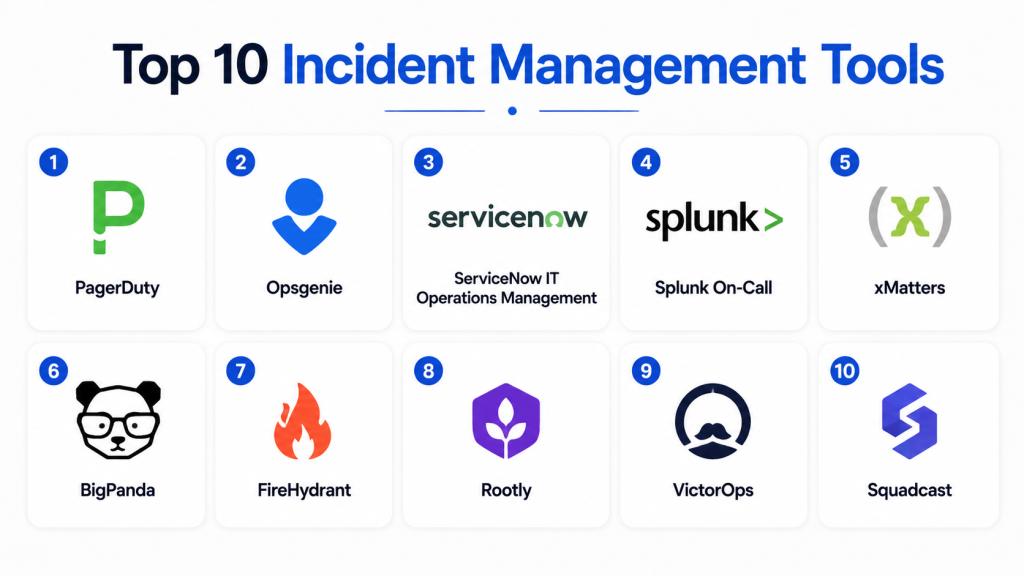
Top 10 Incident Management Tools
1 — PagerDuty
Short description
PagerDuty is one of the most widely adopted incident management platforms for DevOps, IT operations, and SRE teams. It provides real-time alerting, on-call scheduling, automation, and AI-powered incident response workflows.
Key Features
- Intelligent alert routing and escalation.
- AI-powered incident response automation.
- On-call scheduling and duty management.
- Incident analytics and reporting.
- ChatOps collaboration workflows.
- Mobile incident response applications.
- Event intelligence and noise reduction.
Pros
- Strong enterprise-grade scalability.
- Excellent observability integrations.
- Mature incident automation capabilities.
Cons
- Premium pricing structure.
- Complex setup for advanced workflows.
- Smaller teams may find it feature-heavy.
Platforms / Deployment
- Web / Windows / macOS / Linux / iOS / Android
- Cloud
Security & Compliance
- SOC 2
- SSO/SAML
- MFA
- RBAC
- Audit logs
- Encryption
Integrations & Ecosystem
PagerDuty integrates deeply with monitoring, observability, DevOps, and cloud ecosystems.
- AWS
- Azure
- Datadog
- Splunk
- Slack
- ServiceNow
Support & Community
Strong enterprise support ecosystem with extensive documentation, onboarding resources, and active community engagement.
2 — Opsgenie
Short description
Opsgenie is an incident management and alerting platform designed for DevOps, IT operations, and support teams requiring reliable escalation workflows and on-call management.
Key Features
- Alert escalation workflows.
- On-call scheduling management.
- Incident response automation.
- Multi-channel alerting.
- Mobile incident management.
- Team collaboration workflows.
- Reporting and analytics.
Pros
- Strong alert routing capabilities.
- Good Atlassian ecosystem integration.
- Flexible scheduling features.
Cons
- Advanced automation setup may require expertise.
- UI complexity for beginners.
- Some enterprise features require premium plans.
Platforms / Deployment
- Web / Windows / macOS / Linux / iOS / Android
- Cloud
Security & Compliance
- SSO/SAML
- MFA
- RBAC
- Encryption
Integrations & Ecosystem
Opsgenie integrates with observability, DevOps, and ITSM ecosystems.
- Jira
- Slack
- Datadog
- AWS
- ServiceNow
- APIs
Support & Community
Strong Atlassian-backed documentation and onboarding support resources.
3 — ServiceNow IT Operations Management
Short description
ServiceNow ITOM combines incident management, IT operations workflows, automation, and enterprise service management into a unified operational platform.
Key Features
- Enterprise incident management workflows.
- AI-powered event correlation.
- ITSM and CMDB integration.
- Automated remediation workflows.
- Change and problem management integration.
- Service health dashboards.
- Compliance and governance reporting.
Pros
- Excellent enterprise workflow automation.
- Strong governance and compliance capabilities.
- Deep ITSM ecosystem integration.
Cons
- High implementation complexity.
- Premium enterprise pricing.
- Requires specialized administration expertise.
Platforms / Deployment
- Web / Windows / macOS / Linux
- Cloud / Hybrid
Security & Compliance
- SOC 2
- ISO 27001
- SSO/SAML
- MFA
- RBAC
- Audit logs
Integrations & Ecosystem
ServiceNow integrates with enterprise IT operations and observability ecosystems.
- AWS
- Azure
- Splunk
- PagerDuty
- Jira
- APIs
Support & Community
Enterprise-focused support with implementation partners and extensive documentation resources.
4 — Splunk On-Call
Short description
Splunk On-Call is an incident response platform focused on real-time alerting, operational visibility, and observability-driven incident workflows.
Key Features
- Intelligent incident routing.
- On-call scheduling.
- Real-time escalation workflows.
- Observability integration.
- Incident analytics.
- Mobile incident response.
- Team collaboration features.
Pros
- Strong observability integration.
- Scalable operational workflows.
- Good analytics capabilities.
Cons
- Premium pricing model.
- Learning curve for advanced configurations.
- Requires observability ecosystem familiarity.
Platforms / Deployment
- Web / Windows / Linux / macOS / iOS / Android
- Cloud
Security & Compliance
- SOC 2
- MFA
- RBAC
- Encryption
- SSO/SAML
Integrations & Ecosystem
Splunk On-Call integrates with cloud-native observability and DevOps ecosystems.
- Splunk Observability
- Datadog
- AWS
- Slack
- Kubernetes
- APIs
Support & Community
Strong enterprise support ecosystem with technical onboarding and operational guidance.
5 — xMatters
Short description
xMatters is an incident response and service reliability platform focused on workflow automation, intelligent alerting, and operational collaboration.
Key Features
- Incident escalation workflows.
- Workflow automation.
- Intelligent alert management.
- Mobile incident response.
- ChatOps collaboration.
- Incident analytics dashboards.
- Service reliability workflows.
Pros
- Excellent automation capabilities.
- Strong enterprise workflow flexibility.
- Good operational collaboration tools.
Cons
- Complex enterprise setup.
- UI can feel overwhelming initially.
- Premium pricing for advanced automation.
Platforms / Deployment
- Web / Windows / Linux / macOS / iOS / Android
- Cloud
Security & Compliance
- SSO/SAML
- MFA
- RBAC
- Encryption
Integrations & Ecosystem
xMatters integrates with observability, ITSM, and DevOps ecosystems.
- ServiceNow
- Jira
- Slack
- Datadog
- AWS
- APIs
Support & Community
Enterprise onboarding assistance with strong operational documentation resources.
6 — BigPanda
Short description (2–3 lines):
BigPanda is an AIOps and incident management platform focused on event correlation, operational intelligence, and noise reduction.
Key Features
- AI-powered event correlation.
- Incident prioritization workflows.
- Root cause analysis.
- Alert noise reduction.
- Automation and orchestration.
- Real-time operational analytics.
- Service dependency mapping.
Pros
- Strong AIOps capabilities.
- Excellent alert correlation workflows.
- Reduces operational noise significantly.
Cons
- Enterprise-focused pricing.
- Requires mature observability infrastructure.
- Advanced onboarding complexity.
Platforms / Deployment
- Web / Linux / Windows / macOS
- Cloud
Security & Compliance
- SSO/SAML
- RBAC
- MFA
- Encryption
Integrations & Ecosystem
BigPanda integrates with observability and IT operations ecosystems.
- Datadog
- Splunk
- AWS
- PagerDuty
- ServiceNow
- APIs
Support & Community
Enterprise-focused support with operational consulting and onboarding assistance.
7 — FireHydrant
Short description
FireHydrant is an incident management platform designed for engineering teams requiring collaborative response workflows and reliability operations.
Key Features
- Incident response coordination.
- Runbook automation.
- Slack-native workflows.
- Service catalog integration.
- Postmortem management.
- Incident analytics.
- Real-time collaboration.
Pros
- Strong engineering-focused workflows.
- Excellent Slack integration.
- Good incident documentation features.
Cons
- Smaller ecosystem than enterprise competitors.
- Less extensive enterprise governance features.
- Limited legacy ITSM functionality.
Platforms / Deployment
- Web / macOS / Linux / Windows
- Cloud
Security & Compliance
- SSO/SAML
- RBAC
- Encryption
Integrations & Ecosystem
FireHydrant integrates with engineering and observability ecosystems.
- Slack
- Datadog
- PagerDuty
- GitHub
- Jira
- APIs
Support & Community
Developer-focused support ecosystem with responsive onboarding resources.
8 — Rootly
Short description
Rootly is a modern incident management platform built around Slack-native workflows and automated operational response.
Key Features
- Slack-native incident management.
- Automated incident workflows.
- Runbook orchestration.
- Postmortem automation.
- Alert escalation.
- Incident analytics.
- Service catalog visibility.
Pros
- Excellent Slack integration.
- Strong automation workflows.
- Modern operational usability.
Cons
- Smaller ecosystem maturity.
- Limited legacy enterprise ITSM features.
- Some advanced workflows require customization.
Platforms / Deployment
- Web / macOS / Linux / Windows
- Cloud
Security & Compliance
- SSO/SAML
- RBAC
- MFA
- Encryption
Integrations & Ecosystem
Rootly integrates with DevOps, engineering, and observability ecosystems.
- Slack
- Datadog
- GitHub
- Jira
- PagerDuty
- APIs
Support & Community
Modern onboarding experience with strong developer-focused documentation.
9 — VictorOps
Short description
VictorOps is an incident management and collaboration platform focused on alerting, on-call scheduling, and operational response workflows.
Key Features
- Incident alerting workflows.
- On-call scheduling.
- Team collaboration features.
- Escalation management.
- Incident reporting.
- ChatOps workflows.
- Mobile response tools.
Pros
- Strong operational collaboration.
- Good alert escalation workflows.
- Developer-friendly usability.
Cons
- Smaller ecosystem compared to larger vendors.
- Limited AI-powered analytics.
- Some enterprise features are basic.
Platforms / Deployment
- Web / Windows / macOS / Linux / iOS / Android
- Cloud
Security & Compliance
- SSO/SAML
- MFA
- RBAC
- Encryption
Integrations & Ecosystem
VictorOps integrates with monitoring and DevOps ecosystems.
- Splunk
- AWS
- Datadog
- Slack
- APIs
- Kubernetes
Support & Community
Responsive support with onboarding resources and operational documentation.
10 — Squadcast
Short description
Squadcast is an incident response and reliability operations platform designed for DevOps and SRE teams requiring modern on-call and alert management workflows.
Key Features
- Alert escalation workflows.
- On-call scheduling.
- AI-powered incident management.
- Runbook automation.
- Incident analytics dashboards.
- ChatOps collaboration.
- Service reliability workflows.
Pros
- Modern operational interface.
- Good automation capabilities.
- Cost-effective compared to enterprise competitors.
Cons
- Smaller ecosystem maturity.
- Fewer enterprise governance capabilities.
- Limited advanced analytics depth.
Platforms / Deployment
- Web / Windows / Linux / macOS / iOS / Android
- Cloud
Security & Compliance
- SSO/SAML
- MFA
- RBAC
- Encryption
Integrations & Ecosystem
Squadcast integrates with observability, DevOps, and collaboration ecosystems.
- Slack
- Datadog
- AWS
- PagerDuty
- Jira
- APIs
Support & Community
Strong customer onboarding and developer-focused support resources.
Comparison Table (Top 10)
| Tool Name | Best For | Platform(s) Supported | Deployment | Standout Feature | Public Rating |
|---|---|---|---|---|---|
| PagerDuty | Enterprise incident response | Web, Linux, Windows | Cloud | AI-powered automation | N/A |
| Opsgenie | Alerting and scheduling | Web, Linux, Windows | Cloud | Atlassian integration | N/A |
| ServiceNow ITOM | Enterprise IT operations | Web, Linux, Windows | Cloud/Hybrid | ITSM integration | N/A |
| Splunk On-Call | Observability-driven response | Web, Linux, Windows | Cloud | Observability integration | N/A |
| xMatters | Workflow automation | Web, Linux, Windows | Cloud | Automation workflows | N/A |
| BigPanda | AIOps operations | Web, Linux, Windows | Cloud | Event correlation | N/A |
| FireHydrant | Engineering incident response | Web, Linux, Windows | Cloud | Slack-native workflows | N/A |
| Rootly | Modern incident workflows | Web, Linux, Windows | Cloud | Automated runbooks | N/A |
| VictorOps | Operational collaboration | Web, Linux, Windows | Cloud | ChatOps workflows | N/A |
| Squadcast | Modern DevOps response | Web, Linux, Windows | Cloud | Cost-effective automation | N/A |
Evaluation & Scoring of Incident Management Tools
| Tool Name | Core (25%) | Ease (15%) | Integrations (15%) | Security (10%) | Performance (10%) | Support (10%) | Value (15%) | Weighted Total (0–10) |
|---|---|---|---|---|---|---|---|---|
| PagerDuty | 9 | 8 | 9 | 9 | 9 | 8 | 6 | 8.5 |
| Opsgenie | 8 | 8 | 8 | 8 | 8 | 8 | 8 | 8.0 |
| ServiceNow ITOM | 9 | 6 | 9 | 9 | 9 | 8 | 5 | 7.9 |
| Splunk On-Call | 8 | 7 | 8 | 8 | 8 | 8 | 6 | 7.7 |
| xMatters | 8 | 7 | 8 | 8 | 8 | 8 | 7 | 7.8 |
| BigPanda | 9 | 6 | 8 | 8 | 9 | 8 | 6 | 7.9 |
| FireHydrant | 7 | 8 | 7 | 7 | 8 | 7 | 8 | 7.5 |
| Rootly | 8 | 8 | 7 | 7 | 8 | 7 | 8 | 7.7 |
| VictorOps | 7 | 8 | 7 | 7 | 7 | 7 | 8 | 7.3 |
| Squadcast | 8 | 8 | 7 | 7 | 8 | 7 | 8 | 7.7 |
These scores are comparative and designed to help organizations evaluate platforms across incident response depth, automation, integrations, security, usability, scalability, support quality, and operational value. Buyers should align tool selection with infrastructure complexity, operational maturity, cloud-native adoption, and incident response requirements.
Which Incident Management Tool Is Right for You?
Solo / Freelancer
VictorOps and Squadcast are suitable for lightweight operational response and affordable alert management workflows.
SMB
Opsgenie and Rootly provide balanced usability, automation, and operational scalability for growing businesses.
Mid-Market
PagerDuty and Splunk On-Call deliver scalable incident response and observability-driven operational workflows.
Enterprise
ServiceNow ITOM, PagerDuty, and BigPanda are ideal for enterprises requiring advanced automation, governance, and operational scalability.
Budget vs Premium
Squadcast and VictorOps provide cost-efficient operational response workflows, while PagerDuty and ServiceNow target premium enterprise environments.
Feature Depth vs Ease of Use
PagerDuty balances usability and advanced functionality well, while ServiceNow and BigPanda provide deeper operational workflows with higher complexity.
Integrations & Scalability
Organizations should prioritize Kubernetes, observability, ITSM, and cloud-native integration capabilities.
Security & Compliance Needs
Enterprises with strict governance requirements should prioritize tools offering RBAC, MFA, SSO, encryption, audit logs, and compliance workflows.
Frequently Asked Questions (FAQs)
1. What are Incident Management Tools?
Incident Management Tools help organizations detect, prioritize, escalate, and resolve operational incidents quickly and efficiently.
2. Why are incident management platforms important?
They reduce downtime, improve operational visibility, automate response workflows, and help organizations maintain service reliability.
3. What is on-call scheduling?
On-call scheduling allows organizations to assign incident response responsibilities to specific team members during defined time periods.
4. Do incident management tools support automation?
Most modern platforms support workflow automation, incident escalation, and automated remediation workflows.
5. Can incident management platforms integrate with observability tools?
Yes. Many tools integrate with monitoring, logging, tracing, APM, and observability ecosystems for unified operational visibility.
6. Are AI features important in incident management?
AI-powered analytics help organizations reduce alert noise, identify root causes faster, and improve operational efficiency.
7. What integrations are important for incident management tools?
Important integrations include cloud providers, observability platforms, ITSM systems, CI/CD tools, and collaboration platforms.
8. What is ChatOps in incident management?
ChatOps enables teams to manage incidents, collaborate, and automate workflows directly within communication platforms like Slack or Microsoft Teams.
9. Are cloud-native incident management platforms reliable?
Yes. Most modern incident management platforms are designed for distributed cloud-native and Kubernetes-based environments.
10. How should organizations choose an incident management platform?
Organizations should evaluate automation capabilities, integrations, scalability, security controls, usability, and operational response requirements.
Conclusion
Incident Management Tools have become essential for organizations operating modern cloud-native applications, distributed infrastructure, and mission-critical digital services. Businesses now require more than simple alerting systems — they need intelligent incident response workflows, AI-powered automation, observability integration, collaboration capabilities, and scalable operational visibility to maintain uptime and reduce operational risk. Platforms like PagerDuty, ServiceNow ITOM, and BigPanda deliver enterprise-grade incident management and automation capabilities, while Rootly and Squadcast provide modern alternatives for engineering-focused teams prioritizing agility and collaboration. The right incident management platform ultimately depends on infrastructure complexity, operational maturity, observability requirements, governance needs, and budget considerations. Organizations should shortlist multiple solutions, validate integration workflows, test incident response automation, and run pilot deployments before making long-term operational decisions.

Find Trusted Cardiac Hospitals
Compare heart hospitals by city and services — all in one place.
Explore Hospitals
This gave me a better understanding of how incident management tools help teams respond faster and reduce downtime. I’d like to explore which tool fits best for DevOps and IT support teams.