Introduction
Graph database platforms are specialized databases designed to store, manage, and analyze highly connected data. Unlike traditional relational databases that rely on tables and rows, graph databases use nodes, edges, and relationships to represent complex connections between data points. This structure makes them highly effective for applications where relationships matter as much as the data itself. As organizations adopt AI, real-time analytics, fraud detection, and recommendation systems in 2026 and beyond, graph databases are becoming increasingly important. Modern enterprises need faster ways to discover hidden relationships, analyze networks, and power intelligent applications at scale.
Common Real-world use cases include:
- Fraud detection and risk analysis
- Social network analysis
- Knowledge graphs for AI and LLMs
- Recommendation engines
- Network and IT infrastructure mapping
When Evaluating graph database platforms, buyers should consider:
- Query performance and scalability
- Native graph processing capabilities
- AI and analytics integration
- Cloud and hybrid deployment support
- Security and compliance features
- Visualization capabilities
- Multi-model database support
- Developer experience and APIs
- Integration ecosystem
- Operational complexity and pricing
Best for: Enterprises managing highly connected data, AI and analytics teams, fraud detection platforms, recommendation systems, cybersecurity operations, and organizations building knowledge graph infrastructures.
Not ideal for: Simple transactional applications, lightweight CRUD systems, or organizations whose workloads fit traditional SQL databases without relationship-heavy analysis requirements.
Key Trends in Graph Database Platforms
- Knowledge graphs are becoming critical for enterprise AI and Retrieval-Augmented Generation systems.
- Hybrid graph plus vector search capabilities are rapidly expanding.
- Real-time graph analytics is improving fraud detection and cybersecurity operations.
- Cloud-native graph database adoption continues increasing across enterprises.
- Multi-model databases are combining graph, document, and vector workloads.
- AI-assisted query generation and graph exploration are simplifying developer workflows.
- Graph machine learning and graph neural networks are gaining enterprise traction.
- Compliance and governance tooling are becoming stronger for regulated industries.
- Distributed graph processing is improving scalability for massive datasets.
- Open-source graph platforms continue competing strongly with enterprise vendors.
How We Selected These Tools
The platforms in this list were selected based on:
- Market adoption and developer mindshare
- Enterprise production readiness
- Feature completeness for graph workloads
- Performance and scalability reputation
- Security and governance capabilities
- AI and analytics ecosystem integrations
- Cloud and self-hosted deployment flexibility
- Community strength and documentation quality
- Support for modern graph query languages
- Fit across startups, SMBs, and enterprises
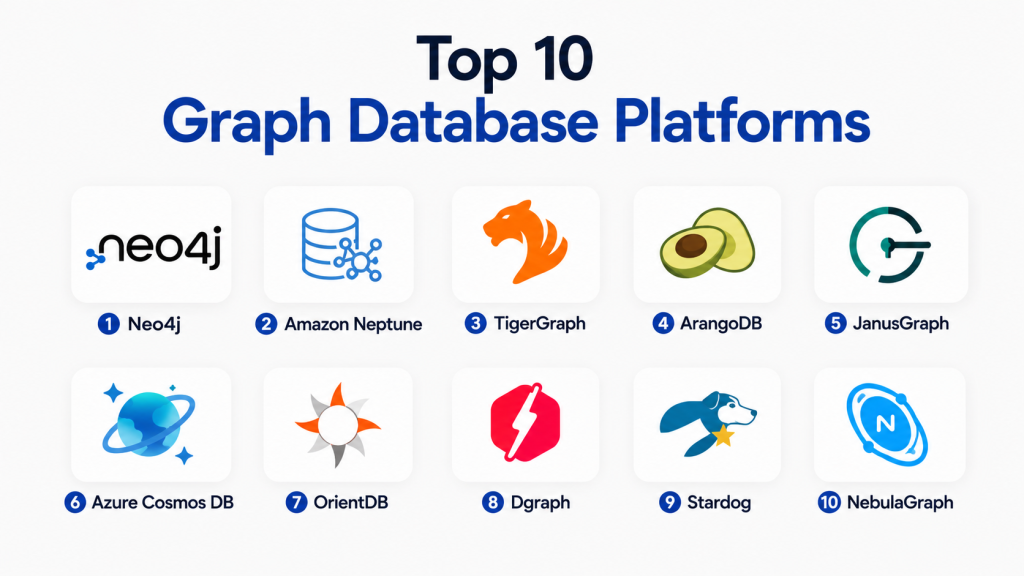
Top 10 Graph Database Platforms
1- Neo4j
Short description: Neo4j is one of the most recognized native graph databases, widely used for relationship analytics, knowledge graphs, and AI-driven applications.
Key Features
- Native property graph architecture
- Cypher query language
- Real-time graph analytics
- Graph data science library
- AI and vector search support
- Horizontal scalability
- Visualization tooling
Pros
- Strong graph query performance
- Large enterprise ecosystem
- Excellent graph analytics tooling
Cons
- Enterprise pricing can be expensive
- Advanced scaling may require expertise
- Resource-intensive for very large deployments
Platforms / Deployment
- Cloud / Self-hosted / Hybrid
Security & Compliance
- RBAC
- Encryption
- SSO/SAML
- Audit logging
- GDPR support
Integrations & Ecosystem
Neo4j integrates strongly with enterprise AI, analytics, and developer ecosystems.
- Apache Spark
- Kafka
- LangChain
- GraphQL
- Python
- Kubernetes
Support & Community
Large global community with strong enterprise support and extensive documentation.
2- Amazon Neptune
Short description: Amazon Neptune is AWS’s managed graph database service optimized for highly connected datasets and graph analytics workloads.
Key Features
- Fully managed graph database
- Supports RDF and property graph models
- Gremlin and SPARQL query support
- High availability architecture
- Automated backups
- AWS-native security integration
- Scalable graph processing
Pros
- Tight AWS ecosystem integration
- Managed infrastructure simplicity
- Strong reliability and uptime
Cons
- Primarily optimized for AWS users
- Less flexibility than open-source options
- Advanced configurations can be complex
Platforms / Deployment
- Cloud
Security & Compliance
- Encryption
- IAM integration
- Audit logging
- VPC isolation
- Compliance support through AWS infrastructure
Integrations & Ecosystem
Neptune integrates closely with AWS analytics and AI services.
- AWS Lambda
- SageMaker
- IAM
- CloudWatch
- Glue
- S3
Support & Community
Strong enterprise support through AWS with broad cloud documentation resources.
3- TigerGraph
Short description: TigerGraph is a high-performance distributed graph database platform designed for enterprise analytics and real-time graph processing.
Key Features
- Distributed native graph engine
- Real-time deep-link analytics
- Parallel processing architecture
- AI and machine learning integrations
- Visual graph studio
- Large-scale graph analytics
- Graph data science tooling
Pros
- Excellent performance at scale
- Strong enterprise analytics capabilities
- Powerful graph visualization tools
Cons
- Higher learning curve
- Premium enterprise pricing
- Smaller open-source ecosystem
Platforms / Deployment
- Cloud / Self-hosted / Hybrid
Security & Compliance
- RBAC
- Encryption
- SSO/SAML
- Audit logging
Integrations & Ecosystem
TigerGraph supports enterprise AI and analytics workflows.
- Kafka
- Spark
- Kubernetes
- Python
- REST APIs
Support & Community
Strong enterprise onboarding and analytics-focused support services.
4- ArangoDB
Short description: ArangoDB is a multi-model database combining graph, document, and key-value functionality in a single platform.
Key Features
- Multi-model architecture
- Native graph querying
- Distributed clustering
- Flexible schema design
- Full-text search
- Graph analytics
- Multi-cloud deployment support
Pros
- Flexible multi-model capabilities
- Strong developer experience
- Good scalability balance
Cons
- Smaller market adoption than Neo4j
- Advanced tuning may require expertise
- Enterprise tooling varies by edition
Platforms / Deployment
- Cloud / Self-hosted / Hybrid
Security & Compliance
- RBAC
- Encryption
- Authentication support
Integrations & Ecosystem
ArangoDB integrates with modern development and analytics ecosystems.
- Kubernetes
- JavaScript
- Python
- GraphQL
- Docker
Support & Community
Growing community with good documentation and flexible deployment guidance.
5- JanusGraph
Short description: JanusGraph is an open-source distributed graph database optimized for scalability and large graph workloads.
Key Features
- Distributed graph processing
- Scalable storage backends
- Apache TinkerPop support
- Multi-datacenter support
- Real-time graph traversal
- Extensible architecture
- Open-source ecosystem
Pros
- Highly scalable architecture
- Flexible backend options
- Strong open-source community
Cons
- Complex operational setup
- Requires infrastructure expertise
- Limited managed service options
Platforms / Deployment
- Self-hosted / Hybrid
Security & Compliance
- Depends on infrastructure configuration
Integrations & Ecosystem
JanusGraph integrates with large-scale distributed data ecosystems.
- Cassandra
- HBase
- Elasticsearch
- Spark
- Hadoop
Support & Community
Strong engineering-focused community with extensive open-source contributions.
6- Azure Cosmos DB
Short description: Azure Cosmos DB includes graph database functionality through Gremlin APIs for cloud-native graph applications.
Key Features
- Multi-model database support
- Global distribution
- Gremlin API compatibility
- Automatic scaling
- High availability
- Multi-region replication
- Low-latency access
Pros
- Strong Microsoft cloud integration
- Simplified global scalability
- Good enterprise reliability
Cons
- Costs can rise at scale
- Graph features less specialized than native graph databases
- Azure-centric ecosystem focus
Platforms / Deployment
- Cloud
Security & Compliance
- Encryption
- RBAC
- Azure Active Directory integration
- Compliance certifications through Azure
Integrations & Ecosystem
Cosmos DB integrates deeply with Microsoft cloud services.
- Azure AI
- Power BI
- Synapse
- Kubernetes
- Azure Functions
Support & Community
Large enterprise support ecosystem with strong Microsoft documentation.
7- OrientDB
Short description: OrientDB is a multi-model open-source database supporting graph, document, and object database capabilities.
Key Features
- Multi-model architecture
- SQL-like graph querying
- Distributed clustering
- ACID transactions
- Graph traversal support
- Schema flexibility
- Native indexing
Pros
- Flexible data modeling
- Strong open-source accessibility
- Combines multiple database models
Cons
- Smaller community than leading vendors
- Limited enterprise ecosystem
- Advanced scaling can be difficult
Platforms / Deployment
- Self-hosted
Security & Compliance
- RBAC
- Encryption support
- Authentication features
Integrations & Ecosystem
OrientDB supports flexible integration patterns for developers.
- Java
- REST APIs
- Docker
- JVM ecosystems
Support & Community
Moderate community activity with open-source-focused support resources.
8- Dgraph
Short description: Dgraph is a distributed graph database built for modern cloud-native applications and scalable graph workloads.
Key Features
- Native GraphQL support
- Distributed architecture
- Horizontal scalability
- Real-time graph traversal
- Cloud-native deployment
- ACID transactions
- Fast graph querying
Pros
- Excellent GraphQL integration
- Modern cloud-native architecture
- Strong scalability capabilities
Cons
- Smaller enterprise ecosystem
- Fewer enterprise governance tools
- Managed deployment options vary
Platforms / Deployment
- Cloud / Self-hosted
Security & Compliance
- RBAC
- Encryption
- Authentication support
Integrations & Ecosystem
Dgraph supports modern application development environments.
- GraphQL
- Kubernetes
- Docker
- Go
- REST APIs
Support & Community
Developer-focused community with improving enterprise support options.
9- Stardog
Short description: Stardog is an enterprise knowledge graph platform focused on semantic reasoning, linked data, and AI-driven data integration.
Key Features
- Knowledge graph platform
- Semantic reasoning
- RDF and SPARQL support
- AI-powered data virtualization
- Enterprise governance
- Data lineage support
- Knowledge graph automation
Pros
- Excellent enterprise knowledge graph tooling
- Strong semantic AI capabilities
- Advanced governance support
Cons
- Enterprise-focused pricing
- Specialized learning curve
- Less suitable for lightweight projects
Platforms / Deployment
- Cloud / Self-hosted / Hybrid
Security & Compliance
- RBAC
- SSO/SAML
- Encryption
- Audit logging
Integrations & Ecosystem
Stardog integrates with enterprise data management ecosystems.
- Tableau
- Power BI
- Kafka
- GraphQL
- REST APIs
Support & Community
Strong enterprise onboarding and semantic web expertise.
10- NebulaGraph
Short description: NebulaGraph is a distributed open-source graph database optimized for large-scale graph analytics and low-latency queries.
Key Features
- Distributed graph engine
- Massive scalability
- Real-time graph analytics
- OpenCypher compatibility
- Cloud-native architecture
- High-performance storage engine
- Visualization support
Pros
- Strong performance scalability
- Good support for large graph datasets
- Open-source flexibility
Cons
- Smaller global ecosystem
- Enterprise support varies
- Fewer integrations than major competitors
Platforms / Deployment
- Cloud / Self-hosted
Security & Compliance
- Authentication support
- Encryption
- RBAC
Integrations & Ecosystem
NebulaGraph supports scalable analytics and graph workloads.
- Kubernetes
- Spark
- Kafka
- Python
- GraphStudio
Support & Community
Growing open-source community with increasing enterprise adoption.
Comparison Table
| Tool Name | Best For | Platform(s) Supported | Deployment | Standout Feature | Public Rating |
|---|---|---|---|---|---|
| Neo4j | Enterprise graph analytics | Web/Linux | Cloud/Self-hosted/Hybrid | Native graph engine | N/A |
| Amazon Neptune | AWS graph workloads | Web | Cloud | Managed graph infrastructure | N/A |
| TigerGraph | Real-time enterprise analytics | Web/Linux | Cloud/Self-hosted/Hybrid | Distributed parallel graph processing | N/A |
| ArangoDB | Multi-model workloads | Web/Linux | Cloud/Self-hosted/Hybrid | Graph plus document model | N/A |
| JanusGraph | Large distributed graphs | Linux | Self-hosted/Hybrid | Backend flexibility | N/A |
| Azure Cosmos DB | Microsoft cloud users | Web | Cloud | Global distribution | N/A |
| OrientDB | Flexible multi-model use cases | Linux | Self-hosted | SQL-like graph querying | N/A |
| Dgraph | GraphQL-native applications | Web/Linux | Cloud/Self-hosted | Native GraphQL support | N/A |
| Stardog | Enterprise knowledge graphs | Web/Linux | Cloud/Self-hosted/Hybrid | Semantic reasoning | N/A |
| NebulaGraph | Large-scale graph analytics | Linux | Cloud/Self-hosted | Massive scalability | N/A |
Evaluation & Scoring of Graph Database Platforms
| Tool Name | Core 25% | Ease 15% | Integrations 15% | Security 10% | Performance 10% | Support 10% | Value 15% | Weighted Total |
|---|---|---|---|---|---|---|---|---|
| Neo4j | 9 | 8 | 9 | 9 | 9 | 9 | 7 | 8.6 |
| Amazon Neptune | 8 | 8 | 9 | 9 | 8 | 8 | 7 | 8.1 |
| TigerGraph | 9 | 6 | 8 | 8 | 10 | 8 | 7 | 8.2 |
| ArangoDB | 8 | 8 | 8 | 7 | 8 | 7 | 9 | 8.0 |
| JanusGraph | 8 | 5 | 7 | 6 | 9 | 7 | 9 | 7.5 |
| Azure Cosmos DB | 8 | 8 | 9 | 9 | 8 | 8 | 7 | 8.1 |
| OrientDB | 7 | 7 | 7 | 6 | 7 | 6 | 8 | 7.1 |
| Dgraph | 8 | 8 | 8 | 7 | 8 | 7 | 8 | 7.9 |
| Stardog | 9 | 6 | 8 | 9 | 8 | 8 | 6 | 7.9 |
| NebulaGraph | 8 | 6 | 7 | 7 | 9 | 7 | 8 | 7.7 |
These scores are comparative rather than absolute and should be evaluated in the context of specific workloads and organizational priorities. Enterprise platforms typically score higher in governance, support, and scalability, while open-source solutions often provide stronger value flexibility. Buyers should prioritize tools that align with operational maturity, AI strategy, and long-term infrastructure requirements.
Which Graph Database Tool Is Right for You?
Solo / Freelancer
ArangoDB and Dgraph are strong options for independent developers needing flexible graph capabilities without excessive operational overhead.
SMB
Neo4j and ArangoDB provide strong usability, documentation, and balanced scalability for growing businesses.
Mid-Market
Amazon Neptune and Azure Cosmos DB are excellent for organizations already invested in AWS or Microsoft cloud ecosystems.
Enterprise
Neo4j, TigerGraph, and Stardog are strong enterprise choices for large-scale graph analytics, AI workloads, and governance-heavy environments.
Budget vs Premium
Open-source platforms like JanusGraph, NebulaGraph, and Dgraph provide cost flexibility, while enterprise vendors offer stronger support and managed infrastructure.
Feature Depth vs Ease of Use
Neo4j balances advanced graph features with usability, while TigerGraph and Stardog focus more heavily on advanced enterprise capabilities.
Integrations & Scalability
Cloud-native organizations may benefit from Neptune or Cosmos DB, while AI-centric workloads may favor Neo4j or TigerGraph.
Security & Compliance Needs
Enterprises handling sensitive data should prioritize vendors with strong RBAC, encryption, SSO/SAML integration, and audit logging features.
Frequently Asked Questions FAQs
1. What is a graph database?
A graph database stores data as nodes and relationships, making it highly effective for analyzing connected data structures and complex relationships.
2. How are graph databases different from relational databases?
Relational databases use tables and joins, while graph databases are optimized for relationship traversal and network-style analysis.
3. What industries commonly use graph databases?
Financial services, cybersecurity, healthcare, telecommunications, e-commerce, and AI-driven enterprises commonly use graph databases.
4. Are graph databases useful for AI applications?
Yes. Graph databases are increasingly important for knowledge graphs, semantic reasoning, recommendation engines, and Retrieval-Augmented Generation systems.
5. What is a knowledge graph?
A knowledge graph organizes interconnected entities and relationships to support intelligent search, AI reasoning, and contextual understanding.
6. Can graph databases scale for enterprise workloads?
Modern graph databases such as Neo4j, TigerGraph, and NebulaGraph are designed for large-scale distributed graph workloads.
7. Are graph databases expensive?
Costs vary depending on deployment model, infrastructure scale, and support requirements. Open-source options may reduce licensing costs but increase operational effort.
8. What query languages are used in graph databases?
Common graph query languages include Cypher, Gremlin, SPARQL, and GraphQL depending on the platform.
9. What security features should enterprises prioritize?
RBAC, encryption, audit logging, SSO/SAML integration, and compliance support are increasingly important for enterprise graph workloads.
10. Can graph databases integrate with cloud platforms and analytics tools?
Yes. Most leading graph databases integrate with cloud providers, AI frameworks, analytics platforms, and data streaming tools.
Conclusion
Graph database platforms are becoming foundational technologies for AI, analytics, cybersecurity, recommendation systems, and enterprise knowledge management. As organizations increasingly rely on connected data and intelligent reasoning, graph databases provide capabilities that traditional relational systems often struggle to deliver efficiently. The market now includes a diverse range of solutions spanning cloud-native managed services, open-source distributed platforms, and enterprise knowledge graph ecosystems. Neo4j remains a strong leader for general enterprise graph workloads, while TigerGraph and Stardog focus heavily on large-scale analytics and semantic AI. Cloud-centric organizations may prefer Amazon Neptune or Azure Cosmos DB, while engineering-driven teams may favor JanusGraph, Dgraph, or NebulaGraph for flexibility and scalability. The best approach is to shortlist two or three platforms, test them against real-world relationship-heavy datasets, validate integration and governance requirements, and evaluate operational complexity before production rollout.

Find Trusted Cardiac Hospitals
Compare heart hospitals by city and services — all in one place.
Explore Hospitals
This article explains graph database platforms in a clear way. The comparison of features, pros, and cons makes it easier to understand which database is suitable for different use cases.