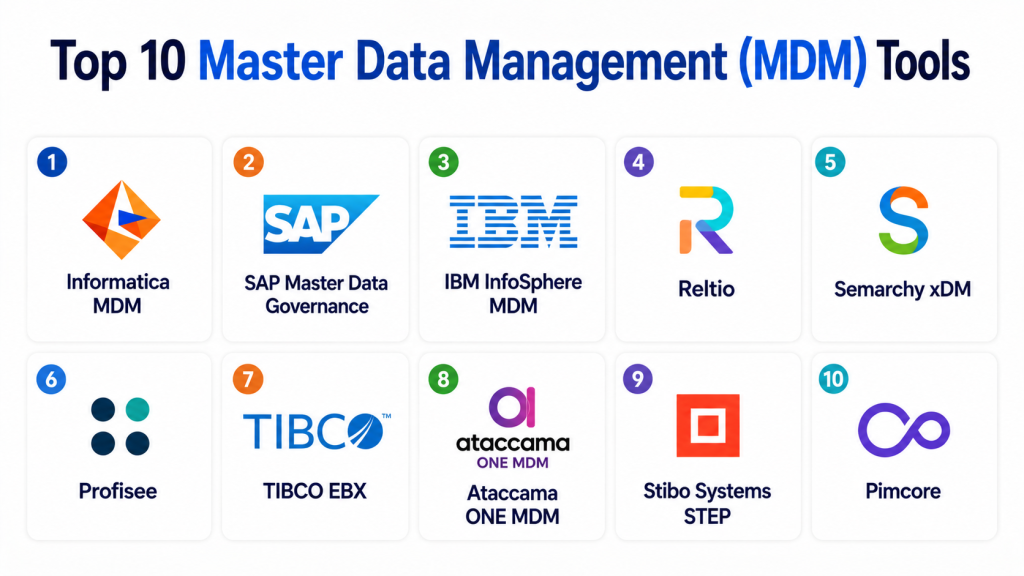
Introduction
Master Data Management MDM Tools help organizations create a centralized, accurate, and trusted version of critical business data across systems, departments, and applications. These platforms manage core business entities such as customers, products, suppliers, employees, assets, and financial records to improve consistency, governance, and operational reliability.
As enterprises increasingly adopt cloud platforms, AI-driven analytics, omnichannel operations, and distributed business systems, maintaining clean and unified master data has become essential. Without strong MDM strategies, organizations often face duplicate records, inconsistent reporting, poor customer experiences, compliance risks, and unreliable analytics. Modern MDM platforms now combine AI-assisted matching, governance automation, data quality management, lineage tracking, and workflow orchestration to improve enterprise-wide data trust.
Common real-world use cases include:
- Creating unified customer and product records
- Supporting enterprise analytics and AI initiatives
- Managing supplier and vendor data consistency
- Improving regulatory compliance and reporting
- Enabling omnichannel customer experiences
Key evaluation criteria buyers should consider:
- Data matching and deduplication accuracy
- Governance and stewardship workflows
- Multi-domain MDM support
- Cloud and hybrid deployment flexibility
- Integration ecosystem depth
- Scalability and performance
- Data quality automation
- Security and compliance controls
- AI-assisted entity resolution
- Workflow and lineage visibility
Best for: Enterprises, financial institutions, healthcare organizations, retail companies, manufacturing businesses, analytics teams, governance teams, and organizations managing complex distributed data environments.
Not ideal for: Small businesses with limited structured data, startups without centralized operations, or organizations relying on only a few disconnected applications.
Key Trends in Master Data Management MDM Tools for 2026 and Beyond
- AI-assisted entity matching and deduplication are becoming standard features.
- Cloud-native MDM platforms are replacing traditional on-premise deployments.
- Active metadata and lineage integrations are growing rapidly.
- Real-time synchronization is replacing batch-based master data updates.
- Governance automation and stewardship workflows are expanding.
- Multi-domain MDM is becoming a core enterprise requirement.
- Data quality and observability capabilities are increasingly integrated into MDM platforms.
- API-first architectures are improving interoperability across ecosystems.
- Industry-specific MDM templates are accelerating enterprise onboarding.
- Compliance automation and audit readiness remain major investment drivers.
How We Selected These Tools Methodology
The tools in this list were evaluated using the following criteria:
- Enterprise market adoption and industry reputation
- Breadth of MDM functionality and domain coverage
- Governance and stewardship capabilities
- Data quality and matching accuracy
- Cloud-native compatibility and scalability
- Integration ecosystem maturity
- Security and compliance readiness
- Ease of deployment and operational management
- AI-assisted automation capabilities
- Customer fit across SMB, mid-market, and enterprise segments
Top 10 Master Data Management MDM Tools
1 — Informatica MDM
Short description: Informatica MDM is one of the most established enterprise MDM platforms, offering multi-domain master data management, governance, and AI-assisted matching for large-scale organizations.
Key Features
- Multi-domain master data management
- AI-powered entity matching
- Data stewardship workflows
- Governance automation
- Hierarchy management
- Real-time synchronization
- Metadata and lineage integration
Pros
- Excellent enterprise scalability
- Mature governance ecosystem
- Strong integration capabilities
Cons
- Premium enterprise pricing
- Complex deployment processes
- Requires governance expertise
Platforms / Deployment
- Web / Windows / Linux
- Cloud / Hybrid / Self-hosted
Security & Compliance
Supports SSO/SAML, MFA, RBAC, encryption, audit logging, and enterprise governance controls.
Integrations & Ecosystem
Informatica integrates broadly across analytics, ERP, CRM, and governance ecosystems.
- SAP
- Salesforce
- Oracle
- Snowflake
- AWS
- Azure
Support & Community
Strong enterprise support ecosystem with extensive consulting, onboarding, and training services.
2 — SAP Master Data Governance
Short description: SAP Master Data Governance focuses on centralized governance and enterprise master data consistency across SAP-centric business environments.
Key Features
- Centralized governance workflows
- Multi-domain MDM support
- Business process integration
- Workflow automation
- Data quality management
- Compliance monitoring
- Hierarchical data modeling
Pros
- Excellent SAP ecosystem integration
- Strong governance workflows
- Reliable enterprise scalability
Cons
- Best suited for SAP environments
- Complex onboarding for non-SAP teams
- Premium implementation costs
Platforms / Deployment
- Web / Windows / Linux
- Cloud / Hybrid / Self-hosted
Security & Compliance
Supports encryption, RBAC, SSO, MFA, and enterprise governance controls.
Integrations & Ecosystem
SAP integrates deeply with ERP and enterprise business systems.
- SAP S/4HANA
- SAP ERP
- Snowflake
- Power BI
- Oracle
- Azure
Support & Community
Strong enterprise support network with global implementation partners.
3 — IBM InfoSphere MDM
Short description: IBM InfoSphere MDM provides enterprise-grade master data governance, entity resolution, and operational consistency across distributed business systems.
Key Features
- Multi-domain MDM
- AI-assisted matching
- Governance workflows
- Relationship management
- Data stewardship tools
- Real-time synchronization
- Hybrid deployment support
Pros
- Strong enterprise reliability
- Mature governance functionality
- Broad industry adoption
Cons
- Legacy complexity in some deployments
- Higher operational overhead
- Enterprise implementation requirements
Platforms / Deployment
- Web / Windows / Linux
- Cloud / Hybrid / Self-hosted
Security & Compliance
Supports SSO, RBAC, encryption, audit logging, and enterprise compliance workflows.
Integrations & Ecosystem
IBM integrates with enterprise analytics and operational ecosystems.
- Db2
- SAP
- Oracle
- Salesforce
- AWS
- Hadoop
Support & Community
Enterprise-focused support with extensive consulting and onboarding resources.
4 — Reltio
Short description: Reltio is a cloud-native MDM platform focused on real-time master data management and AI-driven entity resolution.
Key Features
- Cloud-native MDM architecture
- AI-powered matching
- Real-time synchronization
- Relationship graph modeling
- Governance automation
- API-first design
- Data stewardship tools
Pros
- Modern cloud architecture
- Strong real-time capabilities
- Good scalability for modern enterprises
Cons
- Premium enterprise pricing
- Advanced workflows require planning
- Complex integrations in legacy environments
Platforms / Deployment
- Web
- Cloud
Security & Compliance
Supports SSO/SAML, MFA, encryption, RBAC, and governance controls.
Integrations & Ecosystem
Reltio integrates with modern cloud and enterprise platforms.
- Salesforce
- Snowflake
- AWS
- Azure
- SAP
- ServiceNow
Support & Community
Strong enterprise onboarding and cloud-focused support ecosystem.
5 — Semarchy xDM
Short description: Semarchy xDM combines MDM, governance, and low-code data management capabilities for modern enterprise environments.
Key Features
- Multi-domain MDM
- Low-code workflow management
- Data quality integration
- Governance automation
- Entity resolution
- API-driven architecture
- Stewardship dashboards
Pros
- Flexible deployment options
- Good usability for business teams
- Modern workflow capabilities
Cons
- Smaller ecosystem than major enterprise vendors
- Advanced customization may require expertise
- Enterprise governance depth varies
Platforms / Deployment
- Web / Windows / Linux
- Cloud / Hybrid
Security & Compliance
Supports encryption, RBAC, SSO, and enterprise governance workflows.
Integrations & Ecosystem
Semarchy integrates with analytics and operational ecosystems.
- Snowflake
- Salesforce
- SAP
- Oracle
- AWS
- Power BI
Support & Community
Growing enterprise community with strong onboarding assistance.
6 — Profisee
Short description: Profisee focuses on Microsoft-centric MDM and governance workflows for mid-market and enterprise organizations.
Key Features
- Multi-domain MDM
- Governance automation
- Data stewardship workflows
- Microsoft ecosystem integration
- Workflow orchestration
- Hierarchy management
- Data quality support
Pros
- Excellent Microsoft compatibility
- Good usability for governance teams
- Scalable cloud deployment support
Cons
- Best optimized for Microsoft ecosystems
- Smaller global ecosystem
- Advanced integrations may require consulting
Platforms / Deployment
- Web / Windows
- Cloud / Hybrid
Security & Compliance
Supports SSO, RBAC, encryption, and governance controls.
Integrations & Ecosystem
Profisee integrates strongly with Microsoft analytics and cloud platforms.
- Azure
- SQL Server
- Power BI
- Dynamics 365
- Snowflake
- Salesforce
Support & Community
Strong onboarding and Microsoft-focused partner ecosystem.
7 — TIBCO EBX
Short description: TIBCO EBX provides enterprise-grade MDM, reference data management, and governance capabilities across complex organizations.
Key Features
- Multi-domain MDM
- Reference data management
- Workflow automation
- Governance policies
- Hierarchy management
- Data stewardship tools
- API extensibility
Pros
- Strong governance capabilities
- Flexible data modeling
- Good scalability for enterprise environments
Cons
- UI complexity for some users
- Requires operational expertise
- Premium enterprise positioning
Platforms / Deployment
- Web / Windows / Linux
- Cloud / Hybrid / Self-hosted
Security & Compliance
Supports RBAC, encryption, audit logging, and governance workflows.
Integrations & Ecosystem
TIBCO integrates with enterprise analytics and operational systems.
- SAP
- Oracle
- Salesforce
- AWS
- Azure
- Tableau
Support & Community
Enterprise-focused support and implementation services available.
8 — Ataccama ONE MDM
Short description: Ataccama ONE combines MDM, governance, data quality, and metadata management in a unified enterprise platform.
Key Features
- AI-assisted entity matching
- Governance automation
- Data quality integration
- Metadata management
- Stewardship workflows
- Multi-domain MDM
- Workflow orchestration
Pros
- Unified governance ecosystem
- Strong automation capabilities
- Scalable architecture
Cons
- Complex enterprise deployments
- Premium pricing structure
- Requires governance maturity
Platforms / Deployment
- Web / Windows / Linux
- Cloud / Hybrid / Self-hosted
Security & Compliance
Supports SSO/SAML, RBAC, MFA, encryption, and governance controls.
Integrations & Ecosystem
Ataccama integrates with analytics, governance, and cloud ecosystems.
- Snowflake
- SAP
- AWS
- Azure
- Oracle
- Salesforce
Support & Community
Enterprise consulting and onboarding support available.
9 — Stibo Systems STEP
Short description: Stibo Systems STEP focuses on product and customer master data management for retail, manufacturing, and supply chain environments.
Key Features
- Product information management
- Multi-domain MDM
- Supplier data governance
- Workflow automation
- Hierarchical relationship management
- Omnichannel data synchronization
- Governance controls
Pros
- Strong retail and product data focus
- Good omnichannel capabilities
- Reliable governance workflows
Cons
- Industry specialization may limit flexibility
- Enterprise onboarding complexity
- Premium implementation costs
Platforms / Deployment
- Web
- Cloud / Hybrid
Security & Compliance
Supports encryption, RBAC, SSO, and governance workflows.
Integrations & Ecosystem
Stibo integrates with retail and enterprise commerce ecosystems.
- SAP
- Salesforce
- Adobe Commerce
- Oracle
- AWS
- Azure
Support & Community
Strong retail-focused implementation and onboarding ecosystem.
10 — Pimcore
Short description: Pimcore is an open-source platform combining MDM, product information management, digital asset management, and customer data management capabilities.
Key Features
- Open-source architecture
- Product and customer MDM
- Workflow automation
- API-first integrations
- Flexible data modeling
- Digital asset management
- Omnichannel support
Pros
- Flexible open-source deployment
- Good value for mid-market teams
- Broad digital commerce capabilities
Cons
- Enterprise governance depth varies
- Requires technical expertise
- Complex customization for large deployments
Platforms / Deployment
- Web / Linux / macOS
- Cloud / Hybrid / Self-hosted
Security & Compliance
Supports authentication, RBAC, and secure deployment configurations.
Integrations & Ecosystem
Pimcore integrates with digital commerce and analytics ecosystems.
- Magento
- Salesforce
- SAP
- AWS
- Shopify
- ERP systems
Support & Community
Active open-source ecosystem with commercial support options available.
Comparison Table
| Tool Name | Best For | Platform(s) Supported | Deployment | Standout Feature | Public Rating |
|---|---|---|---|---|---|
| Informatica MDM | Enterprise governance | Web, Windows, Linux | Cloud, Hybrid | AI-powered matching | N/A |
| SAP Master Data Governance | SAP environments | Web, Windows, Linux | Cloud, Hybrid | SAP integration depth | N/A |
| IBM InfoSphere MDM | Enterprise consistency | Web, Windows, Linux | Cloud, Hybrid | Relationship management | N/A |
| Reltio | Real-time cloud MDM | Web | Cloud | Graph-based relationships | N/A |
| Semarchy xDM | Flexible governance workflows | Web, Windows, Linux | Cloud, Hybrid | Low-code MDM workflows | N/A |
| Profisee | Microsoft ecosystems | Web, Windows | Cloud, Hybrid | Microsoft integration focus | N/A |
| TIBCO EBX | Reference data management | Web, Windows, Linux | Cloud, Hybrid | Flexible data modeling | N/A |
| Ataccama ONE MDM | Unified governance ecosystem | Web, Windows, Linux | Cloud, Hybrid | AI-assisted governance | N/A |
| Stibo Systems STEP | Retail and product data | Web | Cloud, Hybrid | Product information management | N/A |
| Pimcore | Open-source flexibility | Web, Linux, macOS | Cloud, Hybrid | Open-source architecture | N/A |
Evaluation & Scoring of Master Data Management MDM Tools
| Tool Name | Core 25% | Ease 15% | Integrations 15% | Security 10% | Performance 10% | Support 10% | Value 15% | Weighted Total |
|---|---|---|---|---|---|---|---|---|
| Informatica MDM | 9.5 | 7.5 | 9 | 9 | 9 | 9 | 6.5 | 8.6 |
| SAP Master Data Governance | 9 | 7 | 9 | 9 | 8.5 | 8.5 | 6.5 | 8.3 |
| IBM InfoSphere MDM | 8.5 | 7 | 8.5 | 8.5 | 8.5 | 8.5 | 7 | 8.0 |
| Reltio | 8.5 | 8.5 | 8.5 | 8.5 | 8.5 | 8 | 7.5 | 8.3 |
| Semarchy xDM | 8 | 8.5 | 8 | 8 | 8 | 7.5 | 8 | 8.0 |
| Profisee | 8 | 8 | 8 | 8 | 8 | 7.5 | 8.5 | 8.0 |
| TIBCO EBX | 8.5 | 7 | 8 | 8.5 | 8.5 | 8 | 7 | 7.9 |
| Ataccama ONE MDM | 8.5 | 7.5 | 8.5 | 9 | 8.5 | 8 | 7 | 8.1 |
| Stibo Systems STEP | 8 | 7.5 | 8 | 8 | 8 | 7.5 | 7.5 | 7.8 |
| Pimcore | 7.5 | 8 | 7.5 | 7 | 7.5 | 7 | 9 | 7.8 |
These scores are comparative evaluations designed to help buyers understand relative strengths across governance, usability, scalability, integrations, and operational value. Enterprise-focused platforms generally score higher in governance and compliance, while open-source and mid-market tools often deliver stronger flexibility and cost efficiency. Buyers should prioritize criteria aligned with operational maturity, governance requirements, and ecosystem complexity.
Which Master Data Management MDM Tool Is Right for You?
Solo / Freelancer
Pimcore provides strong flexibility for smaller technical teams needing customizable MDM capabilities without heavy enterprise licensing costs.
SMB
Profisee and Semarchy xDM balance usability, governance functionality, and manageable deployment complexity for growing organizations.
Mid-Market
Reltio and Ataccama ONE provide strong cloud-native scalability, governance automation, and operational flexibility for expanding businesses.
Enterprise
Informatica MDM, SAP Master Data Governance, and IBM InfoSphere MDM are better suited for highly governed enterprise environments requiring large-scale operational consistency.
Budget vs Premium
Open-source and mid-market tools reduce licensing costs but may require more operational expertise. Enterprise suites deliver stronger governance, support, and scalability.
Feature Depth vs Ease of Use
Reltio and Semarchy prioritize modern usability, while Informatica and SAP emphasize deep governance and enterprise orchestration capabilities.
Integrations & Scalability
Organizations with large ERP, CRM, and analytics ecosystems should prioritize integration breadth, API support, and multi-cloud scalability.
Security & Compliance Needs
Highly regulated industries should prioritize RBAC, encryption, audit logging, stewardship workflows, and governance automation capabilities.
Frequently Asked Questions FAQs
1. What are Master Data Management MDM Tools?
MDM tools help organizations centralize, govern, and maintain consistent master records for customers, products, suppliers, employees, and other critical business entities.
2. Why is MDM important for modern enterprises?
Modern organizations operate across multiple cloud systems, ERPs, CRMs, and analytics platforms. MDM improves consistency, compliance, reporting accuracy, and operational trust across distributed environments.
3. What is the difference between MDM and data governance?
MDM focuses on creating trusted master records, while governance focuses on policies, stewardship, compliance, and operational controls around enterprise data usage.
4. Can MDM platforms support AI and analytics initiatives?
Yes. AI systems and analytics workflows depend heavily on clean, consistent, and reliable master data to improve accuracy and operational decision-making.
5. Which industries benefit most from MDM platforms?
Financial services, healthcare, retail, manufacturing, telecommunications, and supply chain-intensive industries benefit significantly from centralized master data consistency.
6. Are cloud-native MDM platforms replacing traditional deployments?
Many organizations are shifting toward cloud-native and hybrid MDM architectures because they offer scalability, real-time synchronization, and improved operational flexibility.
7. What are common MDM implementation mistakes?
Common mistakes include weak governance ownership, poor data stewardship planning, incomplete integration mapping, and underestimating organizational change management requirements.
8. How difficult is migrating between MDM platforms?
Migration complexity depends on data quality, governance workflows, integrations, hierarchy structures, and synchronization requirements. Pilot testing is strongly recommended before full migration.
9. Do MDM tools support real-time synchronization?
Most modern MDM platforms support real-time or near real-time synchronization across operational systems, analytics environments, and customer-facing applications.
10. How should organizations evaluate pricing?
Organizations should evaluate licensing, implementation complexity, governance requirements, scalability costs, connector availability, and operational overhead when comparing platforms.
Conclusion
Master Data Management MDM Tools have become foundational infrastructure for modern enterprises managing complex digital ecosystems, analytics platforms, AI initiatives, and omnichannel business operations. As organizations increasingly depend on accurate, trusted, and governed data, MDM platforms now play a critical role in improving operational consistency, compliance readiness, customer experiences, and enterprise-wide analytics reliability. The best MDM platform depends heavily on governance maturity, operational complexity, cloud strategy, and integration requirements. Enterprise organizations may prioritize Informatica or SAP for governance depth and scalability, while modern cloud-first teams may prefer Reltio or Semarchy for flexibility and usability. The smartest next step is to shortlist two or three platforms, validate integration compatibility with existing ERP and analytics systems, run a pilot using real operational workflows, and then scale gradually across the enterprise.

Find Trusted Cardiac Hospitals
Compare heart hospitals by city and services — all in one place.
Explore Hospitals
This article explains very clearly how MDM tools help organizations maintain accurate, consistent, and reliable master data across different systems and business processes.