Introduction
Warehouse Management Systems WMS are software platforms designed to control, optimize, and automate warehouse operations such as inventory tracking, order picking, packing, shipping, receiving, and storage optimization. These systems act as the operational backbone of modern supply chains by ensuring real-time visibility, accuracy, and efficiency in warehouse workflows. WMS platforms are becoming essential due to the rapid growth of ecommerce, omnichannel retail, global logistics complexity, and rising customer expectations for fast and accurate deliveries. Modern WMS solutions now go beyond basic inventory tracking and include AI-driven optimization, robotics integration, predictive analytics, real-time location systems, and deep ERP integration.
Common real-world use cases include:
- Multi-warehouse inventory control and synchronization
- Automated order picking and packing workflows
- Real-time stock tracking using barcode and RFID systems
- Ecommerce fulfillment optimization
- Cold chain and specialized logistics management
When evaluating WMS platforms, buyers should consider:
- Real-time inventory accuracy and visibility
- Warehouse automation and robotics support
- Integration with ERP, OMS, and ecommerce platforms
- Scalability for high-volume operations
- AI-driven demand and fulfillment optimization
- Barcode, RFID, and IoT compatibility
- Multi-location warehouse support
- Reporting and analytics capabilities
- Cloud vs on-premise deployment options
- Ease of implementation and usability
Best for:
Retailers, ecommerce companies, third-party logistics providers (3PLs), manufacturers, wholesalers, and enterprises managing complex warehouse and distribution networks.
Not ideal for:
Very small businesses with simple inventory needs or organizations that do not operate warehouses or manage physical goods at scale.
Key Trends in Warehouse Management Systems
- AI-powered warehouse optimization is improving picking and packing efficiency
- Robotics and autonomous mobile robots (AMRs) are increasingly integrated with WMS platforms
- Real-time inventory visibility across global warehouses is becoming standard
- Cloud-native WMS solutions are replacing legacy on-premise systems
- IoT-enabled tracking (RFID, sensors) is enhancing real-time accuracy
- Predictive analytics is optimizing demand forecasting and labor planning
- Micro-fulfillment centers are driving decentralized warehouse strategies
- API-first architecture is enabling faster integration with supply chain ecosystems
- Digital twin technology is improving warehouse simulation and planning
- Sustainability tracking is being integrated into logistics operations
How We Selected These Tools (Methodology)
The WMS platforms in this list were selected using structured evaluation criteria:
- Global adoption and industry usage
- Warehouse execution and automation capabilities
- Real-time inventory tracking accuracy
- Integration ecosystem strength (ERP, OMS, TMS, ecommerce)
- Scalability across enterprise warehouse operations
- Security, compliance, and reliability standards
- AI, automation, and optimization capabilities
- Deployment flexibility (cloud, hybrid, on-premise)
- Vendor maturity and support ecosystem
- Fit across SMB, mid-market, and enterprise segments
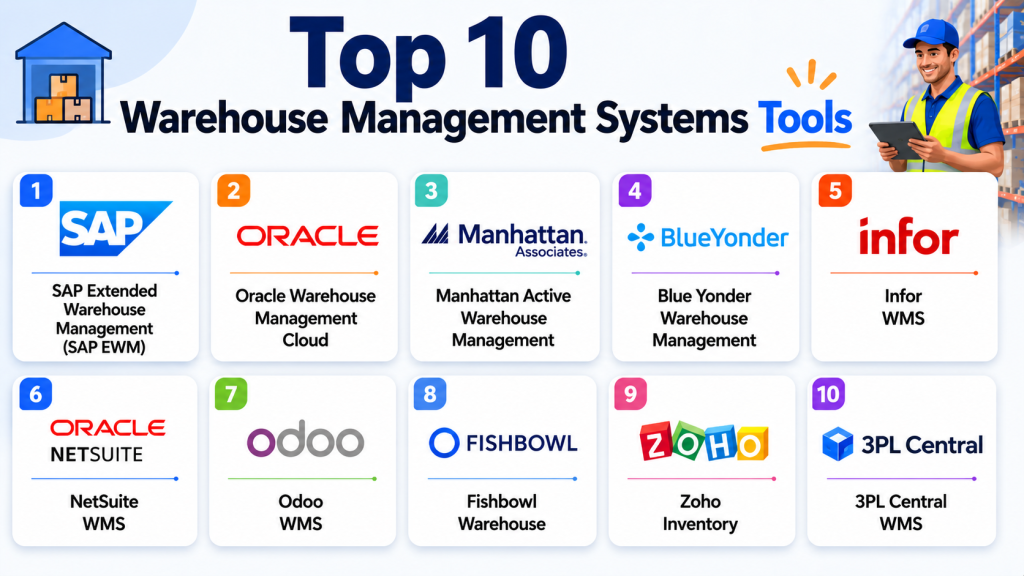
Top 10 Warehouse Management Systems Tools
1 — SAP Extended Warehouse Management
Short description: SAP Extended Warehouse Management is an enterprise-grade WMS designed for complex warehouse operations, deep ERP integration, and global supply chain optimization.
Key Features
- Advanced warehouse execution and control
- Real-time inventory tracking across locations
- Labor management and optimization tools
- Dock and yard management
- Automated picking and packing workflows
- Integration with SAP ERP systems
- Support for RFID and barcode systems
Pros
- Extremely strong enterprise scalability
- Deep SAP ecosystem integration
- Reliable global supply chain support
Cons
- Complex implementation process
- High cost of ownership
- Requires trained specialists
Platforms / Deployment
- Web / Cloud / Hybrid
Security & Compliance
- RBAC
- Encryption
- Audit logs
- Enterprise authentication controls
Integrations & Ecosystem
SAP EWM integrates deeply across enterprise supply chain ecosystems.
- SAP ERP
- Transportation systems
- Robotics platforms
- APIs and middleware
Support & Community
Strong global enterprise support with large consulting ecosystem.
2 — Oracle Warehouse Management Cloud
Short description: Oracle WMS Cloud provides a scalable warehouse management solution designed for modern logistics, ecommerce, and enterprise distribution networks.
Key Features
- Real-time warehouse tracking
- Advanced picking and packing optimization
- Labor management tools
- Automated replenishment
- Multi-warehouse coordination
- Mobile warehouse support
- Reporting and analytics dashboards
Pros
- Strong cloud-native architecture
- Good scalability for enterprise operations
- Deep Oracle ecosystem integration
Cons
- Oracle ecosystem dependency
- Complex setup process
- Higher pricing structure
Platforms / Deployment
- Cloud
Security & Compliance
- RBAC
- Encryption
- Audit logging
Integrations & Ecosystem
- Oracle ERP
- Supply chain systems
- Ecommerce platforms
- APIs
Support & Community
Enterprise-level support and consulting ecosystem.
3 — Manhattan Active Warehouse Management
Short description: Manhattan Active WMS is a modern cloud-native warehouse platform built for high-volume retail and logistics operations.
Key Features
- Real-time warehouse orchestration
- AI-driven slotting optimization
- Labor and task management
- Order fulfillment automation
- Returns processing support
- Multi-site inventory tracking
- Advanced analytics dashboards
Pros
- Modern cloud-native architecture
- Excellent retail optimization capabilities
- Strong scalability
Cons
- Enterprise pricing model
- Requires configuration expertise
- Complex implementation
Platforms / Deployment
- Cloud
Security & Compliance
- RBAC
- Encryption
- Audit logs
Integrations & Ecosystem
- ERP systems
- OMS platforms
- Ecommerce tools
- APIs
Support & Community
Strong enterprise logistics and retail support ecosystem.
4 — Blue Yonder Warehouse Management
Short description: Blue Yonder WMS focuses on AI-driven warehouse optimization and intelligent supply chain execution.
Key Features
- AI-based warehouse optimization
- Real-time inventory visibility
- Predictive demand planning
- Labor optimization tools
- Automated fulfillment workflows
- Robotics integration support
- Supply chain synchronization
Pros
- Strong AI optimization engine
- Excellent supply chain integration
- High scalability
Cons
- Complex deployment process
- Enterprise-focused pricing
- Requires training for optimization
Platforms / Deployment
- Cloud / Hybrid
Security & Compliance
- RBAC
- Encryption
- Audit logging
Integrations & Ecosystem
- ERP systems
- Robotics platforms
- Logistics systems
- APIs
Support & Community
Strong enterprise supply chain expertise.
5 — Infor WMS
Short description: Infor WMS is a flexible warehouse management system designed for multi-industry logistics and distribution environments.
Key Features
- Warehouse execution workflows
- Inventory tracking and visibility
- Order fulfillment management
- Labor management tools
- Mobile warehouse operations
- Reporting dashboards
- Multi-site support
Pros
- Strong industry flexibility
- Good usability
- Scalable architecture
Cons
- Customization complexity
- Requires onboarding support
- Advanced features require configuration
Platforms / Deployment
- Cloud / Hybrid
Security & Compliance
- RBAC
- Encryption
- Audit logs
Integrations & Ecosystem
- ERP systems
- Supply chain tools
- Ecommerce platforms
- APIs
Support & Community
Strong enterprise support and partner ecosystem.
6 — Fishbowl Warehouse
Short description: Fishbowl is a popular SMB-focused warehouse and inventory management solution widely used with QuickBooks integration.
Key Features
- Inventory tracking
- Order management
- Barcode scanning
- Manufacturing workflows
- Warehouse control
- QuickBooks integration
- Reporting tools
Pros
- Strong SMB adoption
- Easy QuickBooks integration
- Simple usability
Cons
- Limited enterprise scalability
- Basic automation features
- UI modernization gaps
Platforms / Deployment
- Windows / Cloud
Security & Compliance
- RBAC
- Encryption (varies)
Integrations & Ecosystem
- QuickBooks
- Ecommerce platforms
- APIs
Support & Community
Strong SMB support ecosystem.
7 — Zoho Inventory
Short description: Zoho Inventory is a lightweight cloud WMS designed for small and medium businesses managing ecommerce and retail operations.
Key Features
- Multi-channel inventory management
- Order tracking and fulfillment
- Warehouse coordination
- Shipping integrations
- Barcode support
- Reporting tools
- Automation workflows
Pros
- Affordable pricing
- Easy setup
- Good SMB usability
Cons
- Limited enterprise features
- Not suitable for complex logistics
- Basic analytics depth
Platforms / Deployment
- Cloud
Security & Compliance
- RBAC
- Encryption
Integrations & Ecosystem
- Zoho suite
- Ecommerce platforms
- Payment systems
- APIs
Support & Community
Strong SMB-focused support ecosystem.
8 — NetSuite WMS
Short description: NetSuite WMS is a cloud-based warehouse management solution integrated into the Oracle NetSuite ERP ecosystem.
Key Features
- Inventory management
- Warehouse task optimization
- Order fulfillment workflows
- Barcode scanning support
- Real-time inventory tracking
- Demand planning tools
- Reporting dashboards
Pros
- Strong ERP integration
- Good cloud scalability
- Unified business suite
Cons
- Complex configuration
- Higher cost structure
- Requires NetSuite ecosystem
Platforms / Deployment
- Cloud
Security & Compliance
- RBAC
- Encryption
- Audit logs
Integrations & Ecosystem
- NetSuite ERP
- Ecommerce systems
- CRM platforms
- APIs
Support & Community
Strong enterprise ERP support ecosystem.
9 — Odoo WMS
Short description: Odoo WMS is an open-source warehouse management system integrated into the broader Odoo ERP ecosystem.
Key Features
- Inventory tracking
- Barcode scanning
- Multi-warehouse support
- Route optimization
- Automation workflows
- Manufacturing integration
- Reporting tools
Pros
- Highly customizable
- Cost-effective solution
- Modular ecosystem
Cons
- Requires configuration effort
- Performance depends on setup
- Advanced features need setup
Platforms / Deployment
- Web / Cloud / Self-hosted
Security & Compliance
- RBAC
- Encryption (varies by setup)
Integrations & Ecosystem
- Odoo ERP modules
- Ecommerce systems
- APIs
- Third-party apps
Support & Community
Large open-source community with enterprise support options.
10 — 3PL Central WMS
Short description: 3PL Central is a warehouse management system built specifically for third-party logistics providers.
Key Features
- Multi-client warehouse management
- Order fulfillment automation
- Inventory tracking
- Billing and invoicing tools
- Barcode scanning
- Reporting dashboards
- Carrier integrations
Pros
- Strong 3PL focus
- Good scalability for logistics providers
- Easy client management
Cons
- Limited manufacturing focus
- Advanced customization may require support
- Not ideal for retail-only operations
Platforms / Deployment
- Cloud
Security & Compliance
- RBAC
- Encryption
- Audit logs
Integrations & Ecosystem
- Ecommerce platforms
- ERP systems
- Shipping carriers
- APIs
Support & Community
Strong logistics-focused support ecosystem.
Comparison Table (Top 10)
| Tool Name | Best For | Platform(s) | Deployment | Standout Feature | Public Rating |
|---|---|---|---|---|---|
| SAP EWM | Enterprise warehouses | Web | Hybrid | ERP integration depth | N/A |
| Oracle WMS Cloud | Enterprise logistics | Web | Cloud | Cloud-native scalability | N/A |
| Manhattan WMS | Retail & logistics | Web | Cloud | AI optimization engine | N/A |
| Blue Yonder WMS | Supply chain AI | Web | Cloud/Hybrid | AI-driven planning | N/A |
| Infor WMS | Multi-industry | Web | Cloud/Hybrid | Flexible workflows | N/A |
| Fishbowl | SMB manufacturing | Windows | Hybrid | QuickBooks integration | N/A |
| Zoho Inventory | SMB ecommerce | Web | Cloud | Affordable simplicity | N/A |
| NetSuite WMS | ERP users | Web | Cloud | Unified ERP system | N/A |
| Odoo WMS | Custom deployments | Web | Cloud/Self-hosted | Modular ERP design | N/A |
| 3PL Central | Logistics providers | Web | Cloud | Multi-client management | N/A |
Evaluation & Scoring of Warehouse Management Systems
| Tool Name | Core | Ease | Integrations | Security | Performance | Support | Value | Total |
|---|---|---|---|---|---|---|---|---|
| SAP EWM | 9.6 | 7.0 | 9.5 | 9.2 | 9.4 | 9.0 | 6.8 | 8.6 |
| Oracle WMS | 9.3 | 7.5 | 9.2 | 9.0 | 9.2 | 8.8 | 7.0 | 8.6 |
| Manhattan WMS | 9.4 | 7.6 | 9.1 | 9.0 | 9.3 | 8.8 | 7.2 | 8.6 |
| Blue Yonder | 9.5 | 7.3 | 9.0 | 9.1 | 9.4 | 8.9 | 7.1 | 8.6 |
| Infor WMS | 8.8 | 8.0 | 8.7 | 8.6 | 8.8 | 8.5 | 8.2 | 8.5 |
| Fishbowl | 8.0 | 8.7 | 8.2 | 8.0 | 8.1 | 8.3 | 8.8 | 8.2 |
| Zoho | 7.8 | 9.0 | 7.9 | 8.2 | 7.9 | 8.4 | 9.2 | 8.3 |
| NetSuite | 9.2 | 7.8 | 9.1 | 9.0 | 9.0 | 8.8 | 7.0 | 8.6 |
| Odoo | 8.6 | 8.5 | 8.7 | 8.4 | 8.6 | 8.3 | 9.0 | 8.5 |
| 3PL Central | 8.4 | 8.6 | 8.5 | 8.3 | 8.5 | 8.4 | 8.7 | 8.4 |
Frequently Asked Questions (FAQs)
1- What is a Warehouse Management System?
A WMS is software that manages warehouse operations such as inventory tracking, order fulfillment, picking, packing, and shipping. It improves accuracy and operational efficiency. It also provides real-time visibility into warehouse activities.
2- Why are WMS platforms important?
They help businesses reduce errors, optimize storage space, improve order accuracy, and speed up fulfillment processes. They are essential for modern supply chain efficiency. They also enable real-time inventory control.
3- Who uses WMS software?
Retailers, manufacturers, logistics providers, ecommerce companies, and wholesalers use WMS systems. Any organization with warehouse operations benefits from them. 3PL providers rely heavily on WMS platforms.
4- What features should a WMS have?
Key features include inventory tracking, barcode scanning, order management, warehouse automation, reporting, and integration with ERP systems. Advanced systems include AI optimization and robotics support.
5- What is the difference between WMS and IMS?
IMS focuses on inventory tracking across the business, while WMS focuses specifically on warehouse operations. WMS is more operational and execution-focused. IMS is broader and inventory-centric.
6- Are WMS systems cloud-based?
Most modern WMS solutions are cloud-based or hybrid. Cloud systems offer scalability and real-time updates. Hybrid systems are used in large enterprises.
7- Can WMS integrate with ERP systems?
Yes, WMS platforms commonly integrate with ERP, OMS, CRM, and ecommerce systems. This ensures seamless data flow across supply chain operations.
8- Is WMS suitable for small businesses?
Yes, SMB-focused WMS tools like Zoho and Fishbowl are suitable for smaller businesses. However, enterprise systems may be too complex for small operations.
9- How does AI improve WMS systems?
AI improves demand forecasting, warehouse routing, picking optimization, and labor planning. It reduces operational costs and improves efficiency.
10- How do I choose the right WMS?
Consider warehouse size, order volume, integrations, scalability, automation needs, and budget. Testing multiple systems through pilots is recommended before final selection.
Conclusion
Warehouse Management Systems are critical for modern supply chain operations, enabling real-time visibility, automation, and optimization across warehouse environments. As logistics becomes more complex, WMS platforms are evolving into intelligent, AI-driven systems that integrate seamlessly with ERP, OMS, and ecommerce ecosystems. Enterprise solutions like SAP, Oracle, and Manhattan dominate large-scale operations, while Zoho, Odoo, and Fishbowl serve SMB and mid-market needs effectively. The right WMS depends on operational complexity, scalability requirements, and integration needs. Businesses should evaluate multiple platforms, run pilot implementations, and validate integration workflows before final adoption.

Find Trusted Cardiac Hospitals
Compare heart hospitals by city and services — all in one place.
Explore Hospitals
Warehouse management systems are really useful for keeping inventory organized, improving accuracy, and making warehouse operations more efficient.