Introduction
Supplier Relationship Management SRM Tools help organizations manage supplier information, performance, risk, collaboration, contracts, compliance, onboarding, and procurement communication in one structured system. In simple terms, SRM software helps companies move beyond basic supplier records and build stronger, more transparent, and more accountable supplier partnerships. SRM matters now because supply chains are more global, supplier risks are more visible, and procurement teams are expected to improve cost, resilience, compliance, sustainability, and supplier performance at the same time. Manual supplier tracking through spreadsheets, emails, and disconnected procurement systems often creates delays, compliance gaps, and poor visibility.
Real-world use cases include:
- Supplier onboarding and qualification
- Supplier performance scorecards and reviews
- Supplier risk and compliance monitoring
- Contract and sourcing collaboration
- ESG, sustainability, and audit readiness
What buyers should evaluate:
- Supplier onboarding and master data management
- Supplier performance scorecards
- Risk, compliance, and ESG tracking
- Source-to-pay integration depth
- Contract and document management
- Supplier collaboration portal
- ERP and procurement system integrations
- Analytics, reporting, and dashboards
- Security, permissions, and auditability
- Scalability across regions and supplier categories
Best for: Procurement leaders, supply chain teams, sourcing managers, vendor management teams, finance teams, compliance teams, manufacturers, retailers, healthcare organizations, public sector buyers, and enterprises managing complex supplier networks.
Not ideal for: Very small businesses with only a few suppliers, teams that only need simple vendor contact records, or companies that do not yet have structured procurement, sourcing, risk, or compliance workflows.
Key Trends in Supplier Relationship Management SRM Tools
- AI-assisted supplier intelligence: SRM platforms are increasingly using AI to summarize supplier risk, detect anomalies, recommend next actions, and support supplier segmentation.
- Supplier risk is becoming continuous: Instead of reviewing supplier risk once a year, companies now want ongoing monitoring of financial, operational, compliance, ESG, and geopolitical risk signals.
- ESG and sustainability tracking are becoming procurement priorities: Buyers want supplier data related to emissions, ethical sourcing, diversity, labor practices, and sustainability commitments.
- Supplier collaboration portals are improving: Modern SRM tools provide shared spaces for suppliers to update documents, respond to assessments, submit certifications, and collaborate on corrective actions.
- Source-to-pay suites are expanding SRM: Many organizations prefer SRM tools that connect supplier data with sourcing, contracts, purchasing, invoicing, spend analytics, and risk workflows.
- Data governance is more important: Clean supplier master data, duplicate prevention, supplier hierarchy management, and approval workflows are now core requirements.
- Integration-first buying is common: ERP, finance, procurement, CLM, risk, tax, ESG, and identity integrations are critical for large organizations.
- Supplier performance is becoming more measurable: Companies are using scorecards for delivery quality, responsiveness, compliance, innovation, pricing, and service levels.
- Cybersecurity and third-party risk are converging: Supplier management is increasingly connected with vendor risk, information security review, privacy assessment, and access governance.
- Procurement teams want faster onboarding: Long supplier onboarding cycles delay sourcing, purchasing, and operations, so automation and self-service supplier portals are major selection factors.
How We Selected These Tools
The Top 10 Supplier Relationship Management SRM Tools were selected using a practical buyer-focused methodology. The goal is not to declare one universal winner, but to compare credible platforms for different procurement maturity levels, company sizes, and supplier management needs.
Selection criteria included:
- Market recognition in supplier relationship management, procurement, source-to-pay, and supplier risk management
- Supplier onboarding, supplier data management, and supplier lifecycle capabilities
- Supplier performance scorecards, risk monitoring, and compliance workflows
- Strength of sourcing, contract, procurement, and spend management integrations
- Suitability for enterprise, mid-market, global procurement, manufacturing, retail, public sector, and services organizations
- Supplier collaboration portal and self-service capabilities
- Analytics, reporting, dashboards, and executive visibility
- Security and governance signals where publicly available
- Practical usability for procurement, sourcing, finance, compliance, and supplier teams
- Scalability across suppliers, categories, regions, and business units
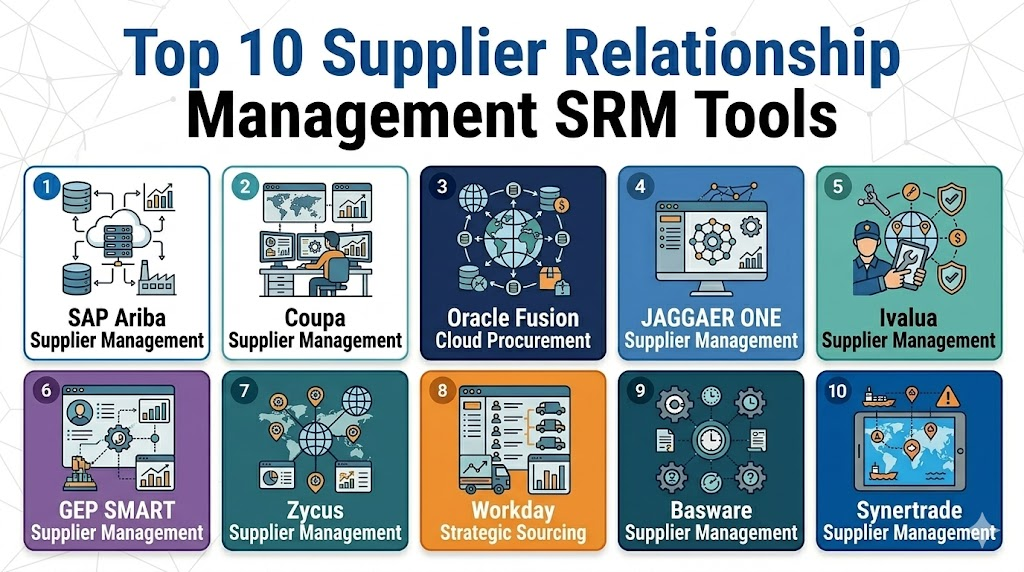
Top 10 Supplier Relationship Management SRM Tools
1- SAP Ariba Supplier Management
Short description: SAP Ariba Supplier Management helps organizations manage supplier onboarding, qualification, performance, risk, collaboration, and procurement workflows. It is best suited for large enterprises and SAP-centric businesses that need structured supplier lifecycle management across global procurement operations.
Key Features
- Supplier onboarding and registration workflows
- Supplier qualification and segmentation
- Supplier performance management and scorecards
- Supplier risk and compliance workflows
- Integration with SAP procurement and ERP systems
- Supplier collaboration through network-based processes
- Support for sourcing, contracts, procurement, and supplier data
Pros
- Strong fit for SAP-heavy enterprises
- Broad supplier management and procurement ecosystem
- Useful for global supplier onboarding and governance
Cons
- Implementation can be complex for smaller teams
- Best value often depends on SAP ecosystem maturity
- Supplier adoption and data quality require active management
Platforms / Deployment
Web / Cloud
Hybrid availability: Varies / N/A
Security & Compliance
Not publicly stated in full detail for every deployment. Buyers should validate SSO, SAML, MFA, RBAC, encryption, audit logs, GDPR, ISO 27001, SOC reports, and data residency requirements during procurement.
Integrations & Ecosystem
SAP Ariba is strongest when connected with SAP ERP, SAP S/4HANA, SAP procurement, supplier network workflows, sourcing, contracts, invoicing, and spend analytics. It is a strong choice for companies that want supplier management tightly connected with enterprise procurement governance.
- SAP S/4HANA and SAP ECC
- SAP procurement and sourcing tools
- Contract lifecycle management systems
- Supplier risk and compliance data
- Finance and invoice workflows
- APIs and SAP integration services
Support & Community
SAP offers enterprise support, implementation partners, documentation, training resources, and global consulting services. Buyers should validate partner experience, onboarding support, supplier enablement assistance, and long-term optimization services.
2- Coupa Supplier Management
Short description: Coupa Supplier Management is part of the Coupa Business Spend Management platform and supports supplier onboarding, risk, performance, collaboration, and procurement workflows. It is best for organizations seeking supplier management connected with spend, sourcing, contracts, procurement, and invoicing.
Key Features
- Supplier onboarding and information management
- Supplier portal and collaboration workflows
- Supplier risk and performance tracking
- Spend management ecosystem integration
- Sourcing and contract process connectivity
- Supplier qualification and approval workflows
- Analytics for supplier and procurement visibility
Pros
- Strong connection between supplier management and spend management
- Useful for procurement teams wanting a unified platform
- Good fit for mid-market and enterprise procurement transformation
Cons
- Full value often depends on adopting multiple Coupa modules
- Complex configurations may require implementation support
- Pricing is generally quote-based and may not fit small teams
Platforms / Deployment
Web / Cloud
Mobile availability: Varies / N/A
Security & Compliance
Not publicly stated in full detail for all buyer requirements. Buyers should validate SSO, MFA, RBAC, encryption, audit logs, SOC 2, ISO 27001, GDPR, and supplier data governance controls.
Integrations & Ecosystem
Coupa connects supplier management with spend management, sourcing, contract management, procurement, invoicing, payments, and analytics. It is useful when businesses want supplier relationship data to inform purchasing and financial decisions.
- ERP and finance systems
- Contract lifecycle management workflows
- Sourcing and procurement modules
- Supplier risk data sources
- Invoice and payment workflows
- APIs and integration connectors
Support & Community
Coupa provides enterprise support, customer success resources, documentation, training, and implementation partner options. Buyers should confirm onboarding support, supplier enablement services, and support tiers.
3- Oracle Fusion Cloud Procurement
Short description: Oracle Fusion Cloud Procurement supports supplier management, sourcing, procurement, contracts, purchasing, and supplier qualification. It is best for companies already using Oracle Cloud ERP or Oracle Cloud SCM that want supplier management inside a broader enterprise application environment.
Key Features
- Supplier profile and information management
- Supplier qualification and assessment workflows
- Sourcing and procurement integration
- Contract and purchasing process support
- Supplier portal and collaboration capabilities
- Reporting and analytics for procurement teams
- Oracle Cloud ERP and SCM ecosystem alignment
Pros
- Strong fit for Oracle Cloud customers
- Connects supplier management with procurement and finance workflows
- Good option for structured enterprise governance
Cons
- Less attractive for companies outside Oracle ecosystem
- Implementation depends on Oracle data and process maturity
- Broader supplier risk needs may require additional tools or modules
Platforms / Deployment
Web / Cloud
Security & Compliance
Not publicly stated in full detail for every customer deployment. Buyers should validate SSO, MFA, RBAC, encryption, audit logs, SOC reports, ISO 27001, GDPR, and data residency requirements.
Integrations & Ecosystem
Oracle Fusion Cloud Procurement is strongest when integrated with Oracle Cloud ERP, procurement, finance, supplier qualification, contracts, and analytics workflows.
- Oracle Cloud ERP
- Oracle procurement and sourcing workflows
- Contract management processes
- Supplier qualification data
- Finance and accounts payable systems
- Oracle integration services and APIs
Support & Community
Oracle offers enterprise support, documentation, implementation partners, training resources, and administrative guidance. Buyers should confirm partner expertise, project scope, and internal Oracle support readiness.
4- JAGGAER ONE Supplier Management
Short description: JAGGAER ONE Supplier Management supports supplier onboarding, qualification, risk, performance, sourcing, and procurement collaboration. It is especially relevant for enterprises, public sector organizations, manufacturing, education, life sciences, and complex procurement teams.
Key Features
- Supplier onboarding and lifecycle management
- Supplier qualification and category segmentation
- Supplier performance scorecards
- Risk, compliance, and document tracking
- Source-to-pay platform integration
- Supplier collaboration and communication workflows
- Analytics for supplier performance and procurement visibility
Pros
- Strong supplier management depth for complex procurement environments
- Good fit for regulated and public sector procurement workflows
- Broad source-to-pay ecosystem
Cons
- May require configuration for complex supplier processes
- Best value depends on user adoption across procurement teams
- Smaller organizations may not need the full suite
Platforms / Deployment
Web / Cloud
Hybrid availability: Varies / N/A
Security & Compliance
Not publicly stated in full detail for all buyer needs. Buyers should validate SSO, MFA, RBAC, encryption, audit logs, SOC 2, ISO 27001, GDPR, and compliance documentation.
Integrations & Ecosystem
JAGGAER fits organizations that need supplier management connected to sourcing, contracts, procurement, spend analysis, risk, and category management workflows.
- ERP and finance integrations
- Sourcing and e-procurement modules
- Contract lifecycle management workflows
- Supplier risk and compliance data
- Spend analytics tools
- APIs and enterprise integration options
Support & Community
JAGGAER provides enterprise onboarding, customer support, documentation, training, and implementation services. Buyers should validate supplier enablement, configuration support, and regional service availability.
5- Ivalua Supplier Management
Short description: Ivalua Supplier Management is part of a unified source-to-pay platform that supports supplier onboarding, risk, performance, collaboration, sourcing, contracts, procurement, and spend analytics. It is best for enterprises that want flexible supplier management with broad procurement process coverage.
Key Features
- Supplier onboarding and master data management
- Supplier risk and performance management
- Supplier assessments and compliance tracking
- Source-to-pay platform integration
- Supplier collaboration portal
- Spend analytics and reporting
- Configurable workflows and supplier segmentation
Pros
- Strong flexibility for complex procurement processes
- Unified source-to-pay platform reduces data silos
- Useful for supplier risk, collaboration, and performance tracking
Cons
- Configuration flexibility can require careful governance
- Implementation scope may be significant for large enterprises
- Smaller teams may not need the full platform depth
Platforms / Deployment
Web / Cloud
Hybrid availability: Varies / N/A
Security & Compliance
Not publicly stated in full detail for all buyer requirements. Buyers should validate SSO, MFA, RBAC, encryption, audit logs, SOC 2, ISO 27001, GDPR, and data protection requirements.
Integrations & Ecosystem
Ivalua is useful where supplier management must connect with sourcing, contracts, procurement, invoicing, spend analysis, risk management, and third-party data sources.
- ERP integrations
- Sourcing and contract workflows
- Procurement and invoicing systems
- Supplier risk and ESG data sources
- Spend analytics platforms
- APIs and data exchange tools
Support & Community
Ivalua provides implementation resources, customer success support, documentation, training, and partner services. Buyers should confirm configuration support, supplier onboarding help, and long-term governance guidance.
6- GEP SMART Supplier Management
Short description: GEP SMART Supplier Management is part of GEP’s procurement and supply chain platform, supporting supplier onboarding, performance, risk, sourcing, contracts, procurement, and spend analytics. It is best for large enterprises looking for an integrated procurement platform.
Key Features
- Supplier onboarding and information management
- Supplier performance scorecards
- Risk and compliance workflows
- Source-to-pay process integration
- Contract and sourcing collaboration
- Spend analytics and procurement dashboards
- Supplier communication and document management
Pros
- Strong fit for enterprise procurement transformation
- Combines supplier management with sourcing, procurement, and analytics
- Useful for global procurement teams managing many suppliers
Cons
- May be more platform than smaller teams need
- Implementation requires clear process ownership
- Supplier data quality must be actively maintained
Platforms / Deployment
Web / Cloud
Mobile availability: Varies / N/A
Security & Compliance
Not publicly stated in full detail for every customer requirement. Buyers should validate SSO, MFA, RBAC, encryption, audit logs, SOC 2, ISO 27001, GDPR, and enterprise security documentation.
Integrations & Ecosystem
GEP SMART connects supplier management with procurement, sourcing, contracts, spend analysis, risk, and financial workflows. It is useful for enterprises that want one platform for multiple procurement processes.
- ERP and finance systems
- Sourcing and contract management
- Procurement and purchasing workflows
- Supplier risk and compliance data
- Spend analytics and reporting
- APIs and integration services
Support & Community
GEP offers consulting, implementation support, customer success resources, documentation, and procurement transformation expertise. Buyers should confirm support tiers, onboarding process, and supplier enablement services.
7- Zycus Supplier Management
Short description: Zycus Supplier Management supports supplier onboarding, performance tracking, risk assessment, collaboration, and source-to-pay workflows. It is best for procurement teams that want supplier management connected with sourcing, contracts, procurement, spend analytics, and AI-driven procurement processes.
Key Features
- Supplier onboarding and profile management
- Supplier performance scorecards
- Risk and compliance workflows
- Source-to-pay suite integration
- Supplier collaboration and document management
- Spend analytics and procurement intelligence
- Workflow automation and approvals
Pros
- Strong procurement suite coverage
- Useful for supplier performance and sourcing alignment
- Good fit for procurement teams improving process automation
Cons
- Advanced workflows may require setup and training
- Best value depends on module adoption
- Smaller organizations may need a lighter supplier management tool
Platforms / Deployment
Web / Cloud
Hybrid availability: Varies / N/A
Security & Compliance
Not publicly stated in full detail for all buyer needs. Buyers should validate SSO, MFA, RBAC, encryption, audit logs, SOC 2, ISO 27001, GDPR, and data governance documentation.
Integrations & Ecosystem
Zycus works well where supplier management must connect with spend analysis, sourcing, contracts, procurement, and procurement analytics.
- ERP and finance integrations
- Sourcing and contract workflows
- Procurement and purchasing systems
- Supplier data and risk sources
- Spend analytics tools
- APIs and integration connectors
Support & Community
Zycus provides support, implementation resources, documentation, and training for procurement teams. Buyers should confirm onboarding assistance, support availability, and supplier adoption guidance.
8- Workday Strategic Sourcing
Short description: Workday Strategic Sourcing supports sourcing, supplier collaboration, intake, contract-related workflows, and procurement team collaboration. It is best for organizations that want user-friendly sourcing and supplier collaboration connected with Workday or broader enterprise procurement processes.
Key Features
- Supplier collaboration for sourcing events
- Intake and sourcing workflow management
- Supplier communication and response tracking
- Contract and project collaboration support
- User-friendly team collaboration interface
- Reporting and sourcing visibility
- Integration with Workday and procurement workflows
Pros
- Strong usability for sourcing and stakeholder collaboration
- Good fit for teams that want faster adoption
- Useful for supplier collaboration during sourcing events
Cons
- Not as deep as full SRM suites for supplier lifecycle management
- May require other systems for advanced supplier risk or performance
- Best fit depends on sourcing-led use cases
Platforms / Deployment
Web / Cloud
Security & Compliance
Not publicly stated in full detail for all buyer requirements. Buyers should validate SSO, MFA, RBAC, encryption, audit logs, SOC 2, ISO 27001, GDPR, and access governance controls.
Integrations & Ecosystem
Workday Strategic Sourcing is useful when supplier collaboration is closely tied to sourcing intake, stakeholder approvals, procurement projects, and Workday enterprise workflows.
- Workday ecosystem integrations
- ERP and procurement workflows
- Contract collaboration processes
- Supplier response management
- Intake and approval workflows
- APIs and data exchange options
Support & Community
Workday provides enterprise support, documentation, implementation partners, training, and customer success resources. Buyers should validate sourcing workflow support, integration guidance, and user adoption resources.
9- Basware Supplier Management
Short description: Basware is best known for procurement, accounts payable automation, e-invoicing, and supplier collaboration. Its supplier management value is strongest for organizations that want supplier connectivity, invoice collaboration, procurement visibility, and finance-oriented supplier processes.
Key Features
- Supplier onboarding and collaboration workflows
- E-invoicing and supplier network support
- Procurement and accounts payable integration
- Supplier communication and document exchange
- Invoice status and payment visibility
- Spend and procurement analytics
- Compliance support for invoice and procurement processes
Pros
- Strong fit for finance and AP-driven supplier collaboration
- Useful for e-invoicing and supplier network processes
- Helps reduce manual supplier invoice communication
Cons
- Less focused on advanced SRM scorecards than some full suites
- Best suited when AP and procurement automation are priorities
- Advanced supplier risk needs may require additional tools
Platforms / Deployment
Web / Cloud
Hybrid availability: Varies / N/A
Security & Compliance
Not publicly stated in full detail for all requirements. Buyers should validate SSO, MFA, RBAC, encryption, audit logs, e-invoicing compliance, GDPR, SOC reports, and data residency requirements.
Integrations & Ecosystem
Basware is useful where supplier management intersects with procurement, invoicing, payment status, finance operations, and supplier document exchange.
- ERP and finance systems
- Accounts payable automation
- E-invoicing networks
- Procurement workflows
- Supplier communication channels
- Reporting and analytics systems
Support & Community
Basware provides customer support, onboarding, documentation, and supplier network assistance. Buyers should confirm supplier enablement support, e-invoicing rollout assistance, and regional compliance support.
10- Synertrade Supplier Management
Short description: Synertrade supports source-to-pay processes including supplier management, sourcing, contracts, procurement, spend analytics, and supplier collaboration. It is a practical option for organizations seeking procurement suite capabilities with supplier lifecycle and relationship management features.
Key Features
- Supplier onboarding and lifecycle workflows
- Supplier qualification and performance tracking
- Sourcing and contract management integration
- Procurement and spend management workflows
- Supplier collaboration and communication
- Reporting and analytics dashboards
- Configurable procurement workflows
Pros
- Broad source-to-pay coverage
- Useful for supplier lifecycle and sourcing alignment
- Practical fit for organizations improving procurement maturity
Cons
- Market presence may vary by region
- Advanced requirements should be validated carefully
- Implementation scope depends on selected modules
Platforms / Deployment
Web / Cloud
Hybrid availability: Varies / N/A
Security & Compliance
Not publicly stated in full detail for all buyer needs. Buyers should validate SSO, MFA, RBAC, encryption, audit logs, SOC 2, ISO 27001, GDPR, and compliance documentation.
Integrations & Ecosystem
Synertrade is useful when supplier management needs to connect with sourcing, contracts, procurement, spend analytics, and operational procurement workflows.
- ERP integrations
- Sourcing and procurement workflows
- Contract management systems
- Spend analytics tools
- Supplier communication and collaboration
- APIs and enterprise data exchange
Support & Community
Synertrade provides implementation support, documentation, customer service, and procurement-focused assistance. Buyers should confirm regional support, onboarding resources, and supplier enablement services.
Comparison Table
| Tool Name | Best For | Platform Supported | Deployment | Standout Feature | Public Rating |
|---|---|---|---|---|---|
| SAP Ariba Supplier Management | SAP-centric enterprise supplier management | Web | Cloud | Supplier lifecycle management connected with SAP procurement | N/A |
| Coupa Supplier Management | Spend management and supplier collaboration | Web | Cloud | Supplier management inside business spend management | N/A |
| Oracle Fusion Cloud Procurement | Oracle Cloud procurement teams | Web | Cloud | Supplier qualification and procurement integration | N/A |
| JAGGAER ONE Supplier Management | Complex enterprise and regulated procurement | Web | Cloud | Supplier management inside broad source-to-pay workflows | N/A |
| Ivalua Supplier Management | Flexible enterprise source-to-pay SRM | Web | Cloud | Configurable supplier risk, performance, and collaboration | N/A |
| GEP SMART Supplier Management | Global enterprise procurement transformation | Web | Cloud | Supplier management with procurement and spend analytics | N/A |
| Zycus Supplier Management | Procurement automation and supplier performance | Web | Cloud | Supplier performance connected with source-to-pay suite | N/A |
| Workday Strategic Sourcing | Sourcing-led supplier collaboration | Web | Cloud | User-friendly sourcing and supplier collaboration workflows | N/A |
| Basware Supplier Management | AP, e-invoicing, and supplier finance collaboration | Web | Cloud | Supplier network and invoice collaboration | N/A |
| Synertrade Supplier Management | Source-to-pay supplier lifecycle management | Web | Cloud | Supplier lifecycle connected with sourcing and procurement | N/A |
Evaluation and Scoring of Supplier Relationship Management SRM Tools
| Tool Name | Core 25% | Ease 15% | Integrations 15% | Security 10% | Performance 10% | Support 10% | Value 15% | Weighted Total |
|---|---|---|---|---|---|---|---|---|
| SAP Ariba Supplier Management | 9 | 7 | 9 | 9 | 8 | 9 | 7 | 8.25 |
| Coupa Supplier Management | 9 | 8 | 9 | 8 | 8 | 8 | 8 | 8.40 |
| Oracle Fusion Cloud Procurement | 8 | 7 | 9 | 9 | 8 | 8 | 7 | 7.95 |
| JAGGAER ONE Supplier Management | 9 | 7 | 8 | 8 | 8 | 8 | 8 | 8.05 |
| Ivalua Supplier Management | 9 | 8 | 8 | 8 | 8 | 8 | 8 | 8.25 |
| GEP SMART Supplier Management | 9 | 8 | 8 | 8 | 8 | 8 | 8 | 8.25 |
| Zycus Supplier Management | 8 | 8 | 8 | 8 | 8 | 8 | 8 | 8.00 |
| Workday Strategic Sourcing | 7 | 9 | 8 | 8 | 8 | 8 | 8 | 7.95 |
| Basware Supplier Management | 7 | 8 | 8 | 8 | 8 | 8 | 8 | 7.75 |
| Synertrade Supplier Management | 8 | 7 | 7 | 7 | 8 | 7 | 8 | 7.50 |
Which Supplier Relationship Management SRM Tool Is Right for You?
Solo / Freelancer
Solo consultants usually do not need to purchase a full SRM platform for their own operations. However, procurement consultants should understand platforms like SAP Ariba, Coupa, Ivalua, JAGGAER, GEP SMART, Oracle, and Zycus when advising enterprise clients.
For advisory work, the best approach is to match the platform to the client’s procurement maturity, supplier complexity, ERP environment, and compliance pressure. A lightweight vendor database or spreadsheet may be enough for very small operations.
SMB
Small and mid-sized businesses should focus on usability, fast onboarding, supplier records, approval workflows, basic risk tracking, and procurement integration. Workday Strategic Sourcing, Basware, Zycus, Synertrade, or focused modules from broader platforms may be suitable depending on the use case.
SMBs should avoid buying an overly complex source-to-pay suite before defining supplier ownership, onboarding steps, supplier data standards, and compliance requirements. Adoption matters more than feature volume.
Mid-Market
Mid-market companies usually need stronger supplier onboarding, supplier performance tracking, document management, procurement integration, and reporting. Coupa, Ivalua, GEP SMART, JAGGAER, Zycus, and Oracle can be strong options depending on ecosystem fit.
Mid-market buyers should prioritize supplier portal usability, ERP integration, workflow flexibility, reporting quality, and implementation effort. They should also confirm whether supplier risk and ESG tracking are native or require external integrations.
Enterprise
Large enterprises need scalable supplier lifecycle management across regions, categories, business units, risk programs, and procurement processes. SAP Ariba, Coupa, Oracle, JAGGAER, Ivalua, GEP SMART, and Zycus are strong enterprise candidates.
Enterprises should evaluate supplier hierarchy management, global compliance, third-party risk integration, source-to-pay coverage, role-based access, audit logs, regional data controls, and supplier adoption strategy. A strong implementation partner and data governance plan are often just as important as the software.
Budget vs Premium
Budget-focused buyers should begin with the most painful supplier management gap, such as slow onboarding, incomplete supplier records, poor compliance tracking, or weak supplier performance visibility. A focused rollout can create value faster than a broad transformation.
Premium platforms make sense when the company has thousands of suppliers, regulated procurement processes, global supplier risk exposure, complex sourcing events, or strong integration requirements. Buyers should compare software cost against reduced supplier risk, faster onboarding, better compliance, fewer manual processes, and improved procurement performance.
Feature Depth vs Ease of Use
Feature-rich SRM suites provide supplier lifecycle management, risk, performance, sourcing, contracts, spend analytics, and procurement workflows. However, they may require more configuration, training, and governance.
Easier tools may support faster adoption but may not cover advanced supplier segmentation, third-party risk, ESG, or global compliance needs. The best choice depends on supplier complexity and procurement maturity.
Integrations & Scalability
SRM tools must connect with ERP, procurement, finance, sourcing, contract lifecycle management, AP automation, tax, risk, ESG, and identity systems. Without reliable integrations, supplier data becomes fragmented again.
Scalability matters because supplier count, categories, regions, documents, assessments, and risk programs can grow quickly. Buyers should validate APIs, connectors, supplier portal workflows, master data handling, and reporting architecture before selection.
Security & Compliance Needs
SRM platforms store sensitive supplier data, tax documents, bank information, contracts, compliance evidence, certifications, risk records, and procurement decisions. Buyers should validate SSO, MFA, RBAC, encryption, audit logs, data residency, backup policies, supplier access controls, and compliance documentation.
Organizations in healthcare, financial services, public sector, manufacturing, pharma, energy, and defense should also evaluate third-party risk, privacy, audit readiness, and supplier document governance carefully.
Frequently Asked Questions
1- What is Supplier Relationship Management SRM software?
Supplier Relationship Management software helps companies manage supplier information, onboarding, performance, risk, compliance, collaboration, and procurement communication. It gives procurement teams a structured way to manage supplier relationships beyond basic vendor records.
2- How is SRM different from vendor management?
Vendor management often focuses on records, contracts, and transactions. SRM is broader because it includes supplier collaboration, performance improvement, risk monitoring, strategic relationships, and long-term supplier value.
3- Which SRM tool is best for large enterprises?
SAP Ariba, Coupa, Oracle, JAGGAER, Ivalua, GEP SMART, and Zycus are strong enterprise options. The best fit depends on ERP ecosystem, procurement maturity, supplier complexity, and risk management needs.
4- Which SRM tool is best for mid-market companies?
Coupa, Ivalua, GEP SMART, Zycus, Workday Strategic Sourcing, Basware, and Synertrade can be practical options for mid-market teams. Buyers should compare implementation effort, workflow fit, and integration needs.
5- How much do SRM tools cost?
Most SRM tools use quote-based pricing. Cost usually depends on users, modules, supplier volume, integrations, implementation services, regions, support level, and whether the buyer chooses a full source-to-pay suite.
6- How long does SRM implementation take?
Implementation can take weeks for a focused supplier onboarding workflow or several months for enterprise-wide supplier lifecycle management. Timeline depends on data quality, supplier count, integrations, approvals, and compliance requirements.
7- What are common mistakes when choosing SRM software?
Common mistakes include ignoring supplier data quality, underestimating supplier onboarding effort, buying too many modules too early, excluding compliance teams, and failing to define supplier ownership and review workflows.
8- Can SRM software help reduce supplier risk?
Yes, SRM software can help centralize supplier documents, track assessments, monitor performance, manage compliance tasks, and support risk-based supplier segmentation. Advanced risk intelligence may require third-party data integrations.
9- Do SRM tools support ESG and sustainability tracking?
Many modern SRM and procurement platforms support sustainability questionnaires, supplier assessments, document collection, and ESG-related reporting workflows. Buyers should validate the depth of ESG tracking before purchase.
10- What should companies prepare before implementing SRM?
Companies should prepare supplier master data, onboarding rules, approval workflows, supplier categories, risk criteria, compliance documents, performance KPIs, integration requirements, and internal ownership for supplier governance.
Conclusion
Supplier Relationship Management SRM Tools help procurement and supply chain teams create stronger, more transparent, and more measurable supplier relationships. The best platform depends on company size, supplier count, procurement maturity, ERP ecosystem, compliance needs, and whether the organization wants a focused supplier management tool or a full source-to-pay platform. SAP Ariba and Oracle are strong choices for enterprises already invested in those ecosystems, while Coupa, Ivalua, JAGGAER, GEP SMART, and Zycus are strong options for broader procurement transformation. Workday Strategic Sourcing is useful for sourcing-led collaboration, Basware is practical for finance and e-invoicing-driven supplier collaboration, and Synertrade can support organizations improving source-to-pay maturity.

Find Trusted Cardiac Hospitals
Compare heart hospitals by city and services — all in one place.
Explore Hospitals
Supplier Relationship Management (SRM) tools are most valuable when they help organizations build, monitor, and optimize strategic relationships with suppliers throughout the procurement lifecycle. By providing supplier performance management, collaboration portals, risk assessment, contract and compliance tracking, supplier segmentation, scorecards, issue resolution, analytics, and integration with procurement and ERP systems, these platforms enable businesses to strengthen supplier partnerships, improve supply chain resilience, reduce procurement risks, optimize supplier performance, and drive long-term operational and cost efficiencies.