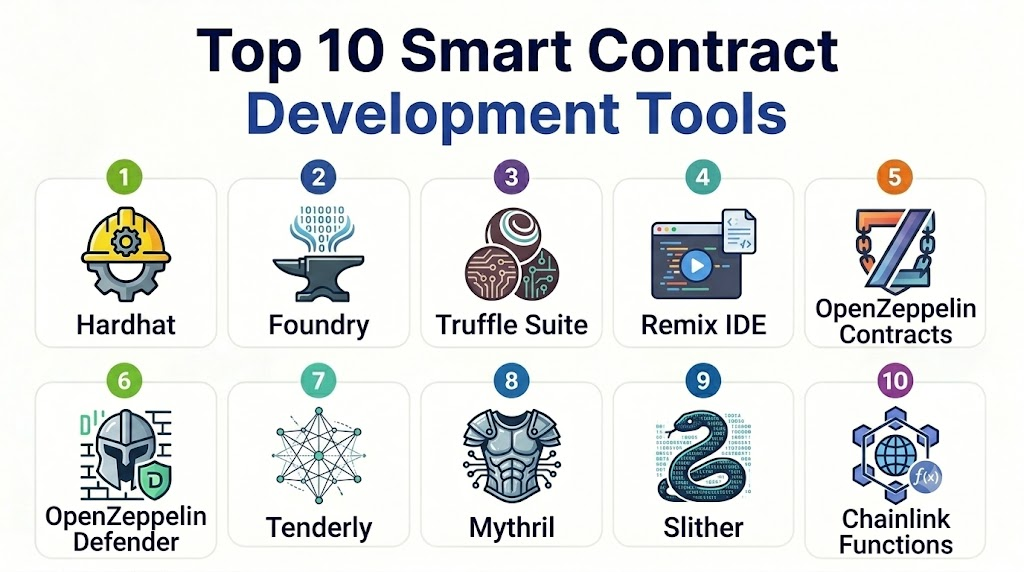
Introduction
Smart contract development tools help developers design, test, deploy, audit, and manage blockchain-based smart contracts. These tools streamline the entire development lifecycle, from writing Solidity code and testing contract logic to deploying decentralized applications and monitoring production environments. As blockchain adoption accelerates across decentralized finance, gaming, digital identity, tokenization, and enterprise applications, the demand for reliable smart contract development tools continues to grow. Modern development teams require solutions that improve security, automate testing, simplify deployments, and reduce the risks associated with immutable blockchain code.
Real World Use Cases
- Decentralized Finance application development
- NFT marketplace creation
- Blockchain gaming platforms
- Token issuance and management
- Enterprise blockchain applications
- Decentralized identity systems
Evaluation Criteria for Buyers
When evaluating smart contract development tools, consider:
- Development productivity
- Testing capabilities
- Security features
- Deployment automation
- Debugging functionality
- Blockchain compatibility
- Integration ecosystem
- Community support
- Documentation quality
- Scalability and maintainability
Best for
Blockchain developers, Web3 startups, decentralized application teams, blockchain consultancies, enterprise innovation teams, and smart contract auditors.
Not ideal for
Organizations without blockchain requirements or projects that do not involve smart contract functionality.
Key Trends in Smart Contract Development Tools
- AI-assisted smart contract development
- Automated vulnerability detection
- Multi-chain development environments
- Advanced smart contract simulation
- Integrated security testing pipelines
- Continuous deployment automation
- Formal verification adoption
- Enhanced developer experience tools
- Enterprise governance integration
- Cross-chain application development
How We Selected These Tools
The tools in this list were selected based on:
- Developer adoption
- Ecosystem popularity
- Feature completeness
- Security capabilities
- Testing and debugging functionality
- Community support
- Documentation quality
- Multi-chain compatibility
- Enterprise readiness
- Long-term industry relevance
Top 10 Smart Contract Development Tools
1- Hardhat
Short description: Hardhat is one of the most widely adopted Ethereum development environments for building, testing, debugging, and deploying smart contracts.
Key Features
- Local Ethereum network
- Advanced debugging
- Automated testing
- Plugin ecosystem
- Deployment automation
- Solidity support
- Developer-friendly workflows
Pros
- Extensive ecosystem
- Strong developer adoption
- Excellent debugging tools
Cons
- Ethereum-focused
- Learning curve for beginners
- Complex plugin management
Platforms / Deployment
- Windows
- macOS
- Linux
- Self-hosted
Security & Compliance
- Security testing integrations available
- Additional compliance certifications not publicly stated
Integrations & Ecosystem
Hardhat integrates with leading blockchain development tools and frameworks.
- Ethers.js
- OpenZeppelin
- Chainlink
- MetaMask
- CI/CD platforms
Support & Community
Large developer community with extensive documentation and tutorials.
2- Foundry
Short description: Foundry is a fast-growing smart contract development toolkit known for high performance, testing efficiency, and developer productivity.
Key Features
- Solidity-native testing
- Fast execution
- Deployment tooling
- Fuzz testing
- Debugging utilities
- Smart contract scripting
- High-performance architecture
Pros
- Extremely fast testing
- Developer-focused workflow
- Strong security testing
Cons
- Newer ecosystem compared to Hardhat
- Requires command-line familiarity
- Fewer beginner resources
Platforms / Deployment
- Windows
- macOS
- Linux
- Self-hosted
Security & Compliance
- Fuzz testing support
- Security-focused development features
Integrations & Ecosystem
- Solidity
- EVM networks
- CI/CD systems
- Security frameworks
Support & Community
Rapidly growing Web3 developer community.
3- Truffle Suite
Short description: Truffle Suite provides a complete development framework for building and managing Ethereum-based decentralized applications.
Key Features
- Smart contract compilation
- Automated migrations
- Testing framework
- Development environment
- Network management
- Debugging support
- Blockchain interaction tools
Pros
- Mature ecosystem
- Comprehensive tooling
- Large user base
Cons
- Slower than newer alternatives
- Some projects moving to newer frameworks
- Complex project structures
Platforms / Deployment
- Windows
- macOS
- Linux
Security & Compliance
- Security integrations available
- Additional certifications not publicly stated
Integrations & Ecosystem
- Ganache
- MetaMask
- Ethereum networks
- OpenZeppelin
Support & Community
Long-standing developer community and extensive resources.
4- Remix IDE
Short description: Remix IDE is a browser-based smart contract development environment widely used for learning, prototyping, and contract deployment.
Key Features
- Browser-based IDE
- Solidity compiler
- Smart contract deployment
- Debugging tools
- Plugin architecture
- Testing support
- Interactive development
Pros
- Easy to start
- No installation required
- Excellent for education
Cons
- Limited enterprise workflows
- Browser dependency
- Less suitable for large projects
Platforms / Deployment
- Web
Security & Compliance
- Security analysis plugins available
Integrations & Ecosystem
- Ethereum
- MetaMask
- Solidity
- Testing plugins
Support & Community
Extensive educational usage and community support.
5- OpenZeppelin Contracts
Short description: OpenZeppelin Contracts provides reusable, audited smart contract libraries used across the blockchain industry.
Key Features
- Audited contract libraries
- ERC standards support
- Security patterns
- Upgradeable contracts
- Governance modules
- Access control systems
- Token templates
Pros
- Industry-standard libraries
- Strong security reputation
- Accelerates development
Cons
- Library rather than full framework
- Requires Solidity knowledge
- Limited deployment tooling
Platforms / Deployment
- Windows
- macOS
- Linux
Security & Compliance
- Security-focused contract design
- Audited code libraries
Integrations & Ecosystem
- Hardhat
- Foundry
- Ethereum
- EVM chains
Support & Community
Highly respected blockchain developer ecosystem.
6- OpenZeppelin Defender
Short description: OpenZeppelin Defender helps teams automate smart contract operations, monitoring, governance, and security workflows.
Key Features
- Smart contract monitoring
- Automated operations
- Governance management
- Security controls
- Incident response
- Transaction automation
- Deployment workflows
Pros
- Production-focused
- Strong automation
- Security-oriented
Cons
- Premium functionality
- Operational focus rather than development
- Additional infrastructure layer
Platforms / Deployment
- Cloud
Security & Compliance
- Access controls
- Monitoring capabilities
- Security management tools
Integrations & Ecosystem
- OpenZeppelin Contracts
- Ethereum networks
- Governance systems
Support & Community
Strong enterprise and developer adoption.
7- Tenderly
Short description: Tenderly provides smart contract monitoring, debugging, simulation, and infrastructure management capabilities.
Key Features
- Transaction simulation
- Contract monitoring
- Debugging tools
- Performance analytics
- Infrastructure services
- Alerting systems
- Development workflows
Pros
- Powerful debugging
- Production visibility
- Developer-friendly interface
Cons
- Premium pricing tiers
- Learning curve
- Operational focus
Platforms / Deployment
- Cloud
Security & Compliance
- Monitoring and alerting controls
- Additional certifications not publicly stated
Integrations & Ecosystem
- Ethereum
- Polygon
- Avalanche
- Developer workflows
Support & Community
Strong Web3 developer adoption.
8- Mythril
Short description: Mythril is a security analysis tool focused on identifying vulnerabilities in Ethereum smart contracts.
Key Features
- Static analysis
- Vulnerability detection
- Security auditing
- Smart contract scanning
- Automated assessment
- Security reporting
- Ethereum support
Pros
- Security-focused
- Open-source
- Widely recognized
Cons
- Limited development features
- False positives possible
- Requires security expertise
Platforms / Deployment
- Windows
- macOS
- Linux
Security & Compliance
- Smart contract vulnerability analysis
Integrations & Ecosystem
- Solidity
- Ethereum
- Security workflows
Support & Community
Popular among auditors and security researchers.
9- Slither
Short description: Slither is a static analysis framework used to detect vulnerabilities, optimize code, and improve smart contract quality.
Key Features
- Static analysis
- Vulnerability detection
- Code quality checks
- Security auditing
- Optimization insights
- CI/CD integration
- Automated scanning
Pros
- Fast analysis
- Security-focused
- Open-source
Cons
- Requires interpretation
- Limited deployment functionality
- Advanced usage requires expertise
Platforms / Deployment
- Windows
- macOS
- Linux
Security & Compliance
- Security analysis framework
Integrations & Ecosystem
- Solidity
- Hardhat
- Foundry
- Security pipelines
Support & Community
Widely adopted in smart contract auditing.
10- Chainlink Functions
Short description: Chainlink Functions enables smart contracts to securely access external APIs and off-chain computation resources.
Key Features
- External data access
- API integration
- Off-chain computation
- Decentralized oracle network
- Cross-chain capabilities
- Smart contract connectivity
- Data verification
Pros
- Expands smart contract capabilities
- Strong ecosystem
- Secure oracle infrastructure
Cons
- Oracle dependency
- Additional complexity
- External service considerations
Platforms / Deployment
- Cloud
- Hybrid
Security & Compliance
- Decentralized oracle security architecture
Integrations & Ecosystem
- Ethereum
- Polygon
- Avalanche
- External APIs
Support & Community
Large blockchain developer ecosystem.
Comparison Table
| Tool Name | Best For | Platforms | Deployment | Standout Feature | Public Rating |
|---|---|---|---|---|---|
| Hardhat | Full-stack development | Multi-platform | Self-hosted | Advanced debugging | N/A |
| Foundry | Fast testing | Multi-platform | Self-hosted | Solidity-native workflow | N/A |
| Truffle Suite | Complete framework | Multi-platform | Self-hosted | Mature ecosystem | N/A |
| Remix IDE | Beginners | Web | Cloud | Browser-based development | N/A |
| OpenZeppelin Contracts | Secure libraries | Multi-platform | Self-hosted | Audited contracts | N/A |
| OpenZeppelin Defender | Operations | Cloud | Cloud | Automation | N/A |
| Tenderly | Monitoring | Cloud | Cloud | Simulation tools | N/A |
| Mythril | Security auditing | Multi-platform | Self-hosted | Vulnerability detection | N/A |
| Slither | Code analysis | Multi-platform | Self-hosted | Static analysis | N/A |
| Chainlink Functions | External integrations | Cloud | Hybrid | API connectivity | N/A |
Evaluation & Scoring
| Tool | Core | Ease | Integrations | Security | Performance | Support | Value | Weighted Total |
|---|---|---|---|---|---|---|---|---|
| Hardhat | 10 | 8 | 10 | 9 | 9 | 10 | 9 | 9.30 |
| Foundry | 10 | 8 | 9 | 9 | 10 | 9 | 9 | 9.20 |
| Truffle Suite | 8 | 8 | 8 | 8 | 7 | 9 | 8 | 8.00 |
| Remix IDE | 7 | 10 | 7 | 7 | 7 | 8 | 10 | 8.00 |
| OpenZeppelin Contracts | 10 | 9 | 10 | 10 | 9 | 10 | 9 | 9.55 |
| OpenZeppelin Defender | 9 | 8 | 9 | 9 | 8 | 9 | 8 | 8.60 |
| Tenderly | 9 | 9 | 9 | 8 | 9 | 8 | 8 | 8.65 |
| Mythril | 8 | 7 | 7 | 10 | 8 | 8 | 9 | 8.15 |
| Slither | 9 | 8 | 8 | 10 | 9 | 9 | 9 | 8.85 |
| Chainlink Functions | 9 | 8 | 10 | 9 | 8 | 9 | 8 | 8.75 |
Frequently Asked Questions
1- What are smart contract development tools?
These tools help developers create, test, secure, deploy, and manage blockchain-based smart contracts.
2- Which tool is best for beginners?
Remix IDE is often considered one of the easiest tools for beginners because it runs directly in a browser.
3- Is Hardhat better than Foundry?
Both are excellent. Hardhat offers a mature ecosystem, while Foundry focuses on speed and Solidity-native workflows.
4- Why are security tools important?
Smart contracts are often immutable after deployment, making security testing critical before production releases.
5- What is the role of OpenZeppelin Contracts?
OpenZeppelin provides audited libraries that help developers avoid common smart contract vulnerabilities.
6- What does Tenderly do?
Tenderly helps monitor, debug, and simulate smart contract behavior in development and production environments.
7- Can these tools support multiple blockchains?
Many of these tools support Ethereum-compatible networks and multiple EVM-based blockchains.
8- Are smart contract development tools free?
Many core development tools are open-source, while advanced monitoring and operational platforms may offer paid tiers.
9- How important is automated testing?
Automated testing is essential for detecting bugs, validating logic, and reducing deployment risks.
10- What should teams evaluate before selecting a tool?
Consider security capabilities, testing features, integration support, scalability, documentation, and community strength.
Conclusion
Smart contract development has evolved into a sophisticated engineering discipline requiring specialized tools for coding, testing, security, deployment, monitoring, and governance. Hardhat and Foundry dominate modern development workflows, while Remix IDE remains a favorite for rapid prototyping and education. OpenZeppelin Contracts and Defender provide critical security and operational capabilities, while Tenderly delivers powerful monitoring and debugging functionality. Security-focused tools such as Mythril and Slither help identify vulnerabilities before deployment, and Chainlink Functions extends smart contracts beyond blockchain boundaries. The best toolset depends on project complexity, team expertise, security requirements, and operational goals. Instead of relying on a single solution, most successful Web3 teams combine multiple tools to create a secure, efficient, and scalable smart contract development pipeline.

Find Trusted Cardiac Hospitals
Compare heart hospitals by city and services — all in one place.
Explore Hospitals
One area worth highlighting is long-term smart contract maintenance and upgrade strategies. Beyond development features, teams should consider automated security testing, audit workflows, and monitoring mechanisms to reduce risks after deployment.