The liver plays a key role in keeping your body healthy. It helps turn food into energy and stores energy for later use. It also cleans your blood and helps your body remove waste. When the liver gets hurt, these jobs can become harder.
Liver disease can affect people in many ways. Some people need medicine and changes to daily habits. Others may need hospital care, special tests, or surgery. In severe cases, a liver transplant may be needed.
The liver disease treatments available in hospitals depend on the cause and level of damage. Early care may help prevent some problems from getting worse. This article explains common liver diseases, tests, treatments, costs, and recovery. It also helps you compare hospital services and find suitable medical care.
Visit Myhospitalnow to explore hospital details and health care services.
What Is Liver Disease?
The liver is a large organ on the upper right side of your belly. It helps your body use nutrients from food. It also stores energy and makes a fluid called bile. Bile helps your body break down fats during digestion.
The liver also helps remove harmful waste from your blood. It makes proteins that help your blood clot. When the liver becomes damaged, these jobs may not work well. This can affect your energy, digestion, and general health.
There are several types of liver disease. Each type can have a different cause and treatment plan.
- Fatty liver disease: Too much fat builds up in the liver. This may cause damage over time.
- Viral hepatitis: A virus causes swelling in the liver. Some types clear on their own, while others need treatment.
- Alcohol-related liver disease: Alcohol can harm liver cells. Long-term use can lead to serious damage.
- Liver cirrhosis: Long-term damage creates scars in the liver. These scars can stop it from working well.
- Autoimmune liver disease: The body’s defense system attacks the liver by mistake. This can cause lasting swelling and damage.
- Liver cancer: Harmful cells grow in the liver. Treatment depends on the size and stage of the cancer.
- Acute liver failure: The liver loses much of its function in a short time. This needs urgent medical care.
- Chronic liver failure: Long-term damage makes it hard for the liver to work. Some patients need care for many years.
Some liver problems improve with early care. Others need long-term checks and treatment. A doctor can help find the cause and plan the right care.
Common Signs of Liver Disease
Liver disease does not always cause clear signs at first. Some people feel well even when damage has started. Others may notice changes as the disease grows worse.
Common signs include:
- Yellow skin or eyes
- Feeling tired or weak
- Pain or swelling in the belly
- Dark urine or pale stools
- Feeling sick or losing your appetite
- Itchy skin that does not go away
- Bruising or bleeding with ease
- Swelling in the legs or ankles
These signs can have other causes too. A doctor can help find the reason. Do not ignore signs that last or keep coming back.
Some signs need emergency care. Get help at once if you vomit blood, pass black stools, feel confused, or become very sleepy. These signs may point to a serious problem. Quick care may help prevent further harm.
When Is Hospital Treatment Needed?
Not every person with liver disease needs a hospital stay. Mild cases may need clinic visits, blood tests, and medicine. A doctor may also suggest changes to food, weight, or daily habits.
Hospital care may be needed when the liver is badly damaged. It may also be needed for bleeding, severe swelling, or serious infection. Some patients need close checks and care that a clinic cannot provide.
People with sudden liver failure may need urgent hospital care. Doctors may check their blood, brain function, and other vital signs. Some patients need an intensive care unit. A specialist may also check if a liver transplant is needed.
Do not wait for a routine visit if serious signs appear. Seek emergency care for blood in vomit, black stools, new confusion, or severe sleepiness.
How Hospitals Find Liver Disease
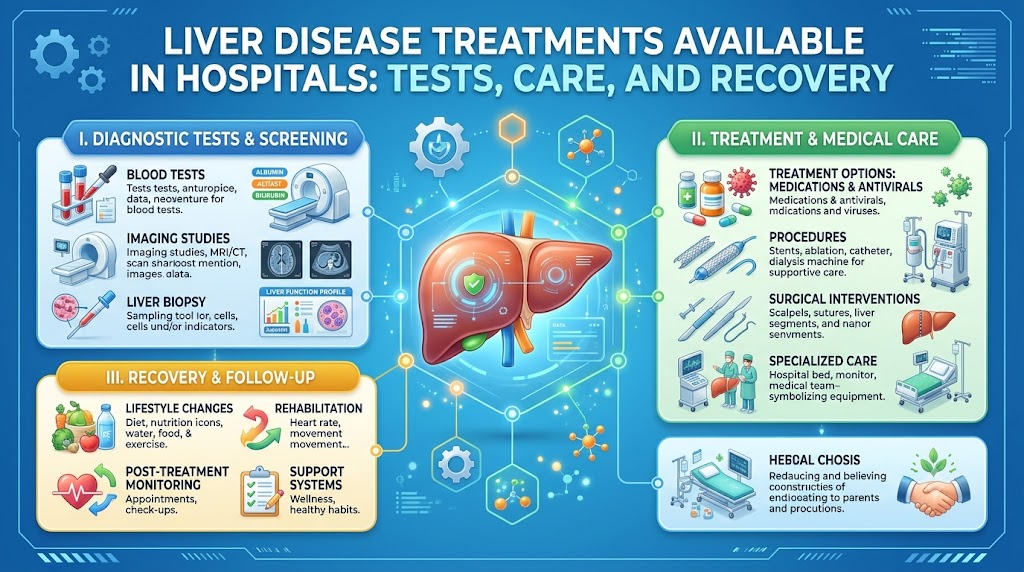
Doctors use your health history, a body check, and medical tests. These help them find the cause of your liver problem. They also show how much damage may have occurred.
Common tests include:
- Health check: The doctor asks about your signs, medicines, and past health. They may check your belly and skin.
- Blood tests: These look for signs of liver damage. They may also show how well the liver works.
- Hepatitis tests: These check for certain viruses that can harm the liver.
- Ultrasound: This scan makes pictures of the liver. It can show changes in size and shape.
- Liver stiffness test: This checks how stiff the liver is. It can help doctors look for scars.
- CT scan or MRI: These scans show more detail when needed. They may help doctors check a lump or other change.
- Liver biopsy: A doctor takes a small piece of liver tissue. A lab checks it for signs of disease.
Not every patient needs every test. Doctors choose tests based on symptoms and health history. Blood tests alone cannot find every liver problem. Some patients need more tests before the doctor can confirm the cause.
Liver Disease Treatments Available in Hospitals
The right treatment depends on the type of liver disease. Doctors also look at the amount of damage. Your age and other health problems may affect your care.
Some patients need one type of treatment. Others need several forms of care at the same time. Your doctor should explain the choices, risks, and expected follow-up.
Medicines and Medical Care
Medicines can treat some liver diseases and their effects. Some drugs fight viruses that harm the liver. Others calm the body’s defense system when it attacks liver cells.
Doctors may also give medicine to control certain health problems. These can include fluid build-up or other effects of liver damage. The right choice depends on your test results and health.
Never start or stop a medicine without medical advice. Tell your doctor about all drugs and supplements you take. This helps the care team check for possible harm or drug effects.
Fatty Liver Treatment
Fatty liver treatment often starts with healthy daily habits. Your doctor may suggest balanced meals and regular exercise. Weight loss may help some people who need it.
Managing other health problems is also important. High blood sugar, diabetes, and high cholesterol can raise health risks. Your doctor may help you make a plan for these problems.
Some people with more serious fatty liver disease may need special drugs. Treatment depends on the type and stage of the disease. Regular checks can help doctors see if your liver health is changing.
Do not rely on detox drinks or unproven products. They may harm your liver or delay proper care. Ask your doctor before using any supplement.
Hepatitis Treatment
Hepatitis causes swelling in the liver. It can result from a virus or another cause. The right treatment depends on the type of hepatitis.
Some viral infections need rest, fluids, and regular checks. Others may need drugs that fight the virus. Hepatitis B and hepatitis C have different treatment plans. One treatment does not work for every type.
Vaccines can help prevent hepatitis A and hepatitis B in eligible people. They do not cure an infection that has already started. Ask your doctor about testing and vaccines if you may be at risk.
Liver Cirrhosis Treatment
Cirrhosis means that scars have formed in the liver. These scars can make it hard for the liver to work. Treatment aims to slow more damage and control health problems.
Doctors may give medicine and arrange regular blood tests. They may also suggest food changes and checks for other problems. Some patients need treatment for fluid build-up in the belly.
Cirrhosis can also cause bleeding or infection. Doctors may use special procedures when needed. Severe cases may need a liver transplant check.
Existing scars do not always go away. Still, the right care may help manage the disease. Regular visits help doctors find problems early.
Hospital Care for Severe Liver Disease
Severe liver disease may cause life-threatening problems. Patients may need care in a hospital for close checks. Doctors watch the liver and other vital signs.
Treatment may help control bleeding, fluid build-up, or infection. Some patients need fluids given through a vein. Others need care for changes in brain function caused by liver failure.
Very sick patients may need an intensive care unit. Doctors may work with several specialists to manage the illness. The care plan depends on the cause and level of damage.
Some patients may need a liver transplant assessment. The medical team will explain the next steps. Quick treatment is important when liver failure develops suddenly.
Endoscopy and Other Procedures
Some liver problems need special medical procedures. An endoscopy uses a thin tube with a small camera. The doctor guides it through the mouth to see the food pipe and stomach.
People with serious liver disease may develop swollen veins. These veins can bleed and cause a medical emergency. Doctors may use an endoscopy to find and treat them.
Other procedures can remove extra fluid from the belly. Some procedures can lower high pressure in blood vessels near the liver. These options suit only certain patients. A specialist will decide if a procedure is safe and useful.
Liver Cancer Treatment
Liver cancer treatment depends on the cancer and the patient’s health. Doctors check the size of the cancer and its stage. They also check how well the liver works.
Treatment may include surgery to remove the cancer. Another option is ablation, which destroys cancer cells with heat or other methods. Doctors may also use treatment that blocks blood flow to a tumor.
Some patients may need targeted drugs or immunotherapy. These treatments work in different ways against cancer. A liver transplant may suit selected patients. Not every patient can have surgery or a transplant.
The care team will explain the choices and possible risks. They may also discuss how treatment could affect daily life. Regular checks help the team follow the patient’s progress.
Liver Transplant Surgery
A liver transplant replaces a badly damaged liver with a donated liver. Doctors may consider it for some people with liver failure. It may also help selected patients with advanced liver disease.
Before surgery, patients need many health checks. The team checks the liver, heart, lungs, and general health. It also looks at whether the patient can manage care after surgery.
Recovery takes time and needs close medical support. Most patients need anti-rejection drugs for life. These drugs help stop the body from attacking the new liver. Regular visits and blood tests remain important.
A transplant is not right for everyone. The transplant team will explain the benefits, risks, and rules. Patients should ask questions before making a decision.
Common Liver Disease Treatments and Their Uses
| Treatment Option | Main Purpose | When It May Be Used |
|---|---|---|
| Medicines | Treat a cause or health problem | Some liver diseases |
| Lifestyle changes | Improve health and lower risks | Some types of fatty liver disease |
| Antiviral care | Fight or control certain viruses | Some cases of hepatitis |
| Hospital care | Treat serious signs and problems | Severe liver disease |
| Medical procedures | Treat certain health problems | Selected cases of cirrhosis |
| Liver transplant | Replace a badly damaged liver | Some people with advanced disease |
Doctors choose care based on each patient’s needs. The same treatment may not suit every person. Ask your doctor why a certain option is right for you.
Which Doctor Treats Liver Disease?
Different doctors may help with liver care. The right doctor depends on your illness and its stage.
- Hepatologist: A doctor who treats liver diseases.
- Gastroenterologist: A doctor who treats stomach, gut, and liver problems.
- Liver transplant surgeon: A surgeon who carries out liver transplant surgery.
- Medical oncologist: A doctor who treats cancer with drugs and other care.
- Interventional radiologist: A doctor who uses scans to guide certain treatments.
- Critical care doctor: A doctor who treats people with life-threatening illness.
Your family doctor may arrange your first tests. They may then send you to a liver specialist. Ask who will lead your care and who you should contact with questions.
What to Look for in a Liver Disease Hospital
Choose a hospital that meets your health needs. Check its doctors, tests, and care options before making a choice.
Look for these features:
- Doctors trained to treat liver disease
- Blood tests and scans
- Endoscopy and other procedures when needed
- Intensive care for serious illness
- Liver transplant services when needed
- Clear details about care and risks
- Written cost lists
- Follow-up visits and patient support
Not every hospital offers all these services. Ask the hospital to confirm its staff and facilities. Check if it treats your type of liver disease.
Ask how the hospital handles urgent problems. Find out who will explain your test results. Good communication can help you understand your care.
What to Check When Choosing a Liver Disease Hospital
| Factor | What to Check | Why It Matters |
|---|---|---|
| Medical team | Doctor training and skills | Helps you find suitable care |
| Tests | Blood tests and scans | Helps doctors check your liver |
| Treatment | Services for your condition | Matches care to your needs |
| Costs | Written list of charges | Helps you plan your budget |
| Follow-up | Visits and ongoing care | Helps manage long-term health |
Compare hospitals based on your needs. Ask for clear answers about services and fees. Do not choose a hospital based on claims alone.
Liver Disease Treatment Costs
The cost of liver disease treatment can vary. It depends on the illness and the care you need. Each hospital may charge different fees.
Costs may include:
- Doctor visits
- Blood tests and scans
- Medicines
- Hospital stays
- Intensive care
- Medical procedures
- Surgery or transplant care
- Follow-up visits and long-term drugs
The city, hospital, and length of care can also affect costs. A serious illness may need more tests and a longer stay. A transplant may involve many steps and long-term care.
Ask for a written cost list before planned treatment. Check what the price covers. Ask if doctor visits, tests, drugs, and follow-up care are included. Also ask about extra fees if your needs change.
Recovery After Liver Disease Treatment
Recovery depends on the type of liver disease. It also depends on how much damage has taken place. Some people improve with care and healthy habits. Others need long-term support.
Keep all follow-up visits with your doctor. Take your medicines as advised. Complete your tests and manage other health problems.
Ask your doctor about alcohol and food choices. Some people need special food advice. Do not follow a strict diet without medical advice.
Avoid liver detox drinks and unproven supplements. These products may harm your liver or delay proper care. Tell your doctor about any product you plan to use.
Recovery after surgery or a transplant often takes longer. You may need close checks and regular blood tests. Follow the care plan from your medical team. Contact your care team if new or worrying signs appear.
How to Prepare for a Liver Specialist Visit
A little planning can help you use your visit well. It can also help your doctor understand your health.
Before your visit:
- Bring your latest test reports and health records.
- Make a list of your medicines and supplements.
- Write down your signs and when they began.
- Tell the doctor about past health problems.
- Ask what may be causing your liver problem.
- Ask which tests you may need.
- Discuss care choices and possible risks.
- Ask about costs and follow-up visits.
- Check if you may need to stay in hospital.
Tell your doctor if you do not understand a word. Ask them to explain it in simple terms. You can also ask a family member to join you. Clear answers can help you make informed choices.
How MyHospitalNow Can Help Patients Explore Hospital Options
MyHospitalNow helps people explore hospital details and health care services. Patients can review the information available when looking for care.
Compare liver doctors and hospital services where details are listed. Check which tests and treatments may be offered. Contact each hospital to confirm its services, staff, and fees.
You can use this information to plan your search. A qualified doctor can help you choose care that fits your needs. Always check medical details before making a treatment decision.
Frequently Asked Questions
1. What liver disease treatments are available in hospitals?
Hospitals may offer medicines, healthy habit advice, procedures, cancer care, and liver transplants. The right care depends on the disease and its stage.
2. Which doctor should I consult for liver disease?
A hepatologist treats liver diseases. A gastroenterologist can also check liver problems and plan care.
3. Can fatty liver disease improve with treatment?
Yes, some types can improve with healthy habits and medical care. Results depend on the type of disease and its stage.
4. How do hospitals diagnose liver disease?
Doctors may use blood tests, scans, and tests for liver viruses. Some patients may need a liver biopsy.
5. Can liver cirrhosis be treated?
Yes, care can treat its cause and control health problems. Existing scars may remain, and severe cases may need a transplant check.
6. When is a liver transplant needed?
Doctors may consider a transplant for severe liver damage or liver failure. Each patient needs a full health check first.
7. How much does liver disease treatment cost?
Costs depend on tests, medicines, hospital stays, and care needs. Ask your hospital for a written cost list.
8. How long does recovery from liver disease treatment take?
Recovery may take days, weeks, or longer. Some people need care and tests for life.
9. When does liver disease require emergency care?
Vomiting blood, black stools, new confusion, or severe sleepiness need urgent care. Go to an emergency unit at once.
10. How can I choose a suitable hospital for liver disease treatment?
Check doctor skills, tests, care services, costs, and follow-up support. Confirm that the hospital can meet your needs.
Conclusion
Liver disease can be mild or very serious. Early tests and the right care can help manage many liver problems. Treatment may include medicines, healthy habits, hospital care, or surgery.
Compare hospital services and ask about costs before planned care. Speak with a qualified doctor about your signs and test results. Ask about your care choices and any risks. This article shares general health facts and does not replace medical advice.

Find Trusted Cardiac Hospitals
Compare heart hospitals by city and services — all in one place.
Explore Hospitals