Knee pain can make walking, bending, and daily tasks hard. Some knee problems may need more than rest and simple care. Doctors may suggest knee arthroscopy to examine or treat certain joint problems.
Knee arthroscopy is a type of keyhole surgery. A surgeon uses a tiny camera and small cuts to look inside the knee. Small tools may also help repair or remove damaged tissue. You can learn more about health topics at Myhospitalnow.
This article explains the knee arthroscopy procedure, preparation, risks, recovery, and aftercare. It also covers warning signs and ways to make recovery safer. Knowing what to expect can help you prepare for surgery and follow your care plan.
What Is Knee Arthroscopy?
Knee arthroscopy is a surgery that lets doctors see inside the knee joint. The surgeon uses a small camera called an arthroscope. The camera sends images to a screen.
The surgeon makes small cuts around the knee to insert the camera and tools. These tools help the surgeon examine or treat certain problems.
Knee arthroscopy is less invasive than open surgery. This means it usually needs smaller cuts. However, it is still surgery and carries some risks. Proper aftercare helps support healing.
Why Might a Doctor Recommend Knee Arthroscopy?
Doctors may suggest knee arthroscopy for certain injuries or joint problems. The choice depends on your symptoms, exam, and test results.
Common reasons include:
- Meniscus tears: The meniscus is firm cartilage that cushions the knee. A tear may cause pain, swelling, or catching.
- Certain ligament injuries: Ligaments connect bones and help keep the knee stable. Some injuries may need surgical treatment.
- Loose bone or cartilage: Small pieces inside the joint may cause pain or block movement.
- Cartilage damage: Cartilage covers the ends of bones and helps them move smoothly. Some injuries may need treatment.
- Joint lining problems: Swelling or inflammation in the tissue lining may cause pain.
- Selected kneecap problems: Some conditions around the kneecap may need surgery.
Not every knee injury needs an operation. Many people improve with rest, physical therapy, or other non-surgical care. Your doctor can explain which options fit your condition.
What Happens Before Knee Arthroscopy?
Your care team will help you prepare for surgery. They will review your health, symptoms, and treatment needs.
Medical Review and Tests
Your doctor may ask about past injuries, health conditions, allergies, and medicines. They may examine your knee and check how well it moves.
You may need imaging tests, such as an X-ray or MRI. These tests can help show damage inside or around the joint. Not everyone needs every test.
Anesthesia and Medicines
Anesthesia helps prevent pain during surgery. Depending on your case, the team may use general anesthesia, regional anesthesia, or local anesthesia with other medicines.
Tell your care team about all medicines and supplements you take. Share any allergies, recent illnesses, and ongoing health problems. Do not stop or change medicines unless your clinician tells you to.
Eating, Drinking, and Travel Plans
Your hospital will explain when to stop eating and drinking. Follow those instructions carefully because fasting rules can vary.
Arrange for someone to take you home after surgery. You may also need help with meals, shopping, and other tasks during early recovery.
How Is Knee Arthroscopy Performed?
The care team gives you the planned anesthesia. They clean the skin around your knee to lower the risk of infection.
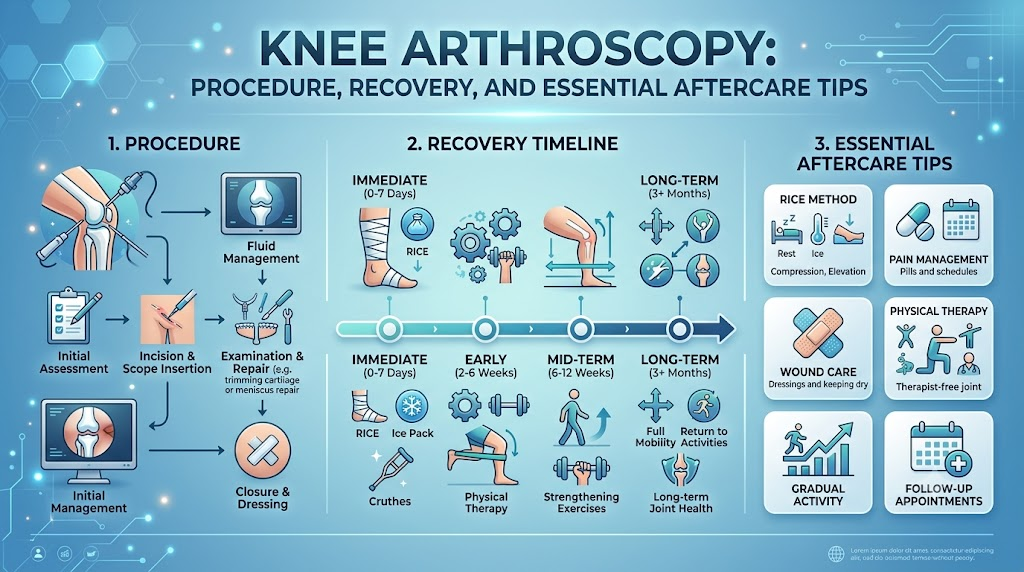
The surgeon makes small cuts near the knee. One cut allows the arthroscope to enter the joint. The camera sends pictures to a screen.
The surgeon may insert small tools through other cuts. These tools can help repair a tear, remove loose pieces, or treat selected problems.
After the procedure, the surgeon closes the cuts as needed. The team covers them with dressings. You then move to a recovery area for observation.
The length of surgery depends on the problem and the work needed. Your surgeon can explain what to expect in your case.
What Types of Problems Can Knee Arthroscopy Treat?
Knee arthroscopy can help treat some problems inside the joint. The exact treatment depends on the damage found.
For a meniscus tear, the surgeon may repair the torn tissue. In other cases, the surgeon may remove only the damaged part. The choice depends on the tear and the health of the tissue.
The surgeon may also remove loose pieces of bone or cartilage. Some procedures treat selected cartilage injuries or problems with the joint lining.
Not every knee problem can be treated through arthroscopy. Some injuries need open surgery or another form of care. Your doctor will discuss the likely benefits and limits before treatment.
Is Knee Arthroscopy Safe?
Many people have knee arthroscopy without serious problems. Still, no surgery is completely risk-free.
Possible risks include:
- Infection around the cuts or inside the joint
- Bleeding or extra fluid in the knee
- Blood clots in the leg
- Stiffness or ongoing pain
- Injury to nearby nerves or blood vessels
- Problems linked to anesthesia
Your risk depends on your health and the type of procedure. Some people may have a higher risk due to other health conditions.
Ask your surgeon about the possible benefits and risks. Find out what results are realistic for your knee problem. This can help you make an informed choice.
How Should You Care for Your Knee After Surgery?
Good knee surgery aftercare helps support healing. Your surgeon’s instructions should always come first because each procedure is different.
Keep the Wound Clean
Keep your dressing clean and dry as directed. Do not remove it or change it before your care team allows you to do so.
Follow the wound care instructions from your hospital. Ask your care team before applying creams or other products near the cuts.
Manage Pain and Swelling
Your care team may advise cold packs to help reduce swelling. Wrap the pack in a towel and use it only as directed. Never place ice directly on your skin.
Raising your leg may also help control swelling. Use a comfortable position recommended by your care team.
Follow Medicine Instructions
Take medicines only as prescribed or directed. Ask your doctor or pharmacist about side effects or concerns.
Do not take extra medicines without checking whether they are safe for you. Some medicines can increase bleeding or cause other problems.
Use Walking Support When Needed
Your surgeon may recommend crutches, a brace, or another support device. Use these as instructed.
Do not put more weight on your leg than your care team allows. Avoid too much standing or walking during early recovery.
Attend follow-up visits so your team can check your progress. Report new or worsening symptoms promptly.
What Should You Expect During Knee Arthroscopy Recovery?
Recovery after arthroscopic knee surgery varies from person to person. It depends on the procedure, the injury, and your overall health.
Mild pain, swelling, and stiffness are common at first. You may need help with daily tasks during the early days. Follow your care team’s advice on movement and rest.
Some people return to simple daily tasks fairly soon. A meniscus repair or more complex procedure may need a longer recovery.
Your surgeon will guide your return to work, driving, exercise, and sports. Do not rush these activities because the knee feels better. Healing inside the joint may take longer than expected.
Why Is Physical Therapy Important After Knee Arthroscopy?
Physical therapy after knee surgery can help restore movement and strength. It may also improve balance and daily function.
A physical therapist can teach exercises that suit your procedure. They can also show you how to move safely and reduce stress on your knee.
Some people need only a short period of therapy. Others need more support to regain movement and strength.
Follow the plan made for your knee. Do not begin strenuous exercise or return to sports until your care team approves it.
Knee Arthroscopy Recovery Stages and Care Needs
Recovery has several broad stages. These stages are not a fixed schedule, and your progress may differ.
| Recovery stage | Common needs | Helpful care steps |
|---|---|---|
| First few days | Pain and swelling control | Follow wound care instructions and rest as advised |
| Early healing | Safe movement and wound care | Use walking aids if prescribed |
| Rehabilitation | Better movement and strength | Follow your physical therapy plan |
| Return to usual activities | Gradual increase in daily tasks | Follow your surgeon’s advice before harder activities |
Your surgeon will explain which steps apply to your procedure. Repairs and more complex surgery may require extra healing time.
What Warning Signs Should You Watch for After Surgery?
Some symptoms need prompt medical attention. Contact your surgical team if you notice:
- Fever or chills
- Increasing redness, warmth, or swelling around the cuts
- Pus or bad-smelling fluid from the wound
- Severe or worsening knee pain
- Bleeding that does not stop
- New or worsening numbness
- Pain or swelling in the calf
These symptoms may signal infection, bleeding, a blood clot, or another problem. Do not wait for a routine follow-up if symptoms are getting worse.
Sudden shortness of breath, chest pain, or fainting may signal a serious emergency. Seek emergency medical help immediately if any of these occur.
How Can You Prepare Your Home for Recovery?
A safe home can make recovery easier. Plan ahead before your surgery whenever possible.
- Clear walking paths and remove loose rugs.
- Keep daily items within easy reach.
- Use stable handrails on stairs when available.
- Arrange help with meals, shopping, and transport.
- Keep your phone and needed items nearby.
- Prepare a comfortable place to rest.
If you need crutches, learn how to use them safely. Ask your care team for training before leaving the hospital. Follow all instructions about weight-bearing and movement.
When Can You Drive, Work, or Exercise Again?
The right time depends on your procedure, pain, movement, and health. Your surgeon will help decide when you can safely return to normal activities.
Do not drive while affected by anesthesia or medicines that cause drowsiness. You should also be able to control the vehicle fully and respond safely. Ask your clinician before driving again.
Desk work may be easier to resume than work that involves lifting or standing. Heavy physical work may need more healing time.
Sports and strenuous exercise need special care. Return only when your surgeon or physical therapist approves it. Moving too soon may slow recovery or cause further injury.
Knee Arthroscopy Aftercare and Safety Tips
These tips offer general guidance, not a personal recovery plan. Always follow your own discharge instructions.
| Aftercare topic | General guidance | Important caution |
|---|---|---|
| Wound care | Keep the dressing clean and dry as directed | Do not remove it too soon |
| Swelling | Raise the leg and use cold packs if advised | Protect the skin from direct ice |
| Walking support | Use prescribed crutches or a brace | Follow weight-bearing limits |
| Medicines | Take medicines as directed | Do not change doses without advice |
| Exercises | Follow your approved therapy plan | Avoid unapproved strenuous activity |
| Driving | Wait for medical approval | Never drive while drowsy |
| Warning signs | Report worsening symptoms promptly | Seek emergency help for serious symptoms |
If you are unsure about any part of your care, contact your surgical team. Clear advice can help you avoid mistakes during recovery.
Key Takeaways About Knee Arthroscopy
Knee arthroscopy can help treat certain knee injuries and joint problems. It is not the right choice for every condition.
The procedure uses small cuts and a camera to examine or treat the knee. It still carries risks and requires careful aftercare.
Follow your surgeon’s advice about wound care, medicines, movement, and physical therapy. Return to work, driving, and sports only when it is safe.
Seek medical help for signs of infection, worsening pain, or other warning signs. Get emergency help for chest pain or sudden breathing problems.
Frequently Asked Questions About Knee Arthroscopy
1. What is knee arthroscopy?
Knee arthroscopy is a type of keyhole surgery used to examine or treat certain knee problems. A surgeon inserts a tiny camera through a small cut. Small tools may help repair or remove damaged tissue.
2. Why do doctors perform knee arthroscopy?
Doctors may use it to treat selected meniscus tears, loose joint fragments, and certain cartilage problems. It may also help with some ligament or joint lining conditions. The right treatment depends on the injury and medical findings.
3. Is knee arthroscopy a major surgery?
Knee arthroscopy is less invasive than open surgery because it uses small cuts. However, it is still surgery and carries risks. The level of care and recovery time depend on the procedure.
4. How long does knee arthroscopy take?
The length of surgery depends on the knee problem and the treatment needed. A simple procedure may take less time than a complex repair. Your surgeon can explain what to expect.
5. Is knee arthroscopy painful?
Anesthesia helps prevent pain during surgery. Some pain, swelling, and stiffness may occur afterward. Your care team can recommend safe ways to manage these symptoms.
6. How long does recovery from knee arthroscopy take?
Recovery may range from a short period to several weeks or months. It depends on the procedure, your health, and the healing process. Your surgeon will guide your return to normal activities.
7. Do I need physical therapy after knee arthroscopy?
Some people need physical therapy to improve movement, strength, and balance. Others may need a different level of support. Your surgeon will decide whether therapy is suitable for your procedure.
8. What are the risks of knee arthroscopy?
Possible risks include infection, bleeding, blood clots, stiffness, and ongoing pain. Anesthesia and nearby tissue injuries can also cause problems. Ask your surgeon about the risks that apply to you.
9. When can I walk or drive after knee arthroscopy?
Walking depends on the procedure and your surgeon’s weight-bearing instructions. Use crutches or a brace if prescribed. Drive only when your clinician approves and you can control the vehicle safely.
10. Which warning signs need medical attention after surgery?
Contact your surgical team for fever, worsening redness, wound discharge, severe pain, or calf swelling. Seek emergency help for sudden shortness of breath, chest pain, or fainting. Do not delay care for serious symptoms.
Conclusion
Knee arthroscopy may help treat selected knee problems and improve daily movement. The best treatment and recovery plan depend on your injury and health.
Follow your care team’s instructions and allow enough time for healing. Speak with a qualified orthopedic surgeon about your options and expected results. The right guidance can help you make informed choices and support a safer recovery.

Find Trusted Cardiac Hospitals
Compare heart hospitals by city and services — all in one place.
Explore Hospitals