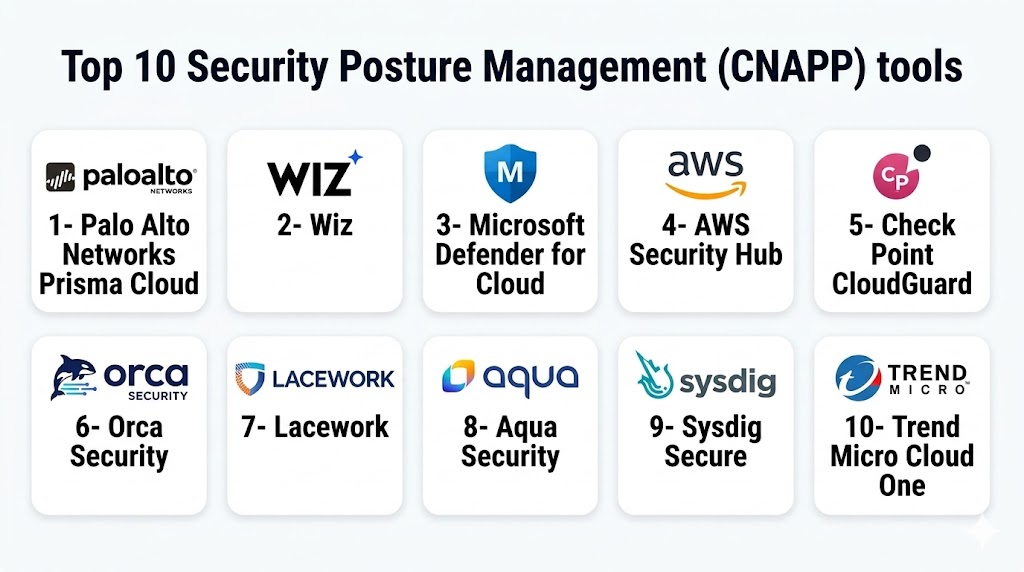
Introduction
Security Posture Management (often delivered through CNAPP platforms—Cloud-Native Application Protection Platforms) refers to integrated cybersecurity suites that unify visibility, risk detection, compliance monitoring, and threat protection across cloud environments. These platforms combine capabilities from CSPM (Cloud Security Posture Management), CWPP (Cloud Workload Protection Platforms), CIEM (Cloud Infrastructure Entitlement Management), and increasingly, AI-driven threat detection. CNAPP suites are critical because cloud environments are no longer static. Organizations operate across multi-cloud, hybrid workloads, containers, Kubernetes, serverless functions, and AI-driven infrastructure. Attack surfaces have expanded dramatically, and misconfigurations remain one of the leading causes of breaches.
Real-world use cases
- Detecting misconfigured cloud storage exposing sensitive data
- Identifying over-permissioned IAM roles across multi-cloud accounts
- Securing Kubernetes clusters and container workloads in production
- Monitoring compliance posture for frameworks like SOC2 and GDPR
- Detecting runtime threats in cloud-native applications
- Managing vulnerabilities in CI/CD pipelines before deployment
What buyers should evaluate
- Multi-cloud visibility and coverage depth
- Identity and access security (CIEM capabilities)
- Runtime protection for workloads and containers
- AI-driven risk prioritization and alert reduction
- Integration with DevSecOps pipelines
- Compliance reporting automation
- Asset inventory and attack surface mapping
- API-first architecture and extensibility
- Detection accuracy and false positive rate
- Scalability across enterprise cloud environments
Best for:
CISOs, cloud security engineers, DevSecOps teams, and enterprise IT organizations managing complex multi-cloud and Kubernetes-heavy infrastructures.
Not ideal for:
Small teams with minimal cloud infrastructure, startups with single-cloud environments that only need basic firewall/security tooling, or organizations without DevOps maturity.
Key Trends in Security Posture Management (CNAPP)
- Unified CNAPP platforms replacing fragmented CSPM, CWPP, CIEM tools
- AI-driven risk prioritization reducing alert fatigue and false positives
- Shift toward continuous compliance instead of periodic audits
- Expansion of runtime security for containers, Kubernetes, and serverless
- Identity-first security becoming central (CIEM evolution)
- API security integration within CNAPP ecosystems
- Real-time cloud attack path visualization and breach simulation
- Increased automation in remediation (auto-fix recommendations)
- Integration with DevSecOps pipelines (shift-left security enforcement)
- Multi-cloud abstraction layers for unified visibility and governance
How We Selected These Tools (Methodology)
- Market adoption across enterprise cloud security programs
- Breadth of CNAPP capabilities (CSPM + CWPP + CIEM coverage)
- Support for multi-cloud environments (AWS, Azure, GCP)
- Runtime protection maturity for containers and workloads
- Quality of risk prioritization and AI-driven analytics
- Integration with DevSecOps ecosystems
- Security posture reporting and compliance mapping
- Scalability for large distributed cloud environments
- API extensibility and automation capabilities
- Industry reputation and enterprise deployment maturity
Top 10 Security Posture Management (CNAPP) Suites
1- Palo Alto Networks Prisma Cloud
Short description: Prisma Cloud is a leading CNAPP platform offering unified cloud security posture management, workload protection, and identity security across multi-cloud environments.
Key Features
- CSPM, CWPP, CIEM in a single platform
- Cloud asset inventory and risk visualization
- Kubernetes and container security monitoring
- Runtime threat detection for workloads
- AI-based risk prioritization engine
- Compliance monitoring dashboards
- IaC (Infrastructure as Code) security scanning
Pros
- Very comprehensive CNAPP coverage
- Strong enterprise-grade security capabilities
- Deep multi-cloud support
Cons
- Complex setup and configuration
- High cost for smaller organizations
Platforms / Deployment
- Web / Cloud / Hybrid
Security & Compliance
- SSO/SAML, MFA, RBAC, audit logs
- Encryption in transit and at rest
- Compliance: Not publicly stated for full certifications
Integrations & Ecosystem
Integrates with DevOps pipelines and cloud providers:
- AWS, Azure, Google Cloud
- CI/CD tools like Jenkins
- SIEM platforms
- Kubernetes ecosystems
Support & Community
Strong enterprise support and extensive documentation.
2- Wiz
Short description: Wiz is a modern agentless CNAPP platform known for fast deployment and deep cloud visibility across multi-cloud environments.
Key Features
- Agentless cloud scanning
- Unified risk graph visualization
- Identity and permission analysis
- Container and Kubernetes security
- Cloud misconfiguration detection
- Vulnerability prioritization engine
- Attack path mapping
Pros
- Very fast deployment (agentless model)
- Excellent visibility across cloud assets
- Strong UX and risk visualization
Cons
- Limited offline or legacy system coverage
- Premium pricing model
Platforms / Deployment
- Web / Cloud
Security & Compliance
- SSO, RBAC, MFA
- Encryption and audit logs
- Compliance: Not publicly stated
Integrations & Ecosystem
- AWS, Azure, GCP
- SIEM tools
- Jira, Slack
- API-based automation
Support & Community
Strong enterprise onboarding and responsive support.
3- Microsoft Defender for Cloud
Short description: Microsoft Defender for Cloud provides native security posture management for Azure and multi-cloud environments.
Key Features
- Cloud security posture management
- Workload protection for VMs and containers
- Security recommendations engine
- DevSecOps integration with Azure pipelines
- Regulatory compliance dashboards
- Threat detection and alerting
- API security insights
Pros
- Deep Azure ecosystem integration
- Strong enterprise adoption
- Good compliance reporting
Cons
- Best optimized for Microsoft environments
- Complex pricing structure
Platforms / Deployment
- Web / Cloud
Security & Compliance
- Strong enterprise-grade security controls
- RBAC, SSO, encryption
- Compliance: Not publicly stated fully
Integrations & Ecosystem
- Azure services
- GitHub
- SIEM tools
- DevOps pipelines
Support & Community
Strong enterprise support via Microsoft ecosystem.
4- Amazon Inspector + AWS Security Hub (CNAPP Layer)
Short description: AWS native security posture tools offering vulnerability detection and cloud configuration management across AWS environments.
Key Features
- Vulnerability scanning for workloads
- CSPM via Security Hub
- IAM security analysis
- EC2, container, and Lambda scanning
- Compliance dashboards
- Event-driven security alerts
- Integration with AWS native tools
Pros
- Deep AWS-native integration
- High scalability within AWS ecosystems
- Strong automation capabilities
Cons
- Limited multi-cloud visibility
- Requires AWS-centric architecture
Platforms / Deployment
- Cloud (AWS only)
Security & Compliance
- AWS-native security controls
- Encryption, IAM, audit logs
- Compliance: Not publicly stated in CNAPP context
Integrations & Ecosystem
- AWS ecosystem services
- Lambda automation
- CloudWatch
- SIEM integrations
Support & Community
Strong AWS documentation and enterprise support.
5- Check Point CloudGuard
Short description: CloudGuard is a CNAPP solution offering unified cloud security across multi-cloud and hybrid environments.
Key Features
- CSPM and CWPP capabilities
- Cloud workload threat prevention
- Kubernetes security
- Identity risk management
- Policy-as-code enforcement
- Automated compliance reporting
- Threat intelligence integration
Pros
- Strong hybrid cloud support
- Good threat prevention capabilities
- Mature enterprise security model
Cons
- UI complexity for new users
- Slower innovation compared to newer platforms
Platforms / Deployment
- Cloud / Hybrid
Security & Compliance
- SSO, MFA, RBAC
- Encryption and audit logging
- Compliance: Not publicly stated
Integrations & Ecosystem
- Cloud providers
- SIEM platforms
- DevOps pipelines
- API integrations
Support & Community
Enterprise-focused support with structured onboarding.
6- Orca Security
Short description: Orca Security is an agentless CNAPP platform focused on deep cloud visibility and vulnerability detection.
Key Features
- Agentless scanning across workloads
- Side-scanning technology for workloads
- Cloud asset inventory
- Identity and entitlement analysis
- Malware detection
- Compliance reporting
- Risk prioritization engine
Pros
- No agent installation required
- Fast deployment and visibility
- Strong risk prioritization
Cons
- Limited runtime enforcement compared to agent-based tools
- Pricing not transparent publicly
Platforms / Deployment
- Web / Cloud
Security & Compliance
- SSO, encryption, RBAC
- Compliance: Not publicly stated
Integrations & Ecosystem
- AWS, Azure, GCP
- SIEM tools
- Jira and DevOps tools
- APIs
Support & Community
Strong enterprise support and growing user base.
7- Lacework
Short description: Lacework is a data-driven CNAPP platform focusing on behavioral anomaly detection in cloud environments.
Key Features
- Cloud behavior analytics
- Anomaly detection engine
- Container and Kubernetes security
- CI/CD pipeline integration
- Compliance automation
- Threat intelligence correlation
- Multi-cloud visibility
Pros
- Strong behavioral analytics
- Good detection accuracy
- Developer-friendly integrations
Cons
- Complex data interpretation
- Enterprise-focused pricing
Platforms / Deployment
- Cloud
Security & Compliance
- RBAC, SSO, encryption
- Compliance: Not publicly stated
Integrations & Ecosystem
- DevOps pipelines
- SIEM systems
- Cloud providers
- API integrations
Support & Community
Strong enterprise support and documentation.
8- Aqua Security
Short description: Aqua Security provides CNAPP capabilities focused heavily on container and Kubernetes security.
Key Features
- Container runtime protection
- Kubernetes security posture management
- Image scanning and vulnerability detection
- CI/CD security integration
- Policy enforcement for cloud workloads
- Secrets management detection
- Compliance reporting
Pros
- Excellent container security depth
- Strong Kubernetes focus
- Good DevSecOps integration
Cons
- Less comprehensive for non-container workloads
- Requires technical expertise
Platforms / Deployment
- Cloud / Hybrid / Self-hosted
Security & Compliance
- RBAC, SSO, audit logs
- Encryption support
- Compliance: Not publicly stated
Integrations & Ecosystem
- Kubernetes ecosystems
- CI/CD pipelines
- Cloud providers
- SIEM tools
Support & Community
Strong developer and enterprise support.
9- Sysdig Secure
Short description: Sysdig Secure focuses on runtime security, Kubernetes monitoring, and cloud workload protection.
Key Features
- Runtime threat detection
- Kubernetes security monitoring
- Cloud posture management
- Image scanning
- Compliance automation
- Forensics and incident response tools
- Policy enforcement
Pros
- Strong runtime security focus
- Excellent Kubernetes observability
- Good forensic capabilities
Cons
- Requires tuning for optimal performance
- Complex enterprise setup
Platforms / Deployment
- Cloud / Hybrid
Security & Compliance
- SSO, RBAC, encryption
- Compliance: Not publicly stated
Integrations & Ecosystem
- Kubernetes
- SIEM platforms
- CI/CD pipelines
- Cloud APIs
Support & Community
Strong technical documentation and enterprise support.
10- Trend Micro Cloud One
Short description: Cloud One is a security platform offering CNAPP-like capabilities for cloud workloads, containers, and compliance.
Key Features
- Cloud security posture management
- Container security
- File and workload protection
- Compliance monitoring
- Vulnerability scanning
- API-driven security automation
- Threat intelligence integration
Pros
- Strong enterprise security heritage
- Broad cloud protection coverage
- Good compliance support
Cons
- Less modern UI compared to newer platforms
- Complex configuration
Platforms / Deployment
- Cloud / Hybrid
Security & Compliance
- RBAC, SSO, encryption
- Compliance: Not publicly stated
Integrations & Ecosystem
- Cloud providers
- SIEM tools
- DevOps pipelines
- API integrations
Support & Community
Strong enterprise support infrastructure.
Comparison Table (Top 10)
| Tool Name | Best For | Platform(s) Supported | Deployment | Standout Feature | Public Rating |
|---|---|---|---|---|---|
| Prisma Cloud | Enterprise CNAPP | Multi-cloud | Cloud/Hybrid | Full CNAPP suite | N/A |
| Wiz | Modern cloud security teams | Multi-cloud | Cloud | Agentless risk graph | N/A |
| Microsoft Defender for Cloud | Azure-heavy orgs | Multi-cloud | Cloud | Azure-native integration | N/A |
| AWS Security Hub | AWS-native teams | AWS | Cloud | Native AWS security stack | N/A |
| CloudGuard | Hybrid enterprises | Multi-cloud | Cloud/Hybrid | Unified hybrid security | N/A |
| Orca Security | Fast deployment teams | Multi-cloud | Cloud | Agentless scanning | N/A |
| Lacework | Data-driven security teams | Multi-cloud | Cloud | Behavioral analytics | N/A |
| Aqua Security | Container-heavy orgs | Multi-cloud | Hybrid | Kubernetes security depth | N/A |
| Sysdig Secure | DevSecOps teams | Multi-cloud | Cloud/Hybrid | Runtime security focus | N/A |
| Trend Micro Cloud One | Enterprise security teams | Multi-cloud | Cloud/Hybrid | Broad protection suite | N/A |
Evaluation & Scoring of Security Posture Management (CNAPP)
| Tool Name | Core (25%) | Ease (15%) | Integrations (15%) | Security (10%) | Performance (10%) | Support (10%) | Value (15%) | Weighted Total |
|---|---|---|---|---|---|---|---|---|
| Prisma Cloud | 9.5 | 8.0 | 9.0 | 9.5 | 9.0 | 9.0 | 8.0 | 9.0 |
| Wiz | 9.3 | 9.2 | 9.0 | 9.3 | 9.0 | 8.8 | 8.5 | 9.1 |
| Microsoft Defender | 9.0 | 8.5 | 9.5 | 9.2 | 8.8 | 9.0 | 8.8 | 9.0 |
| AWS Security Hub | 8.8 | 8.5 | 9.2 | 9.0 | 9.2 | 8.8 | 9.0 | 8.9 |
| CloudGuard | 8.7 | 8.0 | 8.5 | 9.0 | 8.5 | 8.5 | 8.2 | 8.5 |
| Orca Security | 8.8 | 9.0 | 8.8 | 8.8 | 8.5 | 8.5 | 8.5 | 8.7 |
| Lacework | 8.7 | 8.0 | 8.5 | 9.0 | 8.8 | 8.5 | 8.0 | 8.5 |
| Aqua Security | 8.5 | 8.2 | 8.5 | 9.0 | 8.5 | 8.5 | 8.2 | 8.5 |
| Sysdig Secure | 8.6 | 8.3 | 8.5 | 9.0 | 8.8 | 8.5 | 8.0 | 8.6 |
| Trend Micro Cloud One | 8.4 | 8.0 | 8.3 | 8.8 | 8.5 | 8.5 | 8.2 | 8.3 |
Which Security Posture Management (CNAPP) Tool Is Right for You?
Solo / Freelancer
- Not typically applicable
CNAPP platforms are enterprise-grade tools requiring cloud infrastructure scale.
SMB
- Orca Security
- Wiz (starter deployments)
Focus on agentless simplicity and fast visibility.
Mid-Market
- Lacework
- Sysdig Secure
- Aqua Security
Balanced CNAPP coverage with DevSecOps integration.
Enterprise
- Prisma Cloud
- Wiz
- Microsoft Defender for Cloud
Best for full-scale multi-cloud governance and compliance.
Budget vs Premium
- Budget-conscious: Orca Security, Sysdig entry tiers
- Premium: Prisma Cloud, Wiz enterprise, CloudGuard
Feature Depth vs Ease of Use
- Deep but complex: Prisma Cloud, Aqua Security
- Easy to adopt: Wiz, Orca Security
Integrations & Scalability
- Strongest: Prisma Cloud, Wiz, Microsoft Defender
- DevOps-heavy: Sysdig, Lacework
Security & Compliance Needs
- Highly regulated industries: Prisma Cloud, CloudGuard
- Cloud-native compliance: Microsoft Defender, AWS Security Hub
Frequently Asked Questions (FAQs)
1- What is a CNAPP platform?
CNAPP (Cloud-Native Application Protection Platform) unifies cloud security tools into a single system.
It includes CSPM, CWPP, CIEM, and runtime protection capabilities.
2- Why are CNAPP tools important?
They provide continuous visibility across cloud environments.
This helps prevent misconfigurations and runtime attacks.
3- Do CNAPP tools replace traditional security tools?
They often consolidate multiple tools, but may not fully replace all legacy systems.
They enhance rather than eliminate existing security stacks.
4- Are CNAPP platforms suitable for small companies?
Usually no, unless they have significant cloud infrastructure.
SMBs typically use lighter CSPM tools instead.
5- What is the biggest risk CNAPP tools solve?
Cloud misconfigurations and identity-based vulnerabilities.
These are leading causes of cloud breaches.
6- Do CNAPP platforms support Kubernetes?
Yes, most modern CNAPP tools include Kubernetes security features.
This includes workload scanning and runtime protection.
7- How do CNAPP tools integrate with DevOps?
They connect with CI/CD pipelines, Git repositories, and IaC tools.
This enables shift-left security practices.
8- What is agentless CNAPP?
Agentless CNAPP scans cloud environments without installing software agents.
It enables faster deployment and lower operational overhead.
9- Are CNAPP tools AI-powered?
Yes, many platforms now use AI for risk prioritization and anomaly detection.
This reduces alert fatigue significantly.
10- Can CNAPP tools prevent attacks in real time?
Yes, some include runtime protection and automated response capabilities.
However, effectiveness depends on configuration and coverage.
Conclusion
Security Posture Management (CNAPP) platforms are now essential for organizations operating in complex cloud environments. They unify visibility, risk detection, and compliance enforcement across multi-cloud, Kubernetes, and container ecosystems. The right platform depends on cloud maturity, budget, and operational complexity. Wiz and Prisma Cloud dominate enterprise adoption, while tools like Orca Security and Sysdig provide strong alternatives for specific needs. A practical next step is to shortlist 2–3 platforms, run a pilot across real cloud workloads, and validate detection accuracy, integration compatibility, and operational overhead before full deployment.

Find Trusted Cardiac Hospitals
Compare heart hospitals by city and services — all in one place.
Explore Hospitals
CNAPP security posture management tools are most valuable when they correlate misconfigurations, workload risks, and identity exposure into a single risk narrative instead of isolated alerts. In real cloud environments, the biggest challenge is not detecting issues, but prioritizing which combined exposures actually create an exploitable attack path.